What Makes Essays Actually Work
Before you start writing anything, let's get clear on what essays actually are. An essay is a focused piece of academic writing that makes an argument, presents an analysis, or explains something specific about a topic. Unlike creative writing, where you can do whatever you want, academic essays follow structured patterns designed to communicate ideas clearly and persuasively.
Core Characteristics of Strong Essays
Strong essays share the same foundation regardless of topic or length. They present focused arguments, support claims with credible evidence, and organize ideas logically so readers can easily follow the discussion. Effective essays go beyond summary by demonstrating critical thinking and analysis, and they communicate ideas clearly using appropriate academic language and correct grammar.
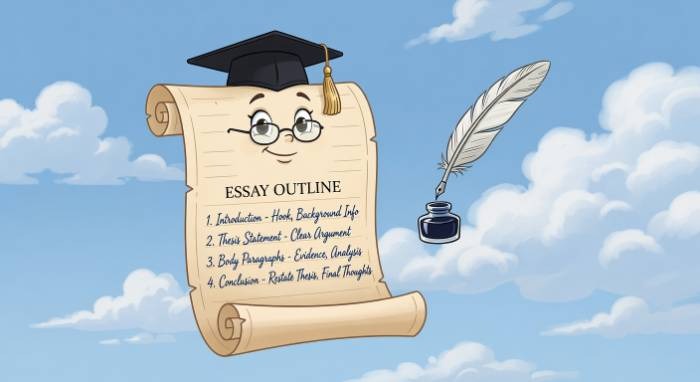
Academic essay structure serves a clear purpose. Introductions establish context and present the main argument, body paragraphs develop ideas with evidence and analysis, and conclusions reinforce why the argument matters. This logical sequence helps readers understand complex ideas efficiently.
Why Structure Matters
Essays allow instructors to assess understanding, critical evaluation, and argumentative skills. A well structured essay shows original thinking rather than memorization. Structure isn’t arbitrary, it mirrors how people process information.
Expectations also change by academic level. High school essays focus on basic organization and clarity, college essays require deeper analysis and research, and graduate level writing demands original contributions. Knowing these differences helps meet academic standards.
The Real Purpose of Essay Writing
Essay writing develops critical thinking, persuasive argumentation, and clear communication skills essential far beyond the classroom. Professionals across fields rely on these abilities daily. Mastering essay writing ultimately means mastering clear, structured thinking that applies to any discipline or career.
Turn Notes into Knowledge
Transform dense materials into digestible content with professional help.
- Completely original work
- Suited for all subjects and levels
- Tailored to your study needs
- Guaranteed punctual delivery
Save time and boost grades with expert academic assistance.
Order NowThe Essay Writing Process That Doesn't Suck
Here's the biggest mistake struggling writers make: they try to write perfect essays in one sitting, from introduction to conclusion, getting everything right on the first try. This approach maximizes stress and produces weaker essays. Professional writers use a completely different process that breaks essay writing into manageable stages you can actually handle. The Five Stage Process That Actually Works:
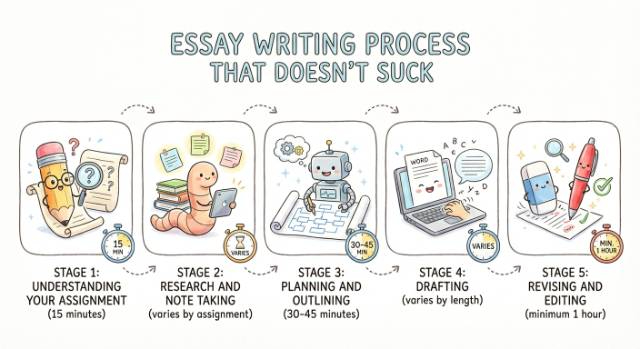
Stage 1: Understanding Your Assignment (15 minutes)
The first step sounds stupidly obvious, but students constantly lose points by misunderstanding what the assignment actually asks. Read the prompt at least three times. Highlight directive words like "analyze," "compare," "argue," "explain," or "evaluate" each requires a different approach.
Pay attention to specific requirements: length expectations, formatting requirements (MLA? APA?), number of sources required, due date and submission method, specific topics or materials you must address. Create a checklist of requirements to ensure you hit every expectation. If anything confuses you, ask your instructor for clarification before investing hours writing the wrong thing.
Stage 2: Research and Note Taking (varies by assignment)
Once you understand what's being asked, gather information before you start writing. For basic essays, this might mean reviewing course materials and identifying relevant examples. For research papers, you'll dive into academic databases for scholarly sources.
| Here's the key: research isn't about copying information. It's about understanding different perspectives and gathering evidence to support the argument you'll develop. |
Take strategic notes, record key arguments, page numbers for citations, brief summaries in your own words, and your analytical responses to source claims. These active reading notes become the foundation for your essay's analysis and prevent plagiarism issues later.
Stage 3: Planning and Outlining (30-45 minutes)
Most students skip outlining because it feels like extra work. This is backward thinking. A solid outline saves 2-3 hours of writing time by eliminating the "what do I write next?" paralysis. Your outline tells you exactly which point comes next and what evidence supports it.
Our comprehensive guide on essay outlines walks you through creating detailed organizational plans that transform random research into structured arguments. You'll learn to map main points, organize supporting evidence, and create flexible frameworks that guide drafting without boxing you in.
Create an outline that includes your thesis statement, main points in logical order, specific evidence for each point, analysis explaining why the evidence matters, and transitions between sections. Test your outline by reading through the main points. Does each point build on the previous one? Is the connection clear? If it feels jumpy, reorder until the flow improves.
Stage 4: Drafting (varies by length)
With a solid outline, drafting becomes much easier. Start with body paragraphs, focusing on developing each point with evidence and analysis rather than perfection. Many writers draft the introduction last so it accurately reflects the final essay. If you get stuck, move on to another section your outline allows flexible, non linear writing.
Stage 5: Revising and Editing (minimum 1 hour)
Revision turns drafts into polished essays. Take a short break before revising so you can review your work with fresh eyes.
Revise in this order:
- Content & argument: Is your thesis clear and supported?
- Organization: Do ideas flow logically between paragraphs?
- Language & mechanics: Fix grammar, spelling, and punctuation last.
Quick revision tips:
- Read your essay aloud to catch awkward phrasing
- Make sure evidence supports the thesis, andthe analysis explains why it matters
- Ensure the conclusion synthesizes ideas instead of repeating the introduction
Proofreading checklist:
- Check grammar, spelling, punctuation, and formatting
- Watch for its/it’s, your/you’re, comma splices, fragments, and subject verb agreement errors
Essay Structure and Format Essentials
Academic essays follow specific structural patterns and formatting conventions that signal professionalism. Understanding these conventions helps your ideas get the attention they deserve instead of getting dismissed for superficial formatting mistakes.
The Three Part Essay Structure
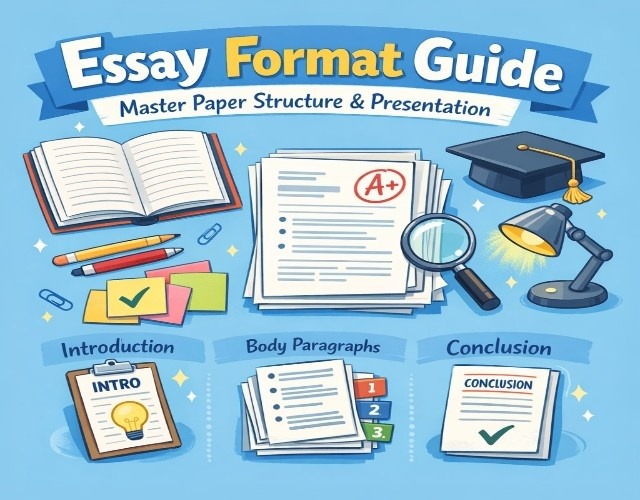
Every academic essay follows a simple structure: introduction, body, and conclusion, which reflects how readers process information.
Introduction (10–15%)
Sets context, engages the reader, and presents a clear thesis outlining your main argument.Body (75–80%)
Develops the argument through focused paragraphs, each with a main point, supporting evidence, analysis, and smooth transitions.Conclusion (10–15%)
Synthesizes key ideas, restates the thesis in new words, and explains why the argument matters without adding new evidence.
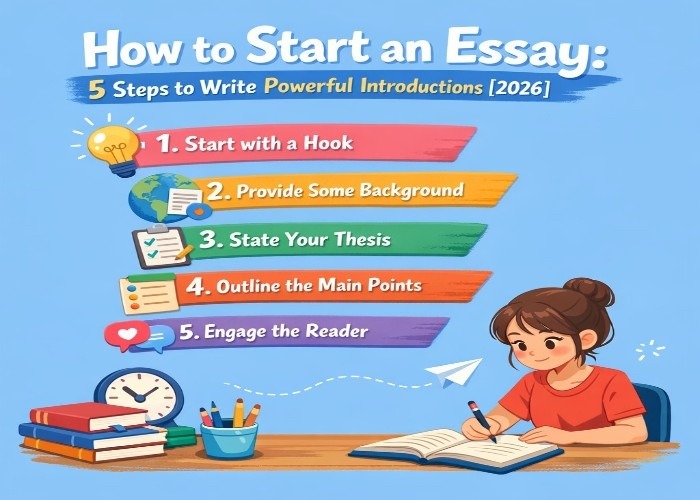
Want to craft introductions that immediately engage readers instead of boring them? Our guide on how to start an essay provides specific techniques for opening with impact, provocative questions, surprising statistics,and compelling anecdotes. Learn to hook readers while setting up your thesis naturally.
Standard Formatting Requirements:
Most academic essays require specific formatting that demonstrates attention to detail. Standard formatting includes readable 12-point fonts like Times New Roman or Arial, 1 inch margins on all sides, double spacing throughout, including quotations and references, indenting the first line of each paragraph 0.5 inches, and including a header with your last name and page number.
Essays also require proper citation formatting to give credit to sources and avoid plagiarism. Three main citation styles dominate academic writing:
- MLA format (Modern Language Association) used primarily in the humanities, uses author-page citations
- APA format (American Psychological Association) used in social sciences, uses author-date citations
- Chicago style used in history uses footnotes or endnotes
Always confirm which citation style your assignment requires and apply it consistently throughout.
Our detailed guide on essay format covers MLA, APA, and Chicago formatting with specific examples. Learn proper heading placement, citation formatting, and all the technical details that distinguish polished essays from amateur work.
Essay Length Guidelines:
Students constantly ask: "How many paragraphs should my essay be?" or "How many pages is 500 words?" The honest answer: it depends on your assignment requirements and how fully you develop your argument. But some general guidelines help with planning:
A 500 word essay typically includes 5 paragraphs (intro, 3 body paragraphs, conclusion) and spans about 1 page single spaced or 2 pages double-spaced. This format works well for timed writing, quick assignments, and demonstrating basic essay competency. It's the standard high school format.
A 1000 word essay typically includes 6-8 paragraphs and spans 3-4 pages double spaced. This length allows for more sophisticated argumentation with multiple supporting points and deeper analysis. It's common for college essays and research assignments requiring substantial development.
Focus on developing your argument fully rather than hitting specific paragraph counts. A well developed 4-paragraph essay beats a poorly developed 7-paragraph essay every single time. Quality of analysis matters infinitely more than quantity of paragraphs.
Essential Essay Components
Strong essays result from mastering each individual component: thesis statements, topic sentences, transitions, hooks, and conclusions. Understanding how each piece functions and connects to others transforms essay writing from frustrating guesswork into systematic craft.
1. Crafting Powerful Thesis Statements:
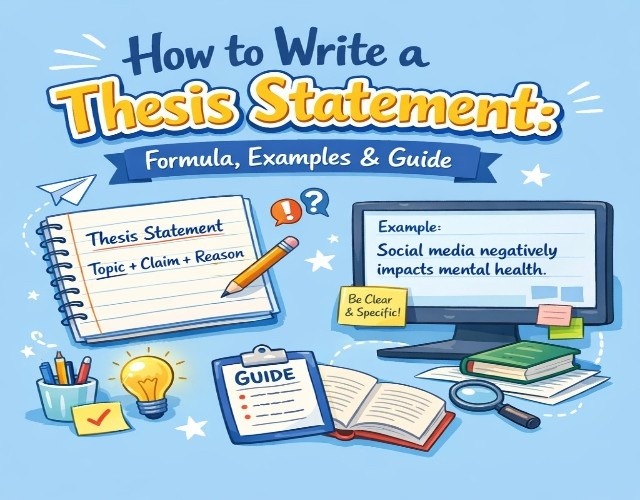
Your thesis statement is the single most important sentence in your entire essay. It presents your main argument, tells readers what to expect, and guides every paragraph you write. Everything else in your essay should directly support or develop your thesis.
A strong thesis statement is specific (not vague), arguable (not obvious), focused on one main idea, and clearly stated in 1-2 sentences. Weak thesis statements announce topics without taking positions: "This essay discusses climate change." Strong thesis statements present clear arguments requiring evidence: "Immediate action on climate change requires carbon pricing policies that make fossil fuel consumption economically disadvantageous."
Our comprehensive guide on writing thesis statements explains exactly what makes thesis statements effective, with dos and don'ts, common mistakes to avoid, and strategies for refining weak thesis statements into strong ones.
2. Writing Effective Topic Sentences:
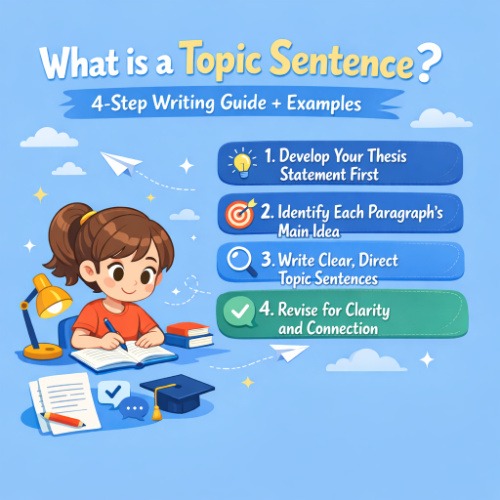
Each body paragraph should begin with a clear topic sentence that states the main point and links it to the thesis. Strong topic sentences are specific, focused, and connect smoothly to surrounding paragraphs. When done well, your thesis and topic sentences alone should clearly reveal your entire argument.
Our guide on what is a topic sentence, breaks down this critical component with examples showing how effective topic sentences guide readers through complex arguments while maintaining clear connections to thesis statements.
3. Creating Smooth Transitions:
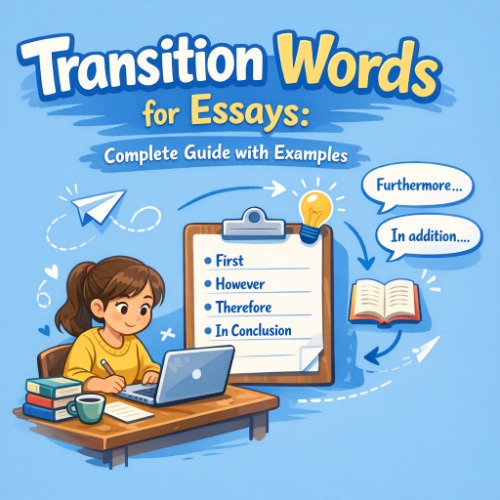
Transitions connect ideas and keep essays flowing. Without them, writing feels choppy and unclear.
Effective transitions include:
- Words & phrases: however, moreover, therefore
- Sentences: link one paragraph to the next
- Paragraphs: introduce new sections in longer essays
Key rule: transitions should reflect logical connections between ideas not just added words. When ideas flow naturally, transitions feel effortless.
Discover hundreds of transition options with our comprehensive guide to transition words for essays, organized by purpose (addition, contrast, cause effect, emphasis) with specific examples showing how to use each type effectively.
4. Hooking Readers Immediately:
Hooks grab attention and set the tone. A strong hook makes readers want to keep reading.
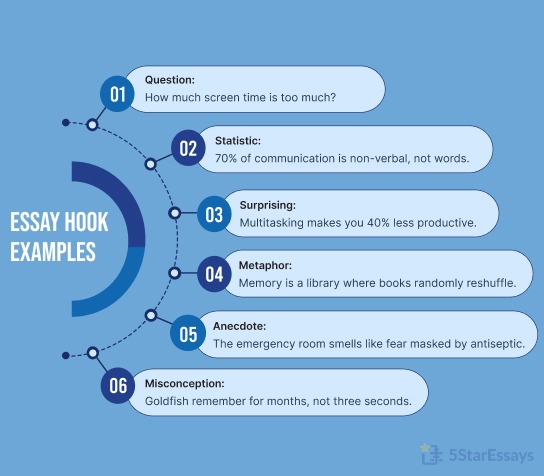
Common types of hooks:
- Question: prompts curiosity
- Statistic: surprises with numbers
- Quote: adds credibility
- Anecdote: illustrates the topic
- Bold statement: demands explanation
Key rule: your hook must connect directly to your thesis, not just grab attention.
Our guide featuring hook examples provides specific examples for every essay type: argumentative, persuasive, narrative, descriptive, expository, and analytical. Learn when to use questions, statistics, quotes, or anecdotes to grab reader's attention instantly while setting up your argument naturally.
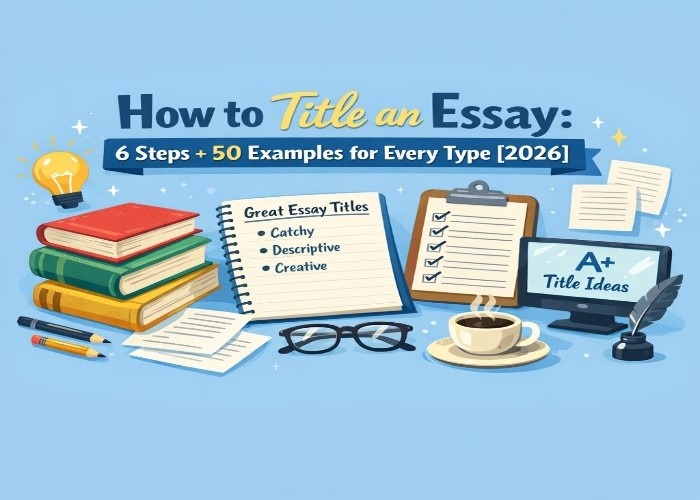
5. Mastering Titles That Work:
Essay titles matter more than you think. A strong title frames your argument and sparks interest.
Effective titles are:
- Specific, not generic
- Accurate to the essay’s content
- Appropriately formal for academic writing
- Properly capitalized
Avoid vague, overly clever titles or ones that simply repeat the assignment prompt.
Learn the exact formulas for creating effective essay titles with our guide on how to title an essay. Discover strategies for different essay types, capitalization rules for major style guides, and common mistakes that make titles fall flat.
Simplify Your Reading and Writing Tasks
Get professional academic support trusted by students worldwide.
- Clear, concise work
- 100% original content
- On time delivery, every time
- Expertly tailored to your needs
Let our experts turn tough readings into understandable content.
Get Started NowWriting Techniques That Boost Your Grade
Beyond understanding essay structure, specific writing techniques separate excellent essays from mediocre ones. These strategies improve clarity, strengthen arguments, and demonstrate the critical thinking skills professors look for.
1. Practical Strategies for Better Writing:
Strong academic writing is clear and engaging.
Key principles:
- Use active voice for direct, confident prose
- Vary sentence structure to avoid monotony
- Mix short and longer sentences for better flow
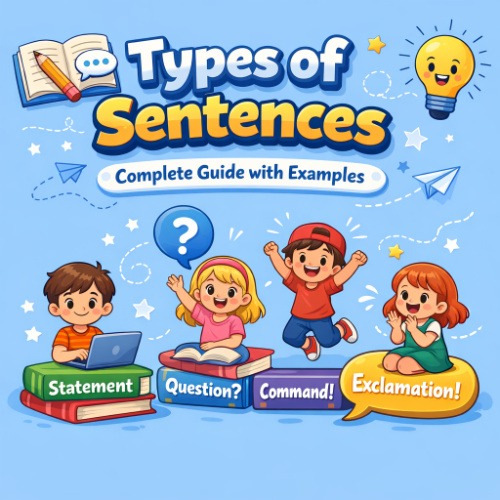
Understanding different types of sentences, simple, compound, complex, and compound complex, helps you create varied, sophisticated prose. Our guide breaks down each sentence type with examples showing how to use each effectively.
Show rather than tell by using concrete details, examples, and evidence. Precise, specific language is more persuasive than vague generalizations and builds credibility.
Our comprehensive guide on essay writing tips provides dozens of practical strategies for improving every aspect of your writing, from choosing stronger verbs to structuring paragraphs effectively to integrating sources smoothly. That guide dives deep into specific techniques, while this pillar gives you the complete picture.
2. Understanding Writing Conventions:
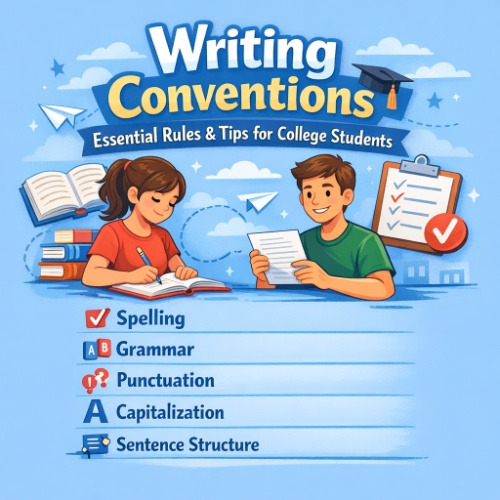
Academic writing follows specific conventions that signal credibility and professionalism. These include grammar rules, punctuation standards, capitalization guidelines, formatting expectations, and citation practices. Mastering these conventions prevents distracting errors that undermine otherwise strong content.
Our guide on writing conventions covers the essential standards for academic essays, from proper comma usage to subject verb agreement to avoiding common grammar mistakes that tank grades.
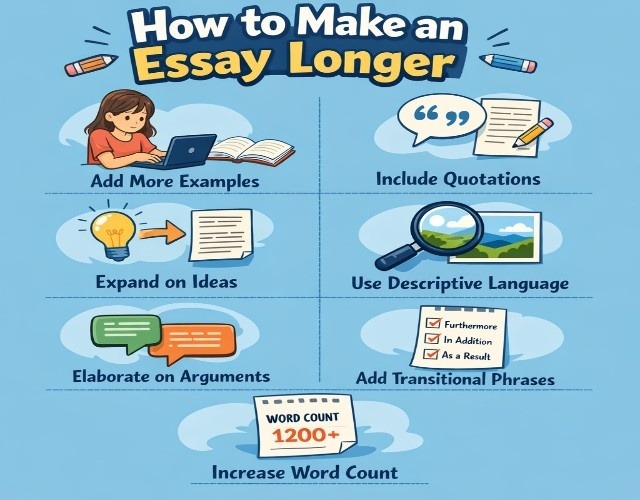
3. Making Essays Longer (The Right Way):
Expanding essays effectively:
- Develop points with more detailed analysis
- Add relevant examples or evidence
- Explore counterarguments and refute them
- Include additional context or background
- Explain why evidence matters
Avoid adding meaningless filler. Quality matters more than word count.
Our guide on how to make an essay longer provides specific strategies for adding meaningful content without padding, fluff, or obvious filler that professors spot immediately.
Different Types of Essays Explained
Academic writing includes numerous essay types, each with specific purposes, structures, and techniques. Understanding what each type requires helps you meet assignment expectations instead of writing the wrong thing excellently.
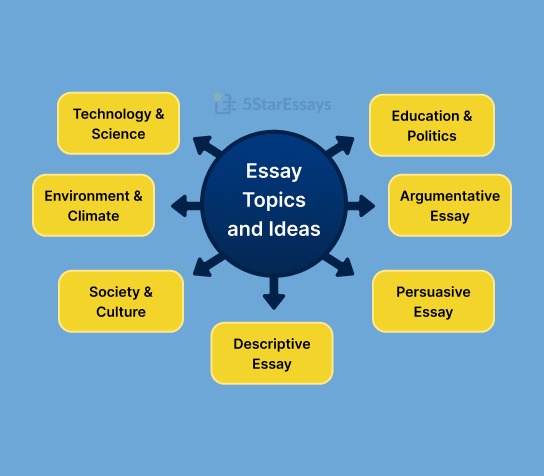
1. Argumentative Essays
Present a clear position on a debatable issue with evidence and logic.
Subtypes:
- Classical Argument Essay
- Rogerian Argument Essay
- Toulmin Argument Essay
2. Persuasive Essays
Aim to convince readers using logic, emotion, or personal appeals.
Subtypes:
- Opinion Essay
- Advocacy Essay
3. Analytical Essays
Break down texts, concepts, or issues to understand how components work together.
Subtypes:
4. Expository Essays
Explain or inform readers objectively without arguing a position.
Subtypes:
- Cause and Effect Essay
- Process Analysis Essay
- Definition Essay
- Compare and Contrast Essay
- Classification Essay
- Illustration Essay
- Exemplification Essay
- Informative Essay
5. Narrative Essays
Tell a story to illustrate points or share experiences.
Subtypes:
- Autobiography Essay
- Personal Narrative Essay
- Reflective Essay
6. Descriptive Essays
Use vivid sensory details to create a dominant impression of people, places, objects, or events.
7. Research Papers
Extended essays with in-depth research, scholarly sources, and original insights.
Subtypes:
- Academic Research Paper
- Term Paper
- Capstone Project
8. College & Scholarship Essays
Focused on admissions or funding applications.
Subtypes:
9. Synthesis Essays
Combine multiple sources to create new understanding or insights.
10. Comparative Essays
Analyze similarities and differences between subjects.
Subtypes:
- Compare and Contrast Essay
- Comparative Literature Essay
Advanced essay writing skills develop with practice and feedback. Working with professional essay writers exposes you to sophisticated techniques applied expertly. Our essay writing service connects you with experienced academic writers who model advanced skills while helping you meet assignment requirements.
Advanced Essay Writing Skills
Develop Your Academic Voice
- Authoritative yet clear, formal without being stiff
- Avoid contractions, minimize first person pronouns, use discipline specific terms
Integrate Sources Effectively
- Introduce sources with context, explain significance
- Paraphrase more than quote, synthesize multiple sources
Analyze Instead of Summarizing
- Focus on why it matters, not just what happened
- Show your thinking, draw conclusions from evidence
Address Counterarguments
- Present opposing viewpoints, acknowledge merits, then reinforce your position
Craft Sophisticated Introductions & Conclusions
- Introductions show context, approach, and awareness of broader conversations
- Conclusions synthesize insights, explore implications, and leave memorable takeaways. Check our guide on how to write a conclusion
Write Under Time Constraints
- Plan (20%), draft (70%), revise quickly (10%)
- Prioritize fully developed ideas over perfect prose
Develop Research Skills
- Use academic databases, evaluate credibility, integrate diverse sources
- Take strategic notes to avoid plagiarism
Understand Citation Styles
- Know the reasoning behind MLA, APA, and Chicago styles, not just formatting
Get Stress Free Academic Help
Focus on learning while we handle your assignments
- Clear explanations of key points
- Original writing guaranteed
- Timely submission
- Supports essays, reports, and projects
Save time and boost grades with expert academic assistance.
Get Started NowFinal Thoughts: From Struggling to Confident
Essay writing becomes manageable once you realize it’s a systematic craft, not a mysterious talent.
Key Takeaways:
- Understand assignment requirements before starting
- Plan and outline before drafting
- Craft arguable thesis statements
- Support arguments with credible evidence and analysis
- Revise in stages: content, organization, mechanics
- Master citation and formatting (MLA, APA, Chicago)
- Practice consistently and seek feedback
Start applying these strategies to your next assignment, study examples in your field, and return to this guide as needed to write confidently and strategically.
Ready to Master Essay Writing?
You now have the complete roadmap for writing strong essays at any academic level. Bookmark this guide and return to specific sections as you work on assignments. With practice and application of these techniques, you'll develop into a confident, skilled essay writer who approaches assignments with strategy instead of stress.


-20154.jpg)