Why Essay Titles Matter
Your essay title is the first element readers encounter, functioning as a promise about what follows. In academic contexts, titles determine whether busy professors and peers invest time reading your work. In digital environments, titles affect search visibility and click-through rates. A weak title suggests weak content; a strong title signals careful thinking and clear communication.
Consider the difference:
- Weak: "An Essay About Social Media"
- Strong: "How Instagram's Algorithm Amplifies Teenage Anxiety"
The weak title is generic, vague, and forgettable. The strong title specifies the platform, identifies the mechanism (algorithm), and names the outcome (teenage anxiety)—making clear exactly what the essay explores.
The Four Functions of Effective Titles:
1. Capture Attention: Your title competes for reader interest against countless alternatives. Make it compelling enough to stand out.
2. Convey Content: Readers should understand your topic, scope, and approach from your title alone.
3. Establish Tone: Formal research papers need professional titles; creative essays allow playful language.
4. Distinguish Your Work: Specific, original titles separate your essay from generic alternatives on similar topics.
Our comprehensive essay writing guide covers every element of effective essay construction, but titling remains one of the most challenging—and most impactful—skills to master.
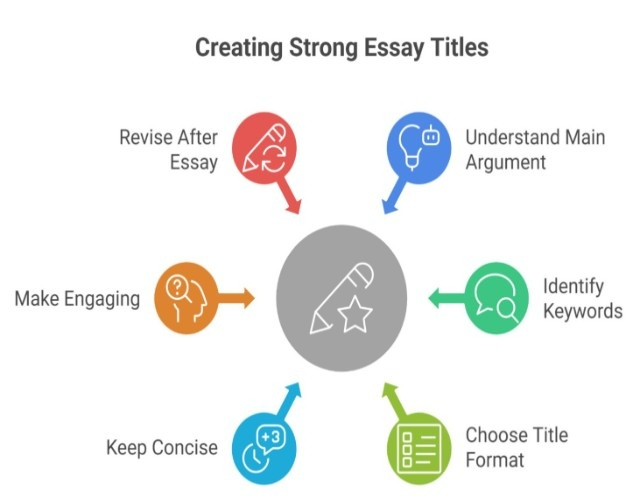
The 6-Step Title Creation Process
Follow this systematic approach to create titles that engage readers while accurately representing your content.
Step 1: Understand Your Essay's Main Argument
You cannot effectively title an essay until you understand what it argues or explores. Before writing your title, ensure you can answer these questions:
- What is my thesis statement?
- What specific claim am I making or question am I exploring?
- What's the most important takeaway readers should remember?
Example:
If your essay argues that "social media platforms undermine teenage mental health by encouraging constant comparison, disrupting sleep patterns, and replacing face-to-face social interaction," your title should reflect these specific mechanisms rather than vaguely referencing "social media effects."
Possible Title: "The Triple Threat: How Social Media Comparison, Sleep Disruption, and Social Isolation Harm Teen Mental Health"
This title directly reflects your argument's structure while making your focus immediately clear.
Step 2: Identify Key Topic Keywords
Think of keywords as the essential terms someone would search for when looking for essays like yours. These words form the foundation of your title.
How to Identify Keywords:
- List the main nouns and concepts in your thesis
- Consider what terms appear repeatedly in your essay
- Think about what words your target audience would search
- Include specific names, places, or time periods when relevant
Example:
For an essay about climate change solutions, keywords might include:
- "climate change"
- "carbon emissions"
- "renewable energy"
- "policy solutions"
- "individual action"
Keyword-Rich Title: "Beyond Carbon Offsets: Why Systemic Policy Change Outweighs Individual Climate Action"
Notice how this title incorporates multiple keywords while remaining concise and specific.
You've Done Enough. Let Us Finish It
Get an A-Worthy Essay Without the All-Nighter
No AI. No recycled papers. 100% original or your money back.
Step 3: Choose Your Title Format
Five proven title formats work for most essays. Select the format that best matches your content and purpose.
Format 1: Declarative Statement Makes a clear claim or identifies your topic directly. Examples: When to Use: Academic papers, research essays, analytical work requiring formal tone.
Format 2: Question Poses the central question your essay answers. Examples: When to Use: Exploratory essays, persuasive pieces, topics with debatable answers. Avoid for highly formal academic papers where questions seem less authoritative.
Format 3: How-To Formula Promises practical instruction or explanation. Examples: When to Use: Process analysis, explanatory essays, instructional content.
Format 4: Contrast or Comparison Highlights tension, alternatives, or relationships between concepts. Examples: When to Use: Compare and contrast essays, argumentative pieces exploring alternatives, analytical work examining relationships.
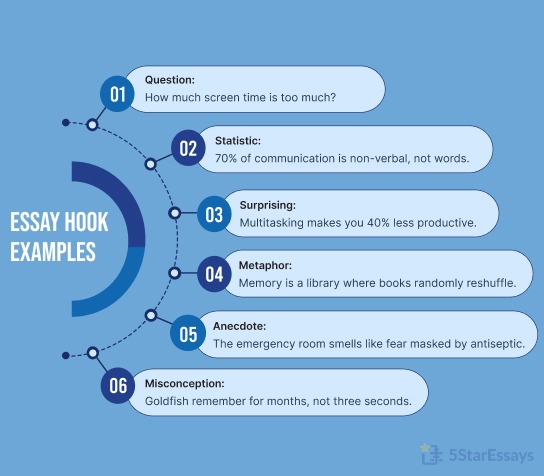
Format 5: Creative Hook Uses metaphor, vivid imagery, or unexpected phrasing to intrigue. Examples: When to Use: Personal narratives, creative essays, journalism-style academic writing. Less appropriate for highly formal research papers.
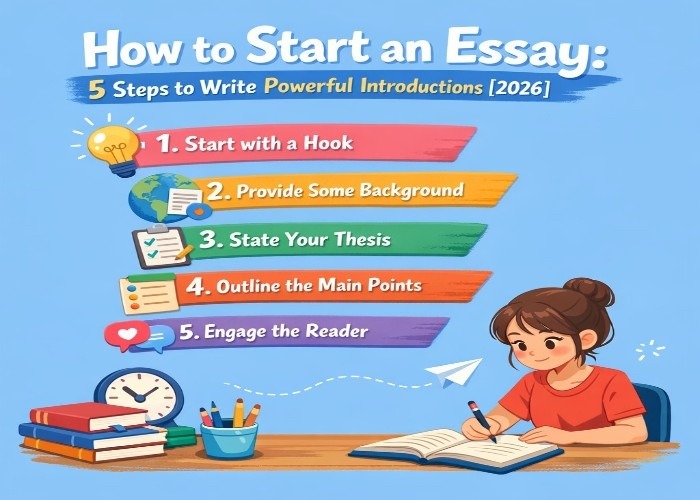
Learn more about crafting compelling opening strategies in our guide on how to start an essay.
Step 4: Keep It Concise
Strong titles range from five to twelve words—long enough to convey specific meaning but short enough to remain punchy and memorable.
Length Guidelines:
Ideal Length: 5-12 words
- Sweet spot for most academic essays
- Balances specificity with brevity
- Easy to remember and cite
Maximum Length: 15 words
- Acceptable for complex topics requiring detail
- Beyond 15 words becomes unwieldy
- Consider using a colon to create main title + subtitle
Your GPA Doesn't Have to Suffer Expert Writers. Original Essays. Guaranteed Results Trusted by 50,000+ students. Zero AI. Zero plagiarism.
Too Short (Under 5 words):
- "Social Media Effects" (too vague)
- "Climate Change Solutions" (lacks specificity)
- "Shakespeare's Women" (which women? which plays? what about them?)
Just Right (5-12 words):
- "How Instagram's Algorithm Amplifies Teenage Body Image Anxiety" (9 words)
- "Renewable Energy Policy Success in Nordic Countries: Lessons for America" (10 words + subtitle)
- "The Hidden Costs of Free Shipping: Environmental Impact of E-Commerce" (11 words)
How to Trim Excessive Length:
- Remove unnecessary articles: "The Impact of Social Media" turns into "Social Media's Impact"
- Eliminate redundant modifiers: "Various Different Types of Learning Styles" turns into "Learning Style Variations"
- Replace phrases with single words: "In spite of the fact that" turns into "Although"
Step 5: Make It Engaging
Beyond accuracy, your title should create curiosity or interest. Transform bland descriptors into compelling invitations to read.
Strategies for Engagement:
Use Specific Details:
Bland: "Technology in Education"
Engaging: "Why Khan Academy's Adaptive Learning Outperforms Traditional Math Instruction"
Incorporate Surprising Angles:
Bland: "Benefits of Exercise"
Engaging: "Why 15 Minutes of Movement Beats An Hour at the Gym"
Make Bold Claims (When Supported):
Bland: "Social Media's Influence on Politics"
Engaging: "How Facebook's Algorithm Determined the 2020 Election"
Use Strong Verbs:
Weak Verbs: "The Effect of Sleep on Academic Performance"
Strong Verbs: "How Sleep Deprivation Sabotages Student Success"
Create Contrast:
No Contrast: "Online Learning Effectiveness"
With Contrast: "Face-to-Face vs. Zoom: What Remote Learning Really Costs Students"
For more strategies on creating engaging content throughout your essay, explore our comprehensive essay writing tips guide.

Step 6: Revise After Writing
Many writers craft preliminary working titles to guide their writing but revise extensively after completing their essays. This approach ensures perfect alignment between title promises and essay delivery.
Why Revise Your Title:
Arguments Evolve: Your understanding deepens during research and writing. Early titles often reflect preliminary thinking rather than final positions.
Specificity Improves: After writing, you know exactly which examples, evidence, and arguments you actually used—allowing more precise titles.
Better Words Emerge: Your essay itself often contains the perfect phrase for your title, but you won't discover it until you've written.
Revision Process:
- Write a working title before drafting to establish direction
- Note potential phrases as you write—mark compelling sentences that might work in titles
- Draft 3-5 title options after completing your essay
- Test each option against your thesis and main arguments
- Choose the title that most accurately represents your content while remaining engaging
Example Revision:
Working Title: "Social Media's Effects on Teenagers"
After-Writing Options:
- "The Instagram Effect: How Social Comparison Destroys Teen Self-Worth"
- "Scrolling Into Depression: Social Media's Impact on Teenage Mental Health"
- "Beyond Likes: How Instagram's Algorithm Amplifies Teenage Anxiety"
Final Choice: "Beyond Likes: How Instagram's Algorithm Amplifies Teenage Anxiety" (most specific, identifies mechanism, incorporates engaging contrast)
Learn more about effective revision strategies in our guide on essay format.
You Deserve Better Than a C
Get the Essay — and the Grade — You Actually Want
Get Expert Help Now
No AI. No templates. Just essays that get results
You Deserve Better Than a C
Get the Essay — and the Grade — You Actually Want
No AI. No templates. Just essays that get results
Title Formulas That Work
Use these proven formulas as templates for creating effective titles quickly:
Formula 1: [Number] [Ways/Reasons/Steps] to [Outcome]
Examples:
- "Five Reasons Medieval Monks Preserved Western Civilization"
- "Three Ways Climate Change Threatens Global Food Security"
- "Seven Steps to Understanding Quantum Mechanics Without Math"
Best For: Expository essays, how-to guides, listicle-style academic writing
Formula 2: [Topic]: [Specific Angle or Approach]
Examples:
- "Student Debt: How Loans Reshape Career Choices for Millennials"
- "Artificial Intelligence: Examining Bias in Facial Recognition Technology"
- "Shakespeare's Hamlet: Analyzing Madness Through a Modern Lens"
Best For: Academic research, analytical essays, focused topic exploration
Formula 3: The [Adjective] [Noun]: [Explanation]
Examples:
- "The Hidden Curriculum: How Schools Teach Compliance Over Creativity"
- "The Broken Ladder: Economic Mobility in 21st Century America"
- "The Invisible Woman: Female Scientists Erased From History"
Best For: Persuasive essays, critical analysis, revealing overlooked aspects
Formula 4: [Action Verb] + [Object]: [Context or Result]
Examples:
- "Reimagining Education: What Finland's Schools Teach America"
- "Defunding the Police: Examining Alternative Public Safety Models"
- "Redesigning Cities: How Urban Planning Can Combat Climate Change"
Best For: Proposal arguments, reform-focused essays, visionary content
Formula 5: Why [Common Belief] Is Wrong
Examples:
- "Why 'Follow Your Passion' Is Terrible Career Advice"
- "Why Homework Doesn't Improve Academic Performance"
- "Why Multitasking Makes You Less Productive, Not More"
Best For: Argumentative essays challenging conventional wisdom, persuasive writing
Explore 300+ topic ideas organized by type in our comprehensive essay topics collection.
When to Write Your Title: Before or After?
The timing question has no single right answer—both approaches offer advantages.
Writing Titles Before Your Essay
Advantages:
- Provides focus and direction for your writing
- Ensures you stay on topic throughout drafting
- Helps overcome initial writer's block
- Works well when you have a clear argument before starting
Disadvantages:
- May limit exploration of unexpected ideas
- Can become inaccurate as arguments evolve
- Might constrain creativity during drafting
Best For: Timed essays, clear assignments with specific prompts, writers who need structure before producing content
Your Time Is Worth More Than This
Get Hours Back. Get a Better Essay
Zero AI. Zero plagiarism. Just expert-level writing.
Writing Titles After Your Essay
Advantages:
- Ensures perfect alignment between title and content
- Allows discovery of best phrases within your essay
- Reflects your actual argument rather than preliminary thinking
- Produces more sophisticated, accurate titles
Disadvantages:
- Requires writing without clear title direction
- Can feel aimless during initial drafting
- Adds an extra step after "completing" your essay
Best For: Complex research papers, exploratory essays, writing where arguments develop during research
The Hybrid Approach (Recommended)
Most successful writers use a combination:
- Draft a working title before writing to establish direction
- Allow flexibility as your argument develops during research and drafting
- Note potential phrases from your essay that might work as titles
- Revise comprehensively after completing your essay
- Test multiple options before selecting your final title
This approach provides structure while maintaining flexibility, producing titles that accurately represent well-developed essays.
Title Length Guidelines
How long should your essay title be? Consider these guidelines:
Ideal Length: 5-12 Words
This range works for most academic essays, balancing specificity with conciseness.
5-7 Words: Concise but specific
- "How Social Media Amplifies Political Polarization"
- "Renaissance Art's Influence on Modern Design"
- "Why College Athletes Deserve Payment"
8-12 Words: Detailed and informative
- "The Economic and Environmental Costs of Fast Fashion Production"
- "How Artificial Intelligence Is Transforming Medical Diagnosis and Treatment"
- "Gender Representation in Marvel Cinematic Universe Films: Progress and Problems"
Maximum Length: 15 Words
Beyond 15 words, titles become unwieldy and hard to remember.
Acceptable at 13-15 words: "The Impact of Social Media Influencer Marketing on Consumer Purchase Decisions Among Millennials"
Too Long (17+ words): "An Examination of the Various Ways in Which Climate Change Is Affecting Coastal Communities Around the World"
Better Version (11 words): "How Climate Change Threatens Coastal Communities in Developing Nations"
Using Colons for Subtitles
Colons allow longer titles by creating two distinct parts: main title (creative/engaging) + subtitle (specific/descriptive).
Format: [Engaging Main Title]: [Specific Subtitle]
Examples:
- "Digital Ghosts: How Social Media Preserves the Dead"
- "The Homework Myth: Why After-School Assignments Harm More Than Help"
- "Sleeping Giants: The Untapped Potential of America's Community Colleges"
Character Count Considerations:
Most academic databases and citation formats handle titles up to 200-250 characters comfortably. Beyond this, titles may be truncated in search results or citations.
Formatting Essay Titles: MLA, APA, and Chicago
Different citation styles have specific formatting rules for titles. Follow the guidelines required for your assignment.
MLA Format Title Rules
MLA format titles follow these conventions:
- Use title case: Capitalize the first word, last word, and all major words (nouns, verbs, adjectives, adverbs)
- Lowercase articles (a, an, the), coordinating conjunctions (and, but, or), and prepositions of four or fewer letters (in, on, at, to) unless they're the first or last word
- Italicize titles of longer works: books, journals, films, plays
- Use quotation marks for shorter works: articles, essays, short stories, poems
- Center the title on your first page (no separate title page unless requested)
- No bold, underline, or special formatting for your essay's title
Examples:
- Book Title: The Great Gatsby
- Article Title: "The Impact of Climate Change on Biodiversity"
- Your Essay Title: Social Media's Role in Modern Political Movements
Imagine Submitting Without the Panic
Your Essay. Written by Pros. Delivered on Time
Hand It Off to Experts
100% original. 100% human. Satisfaction guaranteed
Imagine Submitting Without the Panic
Your Essay. Written by Pros. Delivered on Time
100% original. 100% human. Satisfaction guaranteed
APA Format Title Rules
APA format titles follow these conventions:
- Use sentence case: Capitalize only the first word of the title and subtitle, plus proper nouns
- Italicize titles of longer works: books, journals, reports
- Use quotation marks for shorter works in text but not in reference lists
- Create a separate title page with: title (bold), author name, institutional affiliation, course, instructor, date
- Title appears again at the top of page 2 (first page of text) without bold
Examples:
- Book Title: The psychology of influence
- Journal Article: Personality traits and leadership effectiveness
- Your Essay Title Page: The relationship between social media use and teenage depression
Chicago Style Format Title Rules
Chicago style format titles follow these conventions:
- Use title case: Similar to MLA, capitalize all major words
- Italicize titles of longer works: books, journals, newspapers
- Use quotation marks for shorter works: articles, chapters, essays
- Title page includes: title (1/3 down the page), author name (centered, lower on page), institutional information, date (bottom of page)
- More flexibility for creative title formatting in humanities work
Examples:
- Book Title: To Kill a Mockingbird
- Article Title: "The Effects of Social Media on Society"
- Your Essay Title: The Evolution of Gender Roles in Victorian Literature
For comprehensive guidance on formatting your entire essay, including title pages and citations, see our complete essay format guide.

50+ Essay Title Examples by Type
Learn from these examples organized by essay type. Notice how effective titles balance specificity with engagement.
Argumentative Essay Titles
- "Why the Voting Age Should Be Lowered to 16"
- "The Case for Universal Basic Income in Automated Economies"
- "School Uniforms Suppress Individual Expression Without Improving Behavior"
- "Why College Athletes Deserve Compensation Beyond Scholarships"
- "The Death Penalty: Examining Justice, Deterrence, and Morality"
Persuasive Essay Titles
- "Why You Should Delete Your Social Media Accounts"
- "The Urgent Need for Climate Action: Why We Can't Wait"
- "Why Renewable Energy Is America's Economic Future"
- "Adopting Shelter Animals: The Ethical and Practical Choice"
- "Why Financial Literacy Should Be Required in High Schools"
Expository Essay Titles
- "The Water Cycle: Understanding Earth's Most Important System"
- "How Vaccines Train the Immune System Without Causing Disease"
- "The Electoral College Explained: History, Function, and Controversy"
- "Understanding Depression: Brain Chemistry, Genetics, and Environmental Factors"
- "How Blockchain Technology Works and Why It Matters"
Narrative Essay Titles
- "The Summer I Discovered Who I Really Was"
- "Finding Home in a Country That Wasn't Mine"
- "The Day Everything Changed: My First Day of College"
- "Learning to Fail: How Rejection Taught Me Resilience"
- "Between Two Worlds: Growing Up Bicultural in America"
Compare and Contrast Essay Titles
- "Online Education vs. Traditional Classrooms: Effectiveness and Accessibility"
- "Capitalism vs. Socialism: Economic Systems in Theory and Practice"
- "Ancient Rome and Modern America: Parallels in Empire and Democracy"
- "Nature vs. Nurture: Disentangling Influences on Human Development"
- "Traditional Publishing vs. Self-Publishing: Pros, Cons, and the Future"
Cause and Effect Essay Titles
- "The Ripple Effects of Social Media on Teenage Mental Health"
- "How Student Loan Debt Reshapes Career Choices and Life Decisions"
- "The Consequences of Deforestation: Climate, Biodiversity, and Indigenous Communities"
- "How Childhood Poverty Affects Educational Outcomes and Future Earnings"
- "The Domino Effect: How One Merger Transformed the Airline Industry"
Your GPA Doesn't Have to Suffer
Expert Writers. Original Essays. Guaranteed Results
Save My Grade Now
Trusted by 50,000+ students. Zero AI. Zero plagiarism.
Your GPA Doesn't Have to Suffer
Expert Writers. Original Essays. Guaranteed Results
Trusted by 50,000+ students. Zero AI. Zero plagiarism.
College Essay Titles
- "Finding My Voice Through Music Therapy"
- "The Day I Realized Perfect Wasn't Perfect"
- "From Failure to Founder: How My Failed Startup Taught Me Success"
- "Between Cultures: What Being a Third Culture Kid Taught Me"
- "Why I Want to Be a Doctor: Lessons from My Grandfather's Illness"
Essay Titles About Books
- "Symbolism and Reality in The Great Gatsby"
- "Female Agency in Jane Austen's Pride and Prejudice"
- "The American Dream Deferred: Reading Raisin in the Sun Today"
- "Madness and Method in Shakespeare's Hamlet"
- "Power and Corruption in George Orwell's Animal Farm"
Scholarship Essay Titles
- "How My Mother's Sacrifice Inspired My Nursing Career"
- "From Refugee to Researcher: My Journey Through Science"
- "Breaking Barriers: First-Generation Student Pursuing Engineering"
- "Why Service Defines My Future: Community Leadership and Social Work"
- "Turning Adversity Into Achievement: How Poverty Shaped My Values"
Research Paper Titles
- "Artificial Intelligence in Healthcare: Applications, Benefits, and Ethical Concerns"
- "The Impact of Microplastics on Marine Ecosystems and Human Health"
- "Gender Wage Gap Persistence: Examining Structural and Cultural Factors"
- "Quantum Computing: Principles, Applications, and Future Potential"
- "The Opioid Epidemic: Origins, Consequences, and Policy Solutions"
Essay Titles About Yourself
- "How Losing My Father Taught Me to Find Myself"
- "The Immigrant Experience: My Family's Journey to America"
- "From Introvert to Leader: Discovering Confidence Through Theater"
- "Dyslexia Didn't Define Me—It Refined Me"
- "The Athlete, The Injury, The Comeback: My Resilience Story"
For more topic inspiration across all types, explore our collection of essay topics featuring 300+ ideas.
Bad vs. Good Essay Titles: What Makes the Difference
Understanding what separates weak titles from strong ones helps you avoid common pitfalls.
| Bad Essay Title | Why It Fails | Good Essay Title |
|---|---|---|
| "Essay about Cats" | Too vague, no specific focus, lacks creativity | "Paws and Purrs: How Domestic Cats Manipulate Human Behavior" |
| "Climate Change" | Overly broad, doesn't indicate specific focus or argument | "Melting Point: How Arctic Ice Loss Accelerates Global Climate Change" |
| "My Trip to Europe" | Generic, lacks unique perspective or specific aspect | "Finding Myself in Foreign Places: How Solo Travel Through Europe Transformed My Worldview" |
| "Social Media is Bad" | Simplistic, informal language, no nuance | "The Attention Economy: How Social Media Platforms Profit From User Addiction" |
| "Technology in Schools" | Vague about which technology and what aspect | "Why Interactive Whiteboards Fail While Tablets Succeed in Elementary Classrooms" |
| "An Analysis of Shakespeare" | Which play? What analysis? Too broad | "Madness as Method: Analyzing Hamlet's Feigned Insanity as Political Strategy" |
What Makes Good Titles Work:
- Specificity: Names exact topics, approaches, or arguments
- Clarity: Readers immediately understand the focus
- Engagement: Creates curiosity without being misleading
- Appropriate Tone: Matches essay formality and purpose
- Conciseness: Communicates effectively in 5-12 words
- Originality: Stands out from generic alternatives
Common Title Mistakes to Avoid
Even experienced writers make predictable title mistakes. Watch for these pitfalls:
Mistake 1: Using Vague, Generic Language
Problem: Titles like "Technology Today" or "Issues in Education" could apply to thousands of essays.
Solution: Add specific details. Instead of "Technology Today," write "How Smartphone Addiction Reshapes Teenage Social Development."
Mistake 2: Making Titles Too Long
Problem: "An In-Depth Examination of the Various Ways in Which Social Media Platforms Influence Political Opinion Formation Among Young Adults"
Solution: Trim to essentials: "How Social Media Shapes Young Voters' Political Views"
Mistake 3: Including Unnecessary Questions Marks
Problem: Adding question marks to titles that aren't genuine questions: "The Impact of Climate Change?"
Solution: If it's not a real question, don't use a question mark. "Climate Change's Impact on Coastal Communities" states the topic clearly.
Mistake 4: Writing Titles Before Developing Arguments
Problem: Preliminary titles often misrepresent final arguments because understanding evolves during writing.
Solution: Use working titles during drafting, but revise comprehensively after completing your essay.
Mistake 5: Using Clichés or Overused Phrases
Problem: "Since the Dawn of Time" or "In Today's Society" signal unoriginal thinking.
Solution: Find fresh language that specifically describes your topic rather than relying on tired phrases.
Mistake 6: Being Misleading or Clickbait-y
Problem: "The One Simple Trick That Solves Climate Change" over-promises and undermines credibility.
Solution: Be accurate. Your title is a contract—deliver what you promise.
Mistake 7: Ignoring Format Requirements
Problem: Using italics for your own essay title in MLA format (incorrect) or forgetting sentence case in APA format.
Solution: Review style guide requirements before finalizing your title format.
For more writing mistakes to avoid and strategies to overcome them, explore our guide on essay writing tips.
Your Essay. Done Right. Delivered on Time.
Tell us what you need — our experts handle the research, writing, and formatting.
- Original work with zero plagiarism
- Fast turnaround — even 3-hour deadlines
- Expert writers across all subjects
- Free revisions included
No AI shortcuts. Just expert-level quality.
Get Started TodayTitle Testing Checklist
Before finalizing your title, run it through this quick checklist:
- Accuracy: Does it honestly represent my essay's content and argument
- Specificity: Could this title apply to dozens of other essays, or is it unique to mine
- Length: Is it 5-12 words (or under 15 with good reason)
- Clarity: Will readers immediately understand my topic and focus
- Engagement: Does it create interest or curiosity
- Format: Have I followed MLA/APA/Chicago requirements correctly
- Keywords: Does it include essential search terms for my topic
- Tone: Does it match my essay's formality level?
If you can answer "yes" to all eight questions, your title is strong. If not, revise the specific elements that need work.
For comprehensive guidance on structuring your entire essay effectively, see our complete essay writing guide.
Final Thoughts
Creating effective essay titles is both art and science—balancing creativity with clarity, specificity with conciseness, engagement with accuracy. The six-step process provides a reliable framework, but developing strong title-writing skills takes practice. Pay attention to titles in your reading—academic journals, magazines, newspapers, books—noting what captures your attention and why.
Remember that your title serves multiple audiences. Your instructor evaluates whether it accurately represents your content. Future readers searching databases need keywords to find your work. Everyone encountering your essay deserves a title that clearly communicates your focus while sparking interest.
The best titles honestly represent well-developed essays. Don't try to compensate for weak content with flashy titles—instead, develop strong arguments and let your title accurately showcase them. When your essay delivers on your title's promise, readers trust your work and engage more deeply with your ideas.
For comprehensive guidance on every aspect of essay writing, from brainstorming through final revision, explore our complete essay writing guide, where you'll find detailed resources on structure, research, and development.