Understanding a 500 Word Essay
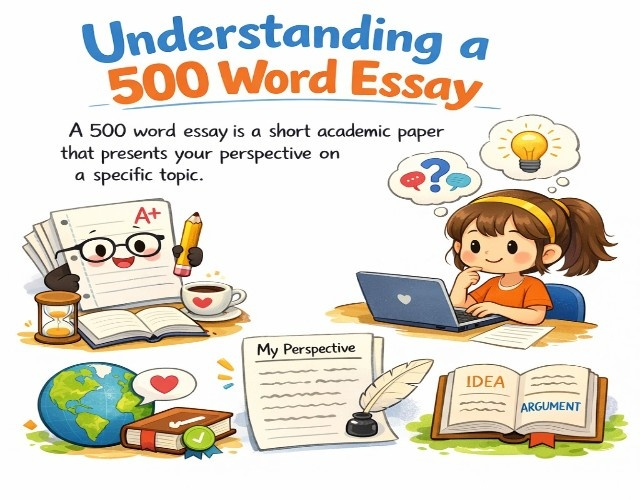
A 500 word essay is a short academic paper that presents your perspective on a specific topic. Think of it as the essay training wheels; it teaches you fundamental writing skills without overwhelming you with length requirements.
How long is a 500 word essay?
| Single-spaced: 1 page |
| Double-spaced: 2 pages |
| Paragraphs: Usually 5 (intro, 3 body, conclusion) |
| Time needed: 1 to 2 hours for most students. |
Any essay type can use the 500 word format The length constraint just means you need to be more selective about what you include. |
Why Teachers Love 500 word Essay Format
Teachers assign 500 word essays because they force you to be concise. You can't ramble or pad your writing, every sentence needs to contribute to your main point. This teaches you to think critically about what's actually important versus what's just filler.
Short Essay, Tight Deadline? We’ve Got You Covered
Reliable 500 Word Essay Writing from Experienced Professionals
- Fast turnaround without sacrificing quality or accuracy
- Essays tailored to your subject, rubric, and academic level
- Logical flow and polished language within strict word counts
- Confidential, stress free support from start to finish
Whether you’re short on time or ideas, our essay writing service delivers high quality 500-word essays you can submit with confidence.
Order NowThe 5 Step Process for 500 Word Essays
Stop trying to write perfectly from start to finish. Here's the process that gets you done faster with better results:
Step 1: Plan Your 500 word Essay Structure (10 minutes)
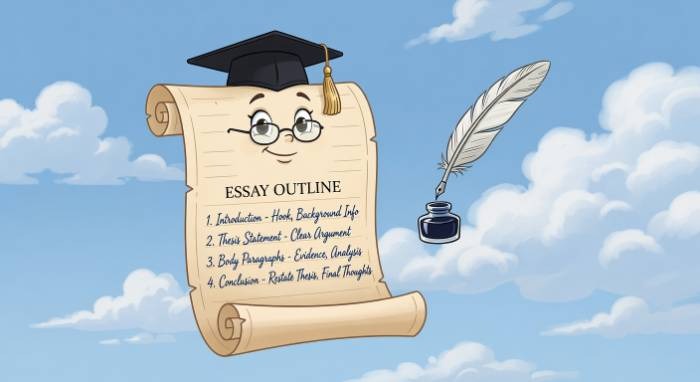
Before writing anything, map out your essay structure. An outline prevents writer's block and keeps you on track. For our complete guide on building effective outlines, check out our essay outline guide with templates you can customize.
Your Basic 5 Paragraph Structure for 500 word essay
Topic: [Your essay topic]
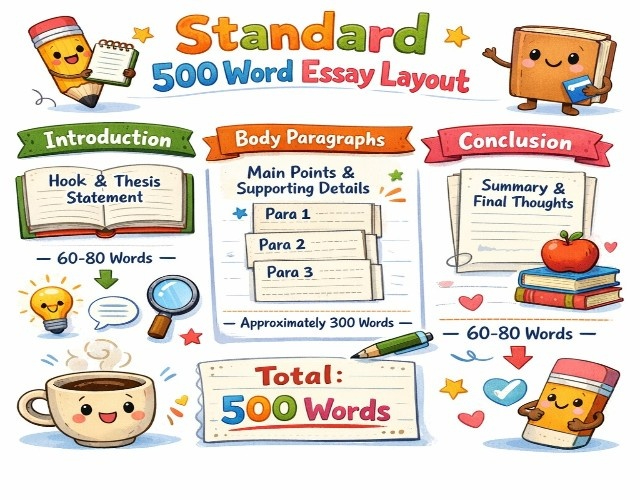
Introduction (100 words)
- Hook sentence
- Background context
- Thesis statement
Body Paragraph 1 (100 words)
- Topic sentence
- Supporting evidence/example
- Explanation
Body Paragraph 2 (100 words)
- Topic sentence
- Supporting evidence/example
- Explanation
Body Paragraph 3 (100 words)
- Topic sentence
- Supporting evidence/example
- Explanation
Conclusion (100 words)
- Restate thesis
- Summarize main points
- Final thought
This outline divides your 500 words evenly, 100 words per paragraph. You can adjust slightly (like 80 words intro, 120 for a body paragraph), but this gives you a solid starting framework.
Step 2: Write an Attention Grabbing 500 Essay Introduction (100 words)
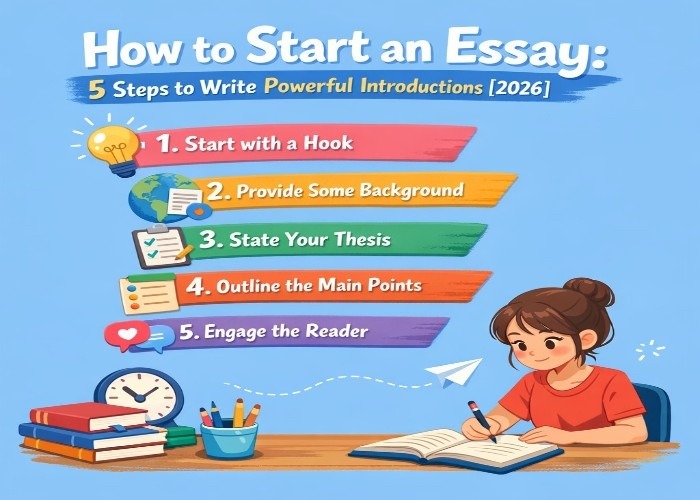
Your intro needs to do three things: hook readers, provide context, and present your thesis. That's it.
A. Start With a Hook
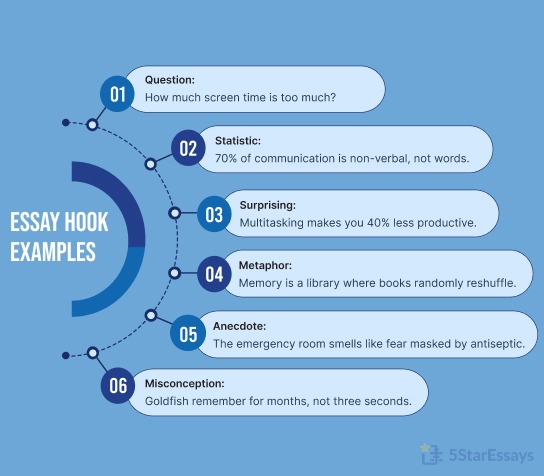
A hook is your opening sentence designed to grab attention. Want 200+ proven hook strategies? Our comprehensive hook examples guide breaks down exactly which hooks work for different essay types, questions, statistics, quotes, anecdotes, and bold statements.
B. Good hooks for 500 word essays
| Question: "What would you do if you only had 24 hours to live?" |
| Statistic: "Over 70% of high school students report feeling stressed about homework." |
| Bold statement: "Social media is destroying genuine human connection." |
C. Add Background + Thesis
After your hook, give 2 to 3 sentences of context that readers need to understand your topic. Then close with your thesis statement, the main argument you'll prove in your essay.
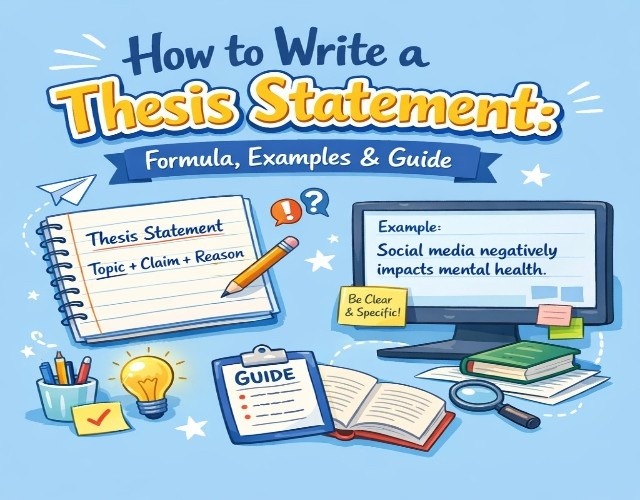
| Struggling to craft a thesis that really works? Our thesis statement guide shows the exact formula and examples of strong thesis statements in action |
Example Introduction:
What would you do if social media disappeared tomorrow?
[Hook] For most teenagers, this feels like an impossible scenario, we've grown up with constant digital connection shaping how we communicate, learn, and form relationships. [Background] However, while social media provides undeniable benefits, its negative effects on teenage mental health, academic performance, and authentic relationships far outweigh the advantages. [Thesis]
Step 3: Develop 500 word essay Body Paragraphs (300 words total)
Each body paragraph follows the same pattern: topic sentence, evidence, explanation. This structure keeps your paragraphs focused and prevents rambling.
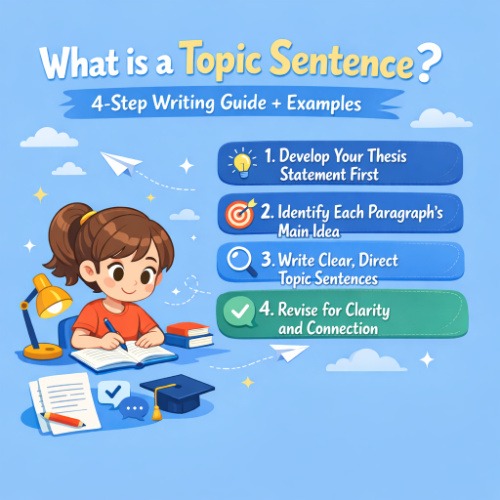
A. Topic Sentences Matter
Start each paragraph with a clear topic sentence stating what that paragraph will discuss. Think of it as a mini thesis for the paragraph. Our detailed guide on what is a topic sentence is shows you how to write topic sentences that guide readers through your argument.
B. Body Paragraph Formula:
|
Example Body Paragraph:
Social media directly contributes to increased anxiety and depression among teenagers. [Topic sentence] According to a 2024 study by the American Psychological Association, teens who spend more than 3 hours daily on social media platforms show 60% higher rates of depressive symptoms compared to peers with limited usage. [Evidence] This correlation exists because constant exposure to curated, idealized versions of others' lives creates unrealistic expectations and diminishes self-worth when teenagers inevitably fail to measure up to these impossible standards. [Explanation]
C. Keep Paragraphs Connected
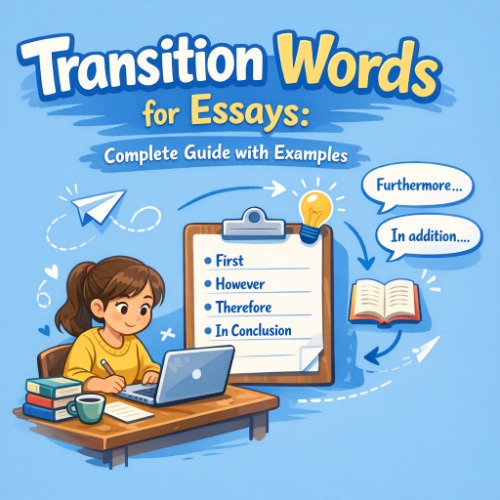
Use transition words to connect your paragraphs smoothly. Our guide to transition words for essays provides a multitude of transitions organized by purpose, addition, contrast, cause-effect, emphasis, and more.
Step 4: Write Your 500 Word Essay Conclusion (100 words)
Your conclusion wraps everything up. Restate your thesis in different words, summarize your main supporting points, and leave readers with something to think about.
What NOT to do
- Don't just copy your intro word for word
- Don't introduce new arguments or evidence
- Don't end with generic phrases like "In conclusion, as you can see..."
What TO do
- Synthesize your points into a final insight
- Emphasize why your argument matters
- End with a thought provoking statement or call to action
| For proven conclusion strategies that actually work, see our complete guide on how to write a conclusion with examples from every essay type. |
Example Conclusion:
Clearly, social media's impact on teenage mental health cannot be ignored. [Restatement] The evidence demonstrates that excessive social media use correlates with anxiety, poor academic performance, and shallow relationships. [Summary] As we move forward, teenagers must recognize that authentic connections require stepping away from screens and engaging with the real world; our mental health depends on it. [Final thought]
Step 5: Edit and Proofread Your 500 Essay (15 minutes)
Don't skip this step. Reading your essay aloud helps you catch awkward phrasing, grammar mistakes, and unclear sentences that your eyes miss when reading silently.
Quick Editing Checklist
|
Pro Tip: Understanding different types of sentences, simple, compound, complex, and compound complex, helps you vary your sentence structure and create more engaging prose. Mix short, punchy sentences with longer, complex ones to maintain reader interest.
Standard 500 Word Essay Layout
Unless your teacher specifies otherwise, follow these formatting guidelines:
A. Page Setup:
| Font: Times New Roman, Arial, or Calibri |
| Size: 12-point |
| Margins: 1 inch on all sides |
| Spacing: Double-spaced throughout |
| Alignment: Left-aligned text |
| Indent:0.5 inches for first line of each paragraph |
B. Citation Style:
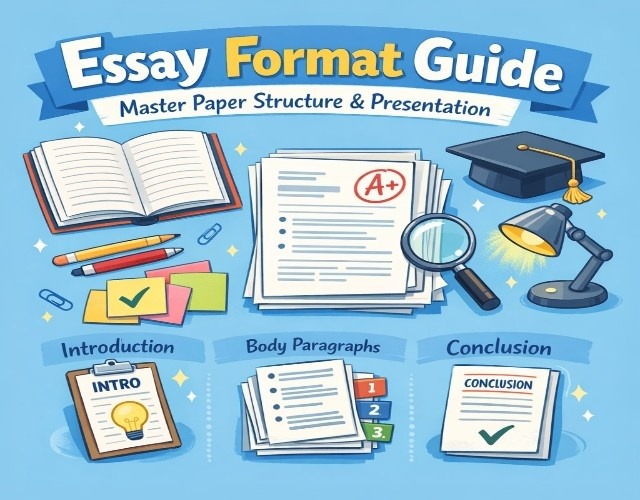
If you're citing sources, confirm which style your teacher requires: MLA, APA, or Chicago. Each has different rules for citations and reference pages. Our comprehensive essay format guide covers all three styles with specific examples showing proper formatting.
C. Title Requirements:
Most 500 word essays need titles unless you're writing in class or for a test. Want to know how to create titles that actually work? Check out our guide on how to title an essay with 50+ examples and proven formulas for every essay type.
Time Saving Writing Tips for 500 Word Essays
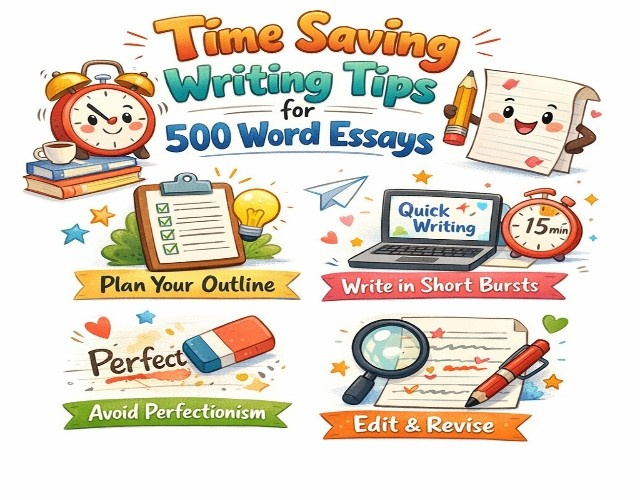
1. Choose Narrow, Focused Topics
The biggest mistake? Picking topics too broad for 500 words. "Climate change" is too big. "How my school's recycling program reduces waste" is perfect. Narrow topics let you provide actual detail instead of vague generalizations.
2. Use the 20-70-10 Rule
Spend 20% of your time planning (outlining, organizing thoughts), 70% drafting, and 10% editing. Most students do the opposite, they skip planning, agonize over drafting, and rush editing. This backwards approach wastes time and produces weaker essays.
3. Don't Pad with Fluff
Teachers spot filler instantly. If you're under the word count, don't add meaningless phrases like "due to the fact that" or "in today's modern society." Instead, develop existing points with more specific examples or add relevant evidence.
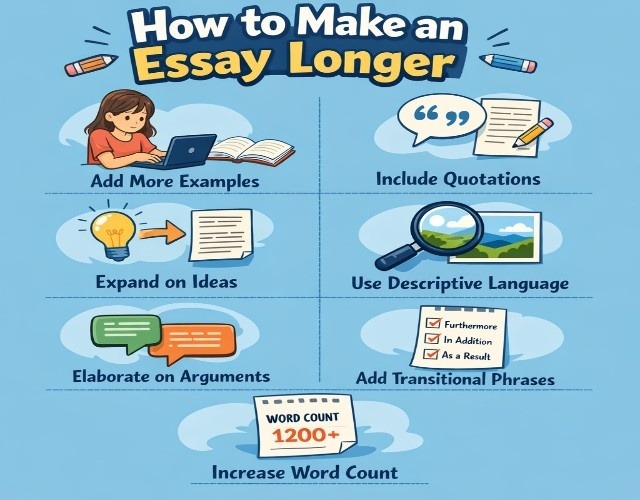
If you're consistently coming up short on word count and need to add substance (not fluff), our guide on how to make an essay longer shows you legitimate expansion strategies teachers appreciate.
4. Master Essential Writing Conventions
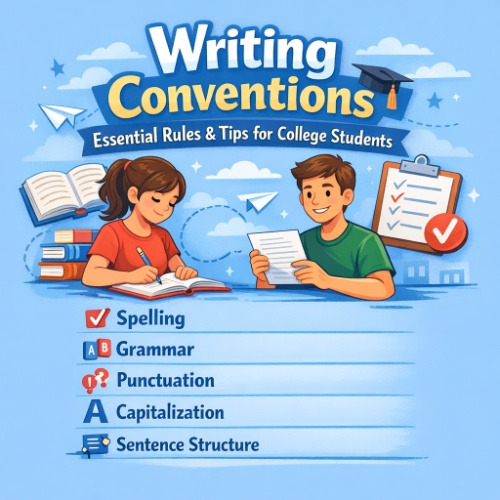
Understanding basic writing conventions, grammar rules, punctuation standards, and capitalization guidelines prevents distracting errors that tank your grade. Clean, error-free writing lets your ideas shine through.
Struggling to Say More in Fewer Words?
Expert Essay Writing Designed for Short Assignments
- Help selecting and narrowing the right topic for a 500-word limit
- Strong thesis statements that drive concise, impactful arguments
- Proper formatting and citation according to your academic style
- Editing and proofreading to ensure clarity and precision
Don’t let word limits hold you back, let our writing professionals craft a clear, compelling 500-word essay for you.
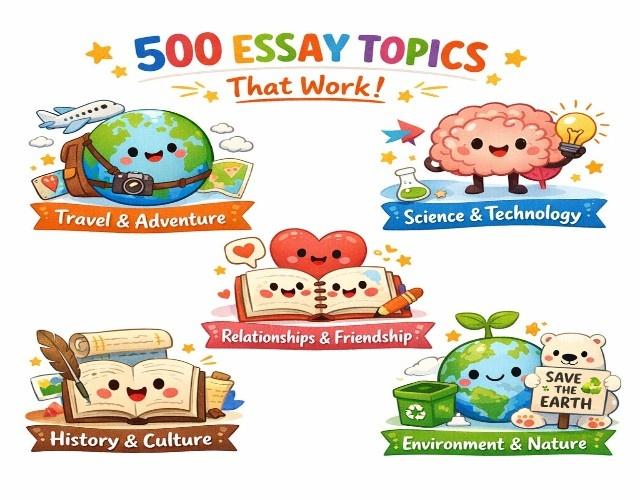
Order Now500 Word Essay Topics That Work
Need topic ideas? Here are specific, focused options perfect for 500 word essays
Argumentative 500 Word Essay Topics
- Should high schools start later to improve student sleep?
- Is year round schooling better than traditional schedules?
- Should students be allowed to use phones during lunch?
Want more ideas? Browse our argumentative essay topics to discover engaging topics that make your argument stronger.
Personal Narrative 500 Word Essay Topics
- The moment I learned failure isn't permanent
- How volunteering at the animal shelter changed my perspective
- My most embarrassing moment that taught me confidence
Looking for inspiration? Check out our narrative essay topics for strong, research ready ideas that stand out
Descriptive 500 Word Essay Topics
- The person who influenced my life most (and why)
- My favorite place to think and reflect
- The smell that instantly transports me to childhood
Want fresh ideas? Browse our descriptive essay topics for clear, informative, and well-structured essays
Expository 500 Word Essay Topics
- How social media algorithms shape what teenagers see
- Why teenagers procrastinate and how to stop
- The science behind why we remember some things but forget others
Still unsure what to write? Our expository essay topics help you explain ideas clearly and effectively.
Personal Experience Topics
- The best advice someone gave you.
- How a teacher influenced your thinking.
- An experience that changed your perspective; Your most memorable school project.
School and Education Topics
- Why homework should/shouldn't be required.
- Benefits of having a study group.
- How social media affects student focus.
- The importance of extracurricular activities.
- Why financial literacy should be taught in schools.
Social Issues Topics
- The impact of peer pressure on teenagers.
- How to handle online bullying.
- Why volunteering benefits communities.
- The effects of part-time jobs on students.
- How social media affects friendships.
Technology Topics
- Should phones be allowed in classrooms?
- Benefits and drawbacks of online learning.
- How technology has changed communication.
- The impact of video games on behavior.
- Why digital privacy matters to teenagers.
Health and Lifestyle Topics
- The importance of sleep for students.
- How to manage stress during exams.
- Why breakfast matters for school performance.
- The effects of energy drinks on teenagers.
- Benefits of playing team sports.
Environmental Topics
- Simple ways students can reduce waste.
- Why recycling programs work in schools.
- The impact of fast fashion on the environment.
- How to conserve energy at home.
- Benefits of walking or biking to school.
Current Events Topics
- How recent news affects your community.
- The role of journalism in society.
- Why voting matters for young adults.
- How to identify fake news online.
- The importance of fact-checking information.
Arts and Entertainment Topics
- How music affects mood and productivity.
- The value of reading for pleasure.
- Why art programs matter in schools.
- How movies influence teenage culture.
- Benefits of learning a musical instrument.
Career and Future Topics
- What you want to study in college and why.
- The importance of time management skills.
- How to choose between college and trade school.
- Why internships help career preparation.
- The value of learning a second language.
Ethical Dilemmas Topics
- Is it wrong to use essay writing services?
- Should athletes be paid for college sports?
- The ethics of sharing homework answers.
- When is it okay to break a promise?
- Should schools monitor student social media?
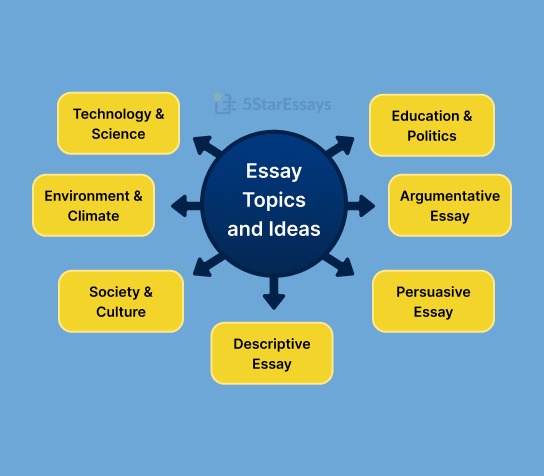
Want 300+ more topic ideas organized by essay type? Check out our massive collection of essay topics with options for every subject and grade level.
Common Mistakes to Avoid in 500 Word Essays
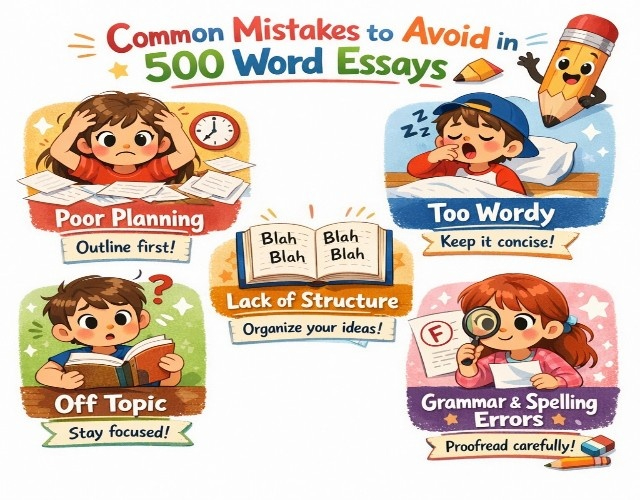
High school students frequently make these errors when writing 500 word essays. Avoiding these mistakes improves your grades and makes writing easier.
- Writing without an outline: Starting to write without planning leads to disorganized essays that wander off topic. Even a simple 5-minute outline dramatically improves essay structure and keeps you focused.
- Choosing topics that are too broad: Trying to explain "World War II" or "the Internet" in 500 words results in superficial essays that lack meaningful detail. Narrow your topic to something specific you can thoroughly address.
- Using filler content to reach the word count: Teachers recognize padding immediately. Sentences like "throughout all of human history" or "in today's modern society" waste words without adding value. Every sentence should contribute meaningful content.
- Forgetting the thesis statement: Some students write introductions that set up the topic but never clearly state their main argument. Your thesis statement should appear as the last sentence of your introduction paragraph.
- Making paragraphs uneven in length: When one body paragraph contains 150 words, and another has only 50 words, your essay feels unbalanced. Aim for approximately equal paragraph lengths to maintain flow and structure.
- Introducing new information in the conclusion: Your conclusion should only summarize and reflect on points already made in the body. Don't bring up new evidence, examples, or arguments in the final paragraph.
- Ignoring word count requirements: Submitting a 350-word essay when 500 words were required, or turning in 700 words when the limit was 500, suggests you didn't follow instructions. Stay within 10% of the required word count.
- Skipping the proofreading step: Even a well-argued essay loses credibility when filled with spelling errors, grammatical mistakes, and typos. Always reserve 10 to 15 minutes for careful proofreading before submission.
Finding it hard to write a 500 word essay? Let our professional essay writing service handle it with expert precision.
500 Word Essay Example
Here's a complete 500 word essay example demonstrating proper structure, formatting, and balanced paragraph distribution. Use this as a model for your own essays.
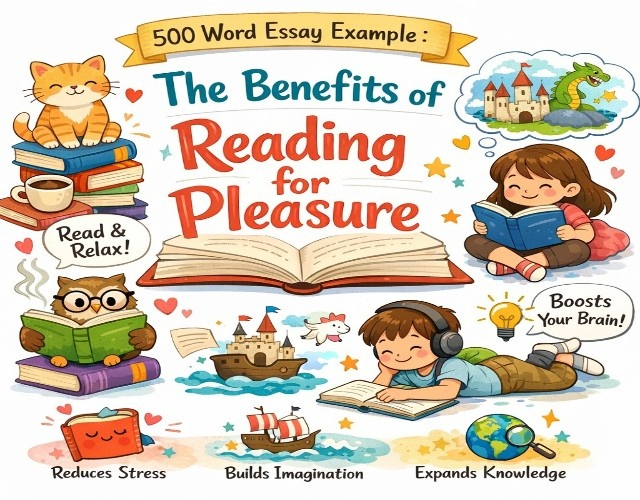
The Benefits of Reading for Pleasure
Many teenagers view reading as a chore assigned by English teachers rather than an enjoyable activity. However, reading for pleasure, choosing books based on personal interest rather than academic requirement, offers significant benefits that extend far beyond improved grades. Regular recreational reading enhances vocabulary, reduces stress, and develops critical thinking skills that prove valuable throughout life.
Reading diverse books naturally expands vocabulary in ways that vocabulary lists and flashcards cannot match. When readers encounter unfamiliar words in context, they unconsciously absorb new terms along with nuanced meanings and appropriate usage. A student who reads mystery novels learns legal terminology, while someone reading science fiction absorbs technical language. This organic vocabulary development feels effortless compared to memorizing definitions, and the words stick because they're connected to engaging stories rather than isolated study sessions.
Beyond academic benefits, reading for pleasure provides an effective stress relief method for busy teenagers. Immersing yourself in a compelling story offers mental escape from the pressures of school, social drama, and future planning. Research shows that reading reduces stress levels more effectively than listening to music or taking a walk. The focused attention required for reading forces your mind away from anxious thoughts, while engaging narratives provide temporary relief from real-world concerns. Even 20 minutes of daily pleasure reading can significantly improve mood and reduce anxiety.
Perhaps most importantly, recreational reading develops critical thinking skills that apply across all academic subjects and real-life situations. Following complex plots requires readers to track multiple storylines, remember character relationships, and predict future developments based on subtle clues. These same analytical skills transfer directly to understanding historical events, solving math problems, and evaluating arguments in persuasive essays. Students who read regularly for enjoyment demonstrate stronger analytical abilities than peers who only read assigned materials, because they've practiced these skills voluntarily for hours beyond what classroom requirements demand.
The benefits of reading for pleasure clearly extend beyond entertainment value. Regular readers develop richer vocabularies through natural word exposure, experience genuine stress relief through mental engagement, and strengthen critical thinking abilities through constant practice with complex narratives. Making time for recreational reading, even just 20 to 30 minutes daily, pays dividends in academic performance, emotional wellbeing, and cognitive development. The challenge for today's teenagers isn't finding good books to read; it's prioritizing reading time in schedules packed with homework, activities, and social media. Those who make reading a daily habit quickly discover it's not a luxury but an investment in personal growth.
Downloadable Resources for 500 Word Essay
Need Help Writing a Perfect 500 Word Essay?
Professional Writing Support That Gets Straight to the Point
- Custom written 500 word essays that match your topic and guidelines
- Clear structure with a strong introduction, body, and conclusion
- Concise arguments without filler or unnecessary content
- 100% original, plagiarism-free work delivered on time
When every word matters, our expert writers help you submit a focused, well written 500 word essay with confidence.
Order NowReady to Write Your Best 500 Word Essay?
You've now got the complete roadmap: outline your 5 paragraph structure, write an engaging introduction with a strong hook and clear thesis, develop three focused body paragraphs with evidence and explanation, craft a conclusion that synthesizes your argument, and edit carefully for clarity and errors.
The 500 word essay might seem intimidating at first, but it's actually one of the most manageable formats you'll write. Follow this process, focus on one strong argument with solid supporting points, and you'll finish faster than you expected.
Use the complete essay writing guide, steps, examples, and quick tips in this guide to build confidence and write stronger essays in less time.


-20154.jpg)