-19329.jpg)
Citation Style Guide: What are These? and Why do they Matter?
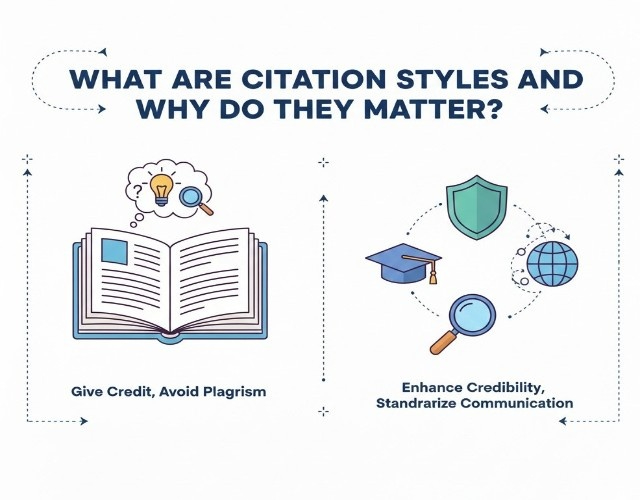
Citation styles are formatting systems that dictate exactly how you credit sources. They specify author order, punctuation, title formatting, date placement, and page numbers in both in-text citations and reference lists, helping students decide which citation style to use for different academic assignments.
Every field developed preferred styles for specific reasons. Psychology needs current research, so APA emphasizes publication dates. Literature professors need exact page references for textual analysis, making MLA's author-page format perfect. Historians want detailed source context, which Chicago's footnotes provide.
Importance of Citation Styles: Why It Matters Beyond Avoiding Plagiarism
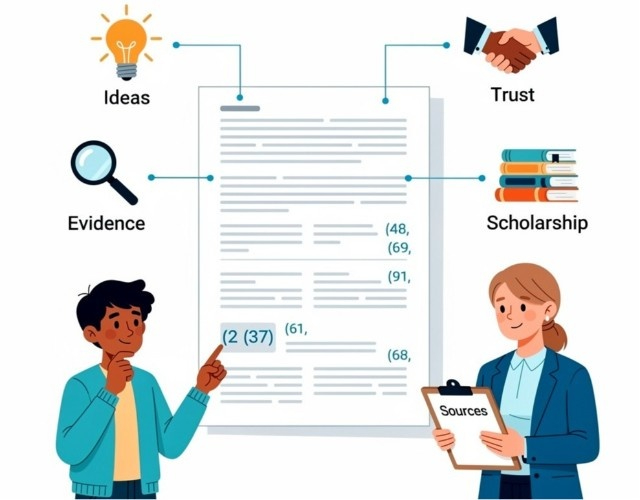
Citations let readers verify your research and locate original sources. They position your work within academic conversations and demonstrate engagement with existing scholarship. They're also your proof that ideas came from credible sources, not random websites.
All styles share core elements, author, date, title, and source location, but differ dramatically in presentation. Some use parenthetical citations, others use numbered references, and some use footnotes. Understanding these patterns helps you adapt when switching between classes.
The consequences of citation errors are real. Minor formatting mistakes cost assignment points. Missing citations trigger plagiarism investigations that jeopardize your academic career. Professional researchers face journal rejection for citation problems. Published work with citation issues damages credibility permanently.
In-Text Citations Confusing You? We'll Get Them Perfect
Complete Papers Written, Researched, and Cited According to Your Exact Style Requirements
- Every source cited perfectly in your required style
- Get comprehensive citations that meet standards
- Delivered on time, guaranteed
- 100% human-written, zero AI
Free revisions until you're 100% satisfied.
Order NowEssential Citation Elements
Every citation style requires the same core information, just formatted differently. Understanding these universal elements helps you gather details while researching.
1. Author Information
- Full legal name (as published)
- Number of authors (formatting changes for multiple)
- Organization name (if no individual author)
- Editor names (for edited collections)
2. Publication Date
- Year (always required)
- Month and day (for newspapers, websites, magazines)
- Access dates (for online sources that might change)
3. Title Information
- Article/chapter title (specific work)
- Journal/book title (larger container)
- Website name (for online sources)
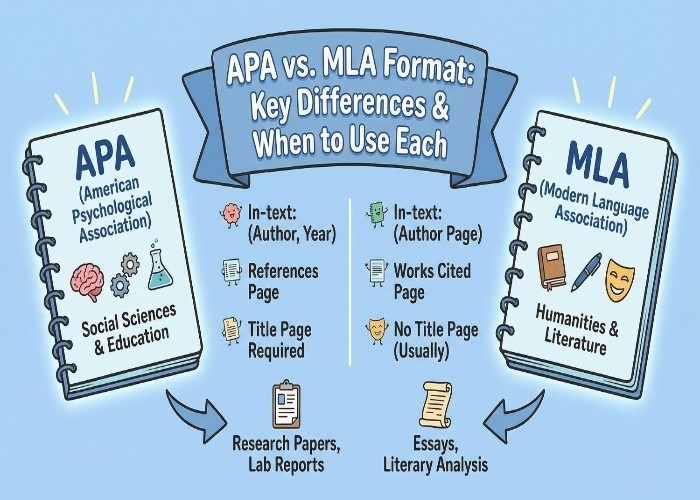
Capitalization rules vary; APA uses sentence case, MLA uses title case, but accurate titles are universal. Want to learn more about the differences? Check our APA vs MLA format guide.
4. Publication Information
- Publisher name
- Journal volume and issue numbers
- Page numbers or ranges
- DOI (Digital Object Identifier) or URL
Technical publications require more detailed information than general sources.
Building Citations While Researching
Don't wait until you finish writing to gather citation information.
- For books: Record author, title, publisher, year, and page numbers you reference.
- For articles: Note author, article title, journal name, volume, issue, year, pages, and DOI.
- For websites: Save author, page title, site name, date published, date accessed, and full URL.
Complete notes during research prevent frustrated searches when you can't remember where that perfect quote came from.
Not sure how to cite sources? This citation style guide breaks it down in a clear, student-friendly way.
The 7 Most Common Citation Styles
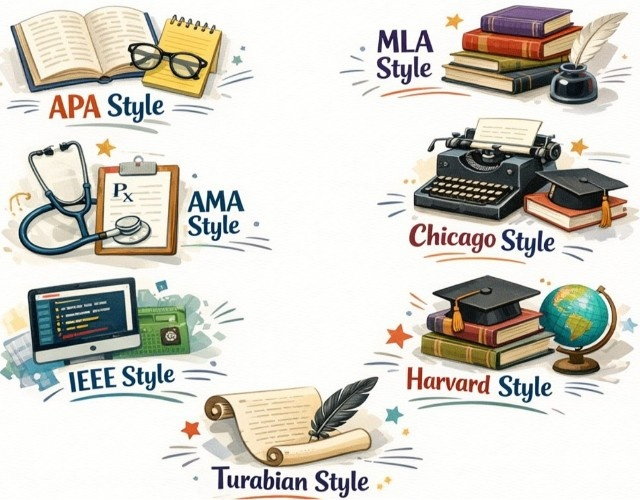
1. APA Format (American Psychological Association)
- Used by: APA citation style is commonly used in Psychology, education, sociology, nursing, business, and social sciences.
- Current edition: 7th edition (2019).
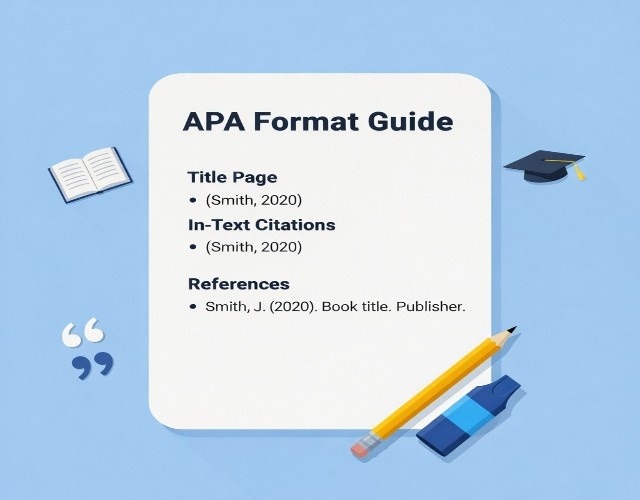
- Key features: Author-date citations (Smith, 2024), References page, sentence case titles
APA dominates social sciences because publication dates help readers assess research currency. The 7th edition simplified student papers by removing running heads and allowing more font options.
Learn complete APA formatting by following our APA Format Guide
2. MLA Format (Modern Language Association)
- Used by: MLA citation format is commonly used in Literature, languages, arts, cultural studies, film studies, and humanities.
- Current edition: 9th edition (2021).
- Key features: Author-page citations (Smith 45), Works Cited page, title case.
MLA is considered the simplest citation style. No dates, no complex punctuation, just author and page. The 9th edition introduced flexible "container" concepts for modern media types.
Master MLA formatting by following our MLA Format Paper Guide
3. Chicago Style
- Used by: The Chicago citation style guide is commonly used in, History, business, fine arts, and some social sciences.
- Current edition: 18th edition (2024).
- Key features: Two systems, Notes-Bibliography OR Author-Date, comprehensive source details.
Chicago's versatility makes it popular across the humanities and social sciences. Choose Notes-Bibliography for history papers with footnotes, or Author-Date for social science work.
Want to learn more about the Chicago guide? Follow our Chicago Style Format.
4. IEEE Format (Institute of Electrical and Electronics Engineers)
- Used by: Electrical engineering, computer science, IT, telecommunications.
- Key features: Numerical citations [1], references in citation order, compact design
IEEE's numerical system handles multiple technical citations efficiently, making it ideal for engineering publications. Learn more about citation rules and how to cite sources in IEEE style by following our IEEE Citation Guide.
5. ASA Format (American Sociological Association)
- Used by: Sociology, social work, criminology.
- Current edition: 5th edition.
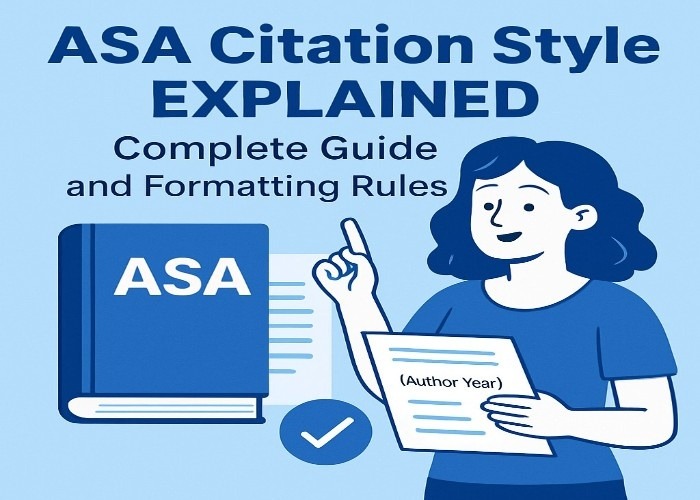
- Key features: Author-date with colon before pages (Smith 2024:45), specific to sociology research.
ASA resembles APA but includes sociology-specific conventions like using "and" instead of "&" in citations.
Still confused? The ASA Citation Guide serves as a citation format guide that walks you through every rule step by step.
6. Harvard Style
- Used by: Business, economics, social sciences (primarily UK/Australia)
- Key features: Author-date format, no single standardized version, institutional variations.
Harvard isn't one standardized style but a family of similar author-date formats. Always check which variation your institution requires.
7. Turabian Style
- Used by: All disciplines (student-focused version of Chicago)
- Key features: Same citation systems as Chicago, simplified for student papers.
Turabian follows Chicago formatting but with student-friendly explanations. Use either Notes-Bibliography or Author-Date depending on your field.
Understanding Citation Format Types
Citation styles fall into four main categories based on how they reference sources.
1. Parenthetical Author-Date Format
These citations include the author's last name and publication year in parentheses: (Johnson, 2024).
Styles using this: APA, ASA, Chicago Author-Date, Harvard
Best for: Social sciences, business, sciences; fields where publication date signals research relevance.
This format works great when citing multiple sources together or referencing the same source repeatedly. The year immediately shows readers how current your research is.
2. Parenthetical Author-Page Format
These citations include only the author's name and page number with no punctuation between them: (Hemingway 45).
Styles using this: MLA
Best for: Humanities, literature, languages, film studies, fields needing specific page references for textual analysis
This streamlined approach keeps citations short and unobtrusive, perfect for literary analysis papers.
3. Numerical Citation Systems
These assign each source a number appearing in brackets [1] or superscript¹. The reference list then appears in citation order or alphabetically.
Styles using this: IEEE, ACS, NLM, Vancouver
Best for: Engineering, computer science, chemistry, medicine, technical fields with frequent multiple citations
Numerical systems prevent cluttered text when citing many sources in a single sentence.
4. Note-Based Systems
These use superscript numbers¹ linking to footnotes (bottom of page) or endnotes (document end) containing full citation information plus optional commentary.
Styles using this: Chicago Notes-Bibliography, Turabian
Best for: History, theology, arts, and fields where detailed source context and explanatory notes enhance understanding
Footnotes keep the main text clean while providing extensive source details and analysis.
How to Choose Your Citation Style for Your Assignments
Step 1: Check Assignment Requirements (Always First!)
Your professor's instructions override everything else. Check your syllabus, assignment sheet, and course website for explicitly stated style requirements.
Remember: Never assume, even if you used a certain style in previous courses, requirements change between classes.
Step 2: Review Department Standards
If your assignment doesn't specify a style, check your department's website or student handbook. Many departments have default citation styles:
- Social Sciences: Usually APA
- Humanities: Typically MLA
- History/Business: Often Chicago
- Engineering: Generally IEEE
Your major's default style is worth mastering since you'll use it repeatedly.
Step 3: Match Your Academic Field
When you have flexibility, choose based on discipline conventions:
- Psychology, education, or social sciences? Use APA format. Publication dates matter because research builds on recent discoveries.
- Literature, film, or arts analysis? Use MLA format. Page-specific references support textual analysis and close reading.
- History or business research? Use Chicago style. Detailed source context and footnotes enhance scholarship.
- Engineering or computer science? Use IEEE format. Numerical citations handle multiple technical references efficiently.
- Sociology research? Use ASA format. Sociology-specific conventions align with field standards.
Step 4: Consider Publication Requirements
Writing for publication? Check journal author guidelines before starting. Academic journals require specific citation styles, and reformatting an entire manuscript wastes time.
Step 5: Ask for Clarification
Don't hesitate to ask your instructor if:
- No citation style is specified anywhere.
- Different course documents mention different citation styles.
- You're unsure which edition to use (APA 6th vs 7th).
- Your field commonly uses multiple styles.
| Professors appreciate clarification over wrong guesses. |
PERFECT CITATIONS, GUARANTEED
Podcasts, Social Media, Videos, Interviews; Get Every Non-Traditional Source Cited Correctly
- PhD writers who know every citation style
- Zero plagiarism with proper attribution
- On-time delivery, no exceptions
- Get comprehensive citations that meet standards
Join 50,000+ students who trust us with their papers.
Order NowCommon Citation Styles Mistakes to Avoid
| Citation Mistake | What Goes Wrong | Why It’s a Problem | How to Fix It |
|---|---|---|---|
| Switching styles mid-paper | Mixing APA, MLA, or other formats in the same paper | Creates inconsistency and confuses readers; signals careless work | Choose one citation style before writing and apply it consistently |
| Missing punctuation | Incorrect punctuation in in-text citations (e.g., missing commas or spaces) | Punctuation conveys meaning and differs by citation style | Learn your style’s exact punctuation rules and follow them carefully |
| Forgetting page numbers for quotes | Quoted material lacks page numbers when required | Readers can’t verify or locate quoted material | Record page numbers while researching; use alternatives for non-paginated sources |
| Incomplete reference entries | Missing DOIs, publication dates, or page ranges | Prevents readers from locating sources | Use a complete style guide to include all required citation elements |
| Wrong capitalization in titles | Using title case instead of sentence case, or vice versa | Capitalization rules distinguish citation styles | APA: sentence case; MLA & Chicago: title case |
| Citing without reading the source | Referencing sources you haven’t personally reviewed | Risks, inaccuracies, and citation errors | Cite the source you actually read; use secondary source formats when needed |
| Using outdated citation rules | Following older style manual editions | Updated rules reflect new media formats and standards | Confirm the required edition and use the latest guidelines |
Citation Tools and Resources
Modern citation tools automate formatting and organization, but understanding underlying principles remains essential.
Free Citation Tools
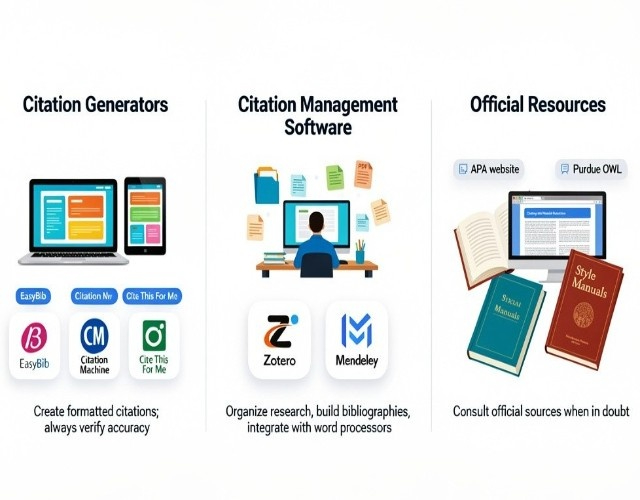
Citation Generators: EasyBib, Citation Machine, and Cite This For Me create formatted citations from source information. Use them as starting points; always verify accuracy.
Citation Management Software: Zotero (free, open-source) and Mendeley (free basic version) organize research materials, generate bibliographies, and integrate with word processors. Invaluable for large projects.
Official Resources: APA's website, Purdue OWL, and official style manuals provide authoritative guidance. When in doubt, consult official sources.
Tool Limitations
Automated tools make mistakes with:
- Unusual source types (social media, podcasts, artworks)
- Sources with missing information
- Capitalization and punctuation nuances
- Recent style manual changes
Always review auto-generated citations carefully.
When to Format Manually
Some situations require manual citation:
- Your source type isn't covered by generators
- You're citing primary sources like historical documents
- You're working with unpublished materials
- You need absolute accuracy for publication
Learning manual formatting gives you full control and a deeper understanding.
Still stressed about citations? Our Reliable essay writing service writers format every source perfectly while writing your paper. No generator errors, no formatting headaches, just correctly cited research papers delivered on time.
Free Downloadable Resources
Citation Style Selection Flowchart: Visual decision tree to pick the right style for your paper.
Citation Style Elements Checklist: Complete list of information needed for each source type.
Citation Style Comparison Quick Reference: One-page comparison of APA, MLA, Chicago, and IEEE
Common Citation Mistakes Guide: What to avoid and how to fix errors
Citation Style Source Tracking Template: Organize citation information as you research.
Need Perfect Citations Without the Stress?
Every Parenthetical Reference, Every Signal Phrase, Formatted Exactly Right Throughout Your Paper
- Every source formatted correctly in your required style
- Zero plagiarism with proper attribution
- Delivered on deadline, guaranteed
- We update every in-text and reference citation
Free revisions until you're 100% satisfied.
Order NowBottom Line
Proper citations demonstrate academic integrity, enable scholarly verification, and establish your credibility as a researcher. While citation styles may seem complex initially, they follow logical patterns that become natural with practice.
Choose your style based on assignment requirements, disciplinary standards, and your academic field. Learn one style thoroughly before attempting others; the skills transfer readily to learning additional formats.

-19434.jpg)
-19334.jpg)
-19406.jpg)