The Anatomy of a Perfect Thesis Statement (Annotated Example)
Before diving into multiple examples, let's dissect one exceptional thesis statement to understand exactly what makes it work.
The Example: "Implementing universal basic income would reduce poverty, stimulate economic growth, and address job displacement from automation, but only if funded through progressive taxation rather than deficit spending."
The Breakdown (Color-Coded Components):
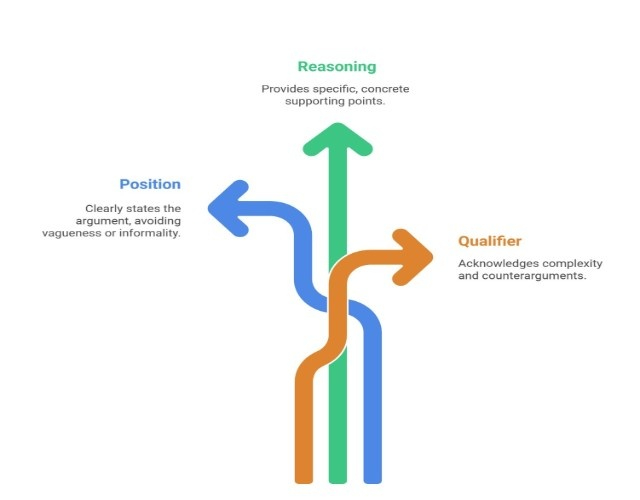
Why This Thesis Statement Works:
- It's immediately debatable: Half your readers will disagree, which means there's an argument to make
- It provides a roadmap: You know exactly what the essay will cover (three benefits, one important condition)
- It's specific: Not "UBI has effects on society" but concrete outcomes you can measure
- It shows depth: The qualifier demonstrates you understand the complexity of the issue
- It's one sentence: Forces clarity and precision in your thinking
The Formula You Can Steal:
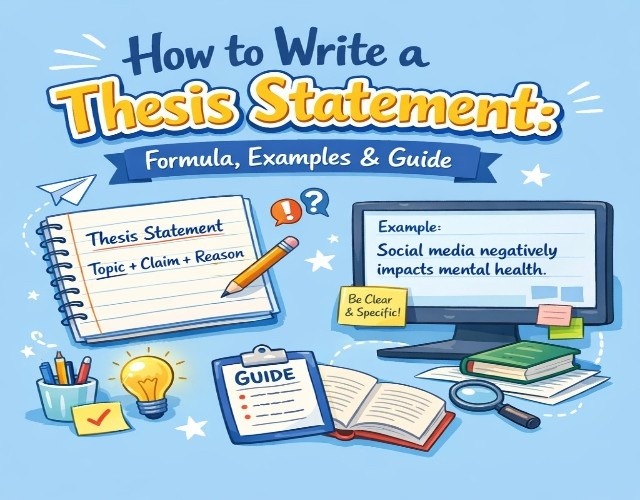
[Specific Action/Position] + [will/would achieve] + [Reason 1], [Reason 2], and [Reason 3] + [important qualifier/condition].
This formula works for any argumentative or analytical essay. Let's see it in action across different essay types.
The 3-Part Thesis Statement Formula (Universal Framework)
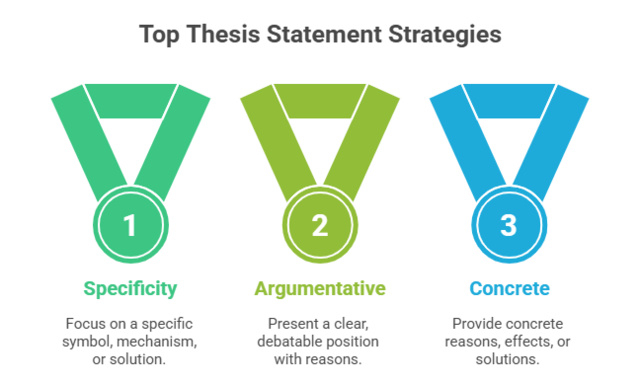
Every strong thesis statement, regardless of essay type, contains three essential elements. Master this formula, and you'll never struggle with thesis statements again.
Element 1: The Specific Claim
Weak: "Technology affects education."
Strong: "Integrating AI tutoring systems into high school classrooms would personalize learning..."
What changed: From vague observation to specific, actionable position.
Your claim must:
- Take a clear position (not just describe something).
- Be specific enough to guide your research.
- Be narrow enough to cover in your essay's length.
- Be broad enough to require multiple supporting points.
Element 2: The Supporting Reasons
Weak: "...because it's beneficial."
Strong: "...by adapting to individual learning speeds, identifying knowledge gaps in real-time, and freeing teachers to focus on critical thinking instruction."
What changed: From a generic justification to three concrete, provable reasons.
Your reasons must:
- Be specific and measurable.
- Preview your body paragraphs.
- Follow logically from your claim.
- Be supportable with evidence.
Element 3: The Scope or Qualifier
Weak: [No qualifier - just stops after reasons]
Strong: "...though implementation requires addressing privacy concerns and ensuring equitable access across socioeconomic lines."
What changed: Addition of nuance showing critical thinking.
Your qualifier can:
- Acknowledge limitations of your argument.
- Specify conditions under which your claim holds.
- Address the most important counterargument.
- Define boundaries of your discussion.
Putting It All Together:
Complete thesis: "Integrating AI tutoring systems into high school classrooms would personalize learning by adapting to individual learning speeds, identifying knowledge gaps in real-time, and freeing teachers to focus on critical thinking instruction—though implementation requires addressing privacy concerns and ensuring equitable access across socioeconomic lines."
This formula works whether you're writing an argumentative essay, analytical essay, or research paper. The elements stay the same; only the content changes.
Thesis Strength Test Table
| Test | Question | Pass/Fail Indicator |
|---|---|---|
| Specificity Test | Can someone disagree with it meaningfully? | If not then too broad |
| Clarity Test | Can you summarize it in 10 seconds? | If not then rewrite |
| Scope Test | Can it fit within the assigned word count? | If not then narrow |
| Relevance Test | Does it directly answer the prompt? | If not then misaligned |
You Deserve Better Than a C
Get the Essay — and the Grade — You Actually Want
No AI. No templates. Just essays that get results
10 Thesis Statement Examples: Bad vs. Good (With Analysis)
Whether you're writing an argument, analysis, or research paper, every list of essay writing tips includes crafting a strong thesis statement. Let's examine thesis statements across different essay types, showing exactly what separates weak statements from strong ones.
Example 1: Argumentative Essay - Gun Control
Bad Thesis: "Gun control is a controversial topic that people have different opinions about."
Why it fails:
- Doesn't take a position (just states something is controversial).
- Provides no direction for the essay.
- Could be said about literally any debated topic.
- Gives readers zero reason to continue reading.
Good Thesis: "Federal universal background checks would reduce gun violence by closing private sale loopholes, preventing firearms access for individuals with domestic violence histories, and creating a national database to track interstate gun trafficking—without infringing on Second Amendment rights of law-abiding citizens."
Why it works:
- Takes a clear, specific position (universal background checks).
- Provides three concrete reasons (each becomes a body paragraph).
- Addresses the main counterargument (Second Amendment concerns).
- Creates a debatable claim that requires evidence to support.
Example 2: Analytical Essay - Literary Analysis
Bad Thesis: "In The Great Gatsby, F. Scott Fitzgerald uses symbolism to show themes about society."
Why it fails:
- Too vague ("symbolism," "themes," "society" - which ones?).
- Doesn't present a specific interpretation.
- Could apply to virtually any novel.
- No analytical insight or argument.
Good Thesis: "Fitzgerald's recurring green light symbolism in The Great Gatsby reveals how the American Dream has devolved from the pursuit of happiness into the pursuit of material wealth, ultimately arguing that this transformation corrupts genuine human connection and leads to spiritual emptiness."
Why it works:
- Focuses on one specific symbol (green light).
- Presents a clear interpretation (American Dream corrupted by materialism).
- Makes an argument about the author's message.
- Specific enough to prove with textual evidence.
Example 3: Expository Essay - Cause and Effect
Bad Thesis: "Social media affects teenagers in many ways, both positive and negative."
Why it fails:
- "Many ways" and "positive and negative" are uselessly vague.
- Doesn't specify what effects or what you'll focus on.
- Too broad to cover meaningfully.
- No clear organizational structure.
Good Thesis: "Excessive social media use among teenagers triggers dopamine-driven feedback loops that mirror addiction patterns, leading to measurable increases in anxiety disorders, sleep disruption, and social comparison-based depression—effects particularly pronounced in girls aged 13-17."
Why it works:
- Identifies specific mechanism (dopamine feedback loops).
- Lists three concrete effects with a causal relationship.
- Specifies vulnerable population (focus for the essay).
- Sets up a clear cause?effect structure.
Example 4: Persuasive Essay - Policy Proposal
Bad Thesis: "College should be more affordable so that more students can attend."
Why it fails:
- States widely-accepted opinion without argument.
- No specific solution proposed.
- Doesn't address HOW or WHY this should happen.
- Too general to be persuasive.
Good Thesis: "State universities should adopt income-based tuition models where students pay a fixed percentage of their post-graduation income for ten years rather than upfront tuition, because this approach eliminates debt burden, aligns institutional incentives with student success, and maintains institutional revenue without taxpayer subsidies."
Why it works:
- Proposes a specific, concrete solution (income-based repayment model).
- Three reasons explain why this solution works.
- Addresses potential objections (revenue maintenance, no new taxes).
- Persuasive because it solves problems in the current system.
Example 5: Comparative Essay
Bad Thesis: "Public schools and private schools have similarities and differences in how they educate students."
Why it fails:
- States the obvious (all comparisons have similarities and differences).
- Doesn't identify WHAT similarities or differences matter.
- No argument or point being made.
- Provides no reason to read further.
Good Thesis: "While public and private schools both aim to prepare students academically, private schools' ability to control curriculum and admission standards creates homogeneous learning environments that excel at test preparation but lack the exposure to diverse perspectives that public schools provide—diversity that better prepares students for a pluralistic democratic society."
Why it works:
- Acknowledges similarity, focuses on meaningful difference.
- Makes an argument about which approach better serves a goal.
- Specific difference identified (curriculum control, admissions, diversity).
- Debatable claim about outcomes.
You Deserve Better Than a C
Get the Essay — and the Grade — You Actually Want
No AI. No templates. Just essays that get results
Example 6: Personal Essay - Narrative
Bad Thesis: "My summer job taught me a lot about responsibility and hard work."
Why it fails:
- Generic life lesson that could apply to any experience.
- Vague terms ("a lot," "responsibility," "hard work").
- Doesn't preview specific story or insights.
- Forgettable and unoriginal.
Good Thesis: "Working as a night-shift custodian at my high school revealed that the building I'd walked through thoughtlessly for four years required twelve hours of invisible labor each night—a realization that fundamentally shifted how I understand class privilege and the human cost of maintaining the spaces we take for granted."
Why it works:
- Specific experience described (night-shift custodian, own high school).
- Clear before/after transformation shown.
- Concrete insight gained (not generic "learned responsibility").
- Promises genuine personal reflection with broader meaning.
Example 7: Research Paper - Scientific
Bad Thesis: "This paper will examine different factors that contribute to climate change."
Why it fails:
- "This paper will examine" is weak phrasing.
- Different factors" is vague (which ones?).
- No argument or finding previewed.
- Reads like an introduction, not a thesis.
Good Thesis: "Analysis of ice core data from the past 800,000 years demonstrates that current atmospheric CO2 levels (420 ppm) exceed any natural variation by over 50%, with isotopic signatures conclusively identifying fossil fuel combustion rather than volcanic or oceanic sources as the driver of this unprecedented acceleration."
Why it works:
- Presents specific findings from research.
- Provides concrete data (numbers, measurements).
- Identifies methodology (ice core analysis, isotopic signatures).
- Makes falsifiable scientific claim with evidence.
Expert Tip: Keep It One Sentence
For academic essays, your thesis should be one concise sentence. If it takes more, you’re trying to argue too much.
Example 8: Three-Point Thesis Structure
Bad Thesis: "Exercise has three main benefits for your health."
Why it fails:
- Doesn't specify what the three benefits are.
- Too vague to guide the essay.
- "Your health" could mean anything.
- No compelling reason to care.
Good Thesis: "Regular cardiovascular exercise reduces all-cause mortality by 30%, improves cognitive function by increasing BDNF protein levels in the hippocampus, and stabilizes mood disorders by regulating serotonin and dopamine production—making it as effective as antidepressants for mild to moderate depression without pharmaceutical side effects."
Why it works:
- All three benefits are explicitly stated and specific.
- Includes measurable impacts (30% reduction, specific proteins).
- Adds a powerful qualifier compared to pharmaceutical treatment.
- Each point provides clear direction for body paragraphs.
Example 9: Informative Essay
Bad Thesis: "Photosynthesis is an important process that plants use to make food."
Why it fails:
- States an obvious fact rather than providing insight.
- No specific information to be explained.
- Doesn't establish what readers will learn.
- Too broad for focused explanation.
Good Thesis: "Photosynthesis converts light energy into chemical energy through two distinct stages—light-dependent reactions in the thylakoid membranes and the Calvin cycle in the stroma—with this biochemical process ultimately producing the glucose that forms the foundation of nearly all food chains on Earth."
Why it works:
- Provides specific process breakdown (two stages).
- Identifies where each stage occurs (location matters).
- Explains broader significance (foundation of food chains).
- Promises a detailed explanation that readers will gain
Example 10: School Uniforms Debate
Bad Thesis: "School uniforms have both advantages and disadvantages that should be considered."
Why it fails:
- Sits on the fence instead of taking a position.
- Should be considered" is passive and weak.
- Provides no actual argument or direction.
- This is an observation, not a thesis.
Good Thesis: "Mandatory school uniforms should be eliminated in public schools because they suppress student self-expression, impose financial burdens on low-income families, and fail to improve academic performance or reduce bullying as proponents claim."
Why it works:
- Takes a clear stance (eliminate uniforms).
- Three specific reasons support the position.
- Directly challenges the opposition's claims.
- Establishes exactly what the essay will prove.
Expert Tip: Prioritize Specificity
A strong thesis avoids broad claims. The more specific your argument and reasons are, the easier the rest of the essay becomes.
Thesis Statement Checklist Table
| Checklist Question | Yes/No | Target |
|---|---|---|
| Is it specific? | Yes | No vague wording |
| Is it arguable? | Yes | Should not be a fact |
| Does it preview main points? | Yes | Helps structure the essay |
| Is it one clear sentence? | Yes | Concise + focused |
| Does it match the essay type? | Yes | Argumentative/expository/analytical |
Common Thesis Statement Mistakes (And How to Fix Them)
Mistake 1: The Announcement Thesis
Wrong: "In this essay, I will discuss the effects of deforestation on climate change."
Why it's wrong: Never announce what you'll do. Just do it.
Fixed: Tropical deforestation accounts for 15% of global carbon emissions, more than all cars, trucks, and planes combined, making rainforest preservation as critical to climate mitigation as transitioning to renewable energy."
Mistake 2: The Question Thesis
Wrong: "What are the benefits of renewable energy?"
Why it's wrong: Your thesis should answer a question, not ask one.
Fixed: "Transitioning to renewable energy would reduce carbon emissions, create more jobs than fossil fuel industries, and decrease energy costs for consumers within a decade, making the upfront infrastructure investment economically rational even without considering environmental benefits."
Mistake 3: The Obvious Fact Thesis
Wrong: "Shakespeare was an important writer who wrote many famous plays."
Why it's wrong: If no one would disagree, it's not a thesis—it's a fact.
Fixed: "Shakespeare's genius lies not in the originality of his plots—most were borrowed from existing sources—but in his psychological insight into human motivation, which made stock characters from Italian novellas into complex individuals whose internal conflicts remain recognizable four centuries later."
Mistake 4: The Too-Broad Thesis
Wrong: "Technology has changed society in many ways throughout history."
Why it's wrong: Too massive to cover meaningfully. Could be a book series.
Fixed: "Smartphone adoption between 2007-2017 altered human attention spans more dramatically than any previous technology, with the average person now checking their phone 96 times daily, creating a state of continuous partial attention that reduces deep work capacity and may be restructuring neural pathways related to focus and impulse control."
Downloadable Resource: Thesis Statement Formula Worksheet
Next Steps: From Thesis to Complete Essay
Now that you've mastered thesis statements, you're ready to build the complete essay structure around your argument.
Your next steps:
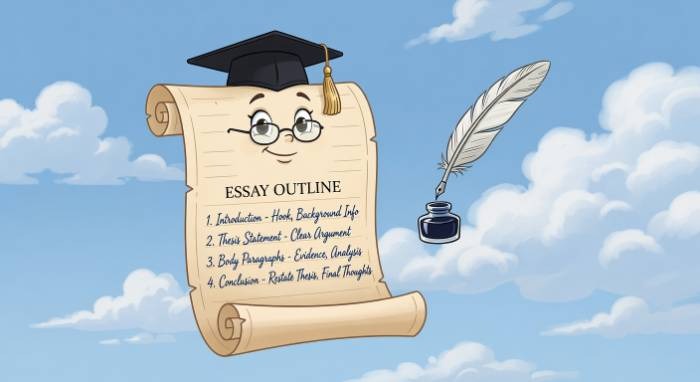
Outline your body paragraphs - Each reason in your thesis becomes one body paragraph. Use the essay outline guide to structure your arguments logically.
Write your introduction - Your thesis is the destination; your introduction is the path leading there. See our essay introduction guide for techniques to hook readers and provide context.
Develop your arguments - Transform your thesis points into fully developed paragraphs using the PEEL paragraph method to ensure each argument is complete and persuasive.
Related resources to strengthen your essay:
- Essay Writing Guide - Comprehensive overview of the entire essay writing process.
- Argumentative Essay Guide - Specific strategies for persuasive writing.
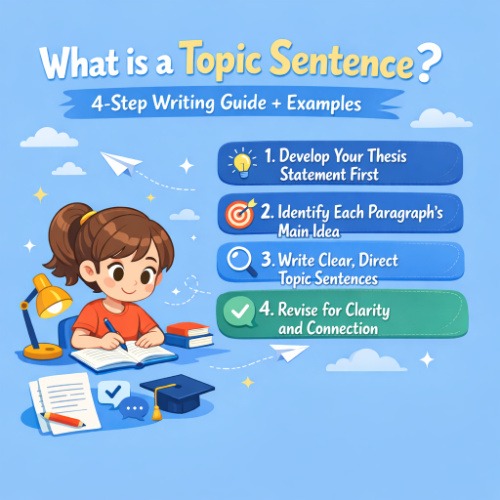
- Topic Sentence Guide - How to connect paragraphs back to your thesis.
Final Thoughts: Your Thesis Is Your Promise to Readers
Think of your thesis statement as a contract with your reader. You're promising: "If you invest time reading my essay, here's exactly what argument I'll prove and why it matters." A strong thesis statement honors that contract by being specific, debatable, and supportable with evidence.
The examples and formula in this guide give you the tools to write thesis statements that take clear positions, provide roadmaps for well-organized essays, and demonstrate sophisticated thinking.
Better Essays. Better Grades. Less Stress.
Our professional writers have helped thousands of students succeed — you're next.
- 100% plagiarism-free, original work
- Expert writers across 50+ subjects
- Fast delivery, even last-minute orders
- Satisfaction guaranteed or money back
Trusted. Confidential. 100% human-written.
Hire an Expert Now
-20154.jpg)