What Makes a Hook Effective?
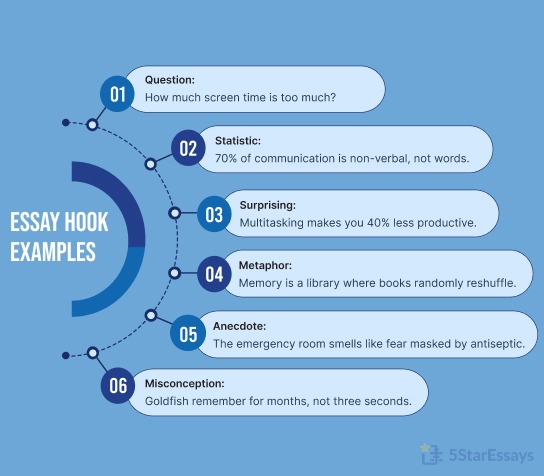
An essay hook is your opening sentence designed to grab attention and create immediate interest. Think of it as a promise: "Keep reading, you'll discover something valuable, surprising, or important."
Effective hooks accomplish four things:
- Grab attention from the very first word
- Create curiosity about where your argument leads
- Set the tone for everything that follows
- Connect naturally to your thesis statement
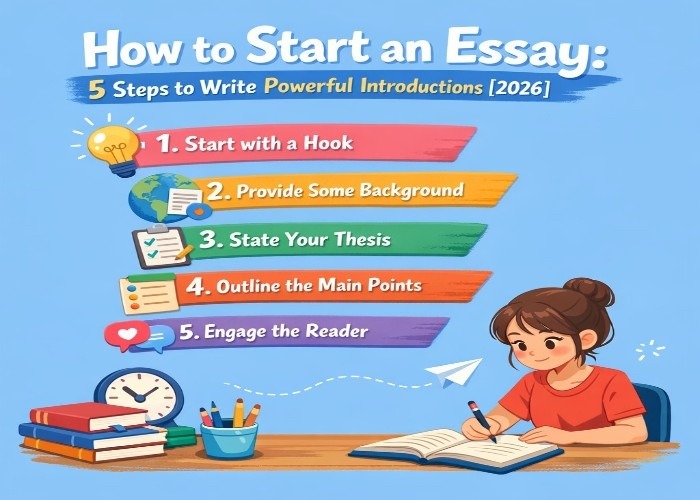
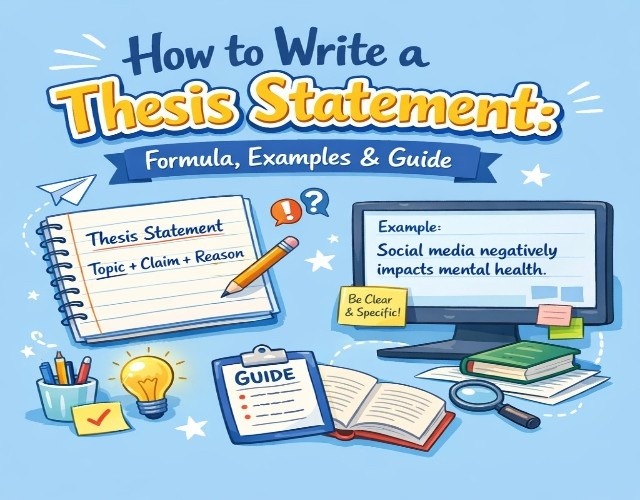
Your hook isn't your thesis; they serve different purposes. Hooks create interest; thesis statements present arguments. Both work together in your introduction, with hooks opening and thesis statements closing. For comprehensive guidance on introduction structure, explore our complete essay writing guide covering every element from brainstorming through final revision.
Need Essays With Hooks That Actually Grab Attention?
Sometimes you need professional help ensuring every element, from hooks through conclusions, works perfectly.
- Expert writers who understand which hooks work for different contexts
- Engaging openings that immediately capture reader interest
- Proper structure from hooks through thesis statements
- Quality guarantee with unlimited revisions until hooks work perfectly
Get Your Essay With a Perfect Hook
Order NowThe 8 Types of Hooks (With 200+ Examples)
1. Question Hooks (20+ Examples)
Question hooks engage readers by making them think critically about your topic before encountering your argument. These work best when questions provoke genuine thought rather than simple yes/no answers.
| When to use: Reflective essays, topics with varied opinions, philosophical questions, informal academic writing When to avoid: Highly formal research papers, scientific reports, yes/no questions, overly broad topics |
Examples:
"What if the last bee on Earth died tomorrow, would you notice before grocery store shelves went empty?"
"How are successful college students different from unsuccessful ones?"
"Have you ever wondered whether technology connects us or isolates us?"
"What lies beneath the ocean's depths that we haven't discovered?"
"Ever pondered the true meaning of happiness beyond material possessions?"
"Ready to challenge your limits, how far would you go to achieve your dreams?"
"Can you envision a world where robots and humans coexist harmoniously?"
"Are you tired of recipes that promise easy but deliver complicated?"
"What if you could control your financial future starting today?"
"Ever wondered what it takes to create a masterpiece that survives centuries?"
Avoid generic questions like "Have you ever thought about climate change?" Ask specific questions forcing readers to visualize scenarios or confront unexpected angles.
2. Quotation Hooks (30+ Examples)
Quotation hooks leverage authority from respected sources, instantly establishing credibility while framing your topic within larger conversations.
| When to use: Academic essays requiring credibility, topics with relevant famous quotes, arguments aligning with expert opinions When to avoid: Overused/clichéd quotes, when quotes lack clear relevance, personal narratives (unless personally meaningful) |
Examples:
"Education is the most powerful weapon you can use to change the world." - Nelson Mandela
"The only way to do great work is to love what you do." - Steve Jobs
"In the middle of difficulty lies opportunity." - Albert Einstein
"Don't watch the clock; do what it does. Keep going." - Sam Levenson
"Believe you can and you're halfway there." - Theodore Roosevelt
"The best way to predict the future is to create it." - Peter Drucker
"The harder I work, the luckier I get." - Samuel Goldwyn
"Success is not final, failure is not fatal: courage to continue counts." - Winston Churchill
"Innovation distinguishes between a leader and a follower." - Steve Jobs
"Be yourself; everyone else is already taken." - Oscar Wilde
Critical rule: Always explain how quotes relate to your thesis. Don't assume readers understand the connection; make it explicit in the following sentences.
3. Statistical Hooks (25+ Examples)
Statistical hooks use surprising numbers to grab attention while establishing credibility through evidence. These work exceptionally well for argumentative and informative essays.
| When to use: Argumentative essays, research papers, persuasive essays about serious issues, when establishing credibility immediately When to avoid: Personal/narrative essays, creative writing, unverifiable statistics, when numbers bore your audience |
Examples:
"Studies reveal that 92% of New Year's resolutions fail by mid-February, yet millions set them every year."
"Nearly two-thirds of American adults have lived with at least one gun at some point."
"Research shows people lie in one out of every five conversations lasting at least 10 minutes."
"8 out of 10 entrepreneurs fail within their first year, but the successful 20% follow specific patterns."
"People spend an average of 2 hours 22 minutes daily on social media platforms."
"Over 75% of communication is non-verbal, yet we focus almost exclusively on words."
"1 in 4 adults suffer from mental health issues, yet stigma prevents most from seeking help."
"Nearly 70% of consumers rely on online reviews before purchasing, and trust builds businesses."
"The global e-commerce industry is projected to reach $6.38 trillion by 2024."
"80% of car accidents are caused by distracted driving, yet drivers continue using phones."
Always cite sources. Readers need to trust your statistics, and uncited data damages credibility immediately.
4. Anecdotal Hooks (30+ Examples)
Anecdotal hooks tell brief, relevant stories capturing attention while illustrating your topic. These can derive from real events, personal experiences, or hypothetical scenarios, as long as they connect meaningfully to your thesis.
| When to use: Narrative essays, descriptive essays, when emotional connection matters, and topics benefiting from humanization When to avoid: Formal research papers, scientific/technical writing, when stories seem forced, if anecdote exceeds 3-4 sentences |
Examples:
"Picture this: a cold winter night, snowflakes gently falling, as I embarked on a journey that would change everything."
"I still remember my grandmother's kitchen, the aroma of fresh cookies, the day she taught me about kindness."
"On a crowded subway during rush hour, everyone lost in their world, a stranger's generosity restored my faith."
"As I stepped onto the stage, spotlight shining, heart pounding, I realized the transformative power of facing fears."
"In the bustling city's heart, amidst noise and chaos, I found a hidden park reminding me to find inner peace."
"The dusty attic held countless treasures, but the tattered journal revealed my ancestors' untold stories."
"Lost in a foreign city, unable to speak the language, strangers became unexpected guides and lifelong friends."
"As symphony's final notes resonated, thunderous applause erupted, and I witnessed music's pure magic."
"The emergency room at 3 AM taught me more about medicine than any textbook ever could."
"One phone call changed everything. Suddenly, I was responsible for decisions I'd never imagined making."
Keep anecdotes brief (2-4 sentences maximum) and ensure they directly relate to your thesis. Don't tell stories just because they're interesting; tell them because they illuminate your argument.
5. Personal Story Hooks (25+ Examples)
Personal story hooks share experiences from your own life, building authenticity and individual perspective. These excel in personal narratives, reflective essays, and college applications.
| When to use: Personal narratives, college applications, reflective writing, when personal experience adds authority When to avoid: Formal argumentative essays, research papers requiring objectivity, when first-person voice is inappropriate |
Examples:
"Growing up as the shyest kid in class, one simple act of courage changed my life forever."
"I'll never forget crossing my first marathon finish line, proving to myself anything is possible."
"At 18, I packed my bags and embarked on a solo global adventure of self-discovery."
"As a single parent juggling multiple jobs, obstacles seemed endless, but determination propelled me forward."
"Finding an old journal in my grandmother's attic unearthed hidden family history truths."
"The sound of applause echoed as I stepped onstage, that performance becoming a turning point."
"After years of self-doubt, I finally pursued my writing passion, and holding my published book was everything."
"Volunteering in a remote village, I witnessed human spirit resilience that forever changed my perspective."
"Walking away from a turbulent relationship, I embarked on self-love and rediscovery."
"My father's Navy career meant growing up on a cruise; I saw things beyond anyone's imagination."
Key distinction: Personal stories are specifically about YOU, while anecdotal hooks can be about anyone. Choose personal stories when lived experience genuinely strengthens your argument.
6. Surprising Statement Hooks (30+ Examples)
Surprising statement hooks open with bold, unexpected claims challenging assumptions or contradicting common beliefs. These create cognitive dissonance, readers think they know something, then your hook makes them question it.
| When to use: Persuasive essays challenging conventional wisdom, topics with misconceptions, controversial subjects When to avoid: When statements are easily disprovable, if surprise seems gimmicky, topics requiring measured approaches |
Examples:
- "Spiders are our unsung heroes, silently protecting homes while maintaining ecological balance."
- "Forget time management, productivity lies in working less, not more."
- "Studies show old-fashioned pen and paper boost memory better than digital devices."
- "You spend more time scrolling social media than sleeping, and it's destroying your health."
- "Introverts possess hidden powers making them exceptional leaders despite common beliefs."
- "Chocolate can benefit your health when consumed in moderation, science proves it."
- "Multitasking actually makes you less productive, not more, according to research."
- "Learning a new language can slow aging and keep your brain sharp longer."
- "Regular naps enhance overall productivity and creativity, contrary to popular belief."
- "Playing video games in moderation enhances problem-solving and boosts cognitive function."
Warning: Surprising statements must be supported with evidence in your essay. Don't make claims you can't back up, or credibility suffers throughout.
Ready to Write Hooks That Actually Work?
Strong hooks aren't about luck; they're about matching the right strategy to your essay's purpose and audience.
- Engaging openings that capture attention
- Expert writers who understand which hooks work for different contexts
- Complete essays with proper structure
- Quality guarantee with unlimited revisions until hooks work perfectly
Get Your Essay With a Perfect Hook
Get Started Now7. Descriptive Hooks (20+ Examples)
Descriptive hooks use vivid sensory language painting pictures in readers' minds. These transport readers to specific moments, places, or experiences through rich imagery.
| When to use: Descriptive essays, narrative essays, creative writing, literary analysis, when atmosphere matters When to avoid: Scientific papers, formal argumentative essays, when brevity is essential, business writing |
Examples:
- "Rain hammered pavement in steady rhythm as I sprinted across campus, clutching notes like lifelines."
- "The classroom smelled of chalk dust and anxiety as thirty students hunched over final exams."
- "Sunlight filtered through autumn leaves, casting dancing shadows across the worn park bench."
- "The library at midnight was a cathedral of silence, broken only by whispered page turns."
- "Waves crashed against cliffs with thunderous force, sending salt spray across my face."
- "The abandoned house creaked in the wind, its broken windows staring like empty eyes."
- "Coffee shop morning bustle, espresso machines hissing, newspapers rustling, voices murmuring."
- "Hospital corridor fluorescent lights hummed overhead, antiseptic smell burning my nostrils."
- "The concert hall vibrated with anticipation, hundreds of held breaths before the first note." 10. "Summer evening air hung thick and heavy, cicadas' song rising as dusk settled."
Best practice: Use descriptive hooks sparingly and keep them concise (1-2 sentences). Too much description before your thesis loses readers rather than engaging them.
8. Metaphor/Simile Hooks (20+ Examples)
Metaphor and simile hooks make readers think about topics in unexpected ways, creating mental connections between seemingly unrelated things.
| When to use: Creative essays, literary analysis, explaining complex concepts simply, topics benefiting from visualization When to avoid: Formal research papers, scientific/technical writing, when metaphors seem forced, business reports |
Examples:
- "A business blog is a magnet pulling clients to a company."
- "Education is a ladder, each rung represents knowledge gained, and the climb never ends."
- "Social media is a double-edged sword, connecting us globally while isolating us individually."
- "Memory is a library where some books are borrowed frequently, others gather dust."
- "Writing is sculpting with words, chiseling away excess until meaning emerges clearly."
- "The economy flows like a river, sometimes flooding, sometimes drought, always changing course."
- "Your mind is a garden, what you plant determines what grows."
- "Procrastination is quicksand; the more you struggle against deadlines, the deeper you sink."
- "Technology is a bridge connecting generations, yet sometimes creating chasms between them."
- "Success is a marathon, not a sprint; pace matters more than initial speed."
Hooks for Specific Essay Types
Different essays require different hook strategies. Here's how to match hooks to your assignment:
Argumentative Essays
Use statistical or quotation hooks establishing credibility.
| Example: "According to WHO, tobacco kills 5 million people yearly, more than HIV/AIDS, TB, and malaria combined." |
Persuasive Essays
Use surprising statements or provocative questions challenging assumptions.
| Example: "On average, humans release 38.2 billion tons of carbon dioxide yearly, and if you think climate change is nothing to worry about, you're mistaken." |
Narrative Essays
Use personal stories or anecdotal hooks immediately transporting readers into experiences.
| Example: "Riding the bus to school, other kids made fun of me, thinking I couldn't understand them. 'Why are his eyes like that?' A Chinese kid in America feels like a zoo animal." |
For complete guidance on structuring different essay types, explore our comprehensive essay format guide covering MLA, APA, and Chicago styles with examples.
Common Hook Mistakes That Kill Engagement
Even strong writers make predictable hook mistakes. Avoid these pitfalls:
- Starting Too Broad: "Throughout history, people have faced challenges." This is so vague it applies to literally anything.
- Using Clichés: "Since the dawn of time..." or "In today's society..." These phrases signal lazy writing immediately.
- Asking Yes/No Questions: "Do you like music?" Readers answer and move on without deeper thought.
- Making Irrelevant Hooks: Opening a renewable energy essay with a story about your pet dog. If hooks don't connect to thesis, they confuse rather than engage.
- Writing Hooks Too Long: A six-sentence anecdote before getting to your topic. Readers lose patience; get to your point quickly.
- Using Dictionary Definitions: "According to Merriam-Webster, freedom is defined as..." Formulaic and boring. Find creative ways to establish context.
- Making Unsupported Claims: "Everyone knows climate change is humanity's biggest threat." Sweeping claims without evidence damage credibility.
Want to ensure your entire introduction works effectively? Our guide on how to start an essay provides comprehensive strategies for openings that work, from hooks through thesis statements.
Testing Your Hook: Quick Checklist
Before finalizing your hook, run it through this test:
- Relevance: Does it connect directly to my thesis?
- Specificity: Is it specific rather than vague or generic?
- Length: Is it 1-3 sentences maximum?
- Appropriate Tone: Does it match my essay's formality level?
- Interest: Would I want to keep reading after this opening?
- Originality: Have I avoided clichés and overused phrases?
- Clarity: Can readers easily understand what I'm saying?
- Transition: Does it lead naturally into my background/thesis?
If you answer "yes" to all eight questions, you've crafted an effective hook. If not, revise specific elements needing strengthening.
Professional essay writers understand which hooks work for different contexts through experience with thousands of assignments. When you work with our professional essay writing service, you get sophisticated hook strategies while ensuring assignments meet every requirement. Learn from experts who've mastered attention-grabbing openings.
Subject-Specific Hook Examples (50+)
Here are proven hooks across various subjects:
- Technology: "Imagine a world where machines read our thoughts, welcome to mind-reading technology's future."
- Health: "A simple 10-minute meditation can change your entire day, unlock mindfulness's transformative power."
- Environment: "The clock is ticking, discover the urgent truth behind disappearing rainforests."
- Travel: "Pack your bags and leave your comfort zone, uncover hidden gems of off-beaten-path destinations."
- History: "Step into a time traveler's shoes as we unravel ancient civilizations' untold secrets."
- Science: "Prepare for amazement diving into quantum physics' mind-bending world and reality implications."
- Education: "Traditional classrooms are history, explore innovative trends shaping education's future."
- Food: "Savor a culinary revolution's tantalizing flavors, where unexpected pairings redefine taste boundaries."
- Psychology: "Unmask hidden forces driving our decisions, explore subconscious influences' fascinating world."
- Art: "Witness colors and ideas colliding in mesmerizing artistic expression displays, unlock inner creativity."
- Finance: "Escape the paycheck-to-paycheck cycle, discover the path to financial freedom and wealth control."
- Sports: "Feel adrenaline surge as we uncover captivating stories behind legendary sports moments."
- Relationships: "Love in the digital age, how technology transformed how we connect, flirt, and navigate relationships."
- Self-Improvement: "Embark on self-discovery journeys learning life-changing habits leading to personal growth."
- Business: "From startup to success story, explore the rollercoaster ride of building thriving businesses."
Need more topic inspiration? Our comprehensive essay topics collection features 300+ ideas organized by type and subject, with guidance on choosing topics that work.
Still Struggling to Hook Your Readers?
Our expert writers craft essays with attention-grabbing hooks that actually work, matched perfectly to your essay type and audience.
- Professional hooks for every essay type
- Engaging openings that capture attention
- Complete essays with proper structure
- On-time delivery guaranteed
Don't let weak hooks tank your essay
Get Expert HelpReady to Write Hooks That Actually Work?
You now have 200+ hook examples across every type, understanding of when each works best, and knowledge of mistakes to avoid. Strong hooks aren't about luck; they're about matching the right strategy to your essay's purpose and audience.
Remember: hooks create interest, thesis statements present arguments. Both work together creating powerful introductions guiding readers into your essays. Master hooks and you transform ordinary openings into compelling invitations readers can't resist.
For comprehensive coverage of all essay writing fundamentals beyond hooks, explore our complete essay writing guide with detailed sections on thesis development, research strategies, and revision techniques.


-20154.jpg)