Understanding Extemporaneous Speech
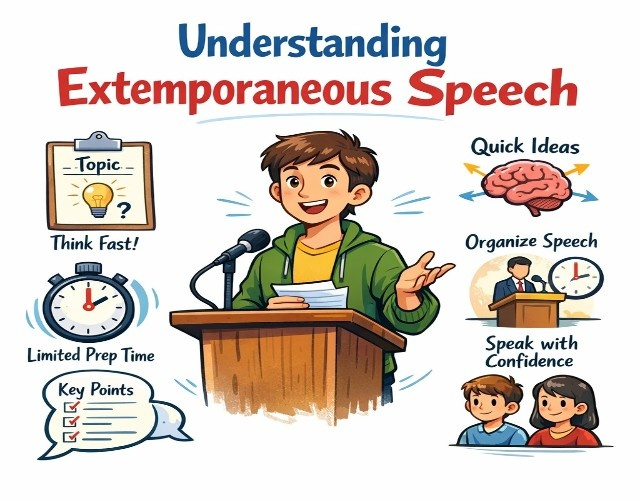
An extemporaneous speech is all about thinking on your feet! You get a topic with little or no prep time and speak spontaneously, making quick thinking and clarity super important.
Unlike memorized speeches, you don’t have a script, just your ideas and your voice. These speeches are common in debate competitions, public speaking events, and classroom activities.
The goal? To inform, persuade, and keep your audience engaged while staying natural and confident. Mastering extemporaneous speaking boosts your critical thinking, communication skills, and ability to shine under pressure.
Key Characteristics of Extemporaneous Speech
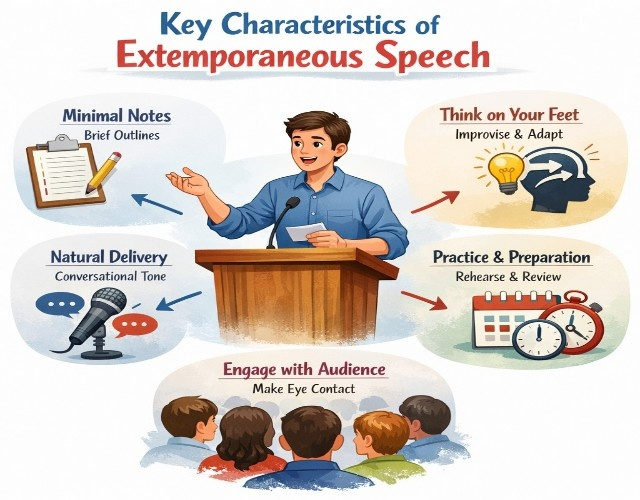
Extemporaneous speaking sits between impromptu (no prep) and memorized speeches (fully scripted). You have time to organize your thoughts, but you're still thinking on your feet during delivery.
What defines extemp speaking:
|
Why it matters: Extemp teaches you to synthesize information quickly and communicate clearly under pressure, skills that translate directly to job interviews, client meetings, and professional presentations.
SPEECH COMPETITION TOMORROW?
Skip the stress. Our professional writers handle everything
- Research compiled from credible sources
- AGG structure (Assert, Give evidence, Generalize)
- Delivery tips and timing notes included
- Unlimited Revisions
100% original. Written by debate experts. Rush delivery available.
Order NowExtemporaneous Speech vs. Other Speech Types
| Type | Prep Time | Notes Allowed | Purpose |
|---|---|---|---|
| Extemporaneous | 30 min | Yes (1 card) | Organized spontaneous speaking |
| Impromptu | 1 to 2 min | No | Pure spontaneity |
| Memorized | Days/weeks | No | Polished delivery |
| Manuscript | Days/weeks | Full script | Precise wording (political speeches) |
Why extemp is valuable: It's the closest to real world scenarios, job interviews, presentations, and panel discussions. You rarely get weeks to prepare, but you're not totally unprepared either.
Essential Elements of a Strong Extemporaneous Speech
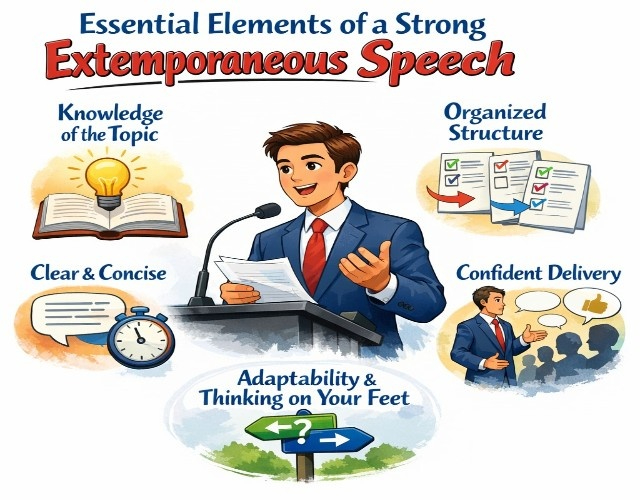
Every winning extemp speech includes these core elements:
1. Relevant and Timely Topic: Your speech should address something meaningful, current events, policy debates, or social issues that impact your audience. Judges want to see you engage with topics that matter, not generic observations anyone could make.
2. Genuine Delivery: Authenticity wins over polish. Your audience can tell when you're being real versus performing. Show you actually care about the topic through your tone, examples, and argument choices. Passion and sincerity make your points stick.
3. Natural Speaking Style Don't try to sound like someone else. Develop your own presentation voice that feels conversational, not scripted. The best extemp speakers sound like they're having an informed discussion, not delivering a lecture. Practice until the structure becomes second nature, then let your personality come through.
Extemporaneous Speaking Format
The Typical Format
- Draw topics (3 options, pick 1)
- Prep time (30 minutes in a separate room)
- Speaking time (5 to 7 minutes in front of judges)
- Questions (sometimes 2 to 3 minutes of Q&A)
What you can use during prep:
|
What you CAN'T use:
|
Extemporaneous Speech Structure
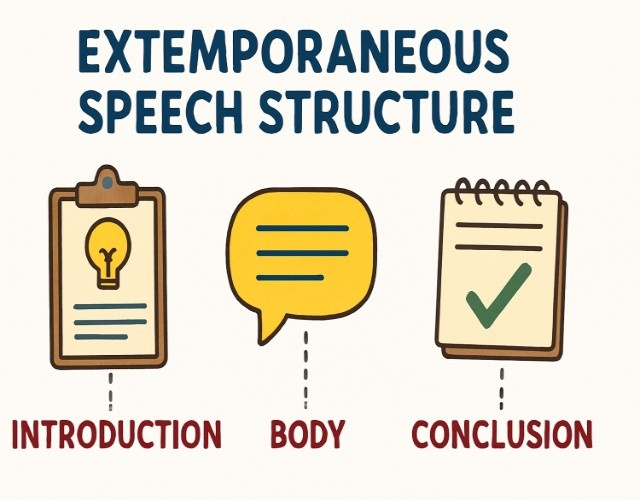
Every strong extemp speech follows this framework:
1. Introduction (45-60 seconds)
Structure:
- Attention Grabber (quote, statistic, question).
- Topic Preview (state your main argument).
- Roadmap (preview your 3 points)
Example:
"The average American checks their phone 96 times per day. But what if I told you this constant connectivity is rewiring our brains? Today I'll explain why digital addiction is a public health crisis through three key points: its neurological impact, its effect on productivity, and what we can do about it."
2. Body (3-4 minutes)
Three main points (AGG format):
Point 1: Assert: State your claim clearly (60-90 seconds)
Point 2: Give Evidence: Support with facts, statistics, examples (60-90 seconds)
Point 3: Generalize/Impact: Explain why this matters, what it means for the audience (60-90 seconds)
| Transition between points: Use signposts like "Moving to my second point..." or "Now let's consider..." |
3. Conclusion (30-45 seconds)
Structure:
- Summarize your 3 points (one sentence each)
- Return to intro (circle back to your opening hook)
- Call to action or thought-provoking final statement
Example:
"We've seen how digital addiction changes our brains, destroys our focus, and isolates us socially. So the next time you reach for your phone, ask yourself: am I using technology, or is it using me?"
The AGG Structure: Your Extemp Speech Framework
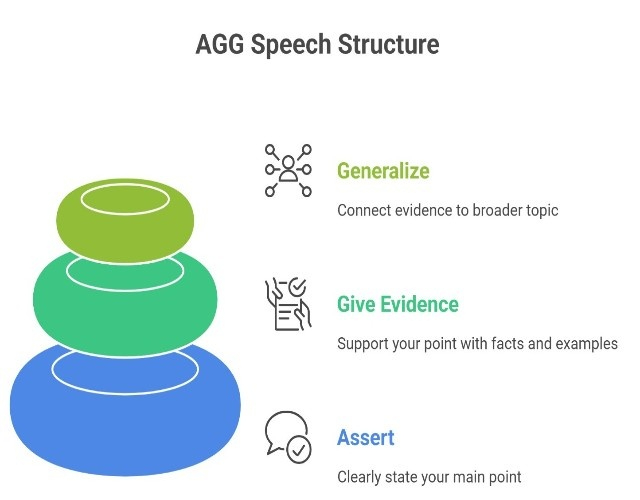
Every winning extemporaneous speech follows the same three part pattern for each main point:
Assert: State your claim in one clear sentence. No hedging, no "I think maybe." Just tell them what you're arguing. |
| Give Evidence: Back it up with specific data. Name your source, cite the year, and include actual numbers. "A 2025 Stanford study found 73% of students..." beats "studies show" every time. |
| Generalize: Explain why it matters. Connect your evidence back to the bigger picture. Answer the "so what?" question that judges are thinking. |
Here's how it works
|
Repeat this structure for all three points in your speech. Same pattern, different content. Judges can follow it, you can remember it, and your argument stays organized under pressure.
Preparing Your Extemporaneous Speech in 30 Minutes
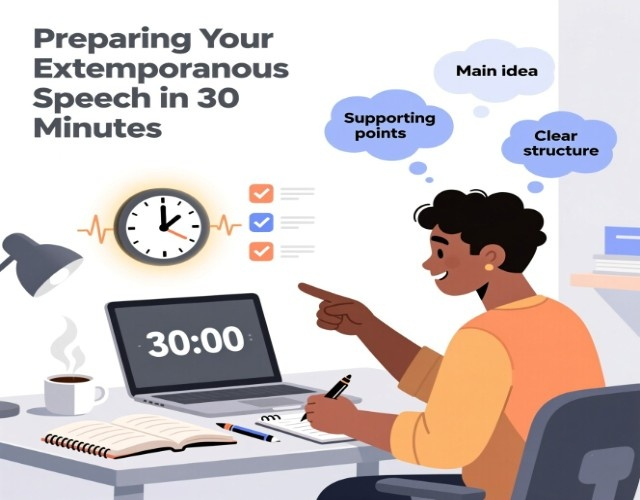
Minutes 1 to 5: Choose & Understand Your Topic
Step 1: Read all 3 topic options Step 2: Pick the one you know MOST about (not the easiest) Step 3: Clarify the question being asked |
Example topics
|
Minutes 6 to 15: Research & Gather Evidence
What to look for:
|
Organization tip: Use your prep materials' table of contents or index to find relevant sections fast.
Minutes 16 to 22: Outline Your Speech
Create a simple outline
1. INTRO 2. POINT 1: [Claim] 3. POINT 2: [Claim] 4. POINT 3: [Claim] 5. CONCLUSION
Minutes 23 to 28: Write Your Note Card
Note card rules (most competitions):
|
What to include:
|
Minutes 29 to 30: Practice Opening
Say your introduction OUT LOUD 2 to 3 times. This sets your confidence and locks in your opening.
Delivery Tips for Extemporaneous Speaking
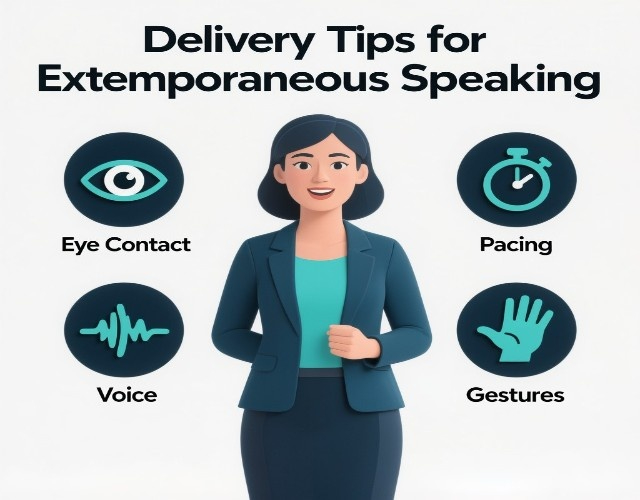
1. Body Language
Do's:
Don't:
|
2. Vocal Delivery
Vary your:
Avoid:
|
3. Using Your Note Card
Best practices:
|
Extemporaneous Speech Topics

Looking for good topic ideas for your extemporaneous speaking? Though the speaker hardly has any say in it, here are some topics that would make a good extemporaneous speech.
- What is the reason behind celebrating Thanksgiving?
- Who is the laziest person in your class and why?
- Which teacher inspired you to study harder?
- Is it important to monitor and restrict people in public?
- How did your parents motivate you to pick your majors?
- What are the advantages of diversity in educational institutions?
- What is the most important skill for better job opportunities?
- What are the problems of kids coming from broken families?
- What can we do to control global warming?
- How does automation affect the job environment?
Still Struggling? Our professional essay writing service writers create fully researched extemporaneous speeches with sources cited, structure outlined, and delivery notes included
Common Extemporaneous Speech Mistakes to Avoid
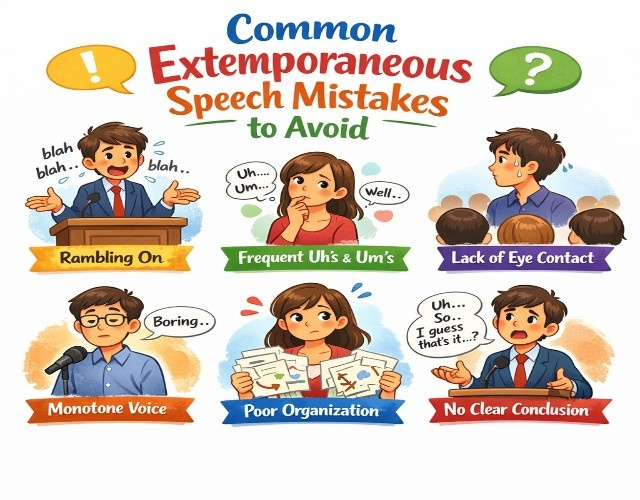
Even experienced speakers fall into these traps. Here's what to watch out for:
1. Trying to memorize everything. You don't have time, and it'll show. Memorized speeches sound robotic; judges can tell the difference between someone who internalized their structure versus someone reciting lines. Use keywords and speak naturally instead.
2. Ignoring time limits. Going over or under your time allocation costs points in competitions and loses audience attention in real settings. Practice with a timer during your prep. A 7 minute speech should feel like 7 minutes when you rehearse, not when you're in front of judges.
3. Using weak evidence. Saying "studies show..." or "experts say..." isn't credible. Judges want specifics: "According to a 2025 Stanford study published in the Journal of Communication..." Strong evidence includes the source, year, and concrete data. Vague references hurt your authority.
4. Abandoning structure mid speech. Nerves make you want to ramble. When you lose your place, speakers often jump between points or repeat themselves. Stick to your outline, Assert, give evidence, and generalize for each point. Your note card is there for a reason.
5. Reading from your note card. Eye contact matters. If you're staring at your card the whole time, you've lost your audience. Glance down briefly (1 to 2 seconds max), then look back up. Your card is a safety net, not a script.
6. Skipping practice runs. "I'll just wing it" never works. Even 2 to 3 full run to throughs during your prep time make the difference between smooth delivery and awkward pauses. Practice your opening and closing, especially, as these frame your entire speech.
7. Forgetting to cite sources during delivery. It's not enough to have sources on your card, you need to verbally cite them as you speak. "According to the New York Times last month..." or "As reported by the Congressional Budget Office..." This builds credibility in real time.
Still Struggling With That Speech?
Let our extemp specialists handle it. We've written 1,000+ competitive speeches with proven structures that judges love.
- Evidence from credible sources (Stanford, Pew Research, Reuters)
- Perfect AGG format every time
- Free Turnitin report included
- Delivery notes showing emphasis and pacing
No AI. No templates. Just speeches that get results.
Order NowBottom Line
Extemporaneous speaking is about quick thinking and clear communication. Follow the AGG structure (Assert, Give evidence, Generalize), practice your opening, and use your 30 minutes wisely. The more you practice, the more natural it becomes.
For students and professionals looking to sharpen their skills, our Speech and Debate Guide offers expert tips, strategies, and examples specifically designed to excel in extemporaneous speaking competitions. With the right preparation and practice, you can turn any topic into a compelling, persuasive speech.