Understanding Graduation Speech

A graduation speech is that big commencement moment when one student gets to speak for the whole class. It’s basically your shot to shine, make people smile, and leave them with something they’ll actually remember.
Most students plan weeks ahead, brainstorming ideas, editing drafts, and practicing out loud, because graduation isn’t just a ceremony; it’s a major milestone. A good speech hits the sweet spot: long enough to share memories, lessons, and thank-yous, but short enough that nobody zones out.
Think of it as a final recap of your college journey, celebrating wins, acknowledging challenges, and appreciating the people who helped you get here. The best graduation speeches strike a balance between humor, heart, and authenticity, allowing the audience to feel both nostalgia and anticipation for what comes next.
Key Elements of a Graduation Speech

Every effective graduation speech balances these essential components:
1. Timing and brevity matter. Aim for 5-7 minutes maximum. Your classmates are excited to celebrate, not sit through a 20-minute monologue. Say more with fewer words. Hit your key points and get off stage while people still want to hear more.
2. Memories anchor the message. Share 2-3 specific moments that defined your class experience, the time everyone pulled an all-nighter before finals, the professor who changed how you think, the campus tradition that brought everyone together. Concrete stories beat abstract reflections every time.
3. Acknowledge accomplishments without bragging. Celebrate what your class achieved together, the academic milestones, the challenges overcome, and the growth from freshman year to now. Focus on collective wins, not individual glory. This speech represents everyone, not just you.
4. Reflection adds depth. Take a moment to acknowledge how far you've all come. What did you learn beyond the textbooks? How did struggles shape you? Keep it real, genuine vulnerability connects more than polished platitudes.
5. The future brings it home. End by looking forward. What's next for your class? What possibilities exist? What advice would you give your classmates as they leave? This section should inspire without being preachy.
Need a Custom Graduation Speech?
Our speechwriters capture your voice and story, then structure it into a memorable commencement address your classmates will actually remember.
- Written by academic specialists
- Any subject, any deadline
- On-time delivery
- 24/7 support and direct writer communication
Zero AI. Zero stress. Just results.
Order NowGraduation Speech Structure That Works
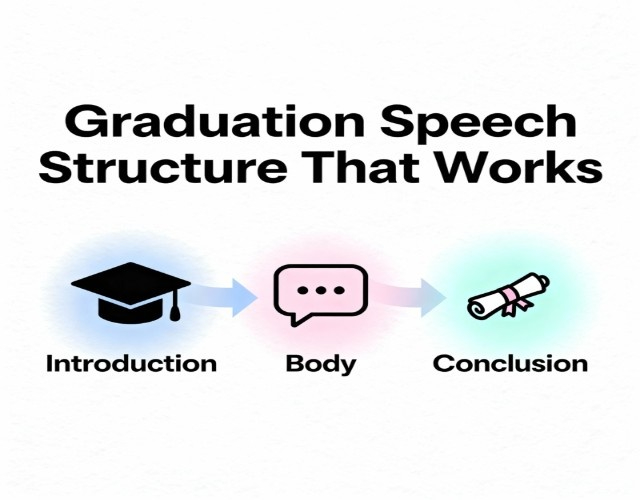
1. Opening (30 to 45 seconds)
- Start with gratitude. Thank the previous speakers, administrators, teachers, and parents. Acknowledge the work everyone put into making this day happen. This isn't just politeness; it sets a tone of appreciation.
- Introduce yourself briefly. State your name and class year. If your school tradition includes it, mention your major or involvement. Keep this under 10 seconds; they already know who you are.
- Hook them immediately. Open with a memorable quote, a question that makes people think, or a brief story that captures the moment. Avoid clichés like "Webster's Dictionary defines graduation as..." Go for something that feels fresh.
2. Body (3 to 5 minutes)
- Share meaningful experiences. Pick 2-3 stories that represent your shared journey. Make them specific, names, places, moments people remember. Generic observations about "the college experience" put people to sleep. Real stories keep them engaged.
- Balance humor with substance. A few laughs are good; they ease tension and keep energy up. But don't turn your speech into a comedy routine. Mix lighter moments with genuine reflection on what matters.
- Connect experiences to lessons. Don't just tell stories, explain what they taught you. How did that failed group project actually teach teamwork? What did late-night study sessions reveal about resilience? Draw the line from experience to insight.
- Address the new chapter. Acknowledge that everyone's nervous about what's next. Talk honestly about uncertainty while emphasizing possibility. Your classmates want to know they're not alone in feeling both excited and scared.
3. Closing (30 to 45 seconds)
- Circle back to your opening. Reference the quote, question, or story you started with. Show how the speech's journey brought you back to that initial idea, but with a new understanding.
- Issue a call to action. Give your classmates something to carry forward. It could be a commitment to stay connected, a challenge to pursue their dreams, or a reminder to support each other. Make it specific and achievable.
- Thank everyone. Close by thanking the audience for listening and celebrating this moment together. End on a note of appreciation and optimism.
Remember! Studying speech and debate examples can help you shape your graduation speech with cleaner transitions, better pacing, and a more audience-focused delivery
Writing Your Graduation Speech: Step by Step
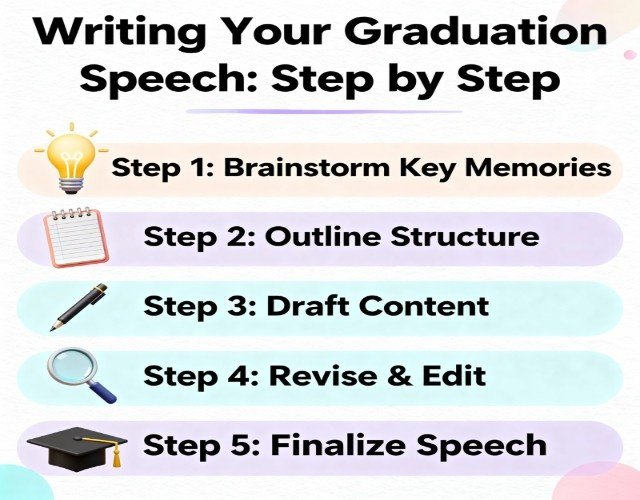
1. Begin by brainstorming. Before writing anything, spend 20 to 30 minutes listing: memorable class moments, lessons learned, people who impacted you, funny incidents, challenges overcome, and hopes for the future. Get everything on paper first.
2. Choose your core message. From your brainstorm, identify the 2 to 3 ideas that matter most. What do you actually want people to remember tomorrow? Next week? In five years? Build your speech around those ideas.
3. Research great graduation speeches. Watch 3 to 5 commencement speeches from people you admire, not to copy them, but to see what works. Notice how they structure ideas, when they pause, how they use humor, and when they get serious. Learn from effective speakers.
4. Write conversationally. Don't write how you think a speech "should" sound. Write how you actually talk. Read sentences aloud as you write them. If you wouldn't say it to a friend, don't say it on stage. Authenticity beats formality.
5. Keep it personal but inclusive. Use "we" more than "I." Share your experiences, but frame them in ways your classmates relate to. You're speaking for the class, not just about yourself. Balance personal stories with collective experiences.
6. Choose quotes carefully. One powerful, relevant quote is better than five mediocre ones. If you use a quote, explain why it matters to your message. Don't just drop it in and move on, connect it to your class's journey.
7. Cut ruthlessly. Your first draft will be too long. That's normal. Go through and eliminate anything that doesn't directly support your core message. Every sentence should earn its place. If you're debating whether something adds value, cut it.
8. End with impact. Your closing lines matter most; people remember the last thing they hear. Spend extra time crafting a final thought that's memorable, hopeful, and authentic. Avoid generic endings like "Go forth and conquer." Make it yours.
Delivery Tips for Graduation Day
1. Practice out loud repeatedly. Reading silently doesn't prepare you for actual delivery. Practice the full speech standing up, out loud, at least 10 times. Time yourself. Record yourself. Practice until the structure feels natural.
2. Don't memorize word for word. Memorized speeches sound robotic, and you'll panic if you forget a line. Instead, internalize the structure and key points. Know your opening and closing cold, but let the middle flow naturally from your notes.
3. Make eye contact. Look at different sections of the audience as you speak. Connect with real faces, your friends, your professors, your family. Don't stare at your notes or at one person the entire time.
4. Slow down. Nerves make everyone rush. Deliberately speak slower than feels natural. Pause between major points. Let important ideas land before moving to the next one. Silence is powerful; don't be afraid of brief pauses.
5. Show emotion authentically. If a moment genuinely moves you, let it show. If something makes you smile, smile. Audiences connect with real emotion. Don't perform feelings you don't have, but don't hide the ones you do.
6. Use the microphone properly. Test it beforehand if possible. Keep it a few inches from your mouth. Don't tap it, blow into it, or move it around while speaking. If it's a podium mic, adjust the height before you start.
7. Breathe. Before you start, take three deep breaths. When you feel rushed or nervous mid-speech, pause and breathe. Oxygen helps your brain and body perform better.
Pro Tip: Study polished speech and debate examples to learn how speakers build momentum, highlight key moments, and close with emotion, perfect techniques for graduation speeches.
STRUGGLING WITH YOUR DRAFT?
Professional writing assistance tailored to your needs
- Professional speechwriters who understand graduation
- Your stories, experiences, and voice, we just structure it
- Delivery notes and timing guidance included
- Full privacy and confidentiality
100% original. Sounds like you. Delivered on time.
Order NowCommon Graduation Speech Mistakes
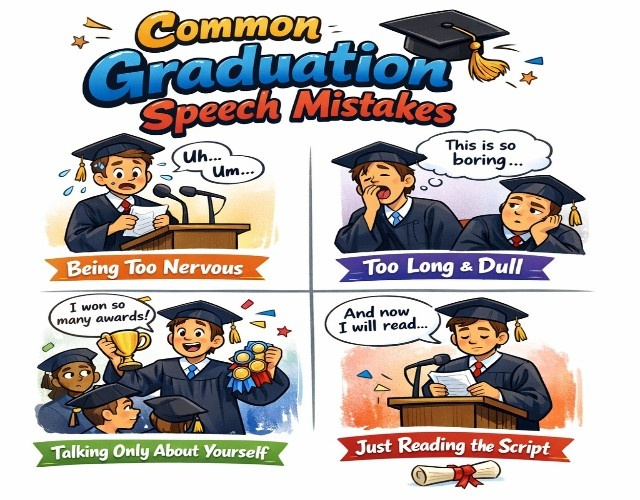
- Talking only about yourself. Your speech represents the entire class. If every story centers on your personal achievements with no connection to shared experiences, you'll lose the room. Make it about "we" and "us," not just "I" and "me."
- Going over time. Administrators give you a time limit for a reason. Going over makes you look self-important and cuts into other parts of the ceremony. Practice with a timer. If you're running long, cut content, don't speed through it.
- Using inside jokes nobody gets. References that only your friend group understands alienate everyone else. If you include humor, make sure most of your class (and ideally the broader audience) will get it. Inside jokes should be inside the class, not inside your inner circle.
- Choosing inappropriate topics. This isn't the time to call out teachers you disliked, air grievances, or make controversial political statements. Save edgy content for your personal social media. Graduation speeches should unite, not divide.
- Reading the entire speech. Looking down at notes the whole time kills the connection. Use note cards with key points and transitions, but maintain eye contact with your audience. People remember speakers who engage them, not speakers who read to them.
- Forcing inspiration. Generic motivational quotes and clichéd advice feel hollow. Don't tell people to "follow their dreams" or "be the change" unless you're connecting it to specific, authentic experiences. Shallow inspiration is worse than no inspiration.
- Ignoring the moment. Graduation is emotional; people are celebrating but also saying goodbye. Acknowledge these mixed feelings. Pretending everyone's just happy misses the reality of the moment.
Graduation Speech Topic Ideas

Need direction? Build your speech around one of these approaches:
Gratitude Focus
- Thank a teacher who changed your path
- Acknowledge parents' sacrifices
- Appreciate classmates who became family
- Recognize unexpected sources of support
Shared Experience Focus
- The class tradition that defined you
- The challenge everyone faced together
- The moment that changed everything
- The running joke that captured your class culture
Lesson Learned Focus
- What failure taught you
- The skill you didn't expect to gain
- The perspective shift that mattered most
- The truth you discovered about yourself
Looking Forward Focus
- Advice for staying connected
- How to handle uncertainty
- The one thing to remember from this experience
- Your hope for where classmates will be in 10 years
Humor Based Focus
- The absurd moments that made college memorable
- Expectations vs. reality of your college experience
- The unspoken rules everyone learned
- Things you'll weirdly miss
Pick one focus and commit to it. Trying to cover everything results in a scattered speech that connects to nothing.
Need help crafting your speech? Our professional essay writing service writers create custom graduation speeches that sound like you, honor your class’s experience, and land with confidence on graduation day.
The Formula for an Unforgettable Graduation Speech

The best graduation speeches share certain qualities that make them stick long after commencement day ends.
1. Authenticity wins over polish. Audiences can tell when you're being real versus performing. Share your actual thoughts and feelings, not what you think a graduation speech "should" sound like. Imperfection and genuine beats are polished and hollowed out every time.
2. Specificity creates connection. Generic statements about "the journey" or "following dreams" wash over people without impact. But when you mention the specific night everyone studied together during the power outage, or the professor who challenged everyone to think differently, those details bring people into the moment with you.
3. Emotion balanced with hope. Graduation is bittersweet; you're leaving a chapter behind while starting a new one. Acknowledge both sides. Let yourself feel the weight of goodbye while pointing toward the excitement of what's next. Don't force optimism if you're genuinely sad, but don't dwell only on endings when beginnings await.
4. Humor that includes everyone. A few well-placed laughs ease tension and keep energy up, but inside jokes that only three people understand alienate the rest. If you use humor, make sure your whole class gets it. The best graduation speech humor comes from shared experiences that everyone remembers.
5. A clear message you believe in. After all the stories and advice, what's the one thing you want classmates to remember? Identify it early in your writing process and build everything around that core truth. Scattered speeches that try to say everything end up saying nothing.
READY TO GIVE A SPEECH PEOPLE ACTUALLY REMEMBER?
Stop stressing over your graduation speech. Our professional writers create custom commencement speeches
- Include YOUR stories and class experiences
- Come with delivery tips and emphasis notes
- Sound authentically like you (not generic)
- Unlimited revisions until it's perfect
Trusted by thousands of graduates. Same day rush available.
Order NowBottom Line
Your graduation speech doesn’t have to be flawless; it just needs to feel genuine. The speeches people remember are the ones built on real experiences, honest humor, and shared milestones. Talk about the journey, the struggles, the late nights, the friendships, and the moments that made your class who you are today.
Practice enough so you’re confident on stage, but don’t over-rehearse to the point where it feels scripted or robotic. Authenticity always beats perfection, especially in speeches meant to celebrate transition and growth. In the end, your classmates won’t remember every line; you’ll be remembered for how you made them feel and how well you captured the spirit of your class.
If you want to level up your delivery, presentation, or structure, you can always refer to our speech and debate guide for quick tips on pacing, tone, storytelling, and audience engagement.

-19982.jpg)