What Are Literary Devices?
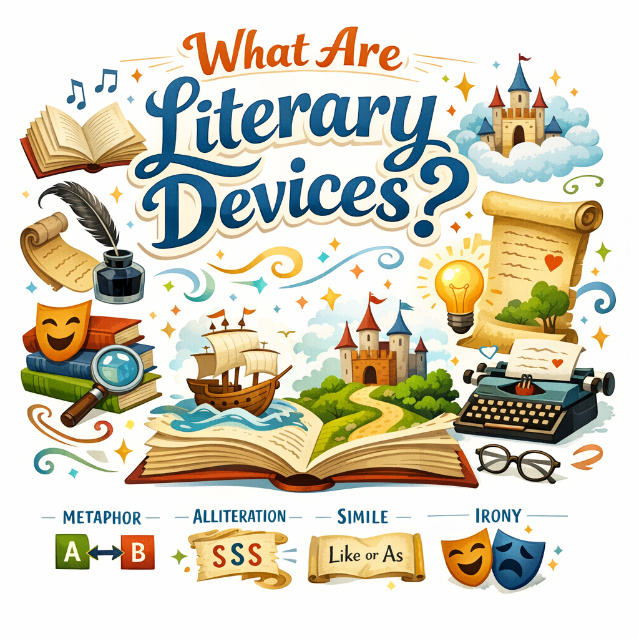
Literary devices are techniques writers use to create meaning, add depth, and make their work more engaging. Think of them as a writer's toolkit. Each device serves a specific purpose, from creating vivid imagery to building suspense.
You've probably used literary devices without realizing it. When you compare someone to sunshine or describe silence as "deafening," you're using metaphors and oxymorons. These techniques appear everywhere: novels, poetry, essays, and even everyday conversations.
Why Literary Devices Matter in Your Writing
Understanding literary devices isn't just about passing your English class. These techniques help you:
- Make arguments stronger: Metaphors and analogies clarify complex ideas
- Create memorable writing: Vivid imagery sticks with readers long after they finish
- Show sophistication: Proper device usage demonstrates advanced writing skills
- Control tone and mood: The right technique shapes how readers feel
- Earn better grades: Professors reward thoughtful device application
Whether you're writing an analytical essay or a creative piece, mastering these tools elevates your work from basic to brilliant.
TRANSFORM "BASIC" TO "BRILLIANT" WITH LITERARY DEVICES.
Our professionals will elevate your essay with masterful device integration.
- Strategic use of motif, symbolism, and irony
- Writing that demonstrates sophisticated literary understanding
- Polished prose that impresses literature professors
- Elevation & Integration Service
Don't just mention devices; wield them with expert precision.
Order NowHow to Write About Literary Devices (Step by Step)
Writing about literary devices in essays follows a clear process:
Step 1: Identify the Device
Read carefully and mark where devices appear. Don't just spot them, understand why the author chose that specific technique at that specific moment.
Step 2: Name It Correctly
Use precise terminology. "Comparison" is vague. "Extended metaphor comparing life to a journey" is specific and shows expertise.
Step 3: Explain Its Purpose
Never just list devices. Always answer:
- What effect does this create?
- How does it support the author's message?
- What would be lost without it?
Step 4: Connect to Themes
Show how the device relates to the work's bigger ideas. A recurring symbol isn't random; it reinforces central themes.
Step 5: Use Textual Evidence
Quote the exact passage showing the device. Format quotes correctly and cite page numbers. Evidence proves you're not making claims up.
Example Analysis: "In The Great Gatsby, Fitzgerald uses green light symbolism to represent Gatsby's unreachable dreams. The light appears across the bay at Daisy's dock, always visible but forever out of reach. This physical distance mirrors the emotional and social barriers preventing Gatsby from recapturing the past."
This analysis identifies the device (symbolism), explains its purpose (representing dreams), and connects it to the theme (the impossibility of recapturing the past).
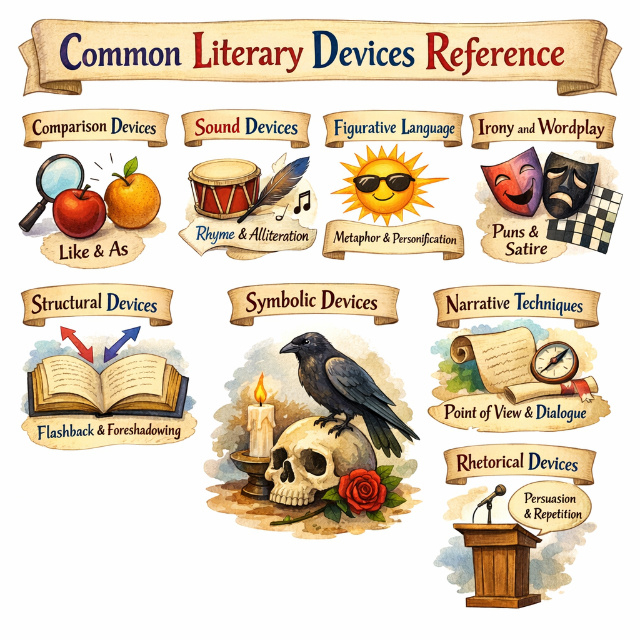
Common Literary Devices Reference
Below you'll find detailed explanations of 28 essential literary devices, organized by type. Each entry includes definitions, examples, and practical usage guidance.
1. Comparison Devices
These devices draw parallels between different things to create meaning.
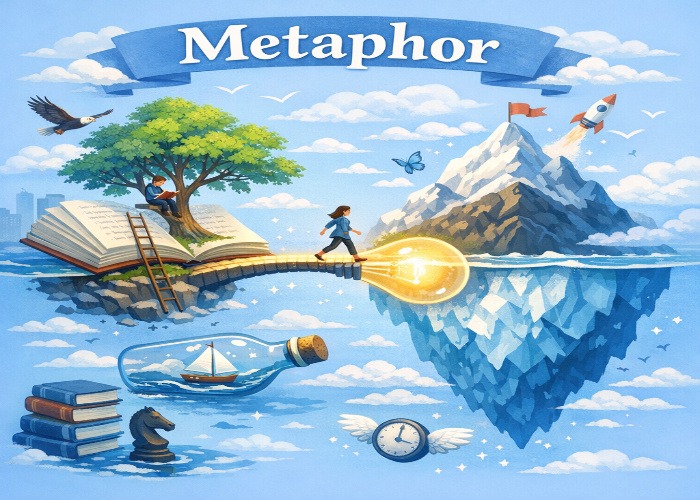
A. Metaphor
What it is: A direct comparison stating one thing is another thing. Example: "Time is a thief" suggests time steals moments from us. When to use: When you want to create a strong, direct comparison without using "like" or "as." Common mistake: Mixing metaphors. Don't write "Time is a thief sailing on the ocean of life." Pick one comparison and develop it. |
Want a deeper analysis of metaphor usage? Check our metaphor examples guide for annotated samples.
B. Simile
What it is: A comparison using "like" or "as." Example: "Her smile was like sunshine" or "He ran as fast as lightning." When to use: When you want a softer, more explicit comparison than a metaphor provides. |
C. Analogy
What it is: An extended comparison explaining one concept through another familiar concept. Example: "A cell is like a factory, the nucleus is the control center, mitochondria are power plants, and ribosomes are assembly lines." When to use: Explaining complex topics to audiences unfamiliar with the subject. |
Explore how analogies strengthen arguments in our analogy guide with step by step examples.
2. Sound Devices
These techniques use the actual sound of words to create effects.
A. Alliteration
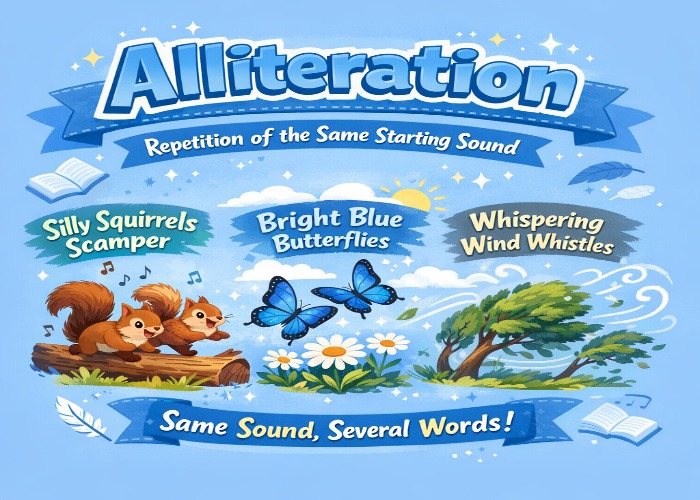
What it is: Repetition of the same consonant sound at the beginning of nearby words. Example: "Peter Piper picked a peck of pickled peppers." When to use: To create rhythm, emphasize key phrases, or make writing more memorable. Warning: Overuse makes writing feel childish. Use sparingly in academic essays. |
Explore how analogies strengthen arguments in our analogy guide with step by step examples.
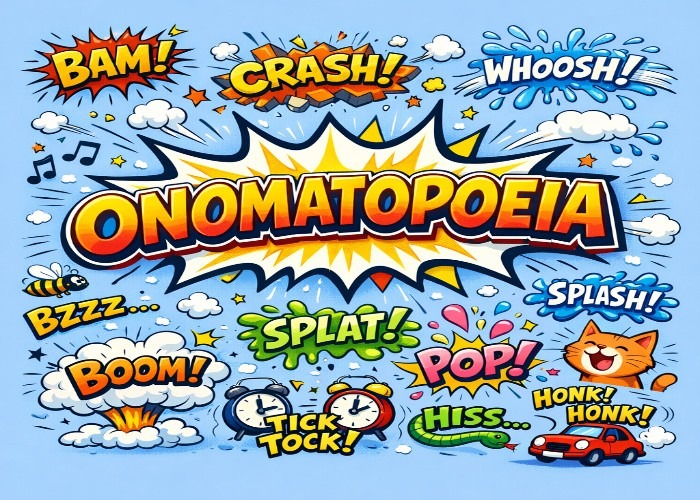
B. Onomatopoeia
What it is: Words that imitate the sounds they describe. Example: "The bacon sizzled in the pan" or "Thunder boomed overhead." When to use: Creating vivid sensory experiences, especially in narrative writing. |
Our onomatopoeia guide covers how to use sound words without sounding amateurish.
3. Figurative Language
These devices create meaning beyond literal word definitions.
A. Hyperbole
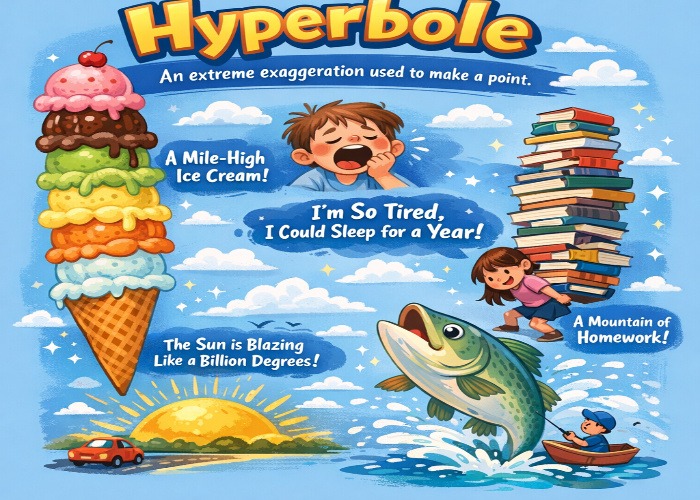
What it is: Deliberate exaggeration for emphasis or effect. Example: "I've told you a million times" or "This backpack weighs a ton." When to use: Adding humor, emphasizing strong emotions, or making a point memorable. Academic usage: Works in creative writing and informal analysis. Avoid in formal research papers. |
Find the line between effective hyperbole and overdoing it in our hyperbole examples.
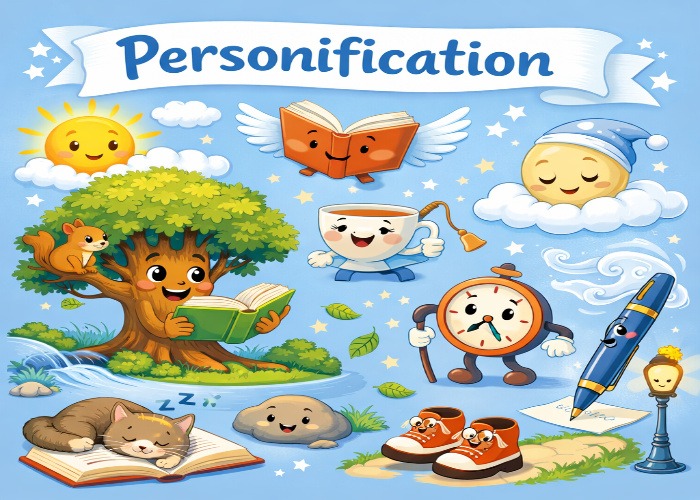
B. Personification
What it is: Giving human characteristics to non human things. Example: "The wind whispered through the trees" or "Opportunity knocked at his door." When to use: Making abstract concepts tangible or creating atmospheric writing. |
Master this technique with our personification examples showing correct application.
C. Imagery
What it is: Descriptive language engaging the five senses. Example: "The warm, buttery smell of fresh croissants filled the bakery, mingling with the rich aroma of espresso." When to use: Whenever you want readers to experience rather than just read about something. The five types:
|
Our imagery guide breaks down each type with annotated examples.
4. Irony and Wordplay
These devices create meaning through contrast or clever language use.
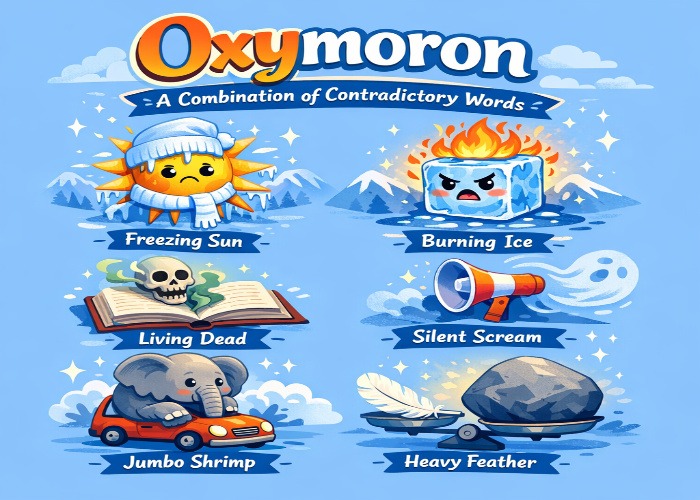
A. Oxymoron
What it is: Two contradictory terms placed together. Example: "Deafening silence," "jumbo shrimp," "bittersweet victory." When to use: Highlighting paradoxes or complex emotions that can't be captured in simple terms. |
See oxymorons in classic literature with our oxymoron examples.
B. Puns
What it is: Wordplay exploiting multiple meanings or similar sounds. Example: "Time flies like an arrow; fruit flies like a banana." When to use: Creating humor in creative writing. Generally avoid in academic essays unless analyzing puns. |
Learn when puns work (and when they don't) in our pun usage guide.
5. Structural Devices
These techniques organize and present ideas in specific ways.
A. Antithesis
What it is: Contrasting ideas placed in parallel structure. Example: "It was the best of times, it was the worst of times" (Dickens). When to use: Emphasizing contrasts, creating balanced rhythm, or highlighting opposing forces. |
Master parallel construction with our antithesis examples.
B. Chiasmus
What it is: A reversal of grammatical structures in successive phrases (AB-BA pattern). Example: "Ask not what your country can do for you, ask what you can do for your country" (JFK). When to use: Creating memorable phrases, emphasizing relationships between concepts, or adding sophistication to writing. |
See chiasmus across speeches and literature in our chiasmus guide.
6. Symbolic Devices
These techniques add layers of meaning beyond surface level text.
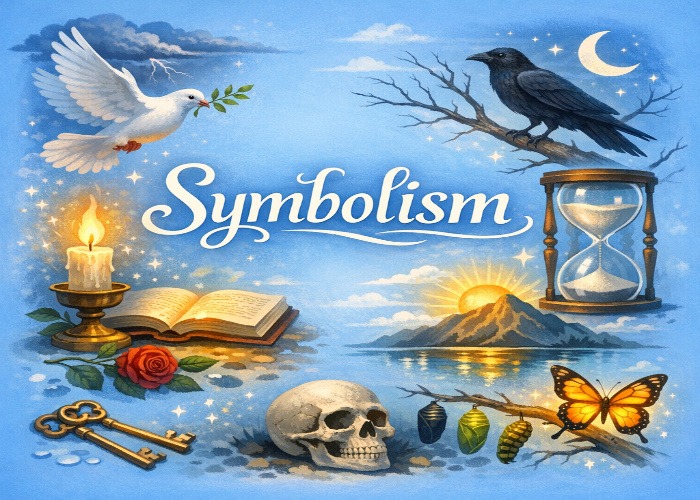
A. Symbolism
What it is: Objects, characters, or events representing abstract ideas. Example: In The Great Gatsby, the green light symbolizes hope, dreams, and the American Dream. When to use: Adding depth to writing, creating recurring motifs, or representing complex themes concretely. Types of symbols:
|
Decode symbol types with our symbolism examples across genres.
B. Allegory
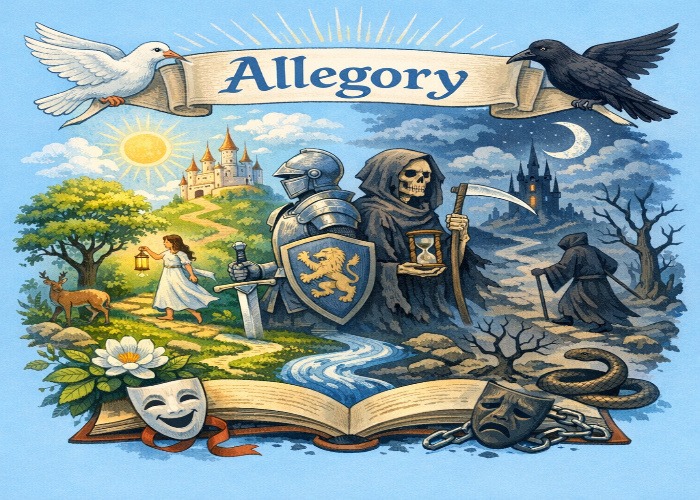
What it is: An extended metaphor where an entire narrative represents something else. Example: Animal Farm uses farm animals to represent figures from the Russian Revolution. When to use: Commenting on real world issues indirectly, creating layered meaning, or teaching moral lessons. Difference from symbolism: Symbols represent one thing. Allegories create entire parallel narratives. |
Our allegory guide explains how to identify and analyze allegorical works.
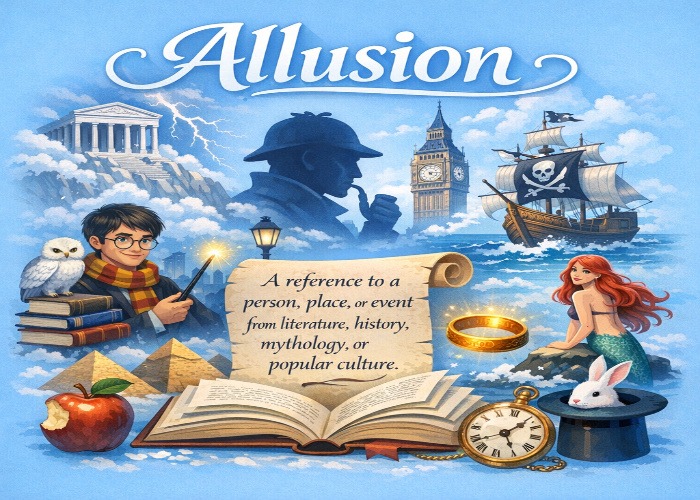
C. Allusion
What it is: A brief, indirect reference to a person, place, event, or other work. Example: "He's a real Romeo with the ladies" alludes to Shakespeare's Romeo and Juliet. When to use: Adding depth for knowledgeable readers, connecting to shared cultural knowledge, or creating economy of language. Warning: Only works if your audience recognizes the reference. Obscure allusions confuse rather than illuminate. |
Master cultural references with our allusion examples from literature and pop culture.
NEED A LITERARY DEVICES ANALYSIS ESSAY? DONE.
From imagery to foreshadowing, our experts will write your custom analysis.
- Comprehensive device exploration for your assigned text
- Clear thesis on author's craft and purpose
- Full essay drafting with proper citations
- Expert Craft Analysis
Submit a flawless, insightful analysis written by literature specialists.
Order Now7. Narrative Techniques
These devices control how stories unfold and how readers experience them.
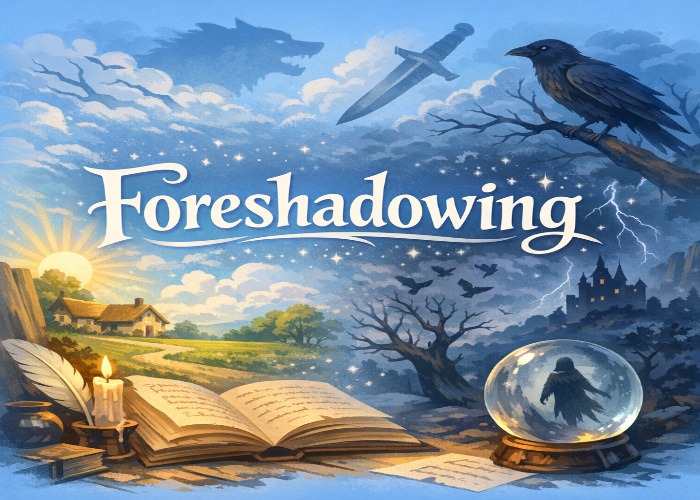
A. Foreshadowing
What it is: Hints or clues about future events in a narrative. Example: Dark clouds gathering before tragedy strikes, or a character's offhand comment that becomes important later. When to use: Building suspense, creating cohesion, or rewarding careful readers. Types:
|
Learn to spot (and create) foreshadowing with our foreshadowing examples.
B. Mood
What it is: The emotional atmosphere a piece of writing creates. Example: Horror stories create a tense, fearful mood through word choice, pacing, and description. How to create a mood:
|
Our mood in literature guide shows how authors manipulate atmosphere.
8. Rhetorical Devices
These techniques persuade, emphasize, or create rhetorical effects.
A. Euphemism
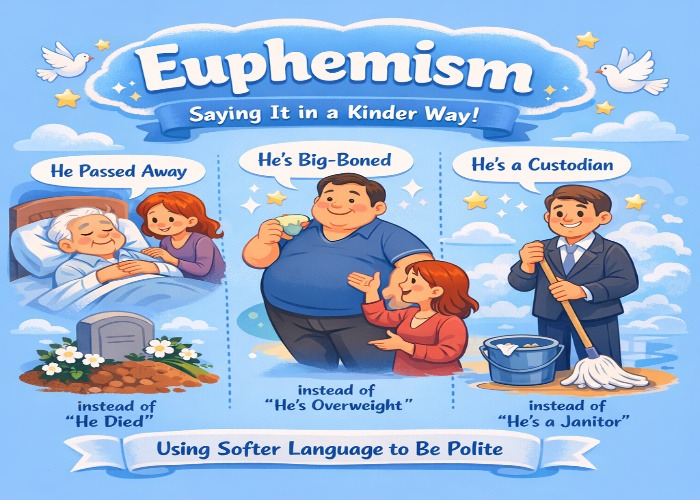
What it is: Mild or indirect words replacing harsh or unpleasant ones. Example: "Passed away" instead of "died," or "let go" instead of "fired." When to use: Softening difficult topics, showing politeness, or avoiding offense. Warning: Can become dishonest when obscuring truth (calling civilian deaths "collateral damage"). |
Understand the role of rhetoric with our euphemism examples.
B. Colloquialism
What it is: Informal language specific to regions or groups. Example: "Y'all" (Southern US), "gonna" (informal for "going to"), "chuffed" (British for pleased). When to use: Creating authentic dialogue, establishing character voice, or writing informally. Academic essays: Generally avoid unless analyzing colloquialisms or quoting dialogue. |
See colloquialisms in context with our colloquialism guide.
C. Satire
What it is: Using humor, irony, or exaggeration to criticize people, institutions, or society. Example: Animal Farm satirizes Soviet communism. The Onion satirizes news media. When to use: Social commentary, exposing hypocrisy, or critiquing power structures. Types:
|
Learn satire's power with our satire examples from Swift to modern comedy.
Additional Literary Devices Reference
Anthropomorphism
Giving human form or personality to non human things. Differs from personification by creating full human like characters (think Mickey Mouse) rather than just attributing human qualities.
Amplification
Expanding a statement with additional details to emphasize or elaborate. "The storm was terrible. It destroyed homes, flooded streets, and left thousands without power."
Anagrams
Rearranging letters to form different words. Writers use these playfully or to create hidden meanings.
Circumlocution
Using many words where fewer would work. Sometimes done deliberately for euphemistic effect or emphasis.
Epigraph
A quotation at the beginning of a book or chapter that hints at themes or sets tone.
Motif
A recurring element (object, phrase, situation) that has symbolic significance and helps develop themes.
Paradox
A statement that seems contradictory but reveals truth. "Less is more" or "The only constant is change."
Portmanteau
Blending two words to create a new word with combined meaning. "Brunch" (breakfast + lunch) or "smog" (smoke + fog).
Tone
The author's attitude toward the subject or audience, conveyed through word choice and style. Can be formal, informal, serious, sarcastic, optimistic, pessimistic, etc.
How to Identify Literary Devices While Reading
Spotting devices becomes easier with practice. Use these strategies:
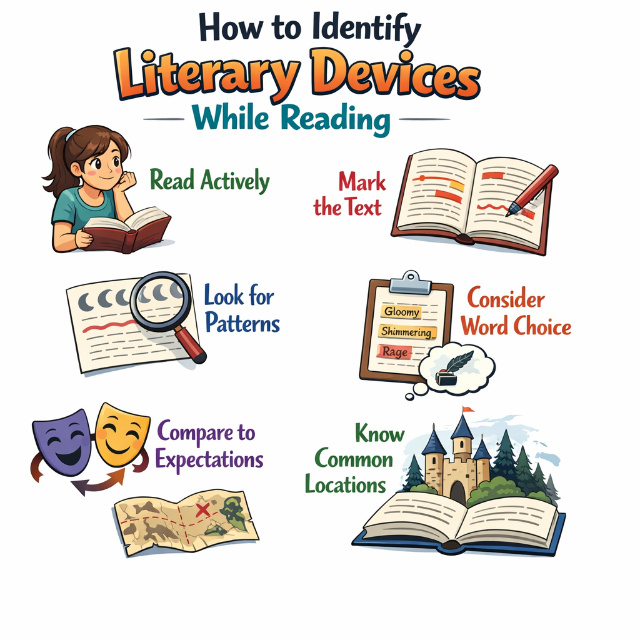
1. Read Actively
Don't just absorb words; question why the author made specific choices.
- Why this metaphor instead of stating it plainly?
- Why this word order?
2. Mark the Text
Underline interesting phrases. Write margin notes when something stands out. Annotating forces you to engage critically.
3. Look for Patterns
Repeated images, phrases, or structures usually signal intentional device use. Track recurring elements.
4. Consider Word Choice
Authors choose every word deliberately. If a description feels vivid, colorful, or unusual, examine what makes it work.
5. Compare to Expectations
When something surprises you or breaks normal patterns, that's often a device at work.
6. Know Common Locations
- Openings: Often establish tone and foreshadow themes
- Descriptions: Rich ground for imagery and figurative language
- Dialogue: Watch for colloquialisms, euphemisms, or revealing word choices
- Transitions: Antithesis and other structural devices appear here
- Endings: Authors often use symbolism and callbacks to earlier motifs
Literary Devices Vs. Literary Elements Vs. Literary Techniques
These terms confuse students, but they're distinct:
| Category | Definition | Examples |
|---|---|---|
| Literary Devices | Specific techniques creating effects | Metaphor, alliteration, foreshadowing |
| Literary Elements | Fundamental building blocks | Plot, character, setting, theme, point of view |
| Literary Techniques | Broad methods of storytelling | Flashback, stream of consciousness, unreliable narrator |
Think of it this way: Elements are what stories contain. Devices are how authors make those elements effective. Techniques are overall approaches to storytelling.
Common Mistakes When Writing About Literary Devices
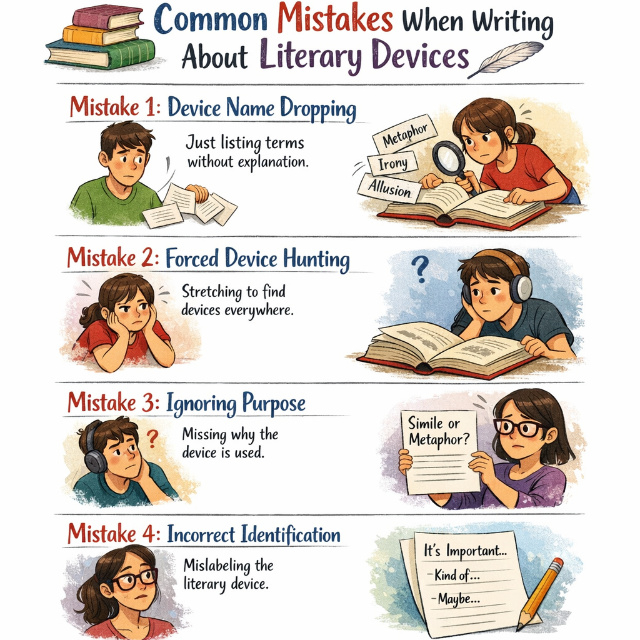
Mistake 1: Device Name Dropping
- Wrong: "Shakespeare uses metaphor, imagery, and symbolism in this scene."
- Right: "Shakespeare's metaphor comparing Juliet to the sun suggests she brings light and warmth to Romeo's previously dark world."
- Why it matters: Listing devices proves nothing. Explaining their effect demonstrates understanding.
Mistake 2: Forced Device Hunting
Some students search so hard for devices that they see them where they don't exist. Not every description is imagery. Not every comparison is a simile.
| Solution: Focus on passages that genuinely stand out. Quality analysis beats quantity. |
Mistake 3: Ignoring Purpose
Never analyze devices in isolation from the work's themes and meaning.
- Wrong: "The author uses personification in line 12."
- Right: "By personifying death as a gentle companion rather than a fearsome enemy, Dickinson challenges readers to reconsider mortality."
Mistake 4: Incorrect Identification
Students often confuse similar devices:
- Metaphor vs. simile (one uses "like"/"as," one doesn't)
- Personification vs. anthropomorphism (one gives human traits, one creates full human characters)
- Symbol vs. motif (symbols represent ideas; motifs are recurring patterns)
| Solution: Review definitions. When unsure, describe what you observe without labeling it. |
Mistake 5: Vague Analysis
- Wrong: "This metaphor is effective."
- Right: "This metaphor transforms an abstract concept into a concrete image readers can visualize, making the philosophical argument more accessible."
Specific language demonstrates a deeper understanding.
Writing a literary analysis essay, but unsure how to structure the device discussion? Our professional essay writing service includes outline templates and paragraph by paragraph guidance for literary analysis.
Downloadable Resource for Mastering Literary Devices
Download this comprehensive literary devices workbook to gain a practical toolkit for both analyzing literature and enhancing your own writing. This interactive guide provides fillable templates, analysis frameworks, and creative exercises that move beyond simple definitions to build genuine skill. You'll master devices through applied practice in identification, comparative analysis, and genre specific application. Secure your free copy to deepen your literary insight and craft more powerful, nuanced writing.
PROFESSIONAL LEVEL LITERARY ANALYSIS, GUARANTEED.
Leverage our experts’ training to submit a device driven essay you can be proud of.
- "A Grade or Revise" guarantee on all analysis
- Work directly with MA/PhD level literature writers
- Original, insightful, and perfectly formatted essays
- Expert Grade Guarantee
Invest in analysis that reflects true scholarly understanding.
Order NowThe Bottom Line
Literary devices transform ordinary writing into memorable art. They're not decoration, they're how authors create meaning, shape reader experience, and convey complex ideas elegantly.
As a student, understanding these tools does more than help you pass English class. It teaches you to read critically, think analytically, and communicate effectively, skills that matter in every field.
Start with the devices you encounter most: metaphor, imagery, symbolism. Build from there. Soon you'll spot techniques automatically and understand not just what authors write, but how they make it work.
Need more guidance? Browse our device specific guides above. Each one goes deeper with annotated examples, usage tips, and analysis strategies.

-19964.jpg)
-20128.jpg)


-20008.jpg)
-20016.jpg)