-19577.jpg)
Literary Analysis Essay Topics: Shakespeare
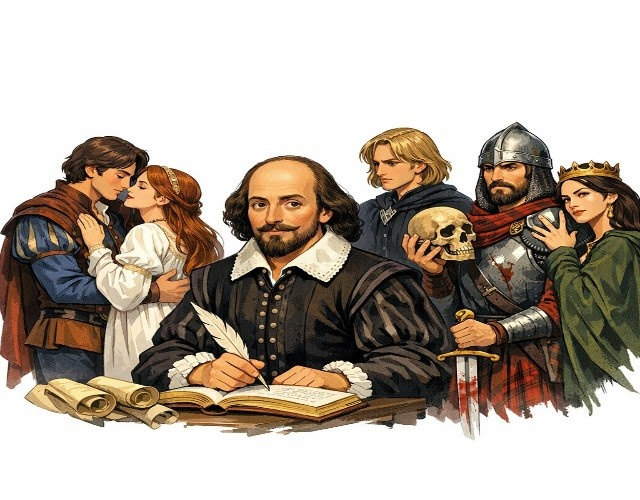
Literary Analysis Topics for Romeo and Juliet (25 topics)
Easy
1. Light and dark imagery throughout the play.
2. Role of fate versus free will in the tragedy.
3. Parent-child relationships and conflict.
4. Function of the Nurse as comic relief.
5. Symbolism of poison in the play.
Medium
6. How Mercutio's death shifts the play's tone from comedy to tragedy.
7. Juliet's character development from obedient daughter to independent woman.
8. The balcony scene is a microcosm of the lovers' relationship.
9. Time pressure and rushed decisions leading to tragedy.
10. Role of Friar Lawrence as both helper and catalyst for disaster.
Hard
11. Dramatic irony creates inevitability throughout the play.
12. Language patterns: how characters speak differently about love versus violence.
13. The play's critique of honor culture and masculine violence.
14. Structural symmetry: mirrored scenes and their significance.
15. How the Prologue frames audience interpretation of events.
More Romeo and Juliet
16. Dream symbolism and premonitions.
17. Public versus private identities.
18. Marriage as a business transaction versus a romantic choice.
19. Comic elements within tragedy.
20. Youth versus age in decision-making.
21. Night as a sanctuary versus day as a threat.
22. Religious imagery and its irony.
23. Names and identity ("What's in a name").
24. The role of chance in creating tragedy.
25. Escalation of violence through the play.
Hamlet Literary Essay Topics (25 topics)
Easy
1. Hamlet's madness: real or performed?
2. The ghost's role and reliability.
3. Ophelia's madness and death.
4. Revenge as driving force.
5. Use of play-within-a-play.
Medium
6. Hamlet's relationship with Gertrude and its complexities.
7. Appearance versus reality throughout the play.
8. Polonius as fool and father.
9. Symbolism of Yorick's skull.
10. Hamlet's treatment of Ophelia.
Hard
11. Hamlet's delay: psychology of inaction.
12. Surveillance and spying as a structural pattern.
13. Corruption imagery (disease, decay, poison).
14. Hamlet as a tragic hero versus an antihero.
15. The significance of performance and theatricality.
More Hamlet
16. Father-son relationships across three families.
17. Suicide and its moral implications.
18. Fortinbras as a foil to Hamlet.
19. Feminine identity and agency.
20. Political succession and legitimacy.
21. Religious doubt and philosophy.
22. Claudius as a complex antagonist.
23. The graveyard scene's function.
24. Language of madness.
25. Multiple narratives of truth.
Macbeth (20 topics)
Easy
1. Ambition as a fatal flaw.
2. Role of the three witches.
3. Sleep symbolism and guilt.
4. Blood imagery throughout.
5. Lady Macbeth's influence on Macbeth
Medium
6. Macbeth's psychological deterioration.
7. Masculinity and its definitions.
8. Prophecy versus free will.
9. Natural versus unnatural events.
10. Banquo as Macbeth's foil
Hard
11. Equivocation and ambiguous language.
12. Lady Macbeth's gender performance and its collapse.
13. Kingship and legitimate versus illegitimate power.
14. Child imagery and the future.
15. Time manipulation in the play's structure.
More Macbeth
16. Guilt manifestations.
17. Darkness and concealment.
18. The dagger hallucination.
19. Macduff's role in restoration.
20. Fair versus foul as a pattern.
Why Struggle When Experts Can Do It Better?
Thousands of students trust us to deliver essays that get the grades they deserve.
- Custom-written from scratch for every order
- Matched with a writer in your subject area
- Delivered on time, every time
- Full confidentiality guaranteed
100% human written. Satisfaction guaranteed.
Order NowAmerican Literature Analysis Topics
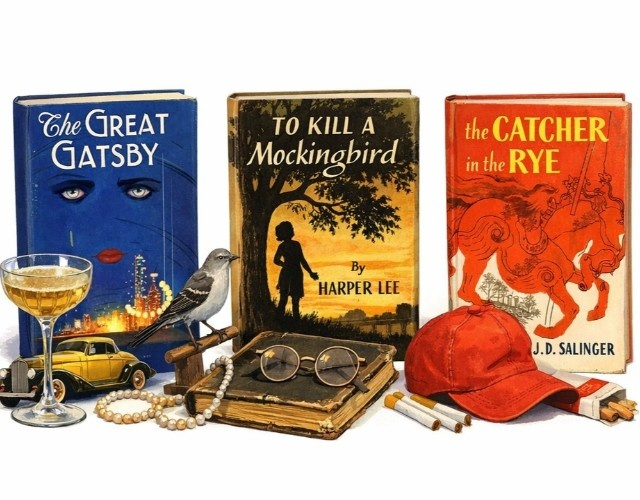
Great Gatsby Essay Topics (25 topics)
Easy
1. The green light as a symbol.
2. The American Dream's corruption.
3. Wealth and class divisions.
4. Nick as narrator and his reliability.
5. Gatsby's parties and their symbolism.
Medium
6. The Valley of Ashes, representing moral decay.
7. Daisy as object versus Daisy as person.
8. Colors and their symbolic meanings.
9. Time and Gatsby's attempt to repeat the past.
10. Geography: East Egg versus West Egg.
Hard
11. Eyes of Doctor T.J. Eckleburg as Moral Surveillance.
12. Narrative structure: why Nick tells the story retrospectively.
13. Gatsby as a tragic hero in the classical sense.
14. The novel's treatment of gender and women's agency.
15. Jazz Age decadence and moral emptiness.
More Gatsby
16. Car symbolism and modernity.
17. Heat and summer as oppressive forces.
18. Tom's racism and power.
19. Jordan Baker's dishonesty.
20. The novel's critique of capitalism.
21. Myrtle's aspirations and death.
22. Wilson's role as moral conscience.
23. The green light's meaning evolution.
24. Parties as performance.
25. Fitzgerald's use of weather.
Remember! Choosing the right topic is essential for writing an effective essay, and literary analysis essay examples help students see how to develop a literary analysis essay topic with clear arguments, strong evidence, and focused analysis.
To Kill a Mockingbird Analysis Topics (25 topics)
Easy
1. Scout's character growth.
2. Racism in Maycomb.
3. Boo Radley as a mockingbird symbol.
4. Atticus as moral compass.
5. Childhood innocence versus adult prejudice.
Medium
6. Scout's narration: child perspective versus adult voice.
7. The trial as a turning point.
8. Feminine identity and expectations.
9. Courage as defined by Atticus.
10. Bob Ewell as villain.
Hard
11. The novel's structural shift from childhood adventures to trial.
12. Multiple definitions of justice (legal versus moral).
13. Maycomb's social hierarchy and unwritten rules.
14. The mockingbird symbol's multiple applications.
15. White savior narrative: critiques and complications.
More To Kill a Mockingbird
16. Mrs. Dubose and moral courage.
17. Education: school versus life lessons.
18. The Radley house has a gothic element.
19. Class divisions beyond race 20. Jem's coming of age.
21. Alexandra's role in gender socialization.
22. The fire at Miss Maudie's.
23. Mayella Ewell as victim and villain.
24. Tom Robinson's testimony.
25. The final Halloween attack.
The Catcher in the Rye (20 topics)
Easy
1. Holden's red hunting hat symbolism.
2. Phoniness as Holden sees it.
3. Holden's relationship with Phoebe.
4. The museum as a symbol of unchanging childhood.
5. Holden's mental state.
Medium
6. Allie's death and its impact on Holden.
7. Holden as unreliable narrator.
8. The ducks in Central Park.
9. Holden's contradictions and hypocrisy.
10. Innocence versus experience.
Hard
11. The "Catcher in the Rye" metaphor and its limitations.
12. Holden's obsession with authenticity masks his own inauthenticity.
13. Sexuality and Holden's confusion.
14. The carousel as acceptance of change.
15. Narrative voice: how Holden's language creates character.
More Catcher in the Rye
16. New York City as a setting.
17. Jane Gallagher's significance.
18. Mr. Antolini is an ambiguous helper.
19. Childhood protection as an impossible goal.
20. The novel's lack of plot as a meaningful choice.
British Literature Essay Topics
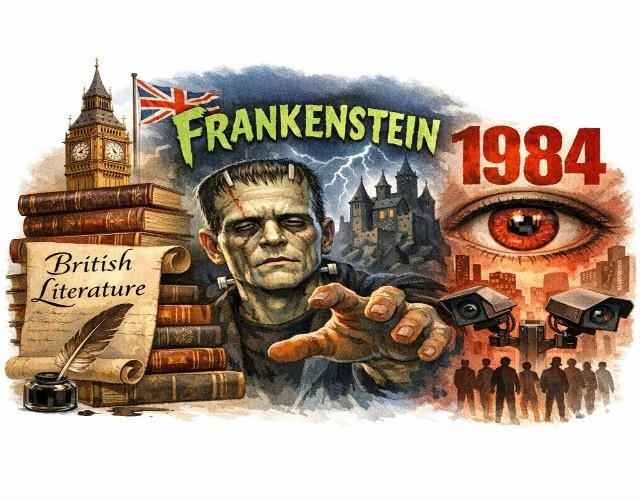
Frankenstein (20 topics)
Easy
1. Victor as modern Prometheus.
2. The creature's learning and development.
3. Nature versus nurture.
4. Dangers of unchecked ambition.
5. Isolation and its effects.
Medium
6. Frame narrative structure and its purpose.
7. Sympathy for the creature.
8. Gender roles and absence of women.
9. Scientific responsibility.
10. Romantic nature descriptions.
Hard
11. Multiple narrators and truth.
12. The creature as Byron's tragic hero.
13. Parent-child relationships and abandonment.
14. Creation as critique of Genesis.
15. Sublime versus beautiful in descriptions.
More Frankenstein
16. Fire symbolism.
17. Weather and mood.
18. Robert Walton as Victor's double.
19. Social rejection creating monstrosity.
20. The novel's warnings about progress.
1984 (20 topics)
Easy
1. Surveillance and control.
2. Newspeak and language manipulation.
3. Winston's rebellion.
4. Big Brother as symbol.
5. Room 101 and personal fear.
Medium
6. Julia versus Winston's rebellion motives.
7. Proles as hope or false hope.
8. Doublethink and its applications.
9. The Party's control of history.
10. Telescreens and privacy invasion.
Hard
11. The Appendix's function and implications.
12. O'Brien as a complex antagonist.
13. Torture and the destruction of self.
14. Love as a political threat.
15. Goldstein's book: truth or fabrication?
More 1984
16. Memory and its unreliability.
17. The coral paperweight.
18. Winston's diary.
19. Ministry names as irony.
20. The novel's ending ambiguity.
Literary Topics for Analyzing Contemporary Fiction
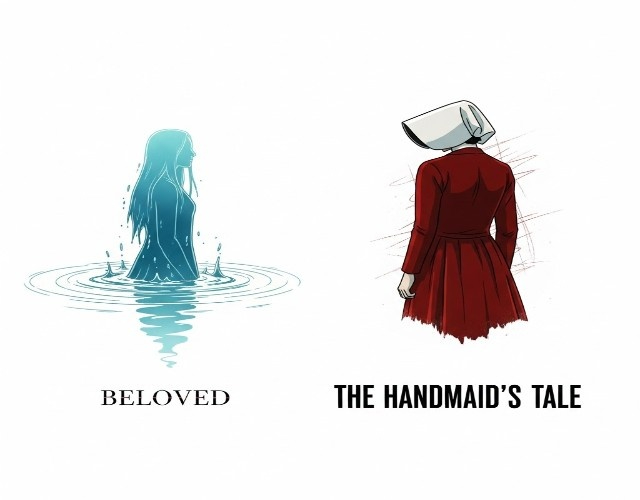
Beloved (15 topics)
Easy
1. Beloved as a ghost or symbol.
2. Slavery's psychological impact.
3. Mother-daughter relationships.
4. Memory and trauma.
5. 124 as a haunted house
Medium
6. Sethe's infanticide and moral complexity.
7. Paul D's masculinity under slavery.
8. Community healing versus isolation.
9. Denver's growth and emergence.
10. Beloved as past that won't stay buried.
Hard
11. Fragmented narrative mirroring trauma.
12. Water as a symbol of the Middle Passage and rebirth.
13. Rememory as a concept.
14. The clearing as spiritual space.
15. Language of unspeakable trauma.
The Handmaid's Tale (15 topics)
Easy
1. Offred as narrator.
2. Women's roles in Gilead.
3. Religion twisted for control.
4. Reproduction and ownership.
5. Resistance in small acts.
Medium
6. Colors and their symbolic meanings.
7. Offred's relationship with her body.
8. Historical notes as frame.
9. Moira's rebellion.
10. Language and power.
Hard
11. Unreliable narration and reconstruction of events.
12. Gilead as a logical extension of existing systems.
13. Female complicity in patriarchal systems.
14. The epilogue's irony and warnings.
15. Narrative gaps and their significance.
NEED THE FULL ESSAY WRITTEN?
Professional writing assistance tailored to your needs
- Any topic, any deadline
- 100% human-written by PhD specialists
- Custom analysis for any text or angle
- On-time delivery, unlimited revisions
No AI shortcuts. Just expert-level quality.
Order NowPoetry Analysis Topics
Modern American Poetry (15 topics)
Easy
1. Imagery in Robert Frost's "Stopping by Woods".
2. Speaker's voice in Sylvia Plath's "Daddy".
3. Nature in Emily Dickinson's death poems.
4. Whitman's celebration of self.
5. Langston Hughes and the American Dream.
Medium
6. Form and meaning in e.e Cummings.
7. Confessional elements in Plath.
8. Dickinson's use of dashes and capitalization.
9. Hughes and jazz rhythms.
10. Frost's deceptive simplicity.
Hard
11. Modernist fragmentation in T.S. Eliot.
12. Dickinson's private mythology.
13. Whitman's democratic poetics.
14. Plath's bee poems as autobiography.
15. Hughes's evolution from the Harlem Renaissance to later work.
Real Talk: A literary analysis essay outline helps students organize a topic by structuring ideas, quotations, and analytical points logically.
Drama & Plays Analysis Topics
Death of a Salesman (15 topics)
Easy
1. The American Dream's failure.
2. Willy's relationship with Biff.
3. Flashbacks and memory.
4. Linda's role as wife and mother.
5. Symbolism of seeds.
Medium
6. Willy as tragic hero.
7. Success defined by different characters.
8. The car as symbol of American life.
9. Women's limited roles.
10. Bernard versus Biff.
Hard
11. Expressionistic elements in staging.
12. Time as fluid rather than linear.
13. Requiem as commentary.
14. Willy's name and anonymity.
15. The play's critique of capitalism.
A Streetcar Named Desire (15 topics)
Easy
1. Blanche's descent into madness.
2. Stanley versus Blanche conflict.
3. Stella torn between sister and husband.
4. Light symbolism.
5. Streetcar and desire symbolism.
Medium
6. New South versus Old South values.
7. Truth versus illusion.
8. Gender and power dynamics.
9. Music and its thematic function.
10. Blanche's past haunting her.
Hard
11. Williams's stage directions as narrative.
12. Blanche as tragic figure.
13. The poker night scene's climax.
14. Class conflict and American identity.
15. Madness as escape versus punishment.
Literature Analysis Topics for World Literature
Things Fall Apart (15 topics)
Easy
1. Okonkwo's tragic flaw.
2. Colonialism's impact on Igbo culture.
3. Gender roles in Umuofia.
4. Ikemefuna's death and its effects.
5. Christianity versus traditional religion.
Medium
6. Achebe's use of proverbs.
7. Masculinity and its costs.
8. Nwoye's conversion.
9. The Oracle's role.
10. Okonkwo versus his father Unoka.
Hard
11. Title's significance from Yeats.
12. Narrative voice and perspective.
13. Cultural translation and representation.
14. Tragic hero in cross-cultural context.
15. The novel's structure in three parts.
Exploring Gothic and Horror: Literary Analysis Essay Ideas
Dracula (15 topics)
Easy
1. Dracula as sexual threat.
2. Victorian gender roles.
3. Blood symbolism.
4. Good versus evil.
5. Technology versus superstition.
Medium
6. Mina as New Woman.
7. Multiple narrators and perspectives.
8. Eastness and otherness.
9. Male bonding and homosocial desire.
10. Van Helsing as father figure.
Hard
11. Epistolary form creating fragmented truth.
12. Reverse colonization anxiety.
13. Female sexuality as monstrous.
14. The Count's aristocratic decay.
15. Western modernity's triumph as ambiguous.
Literary Analysis Essay Topics by Grade Level
A. Easy Literary Analysis Essay Topics for High School
Starting with literary analysis? These topics work well for beginners with clear textual evidence:
1. Symbolism of the green light in The Great Gatsby.
2. Character development of Scout in To Kill a Mockingbird.
3. Light vs. dark imagery in Romeo and Juliet.
4. The American Dream in Death of a Salesman.
5. Themes of isolation in Frankenstein.
B. Literary Analysis Essay Topics for College Students
Need more challenging angles requiring deeper interpretation?
1. Narrative unreliability and memory in Beloved.
2. Gilead as a logical extension of existing systems in The Handmaid's Tale.
3. Equivocation and ambiguous language in Macbeth.
4. Modernist fragmentation techniques in T.S. Eliot.
5. Surveillance and narrative structure in 1984.
C. Literary Research Paper Topics
Writing a longer analytical research paper (10+ pages)?
1. Evolution of the tragic hero archetype from Shakespeare to contemporary drama.
2. Postcolonial analysis across multiple works (Achebe, Rushdie, Roy).
3. Gothic tradition's influence on modern horror literature.
4. Feminist readings of Victorian literature.
5. Trauma representation in contemporary American fiction.
Looking for Specific Literary Essay Types?
Need topics for a specific type of analysis?
Check these dedicated guides:
Comparative Analysis Topics
Rhetorical Analysis Topics
Struggling to narrow 200+ options to one strong angle? Our reliable essay writing service writers analyze your assigned text with fresh insights, finding angles you missed and building arguments with solid evidence.
Conclusion: From Topic to Thesis to Essay
These 200+ literary analysis essay topics provide focused starting points for analyzing any commonly taught text. Your genuine curiosity about patterns in literature produces better analysis than manufactured interest. Choose angles where you've noticed something interesting, a contradiction, repeated image, or surprising technique, and use that observation as your foundation for deeper interpretation.
Don't choose topics based solely on what seems easy or impressive. Choose topics where you notice something interesting in the text, a pattern, contradiction, or surprising technique. Your genuine curiosity produces better analysis than manufactured interest in what you think your teacher wants.
Use difficulty ratings as guides, not restrictions. A medium-rated topic might feel easy if you've read the text multiple times and already noticed the pattern. A hard-rated topic might feel manageable if you're passionate about the question it raises. Trust your judgment about your own readiness while pushing slightly beyond your comfort zone.
Ready to develop your topic into a complete essay? For complete guidance on thesis development, evidence selection, and analysis depth, review our comprehensive literary analysis essay guide.
Deadlines Don't Wait. Neither Should You.
Get a professionally written essay delivered to your inbox, fast.
- Research, writing, and formatting, all done for you
- Original content, zero plagiarism
- Subject-matter experts on every order
- Full privacy and confidentiality
100% human-written. Guaranteed.
Order Now