Introduction
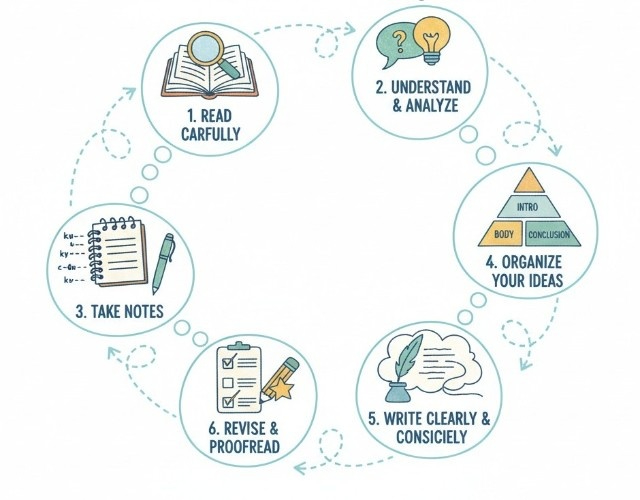
Writing effective book reviews requires more than reading books and sharing opinions. The systematic process from pre-reading preparation through final revision transforms casual reading into critical evaluation demonstrating sophisticated analytical thinking.
Many students struggle with book reviews because they approach them like book reports—reading, summarizing extensively, and adding brief "I liked it" conclusions. This approach produces summaries with minimal evaluation, exactly opposite of what reviews require. Reviews demand critical assessment dominating your content with summary providing only brief context.
The shift from reporting to reviewing represents crucial intellectual development. You're moving beyond demonstrating comprehension to showcasing evaluation abilities. Rather than proving you understood what happened, you're proving you can judge how well it worked and why.
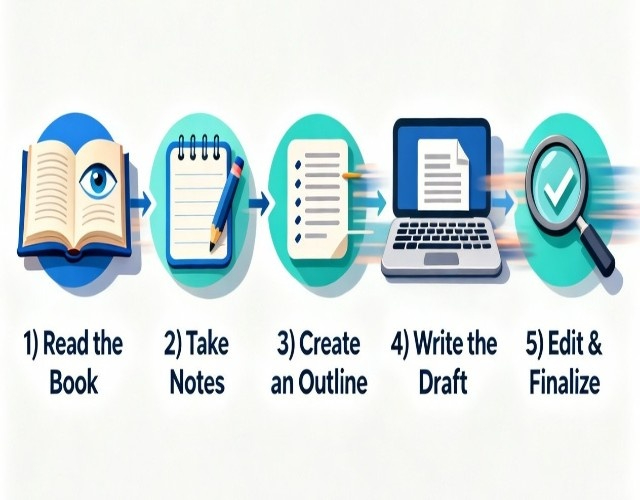
This comprehensive guide walks you through every stage of the review writing process with practical strategies applicable immediately. You'll learn how to prepare before reading, what to notice and record while reading, how to plan your evaluation effectively, strategies for drafting strong reviews, and techniques for revision that transform adequate drafts into excellent final products.
The process may feel awkward initially if you're accustomed to reading for pleasure without analytical attention. Critical reading requires different habits—pausing to take notes, questioning author choices constantly, gathering evidence while reading rather than after finishing. These habits develop with practice and become natural over time.
For foundational understanding of what reviews are and why they matter, see our complete book review guide.
This guide provides the systematic process you need for writing thoughtful, well-supported book reviews at any education level. Whether you're writing your first middle school review or polishing college-level literary analysis, these strategies will strengthen your critical thinking and analytical expression. Let's begin transforming you into a confident, effective book reviewer.
Pre-Reading Preparation
Effective book review writing begins before you read the first page. Preparation enhances your critical abilities by establishing context, expectations, and evaluation criteria that inform your reading from the start.
Research the Author
Understanding who wrote the book provides crucial context for evaluation. Research the author's background, credentials, and previous works before starting. This knowledge helps you assess credibility and understand their perspective.
For fiction, learn whether this is a debut novel or the author's tenth book. Experienced authors typically demonstrate more refined craft than first-time novelists. Understanding an author's previous genres helps contextualize their current work—a mystery writer attempting literary fiction brings different strengths than someone who's written literary fiction exclusively.
For non-fiction, author credentials matter significantly. A climate scientist writing about climate change brings different authority than a journalist or politician covering the same topic. Relevant expertise doesn't guarantee quality, but it affects how you evaluate arguments and evidence.
Research the author's background and perspective. Someone writing about poverty from lived experience offers different insights than someone studying it academically. Both perspectives have value, but understanding the author's position helps you evaluate fairly.
Check whether the author has received awards, recognition, or criticism for previous works. This context helps position the current book within the author's career trajectory and broader literary or scholarly conversations.
Don't let author research bias your evaluation unfairly. Famous authors can write weak books; unknown authors can produce brilliance. Use background information to contextualize your assessment, not replace it with assumptions.
Can't Analyze Your Book Critically?
Let Experts Handle the Analysis and Evaluation for You
Transform your reading into insightful, well-supported critical reviews that impress your teachers.
Understand the Book's Context
Every book exists within specific historical, cultural, and publishing contexts that affect how you should evaluate it. Understanding these contexts prevents unfair assessment based on mismatched expectations.
Note the publication date carefully. Books published decades ago reflect their eras' perspectives and limitations. Criticizing a 1950s novel for lacking contemporary awareness about gender or race misses the point—evaluate how it functioned within its own context while acknowledging how perspectives have evolved.
Research the book's reception when published. Was it controversial? Celebrated? Dismissed initially but reconsidered later? Understanding contemporary reception provides perspective on why the book mattered and how assessments change over time.
Consider the cultural and historical moment the book addresses. A novel about the Great Depression written in 1935 differs significantly from one written in 2020. Contemporary books capture immediacy; historical books offer reflective distance. Evaluate appropriately for each approach.
For academic or scholarly books, understand the field's state when published. A groundbreaking argument in 1990 might seem obvious in 2025 after being widely accepted. Evaluate books partly by their contributions within their original contexts.
Understand whether the book targets general audiences or specialists. Academic monographs serve different purposes than popular non-fiction. Fiction marketed as literary has different goals than commercial genre fiction. Match your evaluation criteria to intended audiences.
Identify Genre Conventions
Genres have established conventions—typical elements readers expect and authors either fulfill or deliberately subvert. Understanding these conventions helps you evaluate how effectively books work within or against genre traditions.
Research your book's genre if you're unfamiliar with it. Mystery novels typically include detective figures, clues, and resolutions. Romance novels require central love stories and emotionally satisfying endings. Fantasy creates internally consistent magical systems. Understanding expectations helps you assess whether books meet, exceed, or interestingly violate them.
Recognize that genre conventions evolve over time. Contemporary mysteries differ from Golden Age detective fiction. Modern romance has different expectations than historical romance novels. Understand current genre conventions for recent books while recognizing historical conventions for older works.
Consider whether the book is genre fiction or literary fiction. Genre fiction emphasizes entertaining plot-driven storytelling within recognizable conventions. Literary fiction prioritizes character development, thematic depth, and stylistic innovation, often with less emphasis on plot momentum. Neither approach is superior—they serve different purposes requiring different evaluation criteria.
For non-fiction, understand whether the book is academic scholarship, professional writing, or popular non-fiction. Academic work requires rigorous methodology and citations. Professional writing balances expertise with accessibility. Popular non-fiction prioritizes engaging general readers. Evaluate appropriately for each category.
Understanding genre conventions prevents unfair criticism. Don't fault romance novels for prioritizing relationship development over plot complexity, or mysteries for focusing on puzzle-solving over literary style. Evaluate books by their genres' standards while noting when they transcend typical limitations or fall short of potential.
Review Assignment Requirements
If writing for a class, thoroughly review assignment requirements before reading. Understanding expectations prevents discovering after finishing that you need to reread for missed elements or revise extensively for formatting issues.
Note required length precisely. A 500-word review requires different approach than a 1,500-word review. Shorter reviews demand selectivity about what to evaluate; longer reviews allow comprehensive analysis. Plan your depth accordingly.
Identify required components explicitly stated in the assignment. Must you include personal response? Compare to other books? Apply specific theoretical frameworks? Address certain questions? Note these requirements before reading so you gather necessary material.
Understand formatting requirements: citation style (MLA, APA, Chicago), spacing, font, margins, header information, bibliography requirements. Knowing these details beforehand prevents last-minute formatting scrambles.
Check whether your instructor expects focus on specific aspects: themes, character development, historical accuracy, argument quality. Tailoring your reading attention to assignment priorities ensures you gather relevant evidence.
Clarify whether you should include spoilers if analyzing endings or crucial plot points. Some instructors permit spoilers with warnings; others prohibit them entirely. Knowing expectations guides what you can discuss.
Understand evaluation criteria your instructor will use. If rubrics emphasize textual evidence, prioritize gathering quotes. If organization matters heavily, plan structure carefully. Aligning your efforts with assessment criteria improves outcomes.
For comprehensive templates matching common assignment requirements, see our book review format guide with templates for all education levels.
Set Evaluation Criteria
Before reading, establish what criteria you'll use to evaluate the book. Having clear standards in mind helps you read critically from the start rather than trying to remember everything for evaluation later.
For fiction, decide which elements you'll assess: plot structure and pacing, character development and believability, writing style and prose quality, theme exploration and depth, setting and world-building, emotional impact and engagement, originality and creativity, genre convention handling.
For non-fiction, establish your evaluation focus: thesis clarity and strength, argument logic and structure, evidence quality and sufficiency, research depth and breadth, author credibility and expertise, organization and accessibility, writing clarity and engagement, practical applicability, contribution to field.
Prioritize 4-6 criteria for focus rather than attempting comprehensive coverage. Depth matters more than breadth. Thorough analysis of key elements beats superficial mentions of everything.
Consider your education level's typical expectations. Middle school reviews focus on accessible elements like character likability and plot engagement. High school reviews add literary analysis of symbolism and theme. College reviews incorporate theoretical frameworks and scholarly perspectives.
Remember that criteria can shift slightly as you read. Initial plans provide focus, but remain flexible if the book reveals unexpected strengths or weaknesses deserving attention. Preparation guides but doesn't rigidly constrain your eventual assessment.
A+ Quality Guaranteed
Professional Book Reviews That Exceed Teacher Expectations
Insightful, well-analyzed book reviews with textual evidence—or your money back
Active Reading for Review
Reading for review differs fundamentally from reading for pleasure. You're simultaneously experiencing the book and analyzing how it works, gathering evidence for eventual evaluation throughout the process.
Systematic Note-Taking
Effective note-taking while reading provides the evidence foundation for your eventual review. Without notes, you'll struggle to remember specific examples supporting your claims or find page numbers for quotes.
1. Create a Note-Taking System: Use a notebook, digital document, or even sticky notes in the book itself. Whatever method you choose, make it systematic and consistent. Record page numbers so you can find passages again.
2. Capture Strengths as You Read: When something works well—a beautiful sentence, a surprising plot twist, an insightful argument—note it immediately. Write down why it works: "Page 47: The dialogue here sounds authentic because characters interrupt each other naturally and use distinct speech patterns."
3. Record Weaknesses Equally: When something fails—awkward phrasing, confusing plot holes, weak evidence—note that too. Explain the problem specifically: "Page 143: This plot development feels contrived because the coincidence is too convenient and there's no foreshadowing."
4. Mark Quotable Passages: Star or highlight passages you might quote in your review. Choose quotes that demonstrate your claims effectively. A quote showing awkward dialogue proves that claim better than you simply asserting it.
5. Track Patterns: Notice repeated issues or strengths. If dialogue consistently sounds stilted or if the author repeatedly uses beautiful metaphors, that pattern matters more than isolated instances. Note: "Third chapter in a row where dialogue feels unnatural."
6. Record Page Numbers: Always include page numbers with your notes. You'll need them for citations and finding passages again. Writing "Great description" without a page number becomes useless when you're drafting.
7. Note Emotional Reactions: When you feel strong emotions—moved, bored, excited, frustrated—record them and analyze why. "Page 200: This scene made me cry because the author spent three chapters building attachment to this character before the loss."
8. Avoid Over-Noting: Don't try capturing everything or you'll spend more time note-taking than reading. Focus on elements relevant to your evaluation criteria and particularly strong or weak examples.
Evidence Collection Strategy
Your review will require specific textual evidence supporting every claim. Gathering this evidence while reading proves far more efficient than searching for it later.
1. Collect Diverse Evidence Types: Gather quotes demonstrating writing style, examples of character development, instances of plot problems, evidence of argument quality. Varied evidence types support different evaluation points.
2. Choose Representative Examples: Select passages that typify broader patterns rather than isolated oddities. If you claim the author uses vivid imagery throughout, find 2-3 examples from different sections proving this pattern exists consistently.
3. Record Both Positive and Negative Evidence: Gather examples of what works well and what doesn't. Balanced reviews require evidence supporting both praise and criticism.
4. Note Context for Quotes: When marking quotes, briefly note their context. You'll need to explain circumstances when using them later. "Page 89: Protagonist's speech revealing her growth - comes after three chapters of her avoiding this confrontation."
5. Flag Potential Spoilers: Mark whether passages reveal important plot points. You may need to avoid them or warn readers before using them, so identifying them while reading helps.
6. Consider Evidence Quotability: Some passages prove points better than others. "The sunset was pretty" tells less than "The sunset painted the sky in watercolor washes of amber and rose, each cloud edged in molten gold." Choose evidence that's specific and vivid.
7. Collect Comparative Examples: If comparing this book to others, note similarities and differences as you notice them. These observations become harder to remember precisely after finishing.
Critical Reading Questions
Ask yourself specific questions throughout reading to maintain critical engagement rather than passive absorption. These questions guide active analytical attention.
For Fiction:
- How does the author reveal character? Through action, dialogue, narration, or combination?
- What makes the plot engaging or slow? Is pacing consistent or uneven?
- How does the writing style affect your reading experience? Does it enhance or distract?
- What themes emerge and how deeply are they explored?
- How effectively does the author create setting? Can you picture locations clearly?
- Are you emotionally engaged? Why or why not? What creates or prevents connection?
- How does this book compare to similar works you've read?
- What would make this book stronger? What would you change?
For Non-Fiction:
- What is the author's main argument? Can you state it clearly?
- How does the author support claims? With what kinds of evidence?
- Is the logic sound? Do conclusions follow from evidence presented?
- What are the author's credentials and potential biases?
- How is the material organized? Does the structure enhance understanding?
- Is the writing clear and engaging for the intended audience?
- What contribution does this make to its field or topic?
- Who would benefit most from reading this? Who might find it less useful?
Universal Questions:
- What is the author trying to accomplish? Do they succeed?
- Who is the intended audience? How well does the book serve them?
- What are this book's greatest strengths? Why?
- What are its most significant weaknesses? Why?
- How does your personal response relate to objective quality assessment?
See What Excellence Looks Like
Access 50+ Annotated Book Review Examples for Every Grade Level
Study real A+ examples with detailed annotations showing exactly what makes them successful.
Tracking Reactions and Analysis
Your emotional and intellectual reactions while reading provide valuable material for evaluation, but require analysis beyond simple feelings.
- Record Immediate Reactions: When you feel bored, excited, confused, moved, or frustrated, note that reaction. These responses tell you something about the book's effectiveness, but require examination to understand why.
- Analyze Reaction Causes: Don't stop at "this bored me." Ask why. Is the pacing slow? Is the material repetitive? Is the writing style plodding? Understanding causes transforms personal reactions into analytical insights.
- Distinguish Personal Taste from Quality: You might dislike horror genres personally while recognizing that a specific horror novel demonstrates excellent craft. Separate "not for me" from "not well done."
- Question Your Assumptions: If you find yourself strongly loving or hating something, examine why. Are you responding to the book's actual qualities or to your preferences and expectations? Both matter, but differently.
- Note Changes Over Time: Did your opinion shift as you read? Did a slow start give way to engaging middle sections? Did initial excitement fade? These trajectories reveal pacing and structure issues worth discussing.
- Consider Alternative Perspectives: Try imagining how readers with different preferences or backgrounds might respond. This practice develops empathy and helps you write recommendations appropriate for varied audiences.
For examples showing how reviewers transform reading notes into effective evaluation, study our annotated book review samples.
Critical Evaluation Techniques
Developing your evaluation transforms reading notes into structured assessment. These techniques help you move from general impressions to specific, supported arguments about quality.
Developing Evaluation Arguments
Strong evaluation arguments combine clear claims with specific evidence and analysis explaining how evidence supports claims.
- Articulate Specific Claims: Rather than vague assertions like "the book was good," make precise claims: "The multiple-perspective narrative structure creates unusual depth for middle-grade fiction" or "The author's research appears superficial, relying primarily on secondary sources."
- Identify Your Main Evaluation Points: Based on your reading notes, what are the 3-5 most important things to say about this book's quality? These become your main arguments that your review will develop.
- Prioritize Significant Elements: Focus on aspects that significantly affect the book's overall quality and reader experience. Minor quibbles about occasional awkward sentences matter less than pervasive problems or consistent strengths.
- Connect Claims to Evidence: Every claim needs specific support. "The characterization feels flat" requires examples: "The protagonist's motivations remain unclear throughout—she abruptly decides to leave home with no prior indication of discontent."
- Explain How Evidence Supports Claims: Don't just present evidence and assume connections are obvious. Analyze: "This dialogue demonstrates the stilted quality because real friends don't speak in complete, grammatically perfect sentences when arguing emotionally."
- Balance Multiple Criteria: Don't focus exclusively on one element. Address plot, character, style for fiction; argument, evidence, organization for non-fiction. Comprehensive evaluation requires examining multiple dimensions.
Fiction Evaluation Criteria
Fiction requires assessing how effectively authors use narrative elements to create engaging, meaningful stories. These criteria guide systematic evaluation.
Plot Assessment:
- Evaluate structure: Does the plot organization enhance the story? Is it chronological, fragmented, or multi-timeline? Does structure serve purpose or confuse unnecessarily?
- Assess pacing: Does the story move too slowly, too quickly, or appropriately? Do certain sections drag while others feel rushed? Does pacing match genre expectations and story needs?
- Consider predictability: Are plot developments surprising yet logical? Or do they feel either too obvious or completely random? The best plots balance surprise with inevitability.
- Examine originality: Does the plot feel fresh or formulaic? Even familiar stories can feel original through unexpected approaches or combinations of elements.
Character Evaluation:
- Assess development: Do characters grow and change believably throughout? Or do they remain static when they should evolve? Are changes earned through story events?
- Evaluate complexity: Do characters feel three-dimensional with mixed motivations, strengths, and flaws? Or do they feel one-dimensional with single defining traits?
- Consider consistency: Do characters behave in ways matching their established personalities? Or do they act out of character to serve plot convenience?
- Examine relationships: Do character interactions feel authentic? Are relationships developed through scenes or just told about? Do connections affect character behavior believably?
Writing Style Assessment:
- Evaluate prose quality: Is the writing clear, elegant, awkward, or pretentious? Does sentence variety maintain interest? Are word choices precise and effective?
- Assess narrative voice: Does the voice suit the story? Is first-person intimate and authentic? Is third-person appropriately omniscient or limited? Does voice remain consistent?
- Consider dialogue: Does it sound natural for characters' backgrounds and personalities? Does it reveal character and advance plot efficiently? Or does it feel stilted or exposition-heavy?
- Examine descriptions: Do they create vivid pictures without becoming excessive? Do they enhance atmosphere and meaning? Or do they bog down pacing?
Theme Analysis:
- Evaluate depth: Does the book explore themes meaningfully or superficially? Are themes developed throughout or mentioned briefly?
- Assess relevance: Do themes resonate with contemporary concerns? Do they offer fresh perspectives on familiar ideas?
- Consider integration: Are themes woven naturally into story and character, or do they feel preachy and forced?
Setting and World-Building:
- Assess vividness: Can you picture locations clearly? Does the author use sensory details effectively?
- Evaluate consistency: For speculative fiction, does the world follow its own rules? Are there contradictions or plot holes?
- Consider function: Does setting enhance plot and themes? Or does it exist merely as backdrop?
Get Your Book Review Written by Literary Experts in 4 Simple Steps
Professional critical analysis that guarantees A+ results without the stress
- Share Your Book Details Tell us the book title, author, grade level, and assignment requirements
- Literary Expert Gets Assigned A specialist in your book's genre starts analyzing immediately
- Deep Critical Analysis Expert evaluates themes, characters, style with textual evidence
- Submit with Confidence Receive your insightful, well-supported book review ready to impress
Join 10,000+ students who've achieved academic success with 5StarEssays. Money-back guarantee included!
Start Your Order NowNon-Fiction Evaluation Criteria
Non-fiction requires evaluating argument quality, evidence strength, and how effectively authors communicate ideas to intended audiences.
Thesis and Argument Assessment:
- Evaluate clarity: Can you state the main argument in one sentence? Is it specific and significant, or vague and obvious?
- Assess logic: Do conclusions follow from premises and evidence? Are there logical fallacies or unsupported leaps?
- Consider persuasiveness: Does the author convince you? Why or why not? What makes arguments strong or weak?
- Examine counterarguments: Does the author address potential objections? Or ignore opposing views?
Evidence Evaluation:
- Assess source quality: Are sources credible, current, and appropriate? Does the author cite primary sources or rely on secondary ones?
- Evaluate sufficiency: Is evidence comprehensive enough to support claims? Or are arguments built on limited examples?
- Consider representation: Are examples representative or cherry-picked to support predetermined conclusions?
- Examine statistics: Are they used appropriately and interpreted correctly? Are contexts provided?
Research Depth Assessment:
- Evaluate comprehensiveness: Does the author demonstrate thorough knowledge? Are important perspectives missing?
- Assess original contribution: What new insights does this book offer? Does it synthesize existing knowledge usefully?
- Consider scholarship: For academic work, does the author engage with existing scholarship appropriately?
Organization and Clarity:
- Evaluate structure: Does the organization make sense? Do chapters build logically? Are transitions smooth?
- Assess accessibility: Can intended audiences understand arguments? Is jargon necessary or excessive?
- Consider readability: Does the writing maintain interest despite potentially dry material?
Author Credibility:
- Evaluate expertise: Does the author have relevant credentials and experience?
- Assess bias: Does the author acknowledge potential biases? Or present opinions as objective facts?
- Consider fairness: Does the author engage charitably with opposing views?
Practical Value:
- For how-to and self-help, assess whether advice is actionable and realistic. Can readers actually implement recommendations?
- Evaluate whether claims are research-based or anecdotal. Are promises realistic or overstated?
Balancing Strengths and Weaknesses
Credible reviews acknowledge both what books do well and where they fall short. This balance demonstrates fairness and enhances your credibility.
- Identify 3-4 Significant Strengths: Focus on what the book does notably well. These should be substantial accomplishments, not minor positives.
- Identify 2-3 Meaningful Weaknesses: Note genuine problems that affect quality or reader experience. Avoid nitpicking minor issues while ignoring major problems.
- Contextualize Weaknesses: Explain whether weaknesses are minor quibbles or fundamental flaws. "The pacing drags in the middle section" is less serious than "The entire plot relies on contrived coincidences."
- Avoid False Balance: You don't need equal amounts of praise and criticism. If a book is genuinely excellent with minor flaws, say so. If it's fundamentally weak with few bright spots, that's fair assessment too.
- Explain Why Elements Succeed or Fail: Don't just list strengths and weaknesses. Analyze what makes strong elements effective and what causes weak elements to fail.
- Consider Intended Goals: Evaluate books partly on whether they achieve their purposes. A beach read succeeding at entertaining escapism shouldn't be faulted for not being literary fiction.
- Maintain Respectful Tone: Critique the work, not the author personally. "This argument lacks sufficient evidence" is professional; "The author clearly didn't do proper research" is hostile.
For examples of balanced evaluation in practice, see our annotated book review samples showing effective critique.
Drafting Your Review
With reading complete and evaluation planned, you're ready to draft. These strategies help you organize and write effectively, creating reviews that inform and persuade readers.
Starting Strong
Your opening paragraph should engage readers immediately while establishing essential context and previewing your evaluation.
1. Open with a Hook: Begin with something attention-grabbing: a provocative question, surprising fact, vivid quote, or bold claim about the book. Avoid generic openings like "This book is about..."
2. Provide Bibliographic Information: Include author's name, book title (italicized), publication date, and relevant context like whether this is the author's debut or tenth novel.
3. Offer Brief Context: In 1-2 sentences, establish what kind of book this is and what it's about. Keep this part concise—you're providing orientation, not detailed summary.
4. Preview Your Evaluation: Your thesis should indicate your overall assessment and perhaps hint at main evaluation points. "Smith's debut novel impresses with vivid prose and complex characters, though uneven pacing weakens the middle section."
Example Strong Opening:
"How many coincidences can a plot withstand before collapsing under contrivance's weight? Jennifer Mason's 'Summer's End' tests this limit enthusiastically. This contemporary romance follows Emma's chance encounter with her high school sweetheart at a beach resort, reuniting the pair after fifteen years apart. Mason's strength lies in emotional authenticity and sharp dialogue, but the plot relies on increasingly unlikely coincidences that undermine the relationship's believability."
Want to Impress with Critical Thinking?
Get Book Reviews That Demonstrate Sophisticated Analysis
Move beyond summary to true evaluation—the critical thinking your teachers want to see.
Organizing Your Content
Structure your review around evaluation criteria rather than plot chronology. This organization maintains analytical focus and prevents excessive summary.
1. Keep Summary Brief and Early: Place your 2-3 paragraph summary near the beginning after the introduction. Establish context quickly, then move into evaluation.
2. Organize by Evaluation Criteria: Dedicate separate paragraphs or sections to different assessment dimensions. One paragraph on character development, another on writing style, another on thematic depth.
3. Use Clear Topic Sentences: Each evaluation paragraph should begin with a clear claim that the paragraph will support: "Wilson's greatest strength lies in atmospheric world-building" or "The argument's logic contains several troubling leaps."
4. Progress Logically: Move from major elements to minor ones, or from strengths to weaknesses, or follow the book's own structure adapted to evaluation. Choose organization that serves your argument.
5. Maintain Paragraph Focus: Each paragraph should address one main evaluation point. Don't try cramming character, plot, and style assessment into single paragraphs.
6. Use Transitions: Connect paragraphs with transition sentences showing relationships between ideas. "While the characterization impresses, the plot development proves less successful."
For specific paragraph-by-paragraph organization templates, see our book review format guide with structures for all education levels.
Integrating Evidence Effectively
Every claim in your review needs specific support from the text. Evidence integration separates strong reviews from weak ones.
1. Introduce Quotes Smoothly: Don't drop quotes in abruptly. Introduce them with context: "Wilson demonstrates her descriptive power when describing the carnival: 'The Ferris wheel blazed against the night sky like a constellation fallen to earth.'"
2. Choose Evidence Strategically: Select quotes and examples that prove your points most effectively. Not every claim needs a quote—sometimes describing an example works better.
3. Keep Quotes Brief: Use the minimum quotation necessary to prove your point. Long block quotes often include unnecessary material. Extract the essential phrase or sentence.
4. Analyze Evidence: After presenting quotes or examples, explain how they support your claims. Don't assume connections are obvious: "This metaphor demonstrates Wilson's skill because it creates a vivid image while suggesting the carnival's magical quality that becomes central to the plot."
5. Balance Quotation with Paraphrase: Mix direct quotes with paraphrased examples. Too many quotes make reviews choppy; too few leave claims unsupported.
6. Include Page Numbers: For quotes and specific examples, provide page numbers in parentheses. This adds credibility and helps readers find passages.
7. Vary Evidence Types: Use quotes for writing style claims, plot examples for structure discussion, character action descriptions for development assessment. Different claims need different evidence types.
Maintaining Appropriate Tone
Your tone should be analytical but accessible, confident but fair, engaging but professional. Striking this balance takes practice.
1. Write Confidently: State your judgments clearly without excessive hedging. "The characterization feels flat" is stronger than "I think maybe the characters might possibly be somewhat underdeveloped."
2. Avoid Extreme Language: Words like "terrible," "brilliant," "awful," and "perfect" rarely fit complex reality. Most books have mixed qualities deserving nuanced assessment.
3. Maintain Professional Distance: Write analytically rather than emotionally. "This plot twist feels unearned because there's no prior foreshadowing" beats "This plot twist made me so angry because it came out of nowhere."
4. Be Fair and Respectful: Critique the work, not the author personally. Avoid sarcasm and hostility even when identifying significant weaknesses.
5. Balance Enthusiasm with Analysis: If you loved a book, your enthusiasm should come through, but support it with analytical reasoning rather than just gushing.
6. Use Appropriate Vocabulary: Match your language to your education level and audience. College reviews should use more sophisticated vocabulary than middle school ones.
7. Vary Sentence Structure: Mix short and long sentences, simple and complex structures. Monotonous sentence patterns bore readers.
Writing Your Recommendation
Your conclusion should synthesize your evaluation and provide clear guidance about who should read this book.
1. Restate Your Overall Assessment: Summarize your main evaluation points without simply repeating your introduction. Show how your analysis leads to this judgment.
2. Specify Target Audiences: Who would enjoy this book? Be specific: "Readers who appreciated 'The Night Circus' atmosphere will enjoy this similarly lyrical prose" beats vague "people who like fantasy."
3. Identify Who Won't Enjoy It: Honestly indicate who shouldn't read it: "Readers seeking fast-paced thrillers will find this character-driven literary fiction too slow."
4. Provide Context Through Comparison: Reference similar books helping readers contextualize this one: "Fans of Celeste Ng's family dramas will appreciate Liu's similar focus on secrets' effects across generations."
5. Justify Your Recommendation: Explain why you're recommending (or not): "Despite pacing issues, the emotional depth and beautiful prose make this worth reading for patient readers willing to prioritize character over plot."
6. End Memorably: Your final sentence should leave readers with a clear impression. Avoid trailing off weakly.
Need Better Evaluation Skills?
Learn to Evaluate Books Like a Professional Critic
Use professionally written reviews as learning tools to master evaluation and critical assessment.
Revision Strategies
First drafts rarely represent your best work. Systematic revision transforms adequate reviews into excellent ones by strengthening arguments, improving evidence, and polishing writing.
Checking Summary-Evaluation Balance
The most common review weakness is excessive summary dominating evaluation. Check your balance first.
1. Measure Roughly: Count paragraphs or estimate word counts. Does summary consume only 15-25% of your total review? If it exceeds 30%, you're writing a report, not a review.
2. Identify What to Cut: Review your summary paragraphs. What information isn't necessary for readers to understand your evaluation? Cut it ruthlessly.
3. Expand Evaluation: If cutting summary leaves your review too short, expand evaluation instead. Develop your analysis more thoroughly, add additional evaluation criteria, or include more textual evidence supporting existing claims.
4. Check Placement: Summary should appear early, providing quick context before moving into evaluation. If summary appears scattered throughout or dominates later sections, reorganize.
Strengthening Evidence
Every claim about quality needs specific support. Reviewing your evidence ensures your arguments convince readers.
1. Verify All Claims Have Support: Read through checking whether every judgment has textual evidence or clear reasoning. Unsupported assertions undermine credibility.
2. Add Missing Evidence: When you find claims without support, add quotes or examples proving them. "The dialogue sounds natural" needs examples of natural-sounding dialogue.
3. Remove Weak Evidence: Not all evidence effectively supports claims. If a quote doesn't actually demonstrate what you claim it shows, find better evidence or revise the claim.
4. Improve Evidence Integration: Check whether you've introduced quotes smoothly and analyzed how they support claims. Add or strengthen analysis connecting evidence to arguments.
5. Balance Evidence Types: Ensure you're using varied evidence—quotes, examples, comparisons. Over-reliance on quotation or lack of specific examples both weaken reviews.
6. Check Page Numbers: Verify all quotes include accurate page numbers. Missing citations reduce credibility.
Ensuring Fair Balance
Reviews should acknowledge both strengths and weaknesses appropriately without false balance or unfair bias.
1. Review Your Assessment: Have you identified significant strengths even if you ultimately didn't enjoy the book? Have you noted genuine weaknesses even if you loved it overall?
2. Check for Disproportionate Focus: If 90% of your review praises with one brief criticism, consider whether that reflects the book's actual quality or your reluctance to critique.
3. Contextualize Weaknesses: Ensure you've explained whether weaknesses are minor quibbles or fundamental problems. "Some dialogue feels stilted" is different from "The dialogue consistently sounds unnatural throughout."
4. Maintain Consistent Standards: Check whether you're applying the same evaluation standards throughout or being harsher on some elements than others.
5. Verify Tone Remains Fair: Ensure you're critiquing the work respectfully rather than attacking the author personally or using sarcasm and hostility.
Improving Organization and Flow
Strong organization keeps readers oriented while building your argument effectively. Review your structure systematically.
1. Check Paragraph Focus: Does each paragraph address one clear evaluation point? Paragraphs trying to cover multiple criteria lose focus.
2. Verify Logical Progression: Do paragraphs connect logically? Does your review build an argument or jump randomly between topics?
3. Add or Strengthen Transitions: Check whether you've shown relationships between ideas. Adding transition sentences helps readers follow your thinking.
4. Review Introduction and Conclusion: Do they frame your evaluation effectively? Does the conclusion synthesize rather than just repeating the introduction?
5. Check for Repetition: Have you made the same point multiple times in different sections? Consolidate repetitive content.
6. Verify Summary Placement: Confirm summary appears early and doesn't reappear unnecessarily throughout.
Polishing Your Writing
After strengthening arguments and organization, polish your prose for clarity, precision, and professionalism.
1. Read Aloud: Reading your review aloud reveals awkward phrasing, unclear sentences, and repetitive language that silent reading misses. Listen for where you stumble or lose track of meaning.
2. Vary Sentence Structure: Check whether you've overused certain sentence patterns. Mix short and long sentences, simple and complex structures for readability.
3. Eliminate Wordiness: Cut unnecessary words making sentences bloated. "Due to the fact that" becomes "because." "In order to" becomes "to."
4. Replace Weak Verbs: Strengthen passive constructions and vague verbs. "The author uses" is weaker than "The author employs" or "deploys" or more specific verbs.
5. Check Word Choice: Ensure you're using words precisely. "Protagonist" and "narrator" aren't interchangeable. "Themes" and "topics" differ.
6. Improve Specificity: Replace vague language with precise terms. "Sort of interesting" should become "engaging" or specific description of what created interest.
7. Proofread Thoroughly: Check grammar, punctuation, spelling, and citation formatting. Errors undermine otherwise strong analysis. Use spell-check but also read carefully for errors it misses.
8. Verify Formatting: Check that your review meets assignment requirements for length, citation style, spacing, and other formatting specifications.
Book Review Due Tomorrow? We've Got You Covered!
24-hour rush delivery available—quality critical analysis without the all-nighter
- Submit Your Urgent Request Provide book details and your deadline—even if it's tomorrow
- Instant Expert Assignment Our fastest literary analysts prioritize your urgent review
- Quick Delivery to Your Inbox Get your completed critical review hours before your deadline
- Last-Minute Tweaks Free rush revisions if you need any adjustments
Don't sacrifice sleep or quality. Get professional literary analysis that delivers on time, every time.
Get Urgent Help NowConclusion
Writing effective book reviews requires systematic processes transforming reading into critical evaluation. The techniques throughout this guide—from pre-reading preparation through active reading, evaluation development, drafting, and revision—provide comprehensive frameworks for reviews at any education level.
Pre-reading preparation enhances your critical abilities significantly. Researching authors, understanding publication contexts, identifying genre conventions, and setting evaluation criteria before reading enables more informed, thoughtful assessment throughout. This groundwork pays dividends in stronger, more contextualized reviews.
Active critical reading with systematic note-taking provides the evidence foundation your review requires. Taking notes on strengths and weaknesses, marking quotable passages, tracking patterns, and recording reactions while reading proves far more efficient than trying to remember everything after finishing. Your notes become your review's raw material.
Developing evaluation means moving from impressions to structured arguments supported by specific evidence. Understanding appropriate criteria for different genres and book types helps you assess fairly and insightfully. The best reviews balance recognition of strengths with honest acknowledgment of weaknesses.
Drafting strategies focusing on organization around evaluation rather than chronology keep reviews analytical. Starting strong, maintaining clear structure, integrating evidence smoothly, and writing with appropriate tone and confidence creates reviews that inform and persuade readers effectively.
Revision transforms adequate drafts into excellent final products. Checking summary-evaluation balance, strengthening evidence, ensuring fairness, improving organization, and polishing writing—systematic revision addresses weaknesses draft-stage writing commonly includes. Never skip revision.
Remember that review writing develops through practice and deliberate attention to technique. First reviews feel awkward as you balance competing demands. Each subsequent review strengthens skills as patterns become familiar and techniques become natural. The discomfort you feel initially indicates growth.
These skills transfer far beyond literature classes. Learning to evaluate using criteria, support judgments with evidence, and communicate assessments clearly serves you throughout academic study and professional life. Critical evaluation appears in countless contexts—reviewing job candidates, assessing project proposals, analyzing research, comparing products. Book review skills apply widely. For foundational understanding of what makes reviews effective, revisit our complete book review guide covering purposes and components.
Start your next review confident you understand not just what reviews should accomplish but exactly how to create them effectively. You have the strategies, examples, and guidance needed for writing reviews demonstrating sophisticated critical thinking and analytical expression. Apply these techniques deliberately and watch your review writing skills flourish with practice and consistent attention to effective process.
Your reviews will inform readers, demonstrate your analytical abilities, and contribute your perspective to ongoing conversations about books and ideas. That contribution matters—your thoughtful evaluation helps others make reading choices while developing your own critical thinking capacities. Write reviews confidently, knowing you have comprehensive strategies supporting excellence at every stage.