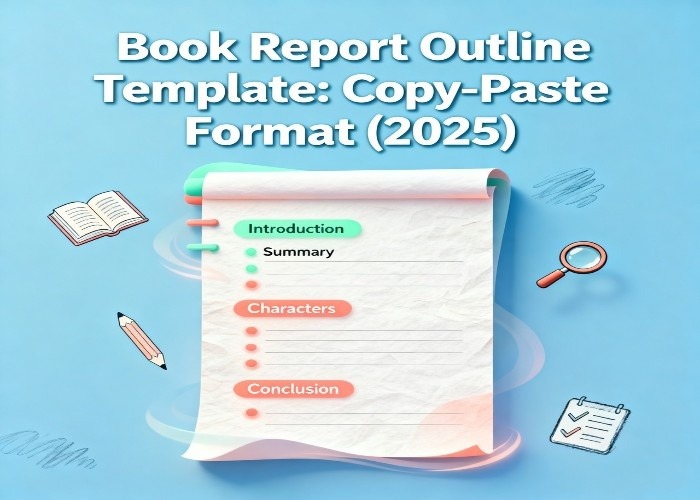
Basic Book Report Outline Template
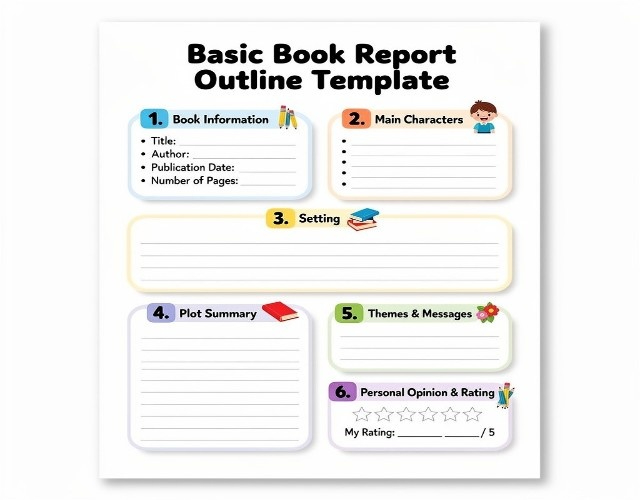
Copy this structure and fill in the [brackets]
1. INTRODUCTION (10-15% of total length) A. Hook: [Engaging opening sentence] C. Thesis: [Your main point about what the book means] 2. PLOT SUMMARY (20-25% of total length) A. Beginning: B. Middle: C. End: 3. CHARACTER ANALYSIS (25-30% of total length) A. Main Character 1: [Name] B. Main Character 2: [Name] C. Supporting Character: [Name] 4. THEME DISCUSSION (25-30% of total length) A. Theme 1: [State theme clearly] B. Theme 2: [State theme clearly] C. Theme 3: [State theme clearly] 5. CONCLUSION (10-15% of total length) A. Summary: [Brief recap of main analytical points]. B. Significance: [Why this analysis matters]. C. Final Thought: [Resonating closing statement].
B. Book Details:
Download Blank Template PDF: Print and fill in by hand
Remember! Using a clear book report framework can help students organize their summaries, character analyses, and personal reflections in a logical and easy-to-follow way.
READY TO HAND IT OFF?
Order Your Book Report from Your Phone in Under 2 Minutes
- Step-by-step structured book reports
- 100% human-written, zero AI
- Delivered on time, every time
- Unlimited revisions
Free revisions until you're 100% satisfied
Order NowStructure Book Report Breakdown by Section
Here's exactly how much space each section should take:
Introduction Format (10 to 15%)
| Education Level | Total Report Length | Recommended Summary Length |
|---|---|---|
| Elementary | 250–500 words | 30–75 words |
| Middle School | 500–800 words | 50–120 words |
| High School | 800–1,200 words | 80–180 words |
| College | 1,500+ words | 150–225 words |
Intro components:
- Hook (1 sentence).
- Book details (Title, Author, Year, Genre)..
- Thesis statement (1to 2 sentences).
Plot Summary Format (20 to 25%)
| Education Level | Recommended Word Count |
|---|---|
| Elementary | 50–125 words |
| Middle School | 100–200 words |
| High School | 160–300 words |
| College | 300–375 words |
Hit these three beats only:
- Beginning (setup + inciting incident).
- Middle (major complications).
- End (climax + resolution).
Character Analysis Format (25 to 30%)
| Education Level | Recommended Word Count |
|---|---|
| Elementary | 65–150 words |
| Middle School | 125–240 words |
| High School | 200–360 words |
| College | 375–450 words |
Per character block:
- Personality traits (with evidence).
- Motivations (what they want).
- Character development (how they change).
- Thematic significance (what they represent).
Theme Discussion Format (25 to 30%)
| Education Level | Word Count Range |
|---|---|
| Elementary | 65–150 words |
| Middle School | 125–240 words |
| High School | 200–360 words |
| College | 375–450 words |
Per theme block:
- Clear theme statement.
- 2-3 pieces of textual evidence.
- Analysis explaining significance.
- Connection to thesis.
Conclusion Format (10 to 15%)
| Education Level | Word Count Range |
|---|---|
| Elementary | 25–75 words |
| Middle School | 50–120 words |
| High School | 80–180 words |
| College | 150–225 words |
Conclusion components:
- Synthesize main points.
- Explain significance.
- Final resonating thought.
See how this structure looks in practice with our book report examples.
Book Report Outline Format: Variations by Length
Short Format (250 to 500 words: Elementary)
1. INTRODUCTION (30-75 words)
- Hook + Book details.
- Simple thesis: "[Character] learns [lesson]"
2. PLOT SUMMARY (50-125 words)
- Beginning, middle, and end in 3-4 sentences each.
3. CHARACTER DESCRIPTION (65-150 words)
- Main character personality
- One supporting character
4. MAIN THEME (40-75 words)
- One theme with an example.
5. CONCLUSION (25-75 words)
- What happens + what it means.
Adjust template: Combine character analysis and theme discussion into simpler descriptions. Focus on plot understanding over deep analysis.
Medium Format (500 to 800 words: Middle School)
1. INTRODUCTION (50-120 words)
- Hook, book details, thesis.
2. PLOT SUMMARY (100-200 words)
- Beginning (setup + problem).
- Middle (complications)
- End (resolution)
3. CHARACTER ANALYSIS (125-240 words)
- Main character (traits + change)
- 1-2 supporting characters
4. THEME DISCUSSION (125-240 words)
- 2 themes with examples.
- Basic analysis of significance.
5. CONCLUSION (50-120 words)
- Recap + why it matters
Adjust template: Develop character motivations more. Include two themes instead of three. Add more analysis of why things happen.
Long Format (800 to 1,200 words: High School)
[Use full Basic Template above: standard structure]
Additional depth needed:
- Analyze the author's writing style.
- Discuss symbolism.
- Compare character arcs.
- Examine multiple theme layers.
Adjust template: Expand each section proportionally. Add the author's craft discussion. Include literary device analysis.
Research Format (1,500+ words: College)
1. INTRODUCTION (150-225 words)
- Contextualize the book historically/culturally.
- Detailed thesis with argument preview
2. PLOT SUMMARY (300-375 words)
- Brief but complete narrative arc.
- Highlight plot elements relevant to the thesis.
3. CHARACTER ANALYSIS (375-450 words)
- 2-3 main characters deeply analyzed.
- Psychological motivations.
- Character as a literary device.
4. THEME DISCUSSION (375-450 words)
- 3 themes with multiple examples each.
- Connect to literary theory.
- Compare to other works
5. LITERARY ANALYSIS (200-300 words)
- Author's style and techniques.
- Symbolism and motifs.
- Narrative structure
6. CRITICAL EVALUATION (150-200 words)
- Book's contribution to literature.
- Strengths and limitations
7. CONCLUSION (150-225 words)
- Synthesize complex argument.
- Broader implications.
Adjust template: Add sections for literary devices, critical evaluation, and theoretical frameworks. Cite secondary sources.
Ace Your Book Reports with Ease!
Professional writing assistance tailored to your needs
- Written from scratch by real experts
- Properly researched and formatted
- Any topic, any deadline
- Revisions until you're happy
Get Your Outline Now
Order NowBook Report Paragraph Structure Template (PEEL Method)
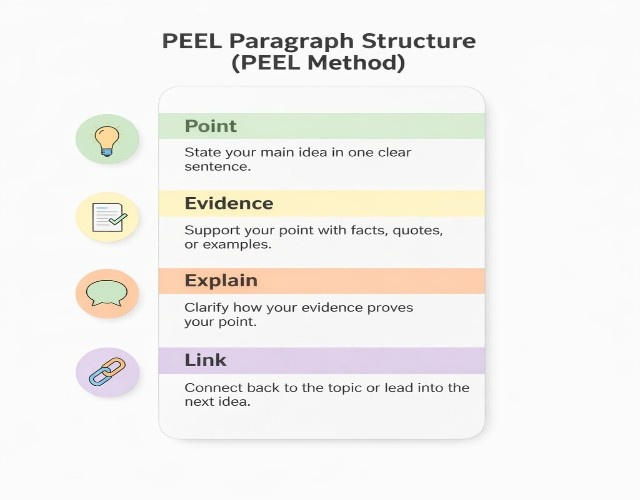
| Step | Element | Purpose |
|---|---|---|
| P | Point | Topic sentence that states your main claim |
| E | Evidence | Quote or specific example from the book with a page number |
| E | Explanation | Analysis explaining what the evidence shows |
| L | Link | Connection back to your thesis or main argument |
Filled template showing structure (this is an outline format, not a full paragraph)
| POINT: Charlotte's sacrifice demonstrates true friendship's selfless nature. |
| EVIDENCE: "After all, what's a life, anyway? We're born, we live a little while, we die" (White, 164). |
| EXPLANATION: Charlotte accepts her mortality to save Wilbur, prioritizing his survival over her own comfort. This choice reveals friendship as action, not just feeling. |
| LINK: This selflessness supports the thesis that White defines friendship through sacrifice, not longevity. |
Download Paragraph Structure PDF: Template for body paragraphs
Looking at book report examples alongside an outline can help students see how to structure their introduction, summary, character analysis, and conclusion effectively.
Choosing the Right Outline Book Report Template
1. Short format: Elementary, simple books.
2. Medium format: Middle school, standard assignments.
3. Long format: High school analysis.
4. Research format: College, critical analysis.
Boost your book report quality with expert help by using a trusted essay writing service, and get top-notch analysis, proper structure, and polished writing.
Book Report Downloadable Templates
Basic Book ReportOutline Template PDF
Blank fillable format.
Structure Checklist for Book Report PDF
Verify all components are included
Grade Level Book Report Templates Bundle
Elementary through college formats
Filled Book Report Outline Sample
See structure in action (Charlotte's Web example)
Nonfiction Book Report Outline
Blank fillable format
STRUGGLING WITH THE ACTUAL WRITING?
Get a professionally written book report that meets academic standards, follows your guidelines, and clearly explains themes, characters, and meaning.
- Follows academic and teacher guidelines
- Proper formatting and structure
- Theme-based literary analysis
- Custom analysis from scratch
Expert Writers for Every Book Genre and Subject
Order NowBottom Line
A strong book report starts with a clear structure. By using this copy paste book report outline template and following the recommended section percentages, you eliminate guesswork and focus entirely on analysis, clarity, and organization. Whether you’re writing a short elementary report or a full college level analysis, this framework adapts to every grade and book type.
Copy the template, fill in your book details, and expand each section using the paragraph frameworks provided. The result is a well balanced, logically organized book report that meets academic expectations and saves hours of planning time.
If you need more guidance before outlining, start with our complete book report writing guide for step by step help from reading strategies to final revisions. And if time is tight, our professional writers can handle the entire process for you, from reading the book to delivering a polished report.