
Why Do STEM and Humanities Require Different Study Approaches?
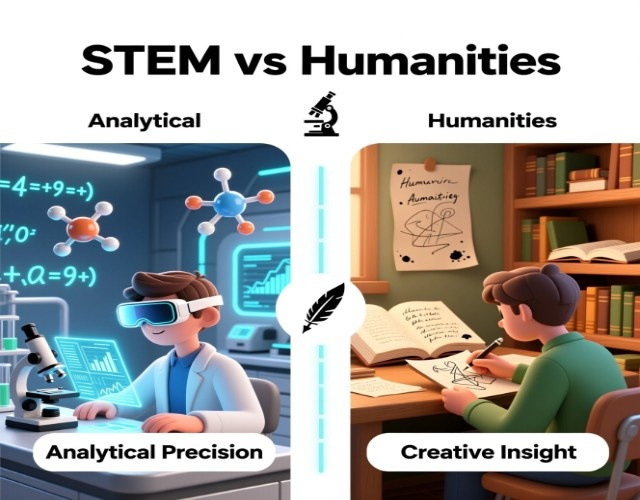
STEM and humanities courses test different cognitive skills, which means effective preparation looks completely different. Understanding this fundamental difference prevents students from wasting hours using wrong-fit study methods.
STEM Courses Test Application and Problem-Solving
STEM exams rarely ask you to recall information directly. Instead, they present novel problems requiring you to apply concepts in new situations. A calculus exam doesn't ask "What is the chain rule?" It gives you a complex function and expects you to recognize when and how to apply the chain rule correctly.
This means STEM studying must focus on doing problems repeatedly until pattern recognition becomes automatic. Reading your textbook five times won't prepare you for solving problems you've never seen. Working through 50 practice problems will.
Research from the Journal of Educational Psychology tracked 1,200 engineering students across four semesters. Students who spent 70% of their study time on problem-solving scored an average of 12 points higher than students who spent 70% of their time reading and reviewing notes. The difference wasn't effort; both groups studied the same total hours. The difference was method.
Humanities Courses Test Synthesis and Argumentation
Humanities exams and essays ask you to construct original arguments connecting multiple texts, theories, or historical events. A history essay doesn't ask you to list facts about World War II. It asks you to argue whether economic factors outweighed political factors in causing the conflict, using evidence from multiple sources.
This means humanities studies must focus on understanding relationships between ideas and building interpretive frameworks. You need to read deeply, identify themes across texts, and practice constructing evidence-based arguments. Drilling flashcards of dates and names won't prepare you for synthesis questions.
A 2024 Stanford study analyzed 800 humanities students' study habits. Students who spent significant time writing practice arguments and connecting texts across readings scored 22% higher on essays than students who focused on memorizing content. The top performers treated studying as argument rehearsal, not information absorption.
The Cognitive Science Behind the Split
| STEM courses primarily engage procedural memory, the brain systems responsible for learning skills through repetition. Solving a differential equation becomes automatic after enough practice, similar to riding a bicycle. Your brain builds neural pathways for recognizing problem types and executing solution procedures. |
| Humanities courses primarily engage semantic memory and executive function, the systems responsible for understanding meaning and managing complex reasoning. Analyzing a poem or evaluating a philosophical argument requires flexible thinking and creative connection-making, not automated procedures. |
Students who recognize this split can match their study techniques to the cognitive demands of each course. This isn't about working harder; it's about working in ways that actually prepare your brain for what each discipline requires.
For students managing heavy course loads across both STEM and humanities, many find that strategic use of an essay writing service for specific assignments allows them to allocate more time to the problem-solving practice their STEM courses demand while still producing strong humanities work.
Best Study Techniques for STEM Courses
STEM studying means practicing problems until solution patterns become automatic. Here's exactly how to structure your study sessions for mathematics, physics, chemistry, engineering, and computer science courses.
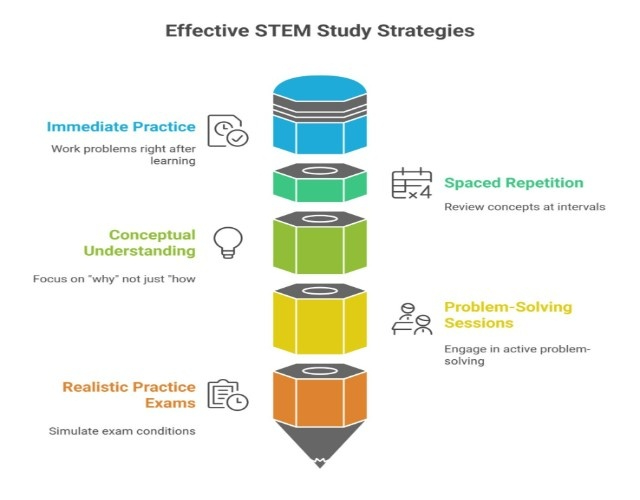
1. Work Problems Immediately After Learning New Concepts
Don't wait until the night before the exam to start problem sets. Work practice problems the same day you encounter a new concept in lecture or reading. Your brain consolidates procedural knowledge during sleep, so early practice plus sleep creates stronger neural pathways than cramming.
After a calculus lecture on integration by parts, work 5 to 10 problems that evening. After reading about thermodynamics, solve sample problems before moving to the next chapter. This immediate application catches misunderstandings while you can still get help.
A 2023 study tracked 600 engineering students across three institutions. Students who worked problems within 24 hours of learning concepts scored 15% higher on exams than students who waited until exam week. The early practice group also reported spending less total time studying because they didn't need to re-learn misunderstood concepts.
2. Use Spaced Repetition for Problem-Solving
Return to old problem types regularly rather than moving forward linearly. After learning integration techniques in calculus, continue practicing integration problems even as you move to new topics like series and sequences. STEM knowledge builds cumulatively; later topics assume mastery of earlier ones.
Create a rotation schedule:
|
This spacing strengthens long-term retention and prevents the common experience of understanding concepts during the unit but forgetting them by exam day.
Students who use spaced problem practice retain 60 to 70% of solution methods after six weeks, compared to 15 to 20% retention from single pass studying.
3. Focus on Understanding, Not Memorizing Solutions
Many students make the mistake of memorizing solution steps without understanding the underlying logic. They can reproduce worked examples but freeze when problems vary slightly. This approach fails on exams that test conceptual understanding through unfamiliar problems.
Instead, after solving a problem, ask yourself:
|
This reflection transforms mechanical practice into conceptual mastery. You're training pattern recognition, not memorizing scripts. When the exam presents novel problems, you'll recognize the underlying structure and know which tools to deploy.
4. Study in Problem-Solving Sessions, Not Reading Sessions
Flip the typical ratio: spend 70 to 80% of STEM study time solving problems and only 20 to 30% reading or reviewing notes. Reading feels productive, but doesn't build problem-solving skills. Doing problems is uncomfortable, but it is the only way to develop automatic pattern recognition.
For a three-hour organic chemistry study session:
- 30 minutes: Review notes and identify key reaction mechanisms.
- 2.5 hours: Work through synthesis problems, mechanism predictions, and practice exam questions.
- Optional: Quick scan of notes to clarify confusion that emerged during problem work.
Students consistently overestimate how much reading helps STEM performance. The research is detailed: doing problems predicts exam success; reading predicts false confidence.
5. Use Practice Exams Under Realistic Conditions
Take full practice exams in timed conditions at least twice before each major STEM exam. This serves three critical functions: reveals gaps in your knowledge, builds time-management skills, and reduces exam anxiety through exposure.
Simulate real conditions: time limits, closed notes, no phone. Don't pause to look up answers or check formulas. Afterward, carefully review mistakes and work similar problems until you can solve them reliably.
Many students save practice exams until the night before, treating them as confidence checks rather than learning tools. This wastes their highest-value study resource. Practice exams taken 3 to 4 days before the real exam, with time to address revealed weaknesses, produce the strongest performance gains.
Best Study Techniques for Humanities Courses
Humanities studying means building interpretive frameworks and practicing argumentation. Here's how to approach literature, history, philosophy, religious studies, and cultural studies courses.
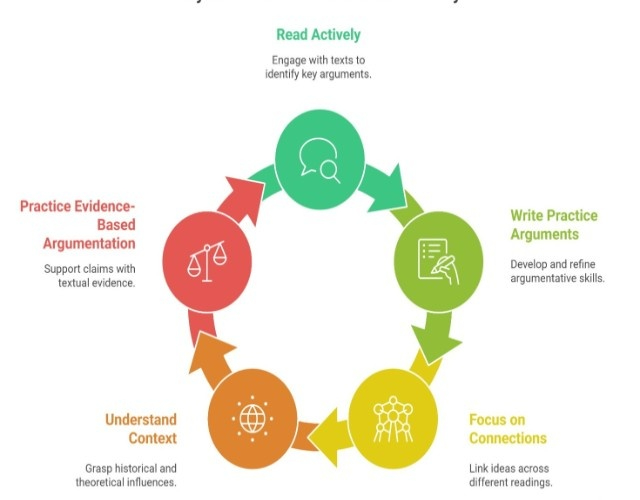
1. Read Actively with Argument Mapping
Passive reading wastes time in humanities courses. Read with a pencil, marking key arguments, evidence, themes, and questions as you go. For each text, identify: What is the author's main claim? What evidence supports it? What are potential counterarguments? How does this connect to other readings?
Create argument maps or concept webs showing relationships between texts. When studying for an exam on postcolonial literature, map how different authors address themes of identity, power, and resistance. These visual frameworks reveal patterns and connections that drive strong essay arguments.
Research shows that students who annotate actively and create conceptual maps score 18% higher on analysis questions than students who read and highlight passively. The annotation process forces engagement with ideas rather than recognition of words.
2. Write Practice Arguments Regularly
Don't wait for assigned essays to practice writing. Compose 1-2 paragraph arguments responding to potential essay questions throughout the semester. This rehearsal builds the thinking patterns humanities exams require.
After completing readings on the American Revolution, write a short argument answering: "Were economic or ideological factors more important in causing colonial rebellion?" Use specific evidence from readings to support your position. This practice identifies gaps in your understanding while you have time to address them.
A 2024 study of 450 history students found that those who wrote practice arguments weekly scored 23% higher on final essays than students who only wrote assigned papers. The practice group also reported feeling less anxious during exams because argument construction had become familiar.
3. Focus on Connections Across Readings
Humanities courses emphasize synthesis, your ability to draw connections between multiple texts, theories, or historical periods. Exams rarely ask about single readings in isolation. They ask you to compare, contrast, and integrate ideas across the course.
After each new reading, ask: How does this connect to previous readings? Does it support, challenge, or complicate earlier arguments? What patterns emerge across texts? Create a running document tracking major themes and how different authors address them.
Students who study humanities courses as integrated intellectual conversations rather than separate reading units develop the synthetic thinking that professors reward. This approach also makes studying more interesting; you're exploring ideas, not memorizing lists.
4. Understand Historical and Theoretical Context
Humanities texts exist in dialogue with their contexts. A Shakespeare play responds to Elizabethan politics and culture. A postmodern novel reacts against modernist literary conventions. Understanding context helps you analyze texts more deeply and make sophisticated arguments.
When studying a philosophical text, research: When was it written? What intellectual or political debates was it addressing? How did contemporaries respond? This context transforms abstract ideas into positioned arguments within specific conversations.
Students who study context alongside texts write more nuanced arguments because they understand why authors made specific choices. This contextual knowledge differentiates excellent analysis from superficial summary.
5. Practice Evidence-Based Argumentation
Humanities essays require specific textual evidence supporting your claims. Vague gestures toward themes don't earn strong grades. You need precise quotations, historical details, and theoretical frameworks backing every assertion.
When practicing arguments, force yourself to cite specific evidence. Don't write "The author suggests identity is complex." Write "When the narrator states 'I contain multitudes' (line 47), this challenges essentialist notions of fixed identity by positioning the self as inherently plural and contradictory."
The specificity demonstrates close reading and analytical precision. Students who practice evidence-based argumentation develop the habit of supporting claims automatically, improving both exam performance and essay grades.
For students managing multiple humanities courses with extensive reading loads and essay requirements, strategic use of a reliable essay writing service for specific assignments can help maintain focus on deep learning and argument development across their most important courses.
Visual breakdown of how successful students allocate study time in STEM versus humanities courses.
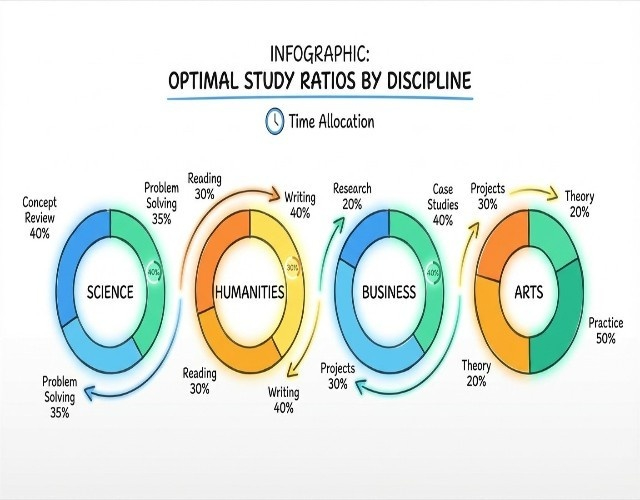
Study Techniques Comparison: STEM vs Humanities
Understanding the core differences helps you allocate time correctly and avoid cross-contamination of ineffective methods.
| Study Element | STEM Approach | Humanities Approach |
|---|---|---|
| Primary Focus | Problem-solving practice | Argument construction & synthesis |
| Time Allocation | 70-80% doing problems | 60-70% reading & writing |
| Reading Strategy | Scan for formulas/concepts | Close reading with annotation |
| Practice Method | Repeat problems until automatic | Write practice arguments |
| Memory Type | Procedural (how to do) | Semantic (what it means) |
| Exam Preparation | Practice exams under time pressure | Practice essays & argument outlines |
| Success Metric | Can solve novel problems correctly | Can construct original supported arguments |
| Key Skill | Pattern recognition | Synthesis across texts |
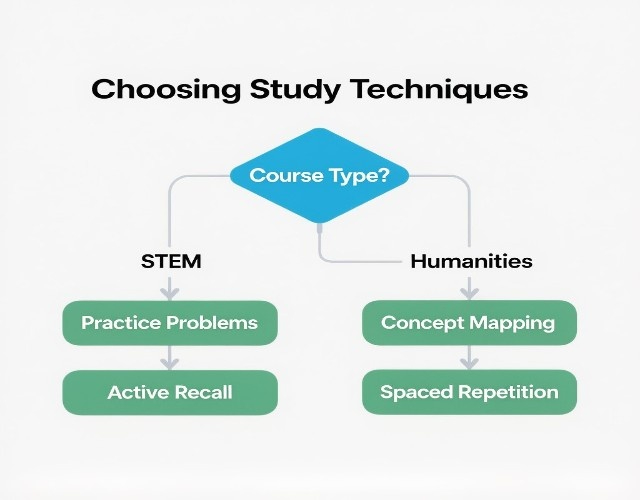
When to Use STEM Techniques
Choose problem-solving focus for:
- Mathematics at all levels (calculus, statistics, discrete math).
- Physics, chemistry, and physical sciences.
- Engineering courses (mechanical, electrical, civil, chemical).
- Computer science and programming.
- Economics with heavy quantitative emphasis.
- Accounting and finance courses.
When to Use Humanities Techniques
Choose argument-focus for:
- Literature and composition courses.
- History and political science.
- Philosophy and religious studies.
- Cultural studies and anthropology.
- Art history and criticism.
- Qualitative social sciences (sociology, psychology).
Hybrid Courses Requiring Both Approaches
Some courses blend quantitative and qualitative elements:
1. Cognitive Psychology & Neuroscience: Read primary research actively (humanities approach) but also practice interpreting statistical results and experimental designs (STEM approach). Allocate 50-50 time between critical reading and quantitative practice.
2. Economic History: Master both historical argumentation and economic modeling. Study the narrative and interpretive elements using humanities techniques, and the mathematical/statistical elements using STEM techniques.
3. Research Methods Courses: Focus on both conceptual understanding of methodology (humanities reading) and practical application through statistical analysis (STEM practice).
4. Science Writing or Philosophy of Science: Requires deep conceptual understanding (humanities reading and argumentation) plus technical comprehension of scientific concepts (STEM understanding).
For hybrid courses, diagnose each component separately. The exam might have both problem-solving sections (prepare with STEM techniques) and essay sections (prepare with humanities techniques). Students who recognize this structure and prepare accordingly consistently outperform those using single-method approaches.
Many students managing both STEM problem sets and humanities essays find that strategic use of a trusted essay writing service for specific papers allows them to maintain balanced preparation across their full course load without sacrificing performance in either area.
Common Mistakes Students Make Studying STEM vs Humanities
Avoid these discipline-specific errors that sabotage performance despite significant effort.
STEM Mistakes That Tank Grades
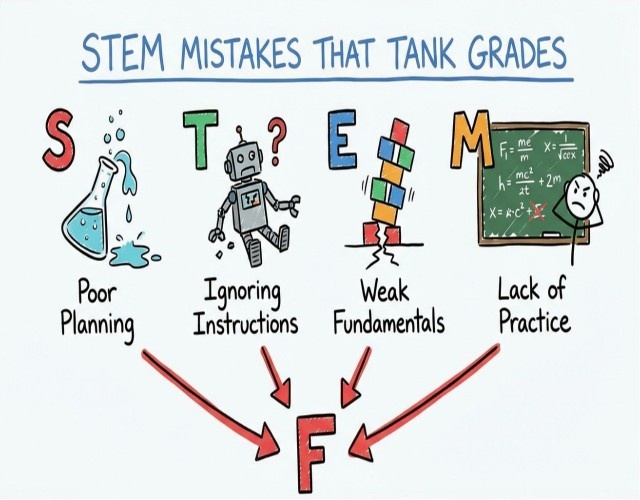
Mistake 1: Reading Without Doing Problems
Students read textbook chapters thoroughly, review lecture notes multiple times, and feel prepared. Then the exam asks them to solve problems, and they freeze. Reading builds recognition, not problem-solving ability. You can't learn to swim by reading about swimming.
| Solution: Flip your ratio. Spend minimal time reading (just enough to understand concepts) and maximal time working on problems. Aim for 3-4 problems for every concept covered. |
Mistake 2: Only Working on Assigned Problems
Homework problems are necessary but not sufficient. Professors assign 10 problems; you need to work 30-50 problems per chapter to build real mastery. Assigned work teaches you concepts. Extra practice builds the automaticity that exams require.
| Solution: After completing assigned problems, work additional problems from your textbook, old exams, or online problem banks. Prioritize problems that combine multiple concepts or require multiple steps. |
Mistake 3: Memorizing Formulas Without Understanding
Students create formula sheets and memorize equations, but can't recognize when or how to apply them. Exams test application, not recitation. A formula sheet won't help if you don't understand which formula solves which type of problem.
| Solution: For each formula, work problems where you must decide when to apply it. Mix problem types so you practice recognizing when each formula is relevant. Understanding context beats memorizing symbols. |
Humanities Mistakes That Lower Grades
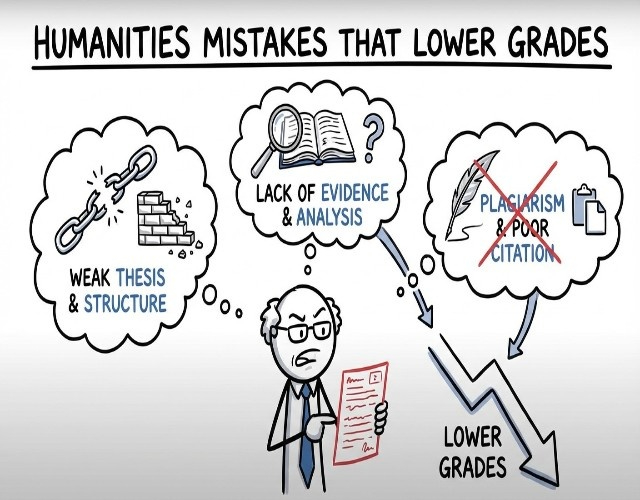
Mistake 1: Memorizing Instead of Understanding
Students create detailed outlines of readings, memorize dates and names, and can recall content accurately. But exams ask them to analyze and argue, not summarize. Humanities professors assume you remember basic content; they're testing your ability to think with that content.
| Solution: Shift from memorizing content to practicing argumentation. After reading, write short arguments using the material. Test yourself with "why" and "how" questions, not "what" questions. |
Mistake 2: Studying Texts in Isolation
Students master individual readings but struggle when exams ask them to compare texts or trace themes across the course. Humanities courses are designed as integrated conversations, not separate units. Synthesis is the skill being tested.
| Solution: Create theme-based study documents connecting multiple readings. Practice writing arguments that draw on 3 to 4 different texts. Map how authors respond to or build on each other's ideas. |
Mistake 3: Avoiding Writing Until Exam Day
Students read extensively but don't practice writing until the actual essay exam or paper assignment. Then they discover they can't construct clear arguments under pressure or organize evidence effectively. Writing is a skill that requires practice, especially under time constraints.
| Solution: Write practice paragraphs and short essays throughout the semester. Time yourself writing 30-minute essay responses. Get comfortable articulating arguments quickly and supporting them with specific evidence. |
For students discovering these mistakes late in the semester with exams approaching, combining targeted study method corrections with strategic support from a fast essay writing service for upcoming papers can help recover performance while building better habits for future courses.
Conclusion: Master Both by Studying Smarter, Not Harder
The research proves that study techniques for STEM vs humanities must match each discipline's cognitive demands. STEM success requires extensive problem solving practice, building procedural automaticity. Humanities success requires synthesis across texts and practiced argumentation, building analytical sophistication. Students who adapt methods to discipline type score 18 to 25% higher than those using generic approaches.
Key Takeaways:
- STEM courses test application, study by doing 3-4 times more problems than assigned
- Humanities courses test synthesis, study by writing practice, arguments, and mapping connections
- Use 70-80% problem practice for STEM, 60 to 70% reading and writing for humanities
- Avoid cross-contamination: reading without practicing fails STEM, memorizing without synthesizing fails humanities
- Start technique-appropriate practice early; both disciplines resist cramming, but for different reasons
Stop using the same study methods regardless of subject type. Diagnose each course's cognitive demands and match your preparation to what will actually be tested. Your organic chemistry exam doesn't care how well you read the textbook. Your philosophy essay doesn't care how many facts you memorized.
For students managing heavy course loads across both disciplines, combining optimized study techniques with strategic support from a legit essay writing service for specific high stakes assignments allows you to maintain deep learning in your priority courses while producing quality work across your full academic schedule.
Transform your study effectiveness by matching method to discipline. Your grades will reflect the difference immediately.