Why Outlines Matter: The Data Speaks
Professional writers, successful students, and content creators all share one habit: they outline before drafting. Here's why this step is non-negotiable for strong argumentative essays.
The Time-Saving Paradox
Students who outline first:
- Draft 40% faster than those who don't
- Spend 60% less time on major revisions
- Report higher confidence during writing
- Experience less writer's block
Time Investment:
- Outlining: 30-45 minutes
- Drafting without outline: 4-6 hours + extensive revisions
- Drafting with outline: 2-3 hours + minimal revisions
Total time saved: 2-3 hours per essay
The Quality Difference
Essays written from outlines consistently demonstrate:
- Stronger logical flow - Arguments build on each other naturally
- Better evidence placement - Support appears where it's most effective
- Clearer thesis development - Position is evident throughout
- More effective counterarguments - Opposing views addressed strategically
- Smoother transitions - Connections between ideas are planned
- Balanced paragraph length - No repetition or underdeveloped sections
What Professors Notice
Instructors can identify essays written without outlines because they exhibit:
- Repetitive arguments
- Evidence dumps without analysis
- Wandering or circular reasoning
- Missing counterarguments
- Weak or absent conclusions
- Inconsistent paragraph development
Bottom line: 30 minutes of outlining prevents hours of frustration and significantly improves your final grade.
Professional Writers Always Outline
Every published article, academic paper, and book chapter begins with some form of outline. If professionals who write daily still outline, students writing occasionally definitely should.
What Happens Without an Outline
Understanding the consequences of skipping outlines helps motivate you to invest the time up front.
Seven Problems Outlines Prevent
1. Disjointed Structure
- Arguments appear in random order
- No logical progression from weak to strong
- Readers are confused about your position
- Example: Presenting your weakest argument first, strongest last, buried
2. Repetitive Arguments
- Same point made multiple times in different paragraphs
- Wastes word count on redundancy
- Makes essay feel padded and weak
- Example: Mentioning "cost concerns" in paragraphs 2, 3, and 4
3. Missing Counterarguments
- Forget to address opposing viewpoints until drafting
- No space left to include them
- Essay appears one-sided and weak
- Example: Realizing after 1,500 words, you never refuted the main objection
4. Weak Evidence Placement
- Strongest evidence buried in middle paragraphs
- Weakest evidence in prominent positions
- Impact diluted by poor organization
- Example: Leading with anecdotes instead of your statistical proof
5. Excessive Revision Time
- Major structural changes needed after drafting
- Rewriting entire sections for flow
- Moving paragraphs around repeatedly
- Example: Spending 3 hours reordering arguments that should have been outlined
6. Writer's Block
- Staring at a blank page, unsure where to start
- Getting stuck mid-paragraph
- Losing track of the main argument
- Example: 45 minutes pass with only the introduction written
7. Lower Grades
- Professors notice lack of planning
- Organization scores suffer
- Argument development seems random
- Example: Feedback: "Unclear structure, arguments need better organization"
Real Student Example: Before & After
Without Outline (First Draft):
- 6 hours to write 1,800 words
- Major revision needed (3+ hours)
- Paragraphs moved, entire section deleted
- Final grade: B-
With Outline (Second Essay):
- 45 minutes to outline
- 2.5 hours to draft 1,900 words
- Minor revisions only (30 minutes)
- Final grade: A-
Time saved: 6 hours Grade improvement: 1.5 letter grades
The Cognitive Load Problem
Writing without an outline forces your brain to:
- Hold entire essay structure in working memory
- Track which arguments you've made
- Remember what evidence goes where
- Monitor logical connections between ideas
- Watch for repetition and gaps
This is impossible to do well simultaneously.
Outlines externalize structure so your brain can focus on one thing: writing compelling sentences.
Your Time Is Worth More Than This
Get Hours Back. Get a Better Essay
Zero AI. Zero plagiarism. Just expert-level writing.
Basic Outline Structure: The Universal Framework
All argumentative essay outlines share core components, regardless of which model you choose.
The 5-Paragraph Standard Structure
INTRODUCTION (150-200 words)
• Hook (question, statistic, quote, anecdote)
• Background context (2-3 sentences)
• Thesis statement (your position + main reasons)
BODY PARAGRAPH 1 (200-250 words)
• Topic sentence (main argument #1)
• Evidence (facts, statistics, expert quotes)
• Analysis (explain how the evidence proves the point)
• Transition sentence to next paragraph
BODY PARAGRAPH 2 (200-250 words)
• Topic sentence (main argument #2)
• Evidence (supporting facts and data)
• Analysis (connect evidence to thesis)
• Transition to next point
BODY PARAGRAPH 3 (250-300 words)
• Counterargument (strongest opposing view)
• Acknowledgment (why others believe this)
• Refutation (evidence disproving counterargument)
• Transition to conclusion
CONCLUSION (150-200 words)
• Restated thesis (differently worded)
• Summary of main points (brief)
• Broader implications or call to action
• Strong closing sentence
TOTAL: 1,500-2,000 words
When to Expand Beyond 5 Paragraphs
Add more body paragraphs (5-7) when:
1. Your assignment requires 2,500+ words
Each argument needs 300-400 words to develop
More evidence = more space needed
2. Your topic has multiple dimensions
- "Should universal healthcare be adopted?" needs:
- Paragraph 1: Cost analysis
- Paragraph 2: Quality of care
- Paragraph 3: Access improvements
- Paragraph 4: Economic impacts
- Paragraph 5: Counterargument + refutation
3. Your evidence is substantial
Multiple strong studies per point
Each deserves a full explanation
Rule: One main idea per paragraph. If you have 5 main arguments, you need 5 body paragraphs.
Essential Components Every Outline Must Include
1. Clear Thesis Statement
- States your position specifically
- Appears at the end of the introduction outline
- Guides entire essay structure
- Example: "Universities should eliminate standardized test requirements because they perpetuate inequality, fail to predict success, and disadvantage qualified applicants."
2. Topic Sentences for Each Body Paragraph
- Mini-thesis for that paragraph
- One clear main idea
- Connects back to thesis
- Example: "Standardized tests perpetuate economic inequality by favoring wealthy students with test prep access."
3. Evidence Placeholders
- Note which sources support each point
- Include specific data/quotes to use
- Track citation information
- Example: "[Smith study, 2024: 85% correlation between income and SAT scores]"
4. Counterargument Section
- Identify the strongest opposing view
- Plan how you'll refute it
- Gather evidence for refutation
- Example: "Critics argue tests provide an objective comparison. However, [evidence showing bias]."
5. Logical Flow Markers
- Transition notes between paragraphs
- Ensure arguments build on each other
- Check for repetition
- Example: "After establishing cost benefits, address quality concerns."
Visual: Outline vs. Draft Relationship
OUTLINE (Blueprint) DRAFT (Building)
I. Introduction Paragraph 1:
A. Hook Full intro with developed hook,
B. Background background,and thesis statement
C. Thesis
II. Body 1 Paragraph 2:
A. Topic sentence Complete argument with evidence,
B. Evidence analysis, and smooth transitions
C. Analysis
[Pattern continues...]
Key insight: Outlines are skeletal—just main ideas and evidence notes. Drafts fleshed out with full sentences and paragraph development.
You Deserve Better Than a C
Get the Essay — and the Grade — You Actually Want
No AI. No templates. Just essays that get results
The Three Outline Types: Choose Your Level of Detail
Different outlining methods work for different writers and assignments. Choose based on your needs.
Type 1: Topic Outline (Quickest)
Uses: Words and phrases only
Time required: 15-20 minutes
Best for: Brainstorming stage, simple topics, experienced writers
Example:
I. Introduction
A. Hook - smartphone addiction statistics
B. Background - rise of social media
C. Thesis - platforms should be regulated
II. Mental health impacts
A. Teen anxiety increases
B. Depression correlations
C. Sleep disruption
III. Addiction mechanisms
A. Dopamine feedback loops
B. Infinite scroll design
C. FOMO engineering
Pros: Fast to create, flexible and easy to rearrange, and good for visual thinkers
Cons: Less detailed guidance while drafting, Easy to lose track of specific arguments, may require referring back to sources
When to use: Initial planning, timed essays, when you know your topic well
Type 2: Sentence Outline (Recommended)
Uses: Complete sentences for all points
Time required: 30-40 minutes
Best for: Complex arguments, most college essays, thorough planning
Example:
I. Introduction
A. Over 60% of teenagers report social media anxiety
B. Platforms use psychological manipulation to maximize engagement
C. Thesis: Social media companies should face government regulation to protect teen mental health
II. Social media significantly damages adolescent mental health
A. CDC data shows a 40% increase in teen depression since 2010
B. Instagram's own research confirms its platforms harm teen girls
C. Sleep disruption from late-night usage exacerbates mental health issues
III. Platform algorithms intentionally exploit psychological vulnerabilities
A. Dopamine-driven feedback loops create addictive behavior patterns
B. Infinite scroll features prevent natural stopping points
C. FOMO engineering keeps users constantly checking notifications
Pros: Clearest guidance for drafting, Helps identify weak arguments early, Ensures logical flow before writing, Easiest to get feedback on
Cons: Takes longer to create, may feel like writing the essay twice, can be too rigid if you need flexibility
When to use: Important essays, complex topics, when you want maximum structure
Type 3: Full Outline (Most Detailed)
Uses: Sentences plus evidence notes and citations
Time required: 40-50 minutes
Best for: Research papers, long essays (2,500+ words), graduate work
Example:
I. Introduction
A. Hook: "60% of teenagers report anxiety from social media" (Pew Research, 2024)
B. Background: Platform usage doubled from 2015-2025, now averaging 7 hours daily
C. Thesis: Social media companies should face government regulation because platforms harm teen mental health, exploit psychological vulnerabilities, and prioritize profit over wellbeing
II. Social media significantly damages adolescent mental health
A. Teen depression increased 40% since 2010, correlating with smartphone adoption
- CDC National Youth Risk Behavior Survey data (2023)
- Quote from Dr. Jean Twenge study
B. Instagram's internal research confirmed harm to teen girls' body image
- WSJ Facebook Files leak (2021)
- 32% of teen girls reported worsening body issues
C. Sleep disruption from late-night usage compounds mental health problems
- Average teen checks phone 50+ times/night (Sleep Foundation study)
- REM sleep reduction linked to depression
Pros: Maximum preparation before drafting, all sources and citations organized, minimal research needed while writing, and easiest transition to draft
Cons: Time-intensive upfront, can feel tedious, and may lock you into structure too early
When to use: Research-heavy papers, when you have abundant sources, and graduate-level work
Which Type Should You Use?
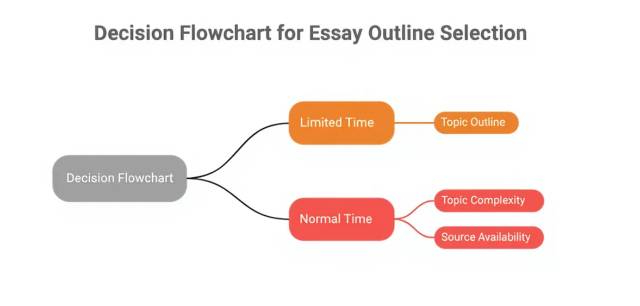
Decision Flowchart:
How much time do you have?
1. Limited (<30 min): Topic Outline
2. Normal (30-45 min): Is your topic complex?
2.1 No: Sentence Outline
2.2 Yes: Do you have many sources?
2.2.1 No: Sentence Outline
2.2.2 Yes: Full Outline
Recommendation: Sentence outlines offer the best balance of time investment and usefulness for most argumentative essays.
Try Before You Buy
Get Up to 2 Pages Written Free
Zero risk. 100% human-written. Guaranteed
Classical (Aristotelian) Model Outline & Template
The Classical model is the most straightforward and widely used. Best for general academic assignments and receptive audiences.
Classical Model Structure Diagram
PART 1: INTRODUCTION (Exordium)
• Grab attention with a strong hook
• Establish credibility (ethos)
• Present background context
• State your thesis clearly
Length: 150-200 words
PART 2: NARRATION (Background)
• Provide necessary context
• Explain why the issue matters
• Define key terms if needed
Length: 100-150 words (can merge with intro)
PART 3: CONFIRMATION (Your Arguments)
• Present 2-3 main arguments
• Use ethos (credibility), pathos (emotion),
logos (logic) strategically
• One idea per paragraph
• Evidence + analysis for each
Length: 600-800 words (3 paragraphs)
PART 4: REFUTATION (Address Opposition)
• Acknowledge the strongest counterargument
• Explain opposing viewpoint fairly
• Refute with evidence and logic
• Show why your position is superior
Length: 250-300 words
PART 5: CONCLUSION (Peroratio)
• Restate thesis differently
• Summarize key arguments briefly
• End with a call to action or implications
• Strong closing that resonates
Length: 150-200 words
Fill-in-the-Blank Classical Template
Topic: _______________________________
I. INTRODUCTION
A. Hook (choose one): - Surprising statistic: _____________________________
- Provocative question: _______________________________
- Relevant anecdote: _______________________________
- Bold statement: _______________________________
B. Background context (2-3 sentences): - _______________________________ - _______________________________ - _______________________________
C. Thesis statement (your position + main reasons): ___________________________
II. NARRATION (Optional - can merge with intro)
A. Why this issue matters: - _______________________________
B. Key terms to define: - _______________________________
C. Current situation: - _______________________________
III. CONFIRMATION - Body Paragraph 1
A. Topic sentence (first main argument): - _______________________________
B. Evidence supporting this argument: - Fact/statistic: __________________________
- Expert quote: _______________________________ - Example: ________________________
C. Analysis (explain how evidence proves your point): - _________________________
D. Appeals used: - Ethos (credibility): _______________________________
- Logos (logic): _______________________________
- Pathos (emotion - use sparingly): _______________________________
E. Transition to next argument: - _______________________________
IV. CONFIRMATION - Body Paragraph 2
A. Topic sentence (second main argument): - ____________________________
B. Evidence: - ____________________________ - _______________________________
C. Analysis: - _______________________________
D. Appeals used: - Ethos: ______________________ - Logos: _________________________
E. Transition: - _______________________________
V. CONFIRMATION - Body Paragraph 3
A. Topic sentence (third main argument): - _______________________________
B. Evidence: - _______________________________ - _______________________________
C. Analysis: - _______________________________
D. Appeals used: - Logos (primary): _______________________________
E. Transition to refutation: - _______________________________
VI. REFUTATION
A. Strongest counterargument: - Critics argue that ______________________________
B. Why some hold this view: - _______________________________
C. Acknowledge any validity: - While it's true that _______________________________
D. Refute with evidence: - However, this fails because ______________________________ - Evidence: _______________________________
E. Transition to conclusion: - _______________________________
VII. CONCLUSION
A. Restated thesis (use different wording): - _______________________________
B. Brief summary of 3 main arguments: - First: ________________ - Second: ________________ - Third: __________________________
C. Broader implications or call to action: - _______________________________
D. Strong closing sentence: - _______________________________
When to Use the Classical Model
Perfect for:
- Standard academic assignments
- Receptive or neutral audiences
- Clear-cut issues with strong evidence
- When you have solid credibility
- Traditional persuasive essays
Avoid for:
- Hostile audiences (use Rogerian)
- Highly complex, nuanced issues (use Toulmin)
- When you need to find a compromise
Example Topic Using Classical: "Should colleges eliminate standardized test requirements?"
TRY BEFORE YOU BUY
Free Essay. Zero Risk. Real Experts.
Zero risk. 100% human-written. Guaranteed.
Toulmin Model Outline & Template
The Toulmin model is ideal for complex issues requiring analytical depth. Best for college-level essays and topics without absolute answers.
Toulmin Model Structure Diagram
1. CLAIM (Your Position)
• What you're arguing
• Specific and debatable
• Example: "Universal healthcare should be
adopted because it improves outcomes."
2. GROUNDS (Evidence/Data)
• Facts supporting your claim
• Statistics, studies, expert testimony
• Example: "Countries with universal care have
longer life expectancy (WHO data)"
3. WARRANT (Reasoning Connection)
• Explains WHY evidence supports the claim
• Often unstated but crucial
• Example: "Better health outcomes indicate
superior healthcare systems"
4. BACKING (Support for Warrant)
• Additional evidence strengthening the warrant
• Makes reasoning more credible
• Example: "Public health research confirms
life expectancy as key quality metric"
5. QUALIFIER (Limitations)
• Words like "usually," "probably," "in most"
• Acknowledges claim isn't absolute
• Example: "Universal healthcare would likely
improve outcomes for most Americans"
6. REBUTTAL (Counter-Conditions)
• When your claim might not hold
• Addresses exceptions
• Example: "However, implementation costs may
initially strain budgets"
Fill-in-the-Blank Toulmin Template
Topic: _______________________________
I. INTRODUCTION
A. Hook and background: - _______________________________
B. Claim (your thesis): - _______________________________
II. CLAIM (State your position clearly)
A. Main claim: - _______________________________
B. Why this claim matters: - _______________________________
C. Scope of claim: - _______________________________
III. GROUNDS (Evidence Supporting Claim)
Body Paragraph 1
A. Primary evidence #1: - _______________________________
B. Primary evidence #2: - _______________________________
C. Primary evidence #3: - _______________________________
D. How this evidence directly supports claim: - _______________________________
IV. WARRANT (Why Evidence Supports Claim)
Body Paragraph 2
A. Reasoning that connects evidence to claim: - __________
B. Underlying assumptions: - We assume that _______________________________
C. Logical principle at work: - _______________________________
D. Why this reasoning is valid: - _______________________________
V. BACKING (Support for Your Warrant)
Body Paragraph 3
A. Additional evidence supporting your reasoning: - ______________
B. Expert testimony or research validating warrant: - ___________________________
C. Real-world examples demonstrating principle: - _____________________________
D. Why your reasoning is credible: - _______________________________
VI. QUALIFIER (Acknowledge Limitations)
Body Paragraph 4
A. Qualifying words for your claim: - "In most cases," "Probably," "Usually," "Likely"
B. Modified claim with qualifier: - _______________________________
C. Conditions under which claim holds: - _______________________________
D. Why qualifier strengthens rather than weakens: - ____________________________
VII. REBUTTAL (Address Counter-Conditions)
Body Paragraph 5
A. Exceptions to your claim: - Your claim might not hold when _________________
B. Strongest counterargument: - Opponents argue that ________________________
C. Refutation of counterargument: - This objection fails because _______________
- Evidence: _______________________________
D. Why your qualified claim still stands: - _______________________________
VIII. CONCLUSION A. Restated claim with qualifier: - ___________________________
B. Summary of grounds-warrant-backing chain: - _______________________________
C. Significance of qualified position: - _______________________________
D. Implications for policy/action: - _______________________________
New Customer Offer
Your First Essay Is Free — Up to 2 Pages
No AI. No credit card. No catch.
Toulmin Model Flow Example
Topic: "Should schools ban smartphones during class?"
CLAIM: Schools should prohibit smartphone use during class
GROUNDS: Studies show 23% lower test scores when phones are present
WARRANT: Academic performance indicates learning effectiveness
BACKING: Educational research validates test scores as a learning metric
QUALIFIER: Schools should *likely* prohibit phones *in most cases*
REBUTTAL: Unless students need phones for medical/safety reasons
When to Use the Toulmin Model
Perfect for:
- Complex policy questions
- Scientific/technical debates
- Issues requiring nuanced analysis
- Topics without clear right/wrong
- College research papers
Avoid for:
- Simple topics with obvious positions
- When you need a traditional structure
- Hostile audiences needing a Rogerian approach
Example Topics Using Toulmin:
- "Should AI development be paused?"
- "Is universal basic income economically viable?"
- "Should gene editing prevent genetic diseases?"
Rogerian Model Outline & Template
The Rogerian model emphasizes finding common ground. Best for controversial topics and hostile audiences.
Rogerian Model Structure Diagram
PART 1: INTRODUCTION (Neutral Ground)
• Identify problem objectively
• Establish shared concern
• NO position stated yet
• Tone: Balanced, respectful
Length: 150-200 words
PART 2: OPPOSING VIEW SUMMARY
• Present opposition fairly and completely
• Use their strongest arguments
• No bias or mockery
• Show you understand their position
Length: 250-300 words
PART 3: STATEMENT OF UNDERSTANDING
• Acknowledge validity in their concerns
• Identify common values/goals
• Show you've genuinely listened
• Build trust through empathy
Length: 150-200 words
PART 4: YOUR POSITION
• Now introduce your view
• Frame as complementary, not oppositional
• Connect to shared goals
• Maintain respectful tone
Length: 300-400 words
PART 5: COMPROMISE/BENEFITS
• Propose a middle ground solution
• Show how both sides benefit
• Address both sets of concerns
• Emphasize cooperation over conflict
Length: 250-300 words
Fill-in-the-Blank Rogerian Template
Topic: _______________________________
I. INTRODUCTION (Establish Neutral Ground)
A. Identify problem objectively: - _______________________________
B. Establish shared concern for both sides: - Everyone agrees that ______________
C. Why this issue matters to all: - _______________________________
D. NO thesis yet - just set up dialogue: - _______________________________
II. OPPOSING VIEW SUMMARY (Present Their Case Fairly)
A. Introduce opposing position respectfully: - Many people believe that _______
B. Their strongest argument #1: - ____________ - Evidence they use: _____________
C. Their strongest argument #2: - ____________ - Evidence they use: _____________
D. Their strongest argument #3: - ____________ - Evidence they use: _____________
E. Why they hold this position: - They value _________ - They're concerned about __________
F. Present without judgment or bias:
Avoid words like "claim," "merely believe," "unfortunately."
Use neutral language: "argue," "contend," "maintain."
III. STATEMENT OF UNDERSTANDING (Validate Their Concerns)
A. Acknowledge validity in their position: - These concerns about _____________ are legitimate
B. Identify common values: - Both sides want __________ - We all value __________
C. Find shared goals: - Everyone seeks _______________________________
D. Show genuine understanding: - It's understandable why ____________________
E. Build trust through empathy: - Given ___________, their position makes sense
IV. YOUR POSITION (Now Introduce Your View)
A. Present your position: - While respecting these concerns, ____________________
B. Frame as complementary not oppositional: - This perspective adds __________ - Rather than contradicting, it ________________
C. Your main argument #1: - __________________ - Evidence: ______________________
D. Your main argument #2: - __________________ - Evidence: ______________________
E. Your main argument #3: - ___________________ - Evidence: _____________________
F. Connect to shared values identified earlier: - This approach also achieves _________________
G. Maintain respectful tone: - Avoid attacking opposition - Use inclusive language ("we," "our")
V. COMPROMISE/MIDDLE GROUND (Propose Win-Win Solution)
A. Middle ground solution: - What if we _______________________________?
B. How this addresses their concerns: - This solution protects __________________ - It prevents _______________________________
C. How this addresses your concerns: - While also ensuring _______ - And promoting ________
D. Benefits to both sides: - Opponents gain _____________ - Proponents gain _____________
E. Shared benefits to all: - Everyone benefits from _____________________________
F. Path forward together: - By working cooperatively ___________________________
VI. CONCLUSION
A. Restate shared values: - _______________________________
B. Emphasize common ground found: - _______________________________
C. Proposed solution summary: - _______________________________
D. Call for dialogue and understanding: - _______________________________
Limited Time Offer for New Customers
First Essay Free — Up to 2 Pages
Offer won't last. No AI. No catch.
Rogerian Model Example Flow
Topic: "Should schools allow prayer in public education?"
INTRO: Both sides care deeply about children's wellbeing and rights
THEIR VIEW: Religious freedom advocates want expression protected
Evidence: Constitutional rights, family values, importance
UNDERSTANDING: These concerns about religious liberty are legitimate
We all value freedom and moral development
MY VIEW: Secular education protects religious minorities
Evidence: Prevents coercion, respects diversity
Connects to the shared value of freedom
COMPROMISE: Allow student-led voluntary prayer clubs after hours
Protects expression without coercion
Benefits for both sides
When to Use the Rogerian Model
Perfect for:
- Highly polarizing topics
- Hostile or defensive audiences
- When both sides have valid points
- Controversial ethical issues
- When building bridges matters
Avoid for:
- Simple academic assignments
- When you need a traditional structure
- Topics with clear evidence on one side
Example Topics Using Rogerian:
- "Should abortion access be protected?"
- "How should gun rights be balanced with safety?"
- "Is affirmative action justified?"
- "Should religious exemptions be allowed?"
Critical Note: Rogerian essays require genuine empathy. Readers detect fake respect. Use this model only when you can fairly present both sides.
The outline model you choose should align with your argument strategy— explore different types of arguments to determine which rhetorical approach fits your thesis best.
Creating Your Outline: Step-by-Step Process
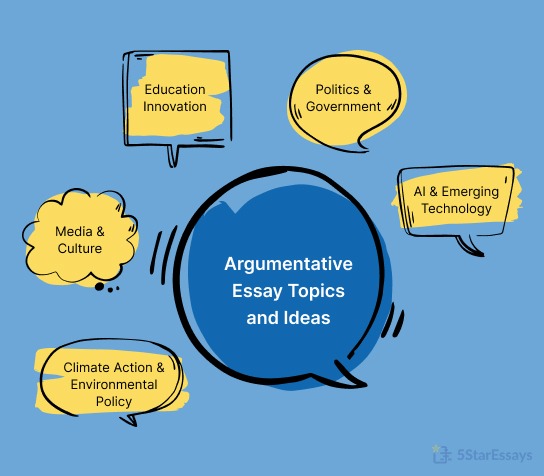
Selecting a focused, debatable topic is the foundation of your outline—find strong argumentative essay topics that offer multiple perspectives and credible research sources. Follow this systematic approach to build your outline efficiently.
Step 1: Start with Your Thesis (5 minutes)
Before outlining, you need a clear position.
Thesis Formula: [Topic] should [position] because [reason 1], [reason 2], and [reason 3].
Example: "Schools should ban smartphones during class because they reduce academic performance, increase social comparison anxiety, and prevent meaningful peer interaction."
Write your thesis here:
Test your thesis:
- Is it specific? (Not too broad)
- Is it debatable? (Reasonable people disagree)
- Does it preview the main arguments? (Reasons listed)
If no to any question, revise before proceeding.
Step 2: List Your 3 Main Arguments (10 minutes)
Extract from your thesis or brainstorm now.
Argument 1: _______________________________
Argument 2: _______________________________
Argument 3: _______________________________
Evaluate your arguments:
For each argument, ask:
- Can I find evidence to support this?
- Does it directly support my thesis?
- Is it distinct from my other arguments? (No repetition)
Rank by strength: Put the strongest argument last (recency effect) or first (primacy effect). The middle position is weakest.
Recommended order:
1. Strong (grab attention)
2. Medium (maintain interest)
3. Strongest (leave lasting impression)
Step 3: Gather Evidence for Each Argument (15 minutes)
Don't start outlining without evidence identified.
For Argument 1: - Fact/statistic: _______________________________
- Expert quote: _______________________________
- Study/research: _______________________________
- Example: _______________________________
For Argument 2: - Evidence: __________________ - Evidence: ______________________ - Evidence: _______________________________
For Argument 3: - Evidence: _________________ - Evidence: ___________________ - Evidence: _______________________________
Quality check:
- Do I have 2-3 pieces of evidence per argument?
- Are sources credible? (.edu, .gov, peer-reviewed)
- Is the evidence recent? (within 5 years for current topics)
Still Struggling With That Essay? Submit With Total Confidence No AI ever. Just real academics who know what graders want
Step 4: Plan Your Counterargument Section (10 minutes)
Strong essays address opposition.
Strongest counterargument to your position:
Why people hold this view:
Evidence supporting counterargument:
Your refutation (why it's wrong or insufficient):
Evidence for your refutation:
Pro tip: Acknowledge any partial validity before refuting. This builds credibility.
Step 5: Organize Logically (5 minutes)
Ensure arguments flow naturally.
Check logical progression:
Do Arguments 1, 2, and 3 make sense?
- Each builds on the previous
- No repetition between arguments
- Counterargument placement is strategic
Common organization patterns:
Problem, Cause, Solution
- Arg 1: Problem exists
- Arg 2: Here's why
- Arg 3: Here's the solution
Strongest, Strong, Strongest
- Hook with power, end with power
Simple to Complex
- Build understanding progressively
Refute, Establish, Prove
- Address opposition, then build your case
Step 6: Add Transitions (5 minutes)
Plan how paragraphs connect.
Transition from Intro; Body 1:
Transition from Body 1; Body 2:
Transition from Body 2; Body 3:
Transition from Body 3; Counterargument:
Transition from Counterargument; Conclusion:
Common transition phrases:
- Furthermore, Moreover, Additionally (adding)
- However, in contrast, on the other hand (contrasting)
- Consequently, therefore, as a result (cause-effect)
- For example, specifically, In particular (illustrating)
Step 7: Review for Balance (5 minutes)
Ensure the outline is comprehensive.
Check paragraph balance:
- Each body paragraph has a similar length potential
- No paragraph is just one sentence
- Evidence is distributed evenly
- Introduction and conclusion are proportional
Quality assurance:
- Read outline aloud—does it flow logically?
- Would a classmate understand your argument from the outline alone?
- Have you avoided repetition?
- Does everything connect back to the thesis?
Total time invested: 30-45 minutes . Time saved during drafting: 2-3 hours Grade improvement: 10-15 points on average
Outline Quality Checklist: 15 Essential Elements
Use this checklist before drafting to ensure your outline is complete.
Thesis & Structure (5 checks)
1. Thesis is clear and specific
States position precisely
Not too broad or vague
Appears in the introduction section
2. 3+ main arguments listed
Each is distinct (no overlap)
Each directly supports the thesis
Organized in logical order
3. Each argument has a topic sentence
Mini-thesis for that paragraph
One clear main idea
Connects to the overall thesis
4. Introduction components present
Hook noted
Background context included
Thesis statement finalized
5. Conclusion components planned
Restated thesis (different wording)
Summary approach noted
Closing strategy identified
Evidence & Support (5 checks)
1. Evidence identified for each argument
2-3 pieces per main point
Sources are credible
Specific data noted (not just "find source")
2. Counterargument included
Strongest opposing view identified
Refutation strategy planned
Evidence for refutation gathered
3. Source tracking in place
Citation information recorded
Page numbers or URLs noted
Can find sources again quickly
4. Analysis planned for each evidence
Not just listing facts
Explanation of "so what?" factor
Connection to the argument is clear
5. Examples are specific
Not generic placeholders
Real data or scenarios
Sufficient detail to develop
That Essay Won't Write Itself But Our Writers Will Write It For You No AI shortcuts. Real writers. Real results.
Flow & Logic (5 checks)
1. Logical flow between paragraphs
Arguments build on each other
Transitions noted
Natural progression exists
2. No repetition between sections
Each paragraph covers new ground
Arguments don't overlap
Evidence isn't recycled
3. Balanced paragraph lengths
Roughly similar development needed
No paragraphs with 1 sentence
No paragraphs with 10 sub-points
4. Model structure followed
Classical/Toulmin/Rogerian components present
All required sections included
Order matches model requirements
5. Clear and complete
Another person could follow the outline
Nothing essential is missing
Ready to draft from this roadmap
If you checked all 15: Your outline is solid
If you missed 1-3: Revise those sections before drafting
If you missed 4+: Outline needs significant work—don't draft yet
Common Outline Mistakes: What to Avoid
Learn from these frequent errors that weaken outlines.
Mistake 1: Too Vague (Single Words Only)
Weak Outline:
I. Intro
II. Social media is bad
III. Mental health
IV. Addiction
V. Conclusion
Strong Outline:
I. Introduction: Hook with teen suicide statistics, background on platform growth, thesis: regulation needed
II. Social media significantly damages adolescent mental health
- CDC data: 40% increase in depression
- Instagram research confirms harm
- Sleep disruption compounds issues
III. [Continues with full development...]
Why it matters: Vague outlines don't prevent writer's block. You'll still struggle with what to say.
Mistake 2: Missing Evidence Identification
Weak Outline:
II. Schools should start later
A. Students need more sleep
B. It helps their grades
C. They'll be healthier
Strong Outline:
II. Schools should start later to align with adolescent biology
A. Teens need 8-10 hours sleep; early starts prevent this
- NIH study: Teen circadian rhythms shift later
- Only 15% of teens get sufficient sleep (CDC 2023)
B. Later starts improve academic performance
- Minnesota study: +8% test scores with 8:30am start
- Attendance improves 12% on average
Why it matters: Without evidence notes, you'll spend hours mid-draft hunting for sources.
Mistake 3: No Counterarguments
Weak Outline:
I. Intro
II. Argument 1
III. Argument 2
IV. Argument 3
V. Conclusion
Missing: Any acknowledgment of opposing views
Strong Outline includes:
IV. Counterargument: Critics argue later starts disrupt family schedules
Acknowledge validity: Working parents have legitimate concerns
Refute: Community transportation solutions exist
Evidence: Districts that adjusted successfully
Why it matters: Essays without counterarguments appear one-sided and receive lower grades.
Mistake 4: Unbalanced Arguments
Weak Outline:
II. Argument 1 (1 sentence)
III. Argument 2 (12 sub-points with extensive detail)
IV. Argument 3 (2 sentences)
Strong Outline:
II. Argument 1 (3-4 sub-points with evidence)
III. Argument 2 (3-4 sub-points with evidence)
IV. Argument 3 (3-4 sub-points with evidence)
Why it matters: Unbalanced outlines lead to unbalanced essays with some underdeveloped sections.
Mistake 5: Weak Thesis Integration
Weak:
- Thesis in intro never mentioned again
- Arguments don't clearly connect to the thesis
- Conclusion restates thesis differently than intro
Strong:
- Thesis explicitly stated in the intro
- Each topic sentence ties back to the thesis
- Conclusion reinforces the same thesis consistently
Why it matters: Disconnected arguments confuse readers about your actual position.
Your GPA Doesn't Have to Suffer
Expert Writers. Original Essays. Guaranteed Results
Trusted by 50,000+ students. Zero AI. Zero plagiarism.
Mistake 6: Missing Transitions
Weak Outline:
II. Body 1
[No transition noted]
III. Body 2
[No transition noted]
IV. Body 3
Strong Outline:
II. Body 1
...
Transition: "Beyond mental health impacts, platforms also..."
III. Body 2
...
Transition: "These psychological effects are compounded by..."
Why it matters: Paragraphs without transitions feel choppy and disconnected when drafted.
Mistake 7: Skipping Conclusion Planning
Weak: "Conclusion - wrap up"
Strong:
V. Conclusion
A. Restate thesis using different wording
B. Summarize three main arguments briefly:
- Mental health impacts summarized
- Addiction mechanisms summarized
- Policy implications summarized
C. Call to action: Urge lawmakers to regulate platforms
D. Strong closing: "The question isn't whether to act, but how quickly"
Why it matters: Rushed conclusions weaken otherwise strong essays.
Mistake 8: Too Rigid (No Flexibility)
Problem: Treating the outline as an unchangeable contract
Solution:
- Outlines are living documents
- It's okay to adjust while drafting
- If you find better evidence, use it
- If arguments need reordering, do it
- Outline guides you; it doesn't imprison you
When to deviate from the outline:
- You discover stronger evidence mid-draft
- Your argument becomes clearer as you write
- You find repetition between planned paragraphs
When NOT to deviate:
- You're feeling lazy
- You want to skip the counterargument
- You're padding to hit word count
From Outline to Draft: Making the Transition
Once your outline is complete, the drafting process becomes significantly more efficient—learn the complete argumentative essay writing process from thesis development to final revisions. Your outline is complete—now transform it into a full essay.
The Expansion Process
Outline = Skeleton Draft = Full Body
Each outline point expands into full sentences and paragraphs.
Example Expansion:
Outline:
II. Social media damages mental health
A. Teen depression increased 40% since 2010
B. Instagram research confirms harm
Draft:
Social media platforms significantly damage adolescent mental health through constant comparison and validation-seeking behaviors. Since 2010, when smartphone adoption reached critical mass, teen depression rates have increased by 40 percent according to CDC National Youth Risk Behavior Survey data. This timeline directly correlates with the rise of image-focused platforms like Instagram and Snapchat. Even more damning, Facebook's own internal research—leaked in 2021—confirmed that Instagram makes body image issues worse for one in three teenage girls. When the platforms themselves acknowledge harm through internal studies, the evidence becomes irrefutable.
Notice:
- Outline sentence, Topic sentence
- Each evidence point, 2-3 sentences
- Analysis added to explain significance
- Smooth flow between ideas
Maintain Outline Structure While Writing
Follow your roadmap:
Do:
- Write paragraphs in outline order
- Use topic sentences from outline
- Include all planned evidence
- Maintain the logical flow you planned
Don't:
- Add arguments not in outline (creates disorganization)
- Skip planned counterargument section
- Reorder paragraphs randomly mid-draft
- Forget transitions you noted
Exception: If you discover your outline has a flaw while drafting, fix the outline first, then continue.
When It's Okay to Deviate from the Outline
Green light to change:
You find better evidence
- Always use stronger support
- Replace a weak source with a credible one
- Add compelling data you discovered
- Update examples to more relevant ones
Your argument becomes clearer
- Natural evolution happens
- Reword thesis if you can state it better
- Adjust topic sentences for clarity
- Refine your position as understanding deepens
You spot repetition
- Combine or eliminate
- Two arguments are actually one (merge paragraphs)
- Evidence appears twice (use once in strongest location)
- Analysis duplicates earlier points (cut redundancy)
Flow needs adjustment
- Sometimes order changes
- Argument 2 actually flows better before Argument 1
- Counterargument fits better earlier or later
- Introduction needs restructuring for impact
Red light—don't change:
- You're tired - Fatigue isn't a reason to skip sections
- You hit writer's block - Outline prevents this; push through
- You want shortcuts - Follow your complete plan
- You're padding content - Never add fluff just for length
Imagine Submitting Without the Panic
Your Essay. Written by Pros. Delivered on Time
100% original. 100% human. Satisfaction guaranteed
Update Your Outline If Major Changes Occur
If you make significant structural changes while drafting:
STOP and update the outline first:
1. Save your draft
2. Return to outline
3. Make the structural change there
4. Ensure it still flows logically
5. Resume drafting with updated roadmap
Why? Updating outline keeps you organized if you need to move sections around later.
The Drafting Mindset
With outline in hand:
You can focus on:
- Writing clear, compelling sentences
- Developing analysis fully
- Choosing precise words
- Crafting smooth transitions
- Maintaining engaging tone
You DON'T have to think about:
- What to say next (outline tells you)
- Whether the argument makes sense (planned already)
- If you're missing evidence (all gathered)
- Paragraph order (determined in outline)
- Structure concerns (model chosen)
This is why outlining saves 2-3 hours of drafting time.
Common Drafting Challenges (With Outline Solutions)
Challenge 1: "I don't know how to start"
Solution: Your introduction is already outlined. Follow it.
Challenge 2: "This paragraph feels weak"
Solution: Check outline—did you include all planned evidence?
Challenge 3: "I'm stuck mid-paragraph"
Solution: Look at the next outline point. That's where you're headed.
Challenge 4: "I'm way under word count"
Solution: Are you analyzing evidence or just listing it? Expand analysis.
Challenge 5: "I've gone way over word count"
Solution: Check for repetition between paragraphs or over-explaining simple points.
Final Drafting Tips
Write in this order:
Body paragraphs first (easiest with outline)
Introduction second (easier once argument is clear)
Conclusion last (after you see what you actually argued)
Use your outline as checklist:
Check off each section as you complete it
Ensures you don't skip anything
Gives satisfaction of progress
Don't stop to edit heavily:
First draft follows outline structure
Save detailed editing for the revision phase
Get ideas down, polish later
Trust your outline:
You planned this structure thoughtfully
Resist the urge to massively restructure mid-draft
Complete the draft, then assess if changes are needed
Downloadable Outline Templates
Get professional templates to jump-start your outlining process.
Pro tip: Print templates and fill them out by hand during the planning stage. Research shows handwriting improves memory and idea generation.
Seeing completed outlines in action helps you understand how structure translates to effective arguments. Review argumentative essay examples to see how these templates develop into full essays.
Conclusion: Your Outline Is Your Foundation
The 30-45 minutes you invest in outlining pays dividends throughout your writing process. Students who consistently outline reports:
- 40% faster drafting - Clear roadmap eliminates decision paralysis
- 60% less revision time - Structure is sound from the start
- Higher confidence - Know exactly what to say next
- Better grades - Organization scores improve significantly
- Less stress - No more staring at blank pages
Mastering outline structure is just one component of effective argumentative writing. For comprehensive coverage of thesis development, evidence integration, counterargument strategies, and revision techniques, explore our complete argumentative essay guide to take your argumentative writing to the next level.
Better Essays. Better Grades. Less Stress. Our professional writers have helped thousands of students succeed — you're next. Trusted. Confidential. 100% human-written.