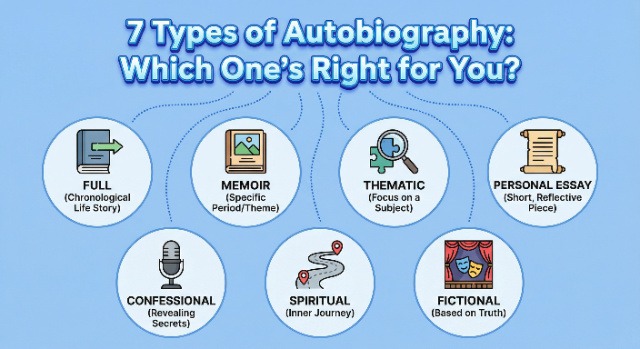
Types of Autobiography

What are the main types of autobiography?
The seven main types of autobiography are:
- Full/Traditional Autobiography (complete life story from birth to present)
- Memoir (focused on specific periods or themes)
- Personal Essay (deep exploration of single events)
- Confessional Autobiography (revealing previously hidden truths)
- Spiritual Autobiography (faith journey and religious experiences)
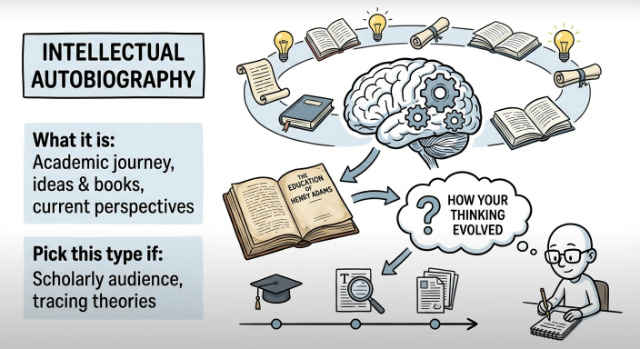
- Intellectual Autobiography (development of ideas and thinking)
- Thematic Autobiography (organized by life aspects rather than chronology).
Quick comparison of autobiography types:
| Type | Scope | Focus | Length | Best For |
|---|---|---|---|---|
| Full/Traditional | Birth to present | Complete life chronology | 200-400 pages | Comprehensive life documentation, accomplished individuals, legacy creation |
| Memoir | Specific period/theme | Emotional truth & meaning | 150-300 pages | Focused stories, specific transformative experiences, literary aspirations |
| Personal Essay | Single event | Deep reflection | 10-30 pages | Academic assignments, single transformative moment, literary magazines |
| Confessional | Revelations | Hidden truths & secrets | Varies widely | Therapeutic processing, making amends, warning others |
| Spiritual | Faith journey | Religious growth | 100-250 pages | Religious audiences, testimony, ministry purposes |
| Intellectual | Ideas/thinking | Academic development | 150-300 pages | Academics, scholars, documenting research journey |
| Thematic | Life aspects | Topics not timeline | 200-350 pages | Non-linear lives, complex narratives, creative structures |
How to choose your autobiography type:
Step 1: Consider Your Purpose
- Legacy/documentation: Full autobiography captures comprehensive life record
- Specific story to share: Memoir focuses on what matters most
- Academic assignment: Personal essay fits typical requirements
- Therapeutic processing: Confessional allows honest exploration
- Faith testimony: Spiritual autobiography speaks to religious community
Step 2: Assess Your Story
- Complete life worth documenting: Full autobiography
- One period/experience defines you: Memoir
- Single transformative event: Personal essay
- Life doesn't fit chronology well: Thematic autobiography
Step 3: Know Your Audience
- General public interested in your achievements: Full autobiography
- Readers facing similar experiences: Memoir
- Academic/literary audience: Personal essay
- Faith community: Spiritual autobiography
- Professional/academic peers: Intellectual autobiography
Step 4: Evaluate Your Material
- Extensive documentation and memories across decades: Full autobiography possible
- Strong memories of specific period: Memoir works well
- One experience you remember vividly: Personal essay ideal
- Gaps in life timeline: Thematic organization helps
Common combinations and hybrid approaches:
Many successful autobiographies blend types rather than adhering rigidly to one category. You might write a memoir with confessional elements, a spiritual autobiography organized thematically, or a full autobiography with strong memoir-like focus on particular periods. Understanding the types by reviewing a detailed autobiography writing guide helps you mix approaches intentionally rather than accidentally creating incoherent hybrids.
Most common for students:
Academic assignments typically require personal essays (exploring single events or brief periods), short memoirs (focused on specific experiences like overcoming challenges or significant relationships), or full autobiographies (comprehensive projects covering birth to present, usually as capstone assignments).
Understanding Autobiography Types
Before exploring specific types, understanding why different approaches exist and how they relate to each other provides helpful context.
Why Different Types Exist
Autobiography types evolved to serve different purposes and audiences. Full autobiography emerged for documenting complete lives of historically significant people. Memoir developed when writers wanted literary freedom to explore specific experiences deeply rather than cataloging entire lives. Personal essays arose in academic contexts requiring focused exploration of single experiences. Spiritual autobiography served religious communities wanting to share faith journeys. Each type addresses distinct needs.
Different types also suit different materials. Some lives naturally divide into clear chronological periods perfect for traditional autobiography. Others resist simple chronology—perhaps you lived in many places with overlapping experiences, or specific themes matter more than temporal progression. Understanding type options helps you choose structures that serve your material rather than fighting against it.
Purpose Drives Format
Your autobiography's purpose should drive your type selection. If you're creating comprehensive family history for descendants, full autobiography makes sense—they want complete documentation. If you're processing trauma therapeutically, confessional autobiography or focused memoir might serve better than exhaustive chronology. If you're completing academic assignment, personal essay likely fits requirements. Let purpose guide format choice.
Before committing to a specific type, ensure you understand the complete writing process. Our detailed guide on how to write an autobiography walks through every step from brainstorming through final editing, applicable to whichever type you ultimately choose.
FIRST ORDER FREE — UP TO 2 PAGES
See the Quality Before You Pay
Trusted by 50,000+ students. Zero AI.
TYPE 1: Full/Traditional Autobiography
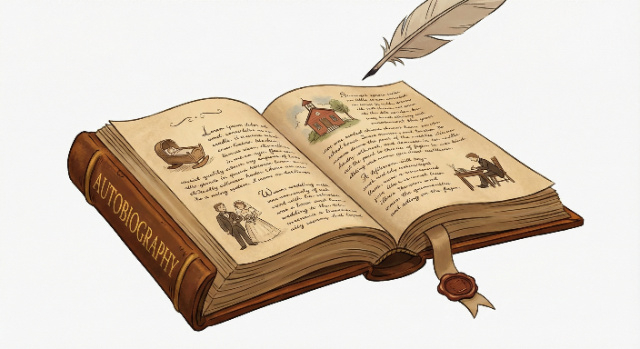
Full or traditional autobiography represents the most comprehensive approach, covering your entire life from birth (or earliest memories) through to the present day in chronological order.
Definition and Characteristics
Full autobiography documents your complete life story, typically organized chronologically through natural life stages: birth and early childhood, elementary school years, adolescence and high school, young adulthood, career development and family formation, middle years, and current life situation. The emphasis falls on factual accuracy, comprehensive coverage of all major life domains (family, education, career, relationships), and chronological progression showing development over time.
These autobiographies typically run 200-400 pages when fully developed, though student versions are much shorter. They aim for relatively objective tone while including personal reflection, focusing on achievements, challenges overcome, and how you became who you are today.
When to Write Full Autobiography
Choose full autobiography when you've achieved significant accomplishments worth comprehensive documentation, your life spans interesting historical periods you experienced firsthand, you want to create complete record for family and descendants, you have time and commitment for extensive project, or assignment requirements specify birth-to-present coverage.
Full autobiography works best when you have substantial material across all life periods and your life follows relatively clear chronological progression through recognizable stages.
Famous Examples
"The Autobiography of Benjamin Franklin" (1791): Franklin's autobiography established templates still used today, demonstrating self-improvement narratives and American success stories. Though he didn't complete it (ending before his greatest achievements), it shows how full autobiography documents complete life trajectories.
"Long Walk to Freedom" by Nelson Mandela (1994): Mandela's comprehensive autobiography covers his rural childhood, political awakening, anti-apartheid activism, 27 years of imprisonment, and eventual presidency. It demonstrates how full autobiography can weave personal and political narratives while maintaining chronological structure.
"My Life" by Bill Clinton (2004): This 957-page autobiography chronicles Clinton's life from childhood in Arkansas through his presidency, demonstrating the comprehensive scope typical of full autobiographies by public figures.
Pros and Cons
Advantages: Provides complete picture of your life, creates valuable historical record, ensures nothing important gets omitted, works well for traditional legacy purposes, and follows intuitive chronological structure most readers expect.
Disadvantages: Time-consuming and overwhelming to write, requires extensive memory and research across decades, can become monotonous if not varied skillfully, treats all periods equally even when some matter more, and demands substantial commitment to complete.
Writing Tips for Full Autobiography
Create detailed timeline before beginning to identify natural chapter divisions and ensure comprehensive coverage. Research thoroughly to verify dates, names, and facts throughout your life. Divide your life into clear periods that become chapters or sections. Balance all life aspects—don't focus exclusively on career while neglecting relationships or vice versa. Don't rush any period—give each life stage appropriate development. Vary pacing within chronological structure to maintain interest.
For examples of successful full autobiographies across different contexts, explore our collection of autobiography examples showing how comprehensive life stories can be structured effectively.
TYPE 2: Memoir
While technically a separate genre, memoirs fall under the autobiographical writing umbrella and represent increasingly popular alternatives to traditional autobiography.
Definition and Characteristics
Memoirs focus on specific time periods, experiences, or themes from your life rather than attempting comprehensive birth-to-present coverage. They're organized around meaning rather than chronology, prioritize emotional truth over exhaustive factual documentation, and use literary techniques more freely than traditional autobiography.
Memoirs typically run 150-300 pages and can cover brief periods explored deeply—perhaps just one year, one relationship, one journey, or one transformative experience—or span longer periods unified by central themes.
Memoir vs Autobiography
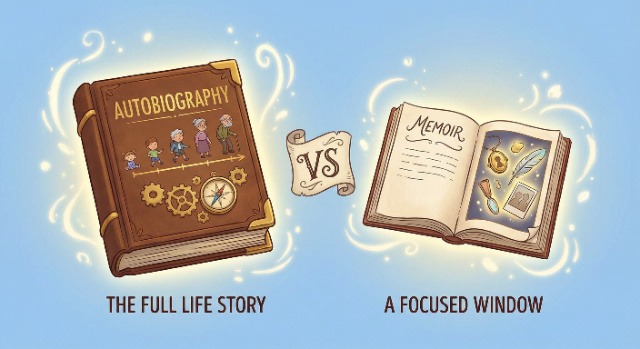
The crucial distinction: autobiography covers your whole life chronologically, while memoir focuses on specific aspects. Autobiography emphasizes comprehensive factual coverage; memoir emphasizes emotional truth and meaning. Autobiography follows temporal order; memoir can organize by theme, significance, or literary effectiveness.
For detailed comparison helping you choose between these closely related forms, see our comprehensive guide on autobiography vs memoir with decision frameworks and examples.
Common Memoir Themes
Successful memoirs often explore overcoming adversity (illness, poverty, abuse, addiction), family relationships and dysfunction, coming-of-age and identity formation, cultural identity and immigration, specific journeys or adventures, career pursuits and professional development, love, loss, and grief, or recovery and transformation.
When to Write Memoir
Choose memoir when one specific experience or period defines your story more powerfully than your entire life, you want literary freedom to experiment with structure and style, comprehensiveness feels less important than depth, you have limited time for writing projects, or specific themes run through your experiences more significantly than chronological progression.
Famous Examples
"Educated" by Tara Westover (2018): Focuses on Westover's journey from survivalist upbringing without formal education through earning a PhD at Cambridge, demonstrating how memoir can span years while maintaining thematic focus on education and self-invention.
"The Glass Castle" by Jeannette Walls (2005): Chronicles Walls' unconventional childhood with nomadic, dysfunctional parents, covering roughly her first 20 years. It demonstrates memoir's power to explore specific periods deeply rather than documenting entire lives.
"Wild" by Cheryl Strayed (2012): Focuses almost entirely on three months hiking the Pacific Crest Trail, using that journey as lens to explore grief, divorce, and self-discovery. Shows how memoir can cover brief periods while achieving emotional scope.
Pros and Cons
Advantages: Focused narrative easier to manage than full autobiography, allows deep exploration of what matters most, more forgiving of memory gaps in other life periods, literary freedom to structure creatively, and typically more commercially viable if pursuing publication.
Disadvantages: Requires strong central theme or compelling specific story, less comprehensive than full autobiography, may disappoint readers expecting complete life coverage, and demands selectivity about what to include versus exclude.
Still Struggling With That Essay?
Submit With Total Confidence
No AI ever. Just real academics who know what graders want
TYPE 3: Personal Essay
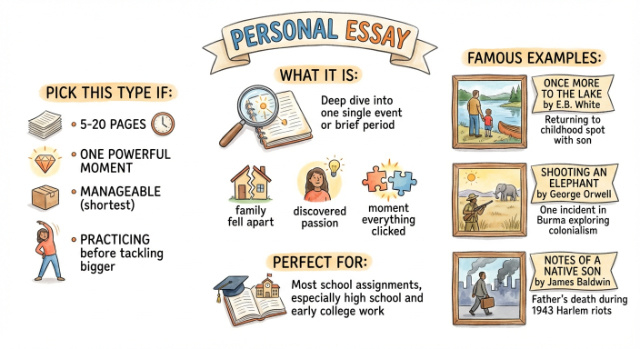
The shortest and most focused form, personal essays explore single events or brief periods in depth, typically running 10-30 pages.
Definition and Characteristics
Personal essays examine one event, experience, or brief time period with intensive focus, using that specific material to explore larger themes, meanings, or truths. They emphasize style, craft, and reflection over comprehensive coverage, typically running 2,500-7,500 words suitable for academic assignments or literary magazine publication.
The personal essay is one of the oldest autobiographical forms, with essays by Montaigne in the 16th century establishing the genre. Modern personal essays combine narrative (what happened) with reflection (what it means) in roughly equal measure.
When to Write Personal Essay
Choose personal essay format when completing academic assignments requiring focused exploration rather than full autobiography, one specific experience taught you something significant worth examining, you're practicing autobiography skills before tackling longer projects, you want to submit to literary magazines or essay collections, or time constraints prevent longer writing projects.
Famous Examples
"Once More to the Lake" by E.B. White (1941): This classic personal essay explores White's return to a childhood vacation spot with his own son, using that specific experience to reflect on time, memory, mortality, and the parent-child relationship.
"Shooting an Elephant" by George Orwell (1936): Orwell examines a single incident—being pressured to shoot an elephant while serving as police officer in Burma—to explore colonialism, authority, and moral compromise.
"Notes of a Native Son" by James Baldwin (1955): The title essay explores Baldwin's father's death and funeral alongside the Harlem race riots of 1943, using these concurrent events to examine race, identity, and his complex relationship with his father.
Pros and Cons
Advantages: Manageable length for busy writers, allows deep exploration of single experience, develops focused writing skills, publishable in literary magazines, and excellent practice before attempting longer autobiography.
Disadvantages: Very limited scope may frustrate if you have larger story to tell, requires exceptional writing since brief length offers no room for weak passages, single story must be genuinely compelling and significant, and academic nature may feel constraining.
TYPE 4: Confessional Autobiography
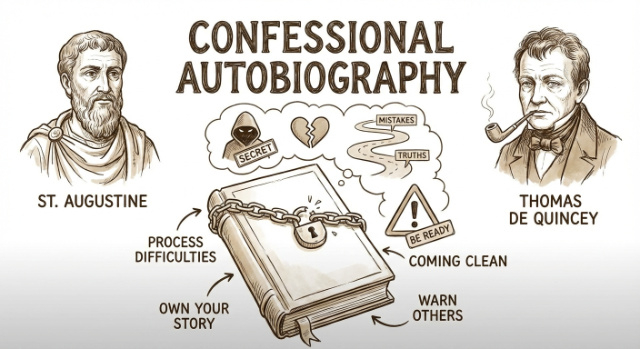
Confessional autobiography reveals previously hidden aspects of your life—secrets, mistakes, difficult truths—often for therapeutic or redemptive purposes.
Definition and Characteristics
This type reveals information you've kept hidden, admits to wrongdoing or mistakes, explores motivations behind difficult choices, and often seeks understanding, forgiveness, or closure through honest disclosure. Confessional autobiography prioritizes vulnerability and honesty over maintaining favorable self-image.
Length varies widely depending on scope—from essay-length confessions to full books. The tone tends toward intimate, honest, sometimes raw, reflecting the difficulty of revealing hidden truths.
When to Write Confessional Autobiography
Choose this approach when you need to confess or come clean about something, writing serves therapeutic processing of difficult experiences, you want to warn others about mistakes you made, making amends requires acknowledging past actions, or owning your complete story (not sanitized version) feels important.
Ensure you're emotionally ready before writing confessional autobiography. Writing too soon after traumatic events can retraumatize rather than heal.
Historical Context and Examples
The confessional autobiography has deep roots. St. Augustine's "Confessions" (397 AD) is often considered the first Western autobiography, documenting his spiritual struggles and conversion to Christianity with remarkable honesty for its era.
"Confessions of an English Opium-Eater" by Thomas De Quincey (1821): De Quincey's frank account of opium addiction established the template for addiction memoirs still used today.
Modern confessional autobiographies include numerous addiction and recovery memoirs, celebrity tell-alls revealing previously hidden aspects of their lives, and personal essays exploring difficult experiences or choices.
Pros and Cons
Advantages: Cathartic and potentially healing to write, authentic honesty creates powerful reader connection, helps others facing similar situations, and reclaims your narrative from shame or secrecy.
Disadvantages: Privacy concerns for yourself and others mentioned, potential family impact and relationship damage, risk of judgment or negative consequences, and emotional difficulty of revisiting traumatic material.
TYPE 5: Spiritual/Religious Autobiography
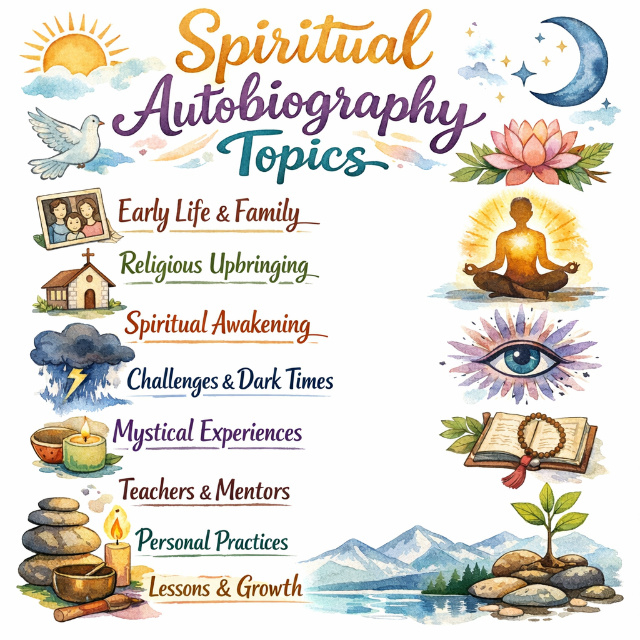
Spiritual autobiography chronicles your faith journey, religious experiences, and relationship with the divine across your life.
Definition and Characteristics
This type focuses on faith development and spiritual experiences, documents religious doubts, questions, and evolution, explores how faith intersects with life events, and often serves testimony or teaching purposes within religious communities. Spiritual autobiographies typically run 100-250 pages and often address religious audiences specifically, though some reach broader readership.
What's Your Essay Stress Costing You?
Sleep Better. Score Higher. Let Us Write It.
No AI. No excuses. Just results you can count on.
When to Write Spiritual Autobiography
Choose spiritual autobiography when faith constitutes your identity's central element, you've experienced significant spiritual journey worth sharing, you want to provide testimony within faith community, you're writing for ministry or teaching purposes, or religious questions and experiences shape your life story more than other factors.
Common Themes
Spiritual autobiographies typically explore conversion experiences and religious awakening, periods of doubt and questioning, answered prayers and perceived divine intervention, religious community and its impact, service and calling, faith tested through suffering or loss, and evolution of belief over time.
Famous Examples
"Confessions" by St. Augustine (397 AD): Beyond being confessional, Augustine's work is deeply spiritual, tracing his intellectual and spiritual journey to Christianity.
"The Seven Storey Mountain" by Thomas Merton (1948): Merton chronicles his conversion and decision to become a Trappist monk, demonstrating modern spiritual autobiography.
"Surprised by Joy" by C.S. Lewis (1955): Lewis documents his journey from atheism to Christianity, showing how spiritual autobiography can appeal to intellectual and literary audiences beyond strictly religious readers.
Pros and Cons
Advantages: Meaningful to faith community facing similar questions, provides testimony value, contributes to religious discourse, and creates spiritual legacy for family.
Disadvantages: Limited audience outside your religious tradition, risk of preaching rather than sharing authentic journey, may alienate non-believers or different faith traditions, and difficulty writing objectively about subjective spiritual experiences.
TYPE 6: Intellectual Autobiography
Intellectual autobiography traces the development of your ideas, thinking, and scholarly journey rather than focusing primarily on life events.
Definition and Characteristics
This academic-focused type documents your intellectual influences and education, traces how your thinking evolved over time, explores key readings and mentors who shaped your ideas, describes research development and theoretical evolution, and connects personal experiences to intellectual growth. These typically run 150-300 pages and appeal primarily to academic and scholarly audiences.
When to Write Intellectual Autobiography
Choose intellectual autobiography when your academic career deserves documentation, you want to trace your thinking's evolution for scholarly purposes, teaching requires explaining how you developed current perspectives, your research journey holds value for others in your field, or assignment requires intellectual autobiography specifically.
Common Elements
Intellectual autobiographies typically include early intellectual influences and awakening, educational journey and key professors, significant readings that shaped thinking, research and discovery processes, theoretical positions and their development, and current philosophical or intellectual stance.
Famous Example
"The Education of Henry Adams" (1907): Adams' intellectual autobiography explores his education (formal and informal) and how it failed to prepare him for the modern world, becoming a classic meditation on learning and knowledge.
Pros and Cons
Advantages: Contributes to academic discourse, documents thinking for students and colleagues, teaches others about intellectual development, and creates scholarly legacy.
Disadvantages: Limited appeal outside academic audiences, can become dry without personal elements, requires sophisticated writing, and may feel overly abstract to general readers.
TYPE 7: Thematic Autobiography
Thematic autobiography organizes by life aspects or topics rather than chronological progression.
Definition and Characteristics
Rather than moving through time sequentially, thematic autobiography creates chapters around different life domains: family, career, relationships, travels, challenges, achievements, beliefs. Each chapter spans your entire life but focuses on that specific aspect. This approach typically runs 200-350 pages.
When to Write Thematic Autobiography
Choose thematic organization when your life doesn't divide neatly into chronological periods (perhaps you've had concurrent careers, lived multiple lives simultaneously), strong distinct life areas matter more than temporal progression, you want to compare and contrast how different aspects developed, creative structure appeals more than traditional chronology, or your audience cares about specific aspects regardless of when they occurred.
Structure Example
A thematic autobiography might include chapters like: Family Roots and Relationships, Educational Journey, Career Development, Romantic Relationships and Marriage, Friendships That Shaped Me, Travel and Places That Changed Me, Challenges and How I Overcame Them, Beliefs and Values Evolution, Current Life and Looking Forward.
Each chapter covers that theme across your entire lifespan, meaning the same years appear in multiple chapters from different thematic angles.
One Click Away From Stress-Free
Let Experts Handle Your Essay Tonight
Human writers only. Original work always. Guaranteed.
Pros and Cons
Advantages: Organized by meaning rather than arbitrary time divisions, reader can choose topics of interest, works for complex lives resisting simple chronology, and highlights patterns and connections clearly.
Disadvantages: Can confuse readers about timeline since events appear in multiple chapters, risks repetition when events relate to multiple themes, requires more careful transitions and time markers, and makes ensuring comprehensive coverage harder.
Choosing Your Type: Decision Guide

With seven types to choose from, how do you select the right approach for your story?
Assessment Questions
Ask yourself these questions to guide your decision:
What's your primary story? If it's your complete life journey from birth to now, full autobiography fits. If it's one transformative period or experience, memoir works better. If it's a single pivotal moment, consider personal essay.
What's your purpose? Legacy documentation suggests full autobiography. Emotional exploration points toward memoir or confessional. Academic requirements often mean personal essay. Faith testimony indicates spiritual autobiography.
Who's your audience? General public interested in your achievements might want full autobiography. People facing similar experiences appreciate focused memoir. Academic readers expect personal essay. Faith community wants spiritual autobiography.
How much time do you have? Years to complete project enables full autobiography. Months of work suits memoir. Weeks or days requires personal essay.
What material do you have? Extensive documentation across decades supports full autobiography. Strong memories of specific period enables memoir. Vivid recall of single event suits personal essay.
For detailed information on formatting whichever type you choose, consult our comprehensive autobiography format guide with templates for every structural approach.
Conclusion
Understanding the seven main autobiography types—full autobiography, memoir, personal essay, confessional, spiritual, intellectual, and thematic—empowers you to make informed choices about how to tell your life story most effectively.
No single type is inherently superior. Each serves different purposes, suits different materials, and appeals to different audiences. The "right" type for you depends on your story's natural shape, your purpose in writing, your available time and resources, and what you want readers to experience. You can review a detailed autobiography writing guide to understand all these aspects in detail.
Don't feel constrained by rigid type definitions. Many successful autobiographies blend approaches—a memoir with confessional elements, a spiritual autobiography organized thematically, a full autobiography with strong memoir-like focus on particular periods. Understanding different types helps you mix approaches intentionally rather than creating accidentally incoherent hybrids.
Most importantly, don't let type selection paralyze you. Choose the approach that feels most natural for your story and start writing. You can always revise your structural approach during editing if your initial choice proves ill-fitting. The important thing is beginning—transforming your memories and experiences into words on pages.
Free Downloadable Resources
Use the comparison chart provided to systematically evaluate which type best serves your project and review the type-specific outline templates to structure your chosen approach effectively. And remember that whichever type you select, the fundamental skills of good autobiography writing—specific detail, honest reflection, clear structure, authentic voice—remain constant.
Your story deserves telling. Choose the type that honors your experiences and serves your purposes, then commit to the writing process with confidence that you've selected an approach that will showcase your life story effectively.
Why Struggle When Experts Can Do It Better? Thousands of students trust us to deliver essays that get the grades they deserve. 100% human-written. Satisfaction guaranteed.