What Are the Real Statistics About College Substance Use?
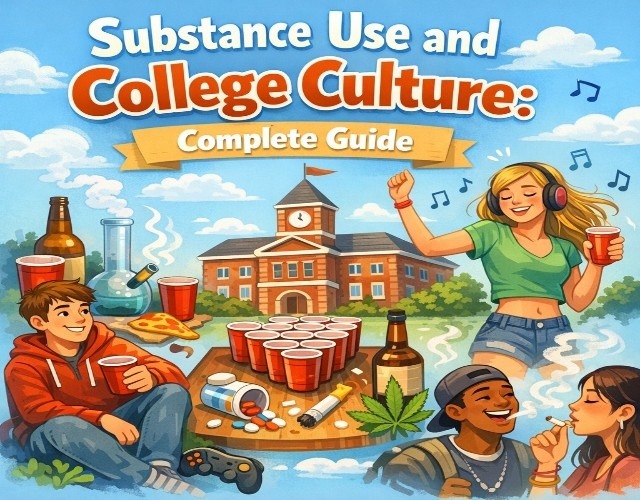
Real statistics show 55 to 60% of college students consume alcohol monthly (not the 85 to 90% students perceive), with 32% engaging in binge drinking (5+ drinks for men, 4+ for women in 2 hours), 38 to 40% of students abstain from alcohol completely or drink very rarely, 24% use marijuana monthly with 11% using daily or near-daily, 5 to 10% misuse prescription stimulants (Adderall, Ritalin) particularly during exam periods, 3 to 5% use cocaine or other illicit drugs, and 15% use nicotine through cigarettes or vaping devices.
Alcohol Use Patterns
1. Drinking frequency breakdown:
2. Binge drinking statistics:
3. Important context:
|
Marijuana and Other Drug Use
Marijuana statistics:
Prescription stimulant misuse:
Other substances:
|
The Perception Gap
What students believe vs. reality:
| Behavior | Student Perception | Actual Reality | Gap |
|---|---|---|---|
| Drink alcohol regularly | 85 to 90% | 55-60% | 25 to 35 points |
| Binge drink weekly | 60 to 70% | 12% | 48 to 58 points |
| Use marijuana regularly | 85% | 24% | 61 points |
| Don't drink at all | 5 to 10% | 20-25% | 15 to 20 points |
This perception gap creates intense pressure to conform to behavior that's actually a minority, not a majority. Understanding real statistics reduces pressure and normalizes non-use or moderate use choices.
When managing academic stress that sometimes drives substance use as a coping mechanism, particularly prescription stimulant misuse during exam periods, consider using a professional essay writing service for managing legitimate workload rather than turning to dangerous study drugs causing anxiety, addiction, and serious health consequences while providing no actual learning benefits or sustainable academic improvement.
How Do You Handle Social Pressure to Drink or Use Substances?
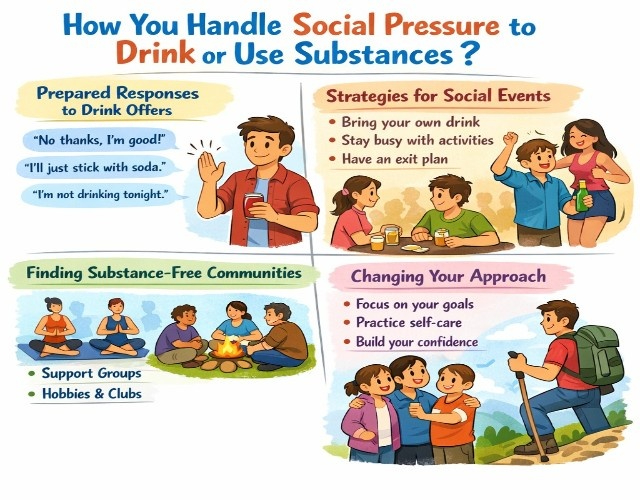
Handle social pressure by preparing responses in advance ("I'm driving," "I have practice tomorrow," "I'm good, thanks"), understanding you never owe explanations for personal choices, finding non-drinking friends through substance-free housing, clubs, or activities, attending events but leaving early if pressure intensifies, being the sober friend occasionally (builds trust and shows leadership), and recognizing that people who pressure you aren't real friends, genuine friends respect boundaries without question.
Prepared Responses to Drink Offers
1. Simple declinations (no explanation needed):
2. With brief explanation (if you prefer):
3. Important: You never owe detailed explanations. "No thanks" is a complete sentence. People who push after the first decline are being rude, not you. |
Strategies for Social Events
1. Holding a drink (reduces offers):
2. Setting boundaries before events:
3. Leaving when uncomfortable:
|
Finding Substance-Free Communities
1. Campus options:
2. Research shows 40 to 45% of students don't drink regularly; finding a substance free community is completely achievable, not impossible. 3. Early morning activities:
People who party hard on Friday night rarely commit to 8am Saturday activities; self selection creates naturally substance-free communities. |
Changing Your Approach
1. If current friend group pressures you:
2. You're not "missing out":
|
Research shows students who abstain or drink moderately report 68% higher overall college satisfaction than those who binge drink regularly, demonstrating that substance use doesn't determine social or college success.
What Are Signs of Problematic Substance Use?
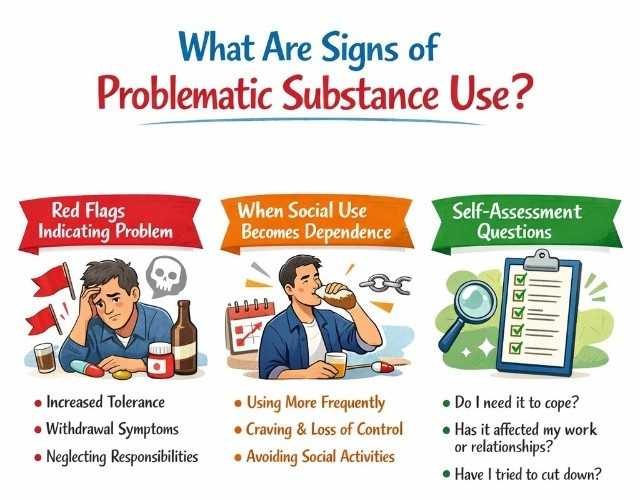
Signs of problematic use include needing substances to cope with stress, anxiety, or negative emotions regularly, using alone frequently rather than only socially, increasing tolerance requiring more to achieve same effects, experiencing withdrawal symptoms when not using, continuing despite negative consequences (poor grades, relationship problems, health issues), neglecting responsibilities and commitments due to use or recovery, unsuccessful attempts to cut back or quit, and spending significant time, money, or mental energy obtaining or thinking about substances.
Red Flags Indicating a Problem
1. Academic impacts:
2. Social and relationship impacts:
3. Physical and mental health impacts:
Behavioral changes:
|
When Social Use Becomes Dependence
Progression warning signs:
1. Experimental use:: Trying substances occasionally in social settings
2. Regular social use: Using most weekends or social events
3. Problematic use: Using to cope with stress, alone, or affecting responsibilities
4. Dependence: Physical or psychological need, inability to stop despite trying
Most common progression: Alcohol starts as weekend social drinking, escalates to using for stress relief on weeknights, tolerance increases, requiring more drinks, hangovers affect weekday classes, grades suffer, but drinking continues, attempts to cut back fail.
Critical distinction:
- Social use: Enhances social experience, remains under control, no negative consequences
- Problematic use: Causes consequences but continues, difficulty controlling amount or frequency, affects academics or relationships
- Dependence: Physical or psychological need, withdrawal symptoms, life revolves around use
Self Assessment Questions
Ask yourself honestly:
- Do I use substances to cope with stress, anxiety, or sadness regularly?
- Have I tried to cut back or quit but couldn't?
- Do I feel uncomfortable at social events without substances?
- Has my use caused problems with school, relationships, or health?
- Do friends or family express concern about my use?
- Do I ever use alone or before/during class?
- Have I done things while intoxicated that I regret?
- Is substance use affecting my goals or values?
If you answered "yes" to multiple questions, consider seeking support through campus counseling, health services, or peer support groups.
What Are Harm Reduction Strategies for Safer Choices?
Harm reduction strategies include alternating alcoholic drinks with water (1:1 ratio) staying hydrated and slowing consumption, eating substantial meals before and during drinking absorbing alcohol and slowing intoxication, never leaving drinks unattended preventing tampering, using designated drivers or rideshare services never driving impaired, pacing consumption (no more than one drink per hour), knowing exact substance composition avoiding laced or unknown substances, and having trusted friends who stay relatively sober monitoring group safety.
Safer Alcohol Consumption
If choosing to drink:
Before drinking:
- Eat a substantial meal (protein, fats, carbs)
- Stay hydrated (drink water throughout the day)
- Know your limits based on past experience
- Set a maximum number of drinks before starting
- Arrange safe transportation home
- Have phone charged and accessible
During drinking:
- Pace: One standard drink per hour maximum
- Alternate alcoholic drink with a full glass of water (1:1 ratio)
- Avoid "drinking games" encouraging rapid consumption
- Pour own drinks or watch the bartender pour
- Never leave a drink unattended (date rape drugs)
- Stick with one type of alcohol (mixing increases nausea)
- Stop drinking 1 to 2 hours before leaving event
Understanding standard drinks:
- 12 oz regular beer (5% alcohol) = 1 drink
- 5 oz wine (12% alcohol) = 1 drink
- 1.5 oz distilled spirits (40% alcohol/80 proof) = 1 drink
- Mixed drinks often contain 2 to 3 standard drinks
- Craft beers often 7 to 9% alcohol (1.5 drinks per 12 oz)
Binge drinking definition:
- Women: 4+ drinks in 2 hours
- Men: 5+ drinks in 2 hours
- Rapid consumption = higher intoxication, greater risks
Recognizing Dangerous Situations
Alcohol poisoning signs (CALL 911):
- Unconscious or semi conscious (cannot be awakened)
- Slow breathing (fewer than 8 breaths per minute)
- Irregular breathing (10+ seconds between breaths)
- Cold, clammy, bluish skin
- Vomiting while unconscious or semi-conscious
- Unresponsive to stimulation
Don't wait: call 911 immediately. Many campuses have medical amnesty policies protecting students who seek help from disciplinary consequences.
Preventing sexual assault:
- Stay with trusted friends (buddy system)
- Watch friends' drinks while they use the restroom
- Notice if someone seems more intoxicated than drinks consumed should cause
- Intervene if a friend seems too intoxicated to consent
- Use rideshare together (don't let an impaired friend leave alone)
- Trust instincts if the situation feels uncomfortable
Drug Specific Harm Reduction
Marijuana:
- Start with low doses (especially edibles)
- Wait at least 2 hours before consuming more edibles
- Don't drive or operate machinery while high
- Be aware of increasing THC potency (modern marijuana 15 to 30% THC vs. 3 to 5% decades ago)
- Avoid combining with alcohol (increases nausea and impairment)
Prescription stimulants (if misused):
- Understand serious risks: anxiety, insomnia, heart problems, addiction
- Don't combine with alcohol or other substances
- Hydrate and eat (suppresses appetite)
- Recognize these don't improve learning (only alertness)
- Know signs of heart problems (chest pain, irregular heartbeat)
Unknown substances:
- Never take pills or substances without knowing exactly what they are
- Drugs can be laced with fentanyl (a deadly opioid)
- If someone collapses or stops breathing, call 911 immediately
- Naloxone/Narcan reverses opioid overdoses (many campuses now stock this)
What Campus Resources Address Substance Use Concerns?
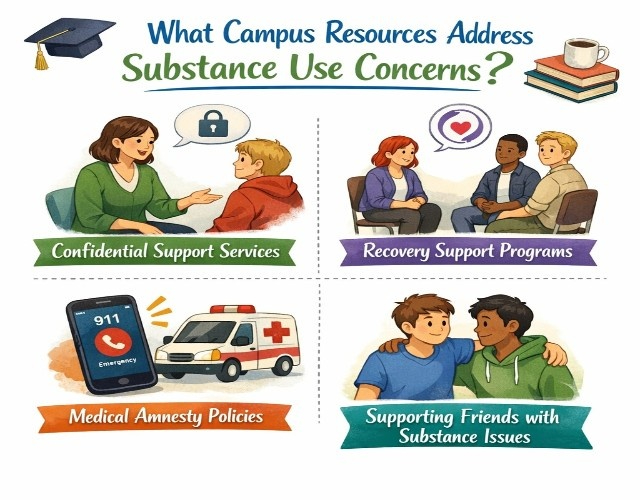
Campus resources include counseling centers providing confidential individual therapy and substance use assessment, health services offering medical treatment for substance-related health concerns and referrals to specialists, collegiate recovery programs supporting students in recovery through peer support and sober housing, peer education programs training student health advocates providing non-judgmental information, medical amnesty policies protecting students seeking emergency help from disciplinary consequences, and referrals to off-campus treatment programs or support groups (AA, NA, SMART Recovery) when intensive support needed.
A. Confidential Support Services
1. Campus counseling center:
2. What counselors address:
3. Student health services:
|
B. Recovery Support Programs
1. Collegiate Recovery Programs (CRPs):
2. Who benefits from CRPs:
3. Finding recovery programs:
|
C. Medical Amnesty Policies
1. What medical amnesty means:
2. When to use medical amnesty:
|
Don't hesitate: call 911 first, worry about consequences never.
D. Supporting Friends with Substance Issues
1. How to help concerned about friend:
2. When friend is in crisis:
3. What not to do:
|
Key Takeaways
Navigate college substance culture safely through these evidence-based strategies:
Understand real statistics versus inflated perceptions as 40 to 45% of students don't drink regularly despite students believing 85 to 90% do, and only 32% binge drink creating "pluralistic ignorance" intensifying pressure to conform to imagined norms rather than reality. Students aware of accurate statistics report 67% less pressure and 73% higher satisfaction with substance decisions.
Prepare responses to social pressure in advance using simple declinations requiring no explanation ("I'm good, thanks"), finding substance-free communities through wellness housing and activity-based clubs, and recognizing genuine friends respect boundaries without question while people pressuring you aren't true friends regardless of surface level social connections.
Recognize problematic use warning signs including using substances to cope with stress regularly, academic impacts (missing classes, declining grades), unsuccessful attempts to cut back despite trying, increasing tolerance, and using alone frequently rather than only socially. If experiencing multiple signs, seek confidential support through campus counseling providing assessment and treatment without judgment or university reporting.
Use harm reduction strategies if choosing to drink including alternating alcoholic drinks with water (1:1 ratio), eating substantial meals before and during consumption, pacing at one drink per hour maximum, never leaving drinks unattended, using designated drivers or rideshare never driving impaired, and having trusted friends monitoring group safety, watching for alcohol poisoning signs.
Utilize confidential campus resources proactively including counseling centers providing substance use assessment and therapy, health services treating substance-related medical concerns, collegiate recovery programs supporting students in recovery, and medical amnesty policies protecting students seeking emergency help from disciplinary consequences, saving lives matters more than policy enforcement.
| Substance use decisions are deeply personal choices determined by values, circumstances, and individual factors. Whether abstaining completely, drinking moderately, or navigating recovery, prioritizing safety, informed decision-making, and authentic values over perceived social expectations determines both immediate wellbeing and long-term health and academic outcomes. |
When managing stress, anxiety, or academic pressure that sometimes drives substance use as a coping mechanism, consider healthier alternatives, including using a trusted essay writing service for legitimate workload management, campus counseling for developing sustainable coping skills, exercise for stress relief, and connection with supportive communities addressing root causes rather than self-medicating with substances offering temporary relief but long-term consequences.