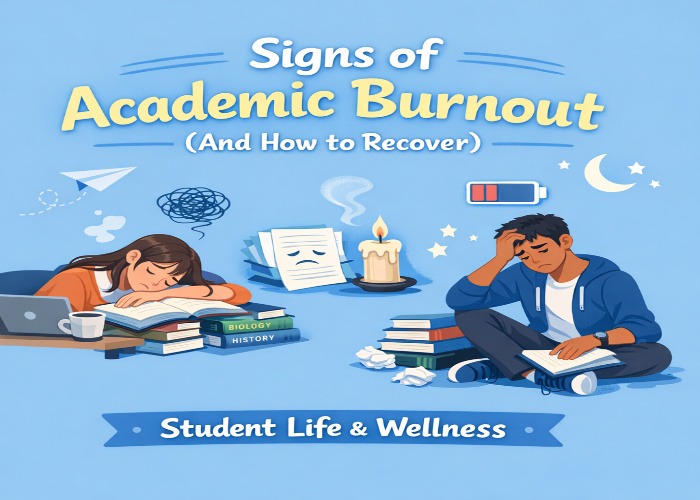
What Are the Early Warning Signs of Academic Burnout?
Early warning signs of academic burnout include emotional exhaustion manifesting as dread when thinking about coursework, inability to feel excitement about achievements that should feel rewarding, and physical fatigue that rest doesn't resolve, cynicism showing up as questioning whether your degree or education matters and feeling detached from material you previously found interesting, and declining efficacy where assignments take significantly longer to complete despite no increase in actual difficulty and you doubt your ability to succeed even when grades remain stable.
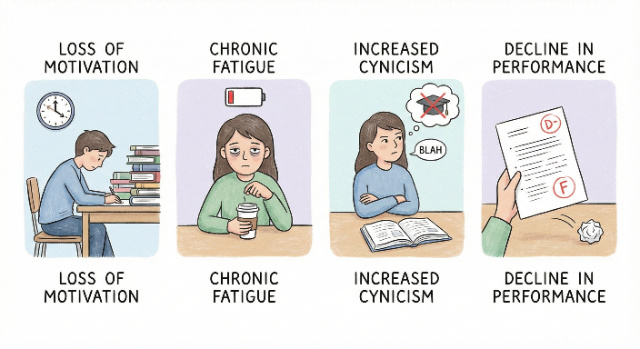
Catching burnout in early stages when you first notice these patterns makes recovery significantly easier than waiting until you've reached complete exhaustion and academic crisis.
Emotional Exhaustion Indicators
Burnout's first component is exhaustion that goes beyond normal tiredness:
Persistent dread about academic work:
- Opening your laptop or textbooks triggers immediate anxiety or heaviness
- Sunday evenings fill with overwhelming dread about the week ahead
- You feel exhausted just thinking about assignments before you even start them
- Academic work that once felt manageable now feels impossibly draining
Emotional numbing around achievements:
- Getting an A on a paper produces no satisfaction or pride
- Completing major projects brings relief but not accomplishment
- Positive feedback from professors feels hollow or meaningless
- You can't remember the last time you felt genuinely excited about learning
Physical fatigue unrelieved by rest:
- Sleeping 8-9 hours but waking up exhausted
- Constant tiredness even during breaks from studying
- Physical heaviness makes movement feel difficult
- Frequent illnesses as your immune system weakens
This exhaustion differs from normal stress-tiredness because rest doesn't fix it. Taking a day off doesn't restore your energy the way it used to.
Cynicism and Detachment Signs
The second burnout component involves emotional distancing from your studies:
Questioning the purpose of your education:
- Frequent thoughts like "Why am I even doing this?" or "Does any of this matter?"
- Feeling your degree won't lead anywhere meaningful
- Seeing coursework as pointless hoops to jump through
- Loss of connection to your original motivation for choosing your major
Detachment from coursework:
- Going through motions without actual engagement with material
- Inability to care about grades despite knowing they're important
- Reading assignments without processing or retaining information
- Attending classes physically but mentally checked out
Isolation from academic community:
- Avoiding study groups, office hours, or academic discussions
- Skipping optional class sessions or campus events
- Withdrawing from classmates and academic mentors
- Feeling disconnected from peers even when physically present
This cynicism represents a defense mechanism where you distance yourself emotionally from something that's hurting you, but it further reduces the meaning and engagement that could help you recover.
Reduced Efficacy Symptoms
The third component involves feeling incompetent despite maintained performance:
Tasks taking significantly longer:
- Assignments that took 2 hours now require 4-5 hours
- Simple tasks feel overwhelmingly complex
- Constant procrastination despite looming deadlines
- Starting and abandoning work repeatedly without progress
Self-doubt despite adequate grades:
- Feeling like an impostor even with good GPA
- Attributing success to luck rather than competence
- Constant comparison to peers who seem effortless
- Fear that you're "fooling everyone" and will eventually be exposed
Difficulty with previously easy material:
- Struggling with concepts you'd normally grasp quickly
- Inability to concentrate during reading or lectures
- Forgetting information immediately after studying
- Feeling confused by material you've successfully handled before
Decision paralysis:
- Inability to choose what to work on first
- Excessive time spent planning without executing
- Overthinking simple academic choices
- Feeling overwhelmed by normal decision-making
These efficacy problems occur even when your grades remain stable, which can make burnout hard to recognize. You're still producing work, but the cost to produce it has become unsustainable.
How Is Burnout Different from Regular Academic Stress?
Burnout differs from normal academic stress through its persistent nature that doesn't resolve with rest or completion of stressful periods, its impact on your sense of meaning and purpose rather than just creating temporary pressure, its progressive worsening over time rather than fluctuating with workload demands, and its resistance to typical stress management techniques that normally help you cope.
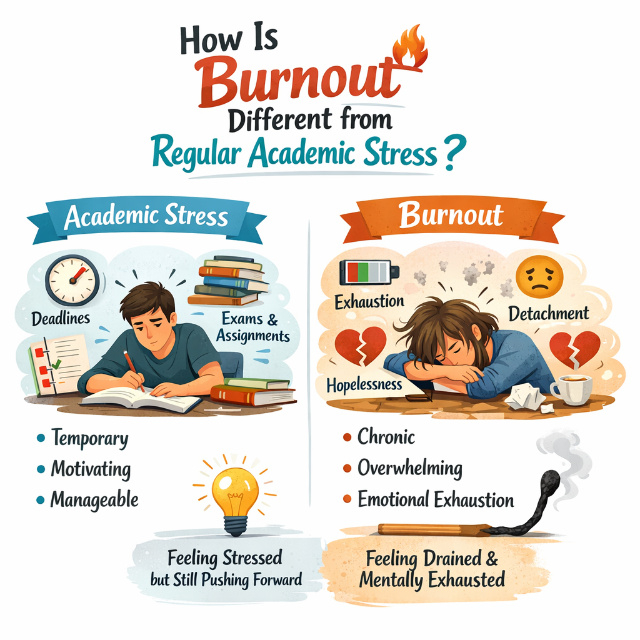
While 75-80% of students experience high stress during finals or midterms that resolves afterward, burnout affects 40-50% of students through sustained symptoms lasting months and persisting even during breaks when academic pressure temporarily decreases.
Duration and Recovery Patterns
Normal academic stress:
- Peaks during high-pressure periods (finals, major projects)
- Resolves with rest, breaks, or completion of stressors
- You feel better after a weekend or school break
- Energy returns when the immediate pressure passes
Burnout:
- Persists regardless of current workload intensity
- Doesn't improve with typical rest or short breaks
- You feel exhausted even after winter or spring break
- Recovery requires sustained intervention, not just time off
Relationship with Meaning
Normal academic stress:
- You still feel connected to why you're in school
- Achievements provide satisfaction even during hard times
- Core motivation remains intact even when overwhelmed
- You can imagine feeling better once current pressure passes
Burnout:
- Loss of connection to your original academic goals
- Achievements feel hollow or meaningless
- Questioning whether your entire educational path makes sense
- Difficulty imagining circumstances where school would feel worthwhile again
Response to Interventions
Normal academic stress responds to:
- Better time management and organization
- Brief rest periods and self-care activities
- Talking with friends or stress reduction techniques
- Completing current assignments to reduce pressure
Burnout requires:
- Fundamental changes to workload or approach
- Extended recovery period with sustained reduced demands
- Professional support from counselors or therapists
- Possible restructuring of academic commitments
The key difference: stress is about having too much to do in too little time. Burnout is about prolonged mismatch between demands and resources that erodes your psychological reserves even when the immediate workload feels manageable.
Burnout vs. Normal Academic Stress: A Quick Comparison
| Feature | Normal Academic Stress | Academic Burnout |
|---|---|---|
| Duration | Short-term, tied to specific events (e.g., a big exam, deadline). | Chronic, persistent feeling that lasts for weeks or months. |
| Recovery | Bounces back after the stressful event passes, with rest. | Doesn't improve with normal rest; feels insurmountable. |
| Response to Breaks/Help | Responds well to short breaks, support, and time management. | Resistant to typical fixes; requires significant intervention and lifestyle changes. |
| Relationship with Meaning | Frustration with tasks, but the overall goal still feels meaningful. Motivation returns. | Cynicism, detachment, and loss of purpose. "What's the point?" becomes a common feeling. |
| Primary Emotional Tone | Anxiety, pressure, temporary overwhelm. | Exhaustion, emptiness, hopelessness, and indifference. |
What Causes Academic Burnout?
Academic burnout develops from prolonged exposure to demands that exceed your resources, including chronically excessive workload where courses and commitments genuinely surpass manageable limits regardless of time management quality, lack of control over your academic path through rigid program requirements or external pressure determining your choices, insufficient reward where effort feels disproportionate to outcomes, breakdown of academic community support through competitive rather than collaborative cultures, and value misalignment where your coursework conflicts with your actual interests or goals.
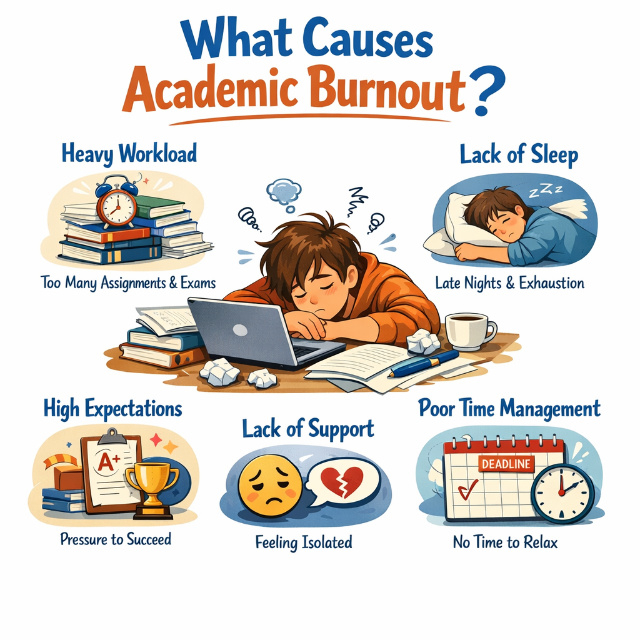
Research on burnout causation shows it results from sustained structural problems rather than personal weakness, with 60-70% of burnout cases involving genuinely unsustainable situations rather than inadequate coping skills.
Workload Factors
Burnout-causing workload has specific characteristics:
Chronically high demands:
- 18-20+ credit hours while working part or full-time
- Competitive programs with excessive busywork and gatekeeping
- Multiple majors or programs pursued simultaneously
- Significant family or caregiving responsibilities alongside full course load
Inadequate recovery time:
- Back-to-back semesters without real breaks
- Working through summers to afford school
- No buffer time between major assignments
- Schedule leaving no room for illness or unexpected events
Unpredictable demands:
- Professors assigning major work with insufficient notice
- Constantly changing requirements or expectations
- Unclear grading criteria creating guesswork
- Emergency situations requiring academic flexibility you don't have
Lack of Control Issues
Burnout accelerates when you lack agency:
Rigid program requirements:
- Inflexible course sequences with limited alternatives
- Prerequisites that force specific timing regardless of readiness
- Required courses that don't align with learning style or interests
- Inability to reduce course load without extending graduation
External pressure determining choices:
- Family expectations overriding personal preferences
- Financial aid requirements forcing full-time enrollment
- Pre-professional track requirements limiting exploration
- Social pressure to maintain pace with peers
Limited academic autonomy:
- Inability to choose assignment formats matching strengths
- Lack of input on assessment methods
- Forced group work with incompatible partners
- No flexibility for personal learning approaches
Reward-Effort Imbalance
Burnout grows when effort feels disproportionate to outcomes:
Grade inflation making As feel meaningless:
- Working significantly harder for same grades as before
- Feeling no different between A and B performance
- Diminished sense of accomplishment with high grades
Lack of meaningful feedback:
- Grades without explanation of strengths or improvements
- Generic comments providing no guidance
- No recognition of exceptional effort
- Feeling like just a number in large classes
Unclear connection to future goals:
- Required courses feeling irrelevant to career plans
- Inability to see how material applies to real world
- Questioning whether degree will provide promised opportunities
Community and Support Breakdown
Burnout intensifies in isolation:
Competitive rather than collaborative culture:
- Classmates as rivals rather than mutual support
- Curve grading creating zero-sum mentality
- Reluctance to share resources or study strategies
- Stigma around struggling or asking for help
Lack of mentorship:
- Inaccessible professors with limited office hours
- Advisors who provide minimal guidance
- No role models who've navigated similar challenges
- Feeling alone in difficulties
Social isolation:
- Academic demands eliminating time for friendships
- Living situation lacking emotional support
- Geographic distance from family or close relationships
- Campus culture feeling unwelcoming or exclusive
Values Misalignment
Burnout accelerates when forced into work that conflicts with core values:
Major doesn't match actual interests:
- Pursuing practical degree despite passion elsewhere
- Following prestige rather than genuine curiosity
- External pressure overriding internal motivation
- Inability to switch due to time or money invested
Ethical conflicts with requirements:
- Assignments requiring actions that feel wrong
- Competitive systems conflicting with collaborative values
- Program culture clashing with personal principles
- Coursework promoting perspectives you fundamentally disagree with
Understanding these causes helps distinguish burnout (structural problem requiring systemic changes) from stress (temporary pressure manageable with better coping). If multiple causes apply to your situation, burnout is likely and requires more than just "better self-care."
How Can You Recover from Academic Burnout?
Recovery from academic burnout requires immediate workload reduction through dropping classes, taking medical withdrawal, or strategically delegating lower-priority work, sustained rest period lasting weeks rather than days where you genuinely disconnect from academic pressures, reconnection with original motivation through rediscovering why you chose your field before external pressures distorted your path, rebuilding supportive community through academic mentors and peer connections, and structural changes preventing recurrence including course load reduction, program modification, or boundary establishment.
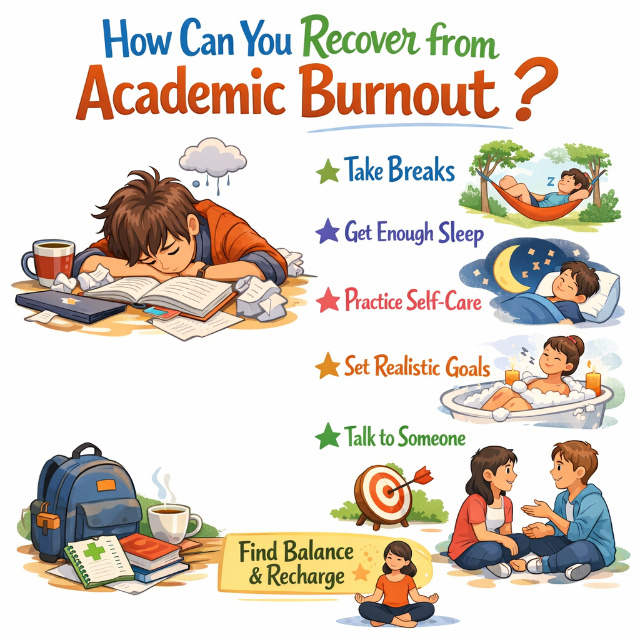
Students who implement comprehensive recovery approaches report significant improvement within 6-8 weeks, while those who only make surface-level changes typically experience recurring burnout episodes within 2-3 months.
Immediate Intervention Steps
When you recognize burnout, take action before it worsens:
1. Reduce current semester workload:
- Drop least essential course if still within deadline
- Request extensions on major assignments from professors
- Consider incomplete grades for courses you'll finish later
- Evaluate whether medical withdrawal protects your GPA and mental health
2. Delegate lower-stakes work strategically: When facing multiple assignments while experiencing burnout, professional essay writing service can handle projects in less critical courses, allowing you to focus limited energy on major requirements while implementing recovery strategies rather than attempting unsustainable workload that perpetuates burnout.
3. Create immediate boundaries:
- Set firm end-time for academic work each day (no work after 9 PM)
- Designate one full day weekly with zero academic activities
- Establish physical space separation between study and rest areas
- Turn off academic notifications during recovery periods
4. Communicate with key people:
- Talk with academic advisor about struggles and options
- Inform professors you're having difficulty (many are more flexible than expected)
- Discuss situation with family or financial supporters if workload reduction affects timeline
- Connect with campus counseling about mental health support during recovery
Sustained Rest Requirements
Burnout doesn't resolve with a weekend off:
Minimum 2-4 week recovery period:
- True break from academic pressure, not just lighter workload
- Permission to do nothing productive for extended time
- Sleep as much as your body needs without guilt
- Physical rest plus mental disconnection from academic identity
Activities that restore rather than drain:
- Physical movement you genuinely enjoy (not exercise as punishment)
- Creative pursuits with no performance pressure
- Time in nature or environments that feel peaceful
- Connection with people who care about you beyond academics
What sustained rest is NOT:
- Cramming more productivity into non-academic areas
- Feeling guilty about "wasting time" during recovery
- Constantly thinking about returning to work
- Using rest to catch up on other obligations
Research shows burnout recovery requires genuine rest lasting weeks, not just reallocation of stress to different areas. Your nervous system needs sustained relief to reset.
Reconnecting with Purpose
Burnout severs connection to meaning. Rebuild it intentionally:
Revisit your original motivation:
- What excited you about your field before external pressures took over?
- What problems did you want to solve or questions did you want to explore?
- What aspects of learning used to bring you joy?
- Are those things still accessible or has your path diverged completely?
Explore intrinsic interests:
- Take one course purely because it interests you, regardless of requirements
- Engage with your field outside academic structure (podcasts, articles, projects)
- Connect with professionals doing work you find meaningful
- Remember that loving a field and loving academic study of that field are different things
Separate your identity from grades:
- Define success beyond GPA (skills developed, knowledge gained, growth)
- Recognize grades measure narrow aspects of learning
- Value process and curiosity over performance metrics
- Consider what you want to learn versus what you need to achieve
Rebuilding Academic Community
Combat isolation through deliberate connection:
Find or create support systems:
- Join study groups focused on collaboration not competition
- Attend professor office hours for mentorship not just grade discussion
- Connect with academic advisor as ally not just administrator
- Participate in campus groups related to your interests
Seek appropriate professional support:
- Campus counseling for processing burnout and developing coping strategies
- Academic coaching for structural help with workload management
- Career services for clarifying goals and exploring alternatives
- Disability services if burnout relates to learning differences or mental health conditions
Share your experience strategically:
- Talk with trusted professors who might offer flexibility or guidance
- Connect with peers who've navigated similar struggles
- Be honest with close friends about difficulty you're experiencing
- Avoid oversharing with competitive classmates or unsupportive people
Making Structural Changes
Surface solutions won't prevent burnout recurrence:
Evaluate and modify course load:
- Reduce to 12-14 credits if 15-18 causes burnout
- Spread difficult courses across multiple semesters
- Balance heavy reading courses with lab or skills-based classes
- Accept that graduating in 4.5 or 5 years beats burning out and dropping out
Adjust work and commitments:
- Reduce work hours if financially possible
- Resign from optional commitments consuming significant time
- Renegotiate family responsibilities during critical academic periods
- Protect schedule from constant addition of "opportunities"
Change academic approach if needed:
- Switch major if current path fundamentally misaligned with interests
- Transfer to school with better fit for learning style or values
- Take semester off to recover and reassess goals
- Consider alternative paths (community college route, different credential)
Establish protective boundaries:
- Firm limits on daily/weekly study hours regardless of workload
- Non-negotiable time for sleep, movement, and social connection
- Practice saying no to additional commitments
- Separate self-worth from academic achievement
Recovery requires honest assessment of whether your current situation is fundamentally sustainable. Sometimes burnout signals the need for significant change, not just better coping with unchanged circumstances.
How Can You Prevent Burnout from Recurring?
Prevent burnout recurrence through sustainable workload management that builds recovery time into your schedule rather than treating it as optional luxury, regular monitoring of early warning signs before exhaustion becomes severe, maintenance of boundaries protecting time for non-academic aspects of life that sustain you, diversification of identity and self-worth sources beyond grades and achievement, and strategic course planning that spaces difficult requirements across semesters preventing impossible clusters.
Research on burnout prevention shows students who implement these practices reduce burnout episodes by 60-75% compared to those who return to pre-burnout patterns after initial recovery.
Sustainable Workload Design
Prevention starts with realistic planning:
The 12-15 credit sweet spot:
- Research suggests 12-15 credits optimizes learning and wellbeing
- Taking 18+ credits to graduate faster often extends graduation through course failures or withdrawals
- Calculate true course difficulty, not just credit hours (lab sciences count more than credits suggest)
- Remember that life circumstances might require lower load than theoretically possible
Strategic course combinations:
- Don't stack three heavy reading courses in one semester
- Balance writing-intensive courses with problem-set or lab courses
- Mix courses you're genuinely interested in with requirements
- Consider prerequisite chains when planning future semesters
Built-in recovery time:
- Schedule at least one day weekly with no classes or deadlines
- Avoid back-to-back finals or major project due dates
- Plan lighter weeks after known high-pressure periods
- Build buffer time for illness, mental health, or unexpected events
Early Warning System
Catch problems before they become crises:
Weekly check-ins with yourself:
- Rate your energy, motivation, and stress on consistent scale
- Notice patterns in physical symptoms (headaches, sleep, appetite)
- Track whether achievements feel rewarding or hollow
- Identify when cynicism or detachment begins creeping in
Specific triggers to monitor:
- Dreading specific courses or types of work
- Feeling resentful about commitments you previously enjoyed
- Difficulty recovering energy after weekends
- Increasing reliance on caffeine, alcohol, or other substances
- Withdrawal from friends or activities that usually support you
Action thresholds:
- Two consecutive weeks of low energy/motivation = talk with counselor or advisor
- Persistent physical symptoms = see doctor and evaluate stressors
- Questioning degree path = explore options with academic advisor
- Feeling hopeless = seek immediate professional support
Boundary Maintenance
Boundaries prevent burnout better than post-crisis intervention:
Firm daily limits:
- Set end time for academic work (recommended 9 PM maximum)
- No coursework in bedroom if possible
- Protect meals as genuine breaks, not study time
- Build transition rituals between academic and personal time
Weekly non-negotiables:
- One full day per week without academic work
- Scheduled time with friends or family
- Physical movement you enjoy (not punishment exercise)
- Activities completely unrelated to academics
Semester boundaries:
- Limit extracurriculars to 1-2 meaningful commitments
- Say no to opportunities that don't align with priorities
- Resist pressure to maximize resume at cost of wellbeing
- Accept that you can't do everything simultaneously
Identity Diversification
Don't stake your entire self-worth on academics:
Cultivate interests outside school:
- Hobbies with no achievement pressure (reading for fun, art, music)
- Skills unrelated to your major (cooking, sports, crafts)
- Volunteer work connecting you to broader community
- Part-time work in field of interest (if sustainable alongside courses)
Define success broadly:
- Progress on personal goals unrelated to grades
- Strength of relationships and community connections
- Growth in self-awareness and emotional intelligence
- Development of skills valuable beyond academic metrics
Practice self-compassion:
- Talk to yourself like you'd talk to a struggling friend
- Recognize that difficulty doesn't mean inadequacy
- Accept that perfect performance isn't possible or necessary
- Value effort and growth over outcomes
Strategic Help-Seeking
Know when to get support before crisis:
Academic support services:
- Tutoring for courses where you're struggling early
- Writing center for feedback on drafts
- Academic coaching for study strategies and time management
- Disability services if learning differences affect performance
Professional help when appropriate: When workload genuinely exceeds manageable capacity despite good planning, using trusted essay writing service for strategic support on lower-stakes assignments prevents burnout progression while you implement structural changes to create sustainable long-term approach.
Mental health resources:
- Regular counseling sessions, not just crisis intervention
- Group therapy for stress management or academic pressure
- Psychiatric evaluation if burnout relates to underlying conditions
- Crisis resources when needed (don't wait until emergency)
Prevention requires accepting that your capacity has limits and designing your academic life within those limits rather than constantly pushing against them.
When Does Burnout Signal Bigger Changes Are Needed?
Academic burnout signals need for major changes when recovery efforts fail to produce improvement after 8-12 weeks of sustained intervention, when you realize fundamental misalignment between your program and actual interests or values making engagement impossible despite reduced pressure, when physical or mental health consequences become severe threatening your long-term wellbeing, when financial or life circumstances make current academic intensity genuinely unsustainable, or when you recognize that completing your current path would lead somewhere you don't actually want to go.
Studies of students who left or changed academic programs show that 40-50% made those decisions due to burnout, and 70-80% of those who made major changes report significantly improved wellbeing and life satisfaction even when changes delayed graduation or required different paths.
Signs Your Program Isn't the Right Fit
Persistent misalignment despite recovery:
- Burnout symptoms return immediately when resuming coursework
- No aspects of your program feel engaging or meaningful
- Your interests clearly lie elsewhere but you're continuing anyway
- Internal resistance every time you think about your field
Values conflict:
- Program culture fundamentally opposes your principles
- Required work consistently violates your ethical standards
- Competitive environment incompatible with collaborative nature
- Teaching methods or content promoting perspectives you reject
Wrong fit for learning style:
- Program emphasizes approaches that don't match how you learn
- Disability or neurodivergence makes standard requirements impossible
- Better alternatives exist that would utilize your actual strengths
- Constant accommodation needs suggesting structural mismatch
Health-Based Necessary Changes
Physical health consequences:
- Chronic illness developing or worsening due to stress
- Immune system compromise leading to frequent infections
- Sleep disorders, digestive issues, or pain conditions
- Medical professionals advising workload reduction
Mental health severity:
- Depression or anxiety disorders developing beyond burnout
- Suicidal thoughts or self-harm urges
- Panic attacks or severe anxiety interfering with functioning
- Substance use escalating to cope with academic pressure
Professional recommendation:
- Therapists or doctors advising medical withdrawal
- Diagnosis requiring accommodation your program won't provide
- Treatment requiring time or energy incompatible with full-time study
- Risk of long-term damage from continuing current path
External Circumstances Requiring Adjustment
Financial unsustainability:
- Working 30+ hours weekly to afford school creating impossible load
- Accumulating debt for degree with uncertain employment prospects
- Family financial crisis requiring different prioritization
- Better financial options through different academic paths
Family or caregiving responsibilities:
- Caring for ill family members or children
- Being primary support for dependents
- Geographic constraints requiring different schooling options
- Life circumstances not compatible with full-time traditional education
Life stage misalignment:
- Starting college immediately after high school without clarity on goals
- Pursuing degree because of external pressure rather than genuine interest
- Major life transitions (marriage, children, relocation) changing priorities
- Recognizing other paths would better serve your actual aspirations
Options When Major Changes Are Needed
Within current institution:
- Change majors or switch to related program better aligned with interests
- Reduce to part-time student status spreading requirements across more time
- Take leave of absence for recovery and goal clarification
- Transfer to different college within university with better cultural fit
Alternative academic paths:
- Transfer to institution with different approach or resources
- Switch to online program allowing more flexibility
- Attend community college to complete general requirements affordably
- Take gap year or semester working in field to test interest and recover
Non-traditional approaches:
- Pursue certificates or credentials instead of full degree
- Combine work and part-time study over extended period
- Explore apprenticeships or alternative learning paths
- Consider whether specific degree is truly necessary for your goals
Temporary vs. permanent changes:
- Medical withdrawal preserves GPA while you recover
- Leave of absence lets you return when circumstances improve
- Dropping out permanently is valid if school isn't right path
- Part-time study might be temporary or sustainable long-term approach
Making major changes feels like failure, but continuing on a path that destroys your health or leads somewhere you don't want to go is the real failure. Your degree has value only if you're healthy enough to use it and want the life it leads to.
Key Takeaways
Academic burnout is a serious condition distinct from regular stress, requiring comprehensive recovery approaches rather than surface-level self-care additions:
- Recognize early warning signs: emotional exhaustion, cynicism toward studies, and reduced academic efficacy
- Understand it's structural not personal: burnout results from unsustainable demands, not weakness
- Implement immediate intervention: reduce workload, establish boundaries, seek support
- Allow genuine recovery time: 4-12 weeks of sustained rest and reduced academic pressure
- Make structural changes: adjust course load, rebuild community, reconnect with purpose
- Prevent recurrence: sustainable workload, early monitoring, protected boundaries
- Recognize when major changes needed: persistent misalignment, health consequences, or life circumstances
Academic burnout doesn't mean you're failing; it means you're facing demands that exceed sustainable capacity. Recovery is possible with proper intervention, and preventing recurrence requires designing an academic path that works with your actual capacity rather than against it.
When burnout stems from genuinely excessive workload rather than poor time management, using urgent essay writing service for strategic support on lower-priority assignments can provide the breathing room needed to implement recovery strategies and structural changes without catastrophic academic consequences. The goal isn't to avoid all challenge but to maintain demands within sustainable limits that allow you to learn effectively while protecting your long-term wellbeing.
Your health and wellbeing matter more than any grade, degree, or timeline. A successful college experience is one you complete with your mental and physical health intact, not one where you sacrifice everything for slightly faster completion.