Short on time or stuck transforming your story into a compelling essay? Our essay writing service specializes in turning your experiences into winning applications.
What is a Scholarship Essay?
A scholarship essay is your written pitch for why a scholarship committee should invest its money in your education and future.
Simple definition: You answer a specific prompt to convince the committee you're the best candidate for their scholarship funds.
The three essential elements:
- Prompt response: You directly answer the specific question they asked
- Personal narrative: You share your authentic story and voice
- Clear value: You explain what you'll do with their investment
Think of it this way:
- Bad: "I need money for college, and I work hard"
- Good: "As the first in my family to attend college, I've spent three years tutoring immigrant students while working nights at my parents' restaurant. Your scholarship funds my engineering degree and help me build the mentorship program I've designed to support first generation students."
1. What Makes Scholarship Essays Different?
Scholarship vs. Other Essays:
| Type | Purpose | Audience |
|---|---|---|
| Scholarship Essay | Win funding | The committee decides who gets money |
| College Essay | Gain acceptance | Admissions decides who attends |
| Personal Statement | Show character | Various audiences |
The key difference? Scholarship essays answer "Why should we invest in YOU?" Everything in your essay should support that answer.
2. What Committees Actually Look For
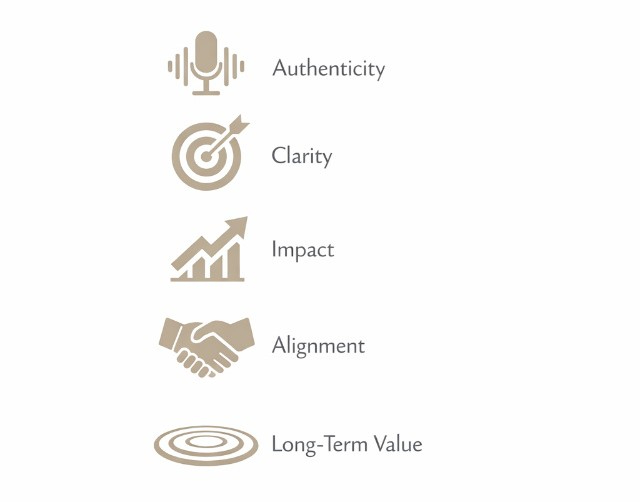
After reviewing thousands of winning essays, committees consistently reward:
- Authentic voice: Sounds like a real person, not AI
- Specific details: Concrete facts, not vague claims about being "passionate"
- Clear goals: You know what you want and why
- Demonstrated impact: Evidence you've already made a difference
- Alignment with values: Your goals match what they care about
- ROI potential: Their investment creates ripple effects beyond you
Bad: "I deserve this scholarship because I have good grades and work hard. Education is important, and I want to make a difference."
Good: "Last semester, I started a free homework help program in our apartment complex after watching my neighbor's 8 year old struggle with math. Twelve kids now show up every Thursday. Your scholarship reduces my retail hours from 30 to 20 weekly, giving me time to expand this program to three more buildings before graduation."
See the difference? Specifics, evidence, and clear outcomes.
Write a Scholarship Essay That Wins
Turn your experiences into a clear, compelling essay that committees actually remember.
- Strong hook + perfect structure (no rambling)
- Authentic voice with specific details (not generic lines)
- Clear goals + “why this scholarship” connection
- Expert revision for clarity, flow, and word-limit fit
Stop overthinking, get a scholarship-ready draft you’re proud to submit.
Order NowHow to Write a Scholarship Essay (Step by Step)
Writing a winning scholarship essay follows a clear process. Don't skip steps; each one makes the next easier.
Step 1: Decode the Prompt
Before writing anything, understand exactly what they're asking.
Read the prompt 3 times:
- First: General understanding
- Second: Identify key requirements and question words
- Third: Note word limit and formatting
Identify question words:
- "Describe" = provide specific details
- "Explain" = clarify why/how with reasoning
- "Discuss" = explore multiple angles
- "How" = describe process or method
- "Why" = provide reasoning and motivation
Check for hidden requirements:
Look for "and" statements: "Describe your goals AND how this scholarship helps" means you must address BOTH. Count the questions: Some prompts have 3-4 sub questions. Answer all. Note emphasis words: "significant," "most important," "greatest" tell you what to prioritize. |
Step 2: Research the Organization
Generic essays don't win. Tailored essays do.
Find out:
- What does this organization value?
- Who funds this scholarship and why?
- What language do they use on their website?
- What problems are they trying to solve?
Strategic alignment:
- STEM scholarship from an engineering company emphasizes innovation, problem solving, and technical skills
- Community foundation scholarship emphasizes local impact, service, and giving back
- Minority professional organization emphasizes identity, representation, mentorship
Where to research:
- Organization website ("About" and "Mission" pages)
- Past winner profiles
- Social media accounts
- News coverage
Use this intel: Mirror their language, align your goals with their mission, and reference their work when relevant.
Step 3: Brainstorm Your Unique Angle
What makes YOU different from 500 other qualified applicants?
Questions to ask yourself:
About background:
- What's your origin story?
- What challenges shaped you?
- What experiences do most people not have?
About achievements:
- What impact have you made?
- What have you built or started?
- What problems have you solved?
About goals:
- What specific problem do you want to solve?
- Who benefits from your work?
- How does this scholarship accelerate your timeline?
Finding your angle:
Look for unexpected combinations, cause and effect chains, or unique perspectives that only you can offer.
Step 4: Gather Specific Evidence
Vague claims don't win. Specific evidence does.
For every major point, collect:
Quantifiable details:
- Numbers: "tutored 47 students," not "helped many"
- Time: "every Tuesday for 18 months," not "regularly"
- Money: "raised $3,20,0" not "significant funds"
Sensory details:
- What did you see, hear, and feel in key moments?
- What specific locations matter?
- What objects symbolize your journey?
Dialogue and quotes:
- What did someone say that changed you?
- What question prompted your interest?
Step 5: Create Your Outline
Turn brainstormed ideas into a structured plan.
Basic winning structure:
- Opening Hook (1 paragraph)
- Compelling opening that grabs attention
- Sets up your main theme
- Background/Context (1-2 paragraphs)
- Your relevant background
- The challenge that shaped you
- Why this matters
- Your Response/Journey (2-3 paragraphs)
- What you did
- Specific evidence
- Obstacles and how you overcame them
- What you learned
- Future Impact (1-2 paragraphs)
- Your specific goals
- How scholarship enables them
- Who benefits from your success
- Alignment with the scholarship mission
- Conclusion (1 paragraph)
- Circle back to the opening
- Reinforce why you're the right investment
- Forward looking statement
Step 6: Write Your First Draft
Before you start:
- Set a realistic time: 2-3 hours for the complete first draft
- Eliminate distractions
- Have your outline and evidence ready
- Know your word limit
Writing strategy:
Don't start at the beginning. Write whichever section feels easiest first.
Write past the bad parts. Mark "[FIX: transition here]" and keep going.
Use specific numbers and details as you write.
Balance showing and telling:
- Telling: "I'm passionate about education"
- Showing: "I arrive at school 45 minutes early to help students who can't afford tutoring"
Ignore your internal editor. First drafts are supposed to be imperfect.
Track your word count every few paragraphs to pace correctly.
When you finish: Save it, close your laptop, and walk away for at least 24 hours. Fresh eyes catch problems.
Step 7: Revise Strategically
BIG PICTURE REVISION (First Pass):
Read your entire essay once without editing. Ask:
Prompt adherence:
- Did I answer the specific question?
- Did I address every part?
- Did I stay within the word limit?
Structure:
- Does my opening hook attention?
- Does each paragraph flow logically?
- Is my strongest content in the middle?
- Does my conclusion create closure?
Balance:
- Appropriate space on each required element?
- Too much background, not enough future?
- Am I showing or just telling?
CONTENT REVISION (Second Pass):
Go paragraph by paragraph:
Strengthen your content:
- Replace vague claims with specific evidence
- Add numbers, names, locations, details
- Expand moments that matter
- Cut generic statements
Improve transitions:
- Does each paragraph connect to the next?
- Varied transition techniques?
- Can I cut tangents?
Verify alignment:
- Does my story match scholarship values?
- Did I use their language naturally?
- Is it clear why THIS scholarship matters?
LINE EDITING (Third Pass):
Fix the actual sentences:
Sentence variety:
- Vary lengths (short and long)
- Start sentences in different ways
- Break up long paragraphs (3-5 sentences max)
Word choice:
- Replace weak verbs: "helped" to "tutored" or "mentored"
- Cut unnecessary words: "in order to" can be placed with just "to"
- Remove qualifiers: "very," "really," "quite"
- Eliminate redundancy
Grammar:
- Run spell check
- Read aloud to catch awkward phrasing
- Check pronoun clarity
- Verify names are spelled correctly
Step 8: Get Feedback
Who to ask:
- Teachers who know you well
- School counselors (they've seen successful essays)
- Mentors in your field
- Recent scholarship winners
How to ask:
Give specific questions:
- "Does my opening grab you?"
- "Can you identify 2-3 specific details that make this uniquely mine?"
- "Where do you get bored?"
- "Does this answer the prompt?"
What to do with feedback:
- Listen for patterns: If 2+ people flag the same issue, fix it.
- You don't have to take all the advice.
- Ask clarifying questions.
Step 9: Proofread Carefully
A single typo can tank your application.
Proofreading strategy:
Step 1: Read backward, sentence by sentence. Catches typos. Step 2: Read aloud slowly. Catches awkward phrasing. Step 3: Print and read on paper. Spot errors you miss on screen. Step 4: Use spell check, but verify every suggestion. Step 5: Check every name against official sources. |
Common errors:
- Your/you're, its/it's, their/there/they're
- Missing words
- Repeated words
- Inconsistent verb tenses
- Missing punctuation
Final checklist before submitting:
- Correct scholarship name
- Correct word count
- File named correctly
- Your contact info included
- Submitted 24-48 hours early
- Correct file format
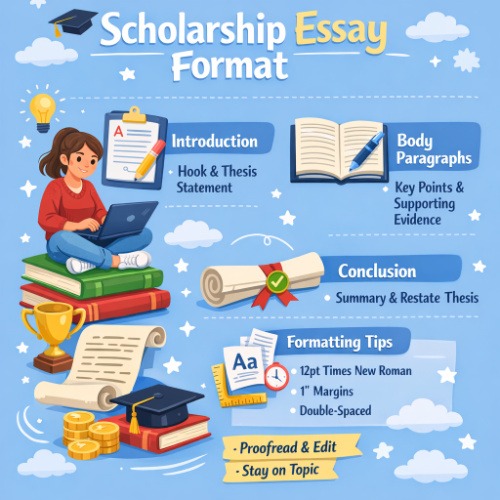
Don't know what the correct format is? Not a problem. We have created a scholarship essay format guide just for you.
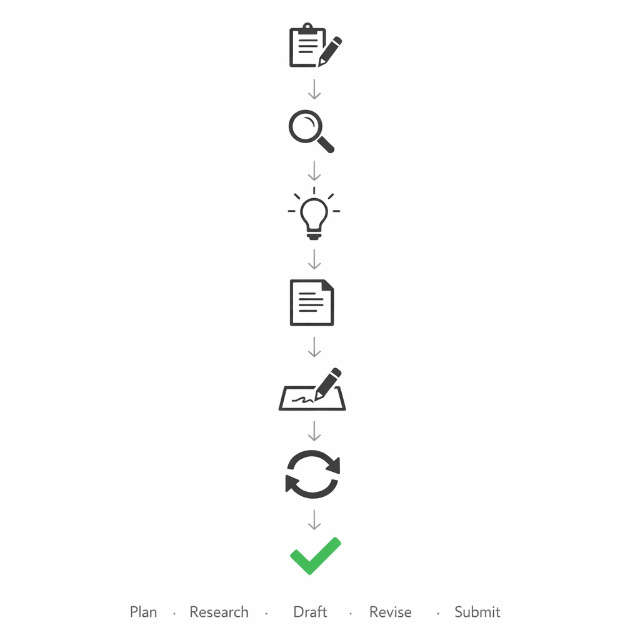
Stop Stressing. Get Your Essay Done.
I’ll write a high-quality essay that matches your requirements and is ready to submit.
- 100% custom writing for your topic
- Written by subject specialists
- Any subject, any deadline
- Money-back guarantee
Join 50,000+ students who submit with confidence.
Get Started NowHow to Start a Scholarship Essay
Your opening is make or break. Committees decide in the first 30 seconds whether to keep reading carefully or skim. Here's how to hook them.
| Section | % of Essay | Purpose | What to Include |
|---|---|---|---|
| Introduction | 12–20% | Hook the reader and set direction | Specific hook, brief context, preview of main argument |
| Background / Challenge | 20–25% | Show why your achievement matters | Circumstances, challenge, stakes, why it mattered |
| Your Response / Achievement | 35–40% (Longest) | Prove impact with evidence | Actions taken, obstacles, adaptation, skills, results (numbers + outcomes) |
| Future Goals / Impact | 20–25% | Show return on their investment | Clear goals, timeline, how scholarship helps, wider impact, mission fit |
| Conclusion | 10–15% | Reinforce why you’re the right choice | Full-circle ending, future vision, confident impact statement |
After the Hook: Context and Thesis
Your opening paragraph needs three elements:
1. Hook (1-2 sentences) Grabs attention 2. Context (2-3 sentences) Essential background 3. Thesis (1-2 sentences) Previews what this essay shows |
Length: Opening paragraph should be 4-6 sentences total. Get to it fast.
Test your opening: Read just your first paragraph to someone. If they're not interested in what comes next, rewrite it.
Writing Techniques That Win Scholarships
These techniques transform okay essays into funded essays.
1. Show, Don't Tell
The #1 rule of effective writing.
Telling = making claims
Showing = providing evidence through specific scenes and details
Telling: "I'm a natural leader"
Showing: "When our robotics team wanted to quit after regionals, I gathered everyone for pizza. 'We're going to figure this out,' I told them, pulling up the failed run video. 'Watch, right there at 0:47, the arm drops too fast. If we adjust the gear ratio...' Within two weeks, we'd fixed every issue and qualified for the state."
How to show instead of tell:
Replace emotion words with physical reactions Replace trait claims with specific behaviors Use scenes instead of summaries |
2. Use Powerful Specific Details
Generic details don't stick. Specific details do.
The specificity scale:
Level 1 (Forgettable): "I volunteered helping kids" Level 3 (Good): "I tutored third graders in math twice weekly" Level 5 (Most Powerful): "Every Tuesday and Thursday after school, I met with six third graders in Room 114. We worked on multiplication and fractions using manipulatives I bought with my own money because the district had cut the math intervention budget." |
Types of specifics:
Proper nouns: Names of people, places, programs Exact numbers: Replace estimates with actual counts Time markers: When and how long Quoted dialogue: What was actually said |
3. Write Compelling Dialogue
Dialogue breaks up paragraphs, reveals character, and brings scenes alive.
When to use dialogue:
When someone said something that changed you. When a moment crystallized through conversation. When interaction shows your character
Keep it natural:
People talk in fragments and informal language. Don't make everyone sound like they're giving speeches.
4. Vary Your Sentence Structure
Monotonous rhythm puts readers to sleep. Varied rhythm keeps them engaged.
Mix short and long sentences:
Long sentences build detail and complexity. Short sentences create impact. Vary between them.
Use different sentence openers:
Don't start every sentence with "I." Begin with time phrases, dependent clauses, participial phrases, prepositional phrases.
Read your essay aloud:
You'll immediately hear where sentences feel repetitive.
5. Create Strong Transitions
Smooth transitions make your essay feel coherent.
Techniques:
Bridge sentences: End paragraph with a sentence leading to the next topic Echo words: Repeat keyword from the end of one paragraph at the start of the next Time markers: "Three months later..." "By junior year..." "After that setback..." Logical connectors: "However," "As a result," "For instance" |
6. End Paragraphs Strategically
The last sentence of each paragraph creates momentum.
Strong paragraph endings:
Create anticipation: "But that was only the beginning." Show transformation: "I wasn't the same student who'd walked into that classroom in September." Connect forward: "This laid the foundation for everything that came next." |
Is all this information too overwhelming? Check out our scholarship essay examples for clarity.
Common Mistakes That Kill Scholarship Essays
Even strong students make these errors. Avoid them, and you're ahead of 70% of applicants.
Mistake 1: Generic Essays
The problem: Your essay could be submitted by 200 other students with minimal changes.
How to fix it: Replace every generic statement with something specific to you. Include proper nouns, exact numbers, and details unique to YOUR life.
Mistake 2: Telling Your Entire Life Story
The problem: Trying to cram too much into a limited space, so nothing gets developed well.
How to fix it: Pick 1-3 experiences and develop them fully rather than mentioning everything briefly. Go deep, not broad.
Mistake 3: Sob Story Without Growth
The problem: Focusing only on hardship without showing how you've responded or grown.
How to fix it: The ratio, 30% challenge, 70% your response, and growth. Briefly establish the challenge, and spend most of the essay on your response.
Mistake 4: Not Answering the Actual Prompt
The problem: You write the essay you want instead of the essay they asked for.
How to fix it: Break down the prompt into specific questions before writing. Check every few paragraphs that you're still on track. Highlight where you answered each component.
Mistake 5: Weak Opening
The problem: First sentences are generic, boring, or confusing.
Common weak openings:
| "My name is [Name], and I am applying..." "I am writing to tell you why I deserve..." "Throughout history, education has been important..." |
How to fix it: Use proven hook strategies: drop into action, start with a surprising statement, open with dialogue, share a pivotal moment.
Mistake 6: Vague Goals
The problem: Saying "I want to help people" without specifics about how, when, or who.
How to fix it: Include a specific job title or career path, timeline, who specifically benefits, how the scholarship accelerates your path, and concrete next steps.
Mistake 7: Grammar and Spelling Errors
The problem: Typos signal carelessness.
How to prevent: Use multiple proofreading passes. Read backward sentence by sentence. Read aloud slowly. Print and read on paper. Have someone else read it.
Mistake 8: Wrong Tone
The problem: Either writing like you're texting a friend, or writing like a legal document. Too casual: Slang, overly informal phrases, too many exclamation points Too stiff: "One must endeavor," thesaurus abuse, corporate buzzwords The right tone: Professional but personable, clear and direct, sounds like an intelligent person speaking naturally. |
Mistake 9: Forgetting to Connect to THIS Scholarship
The problem: Writing a good essay about yourself but never connecting to the specific scholarship organization.
How to fix it: Research the organization. Make explicit connections. Explain specific impact of this funding.
Mistake 10: Ending Weakly
The problem: The Essay peters out or ends abruptly.
Weak endings:
| "Thank you for considering my application." "In conclusion, I have shown why I deserve this scholarship." |
How to end strong: Use a full circle (connect back to the opening), future vision (paint a specific picture), or impact ripple (show how the investment multiplies).
Know the structure but struggling to execute? Our trusted essay writing service handles the execution. We take your experiences and transform them into strategic narratives with perfect pacing, authentic voice, specific evidence, and committee-winning structure.

Free Downloadable Resources
Stop Stressing. Start Submitting.
Our professional writers craft essays that impress professors and earn top marks.
- 100% custom, never resold or recycled
- Written by academic specialists
- Any subject, any deadline
- Money-back guarantee
Trusted by 50,000+ students worldwide
Get Expert Help NowReady to Win That Scholarship?
Writing a scholarship essay that wins requires authentic voice, specific evidence, strategic positioning, clear goals, and professional execution. You now have the complete framework.
Here's what you've learned:
- What scholarship committees look for and why
- The complete 9 step writing process
- How to structure your essay for maximum engagement
- Writing techniques that bring your story alive
- Common mistakes that kill applications
The most important step? Starting.
Don't wait for perfect circumstances. Begin with small actions: study what works, brainstorm your angles, create your outline, and write one paragraph. Build from there.
Your story matters. Your goals are valid. Your experiences have shaped perspectives worth funding. Committees want to invest in students like you; show them why you're the right investment.