Persuasive Essay Example: School Uniform Policy
Topic: Schools should require uniforms
Here's a complete persuasive essay arguing for mandatory school uniforms. Notice how it balances logic, emotion, and credibility.
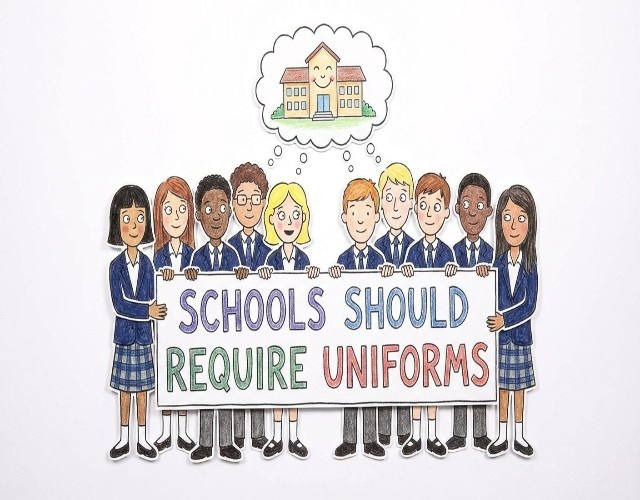
Should Schools Require Uniforms? The Case for Equality
Walk into any public high school, and you'll immediately see the divide: designer labels versus thrift store finds, the latest trends versus last year's hand me downs. While dress codes attempt to level the playing field, they fail. Schools should implement mandatory uniform policies because they reduce socioeconomic pressure, improve focus on academics, and create safer learning environments.
The financial burden of "fitting in" hits low-income families hardest. According to a 2023 National Retail Federation study, families spend an average of $864 annually on school clothes, a cost that climbs higher when teens feel pressured to match their peers' wardrobes. Uniforms eliminate this competition. A typical uniform costs $150-$200 per year, saving families $600+ annually while removing the daily stress of "what to wear."
Beyond economics, uniforms shift focus from appearance to academics. Dr. Sandra Wilde's five-year study of 1,200 middle schools found that schools with uniform policies reported 12% higher test scores and 18% improved attendance rates compared to non-uniform schools. Teachers spend less time enforcing dress codes and more time teaching. Students spend less energy on social comparisons and more on learning.
Safety improves dramatically with uniforms. Gang colors disappear. Intruders become immediately identifiable. School resource officers in Long Beach, California reported a 36% decrease in campus violence within one year of implementing uniforms. When everyone wears the same colors, tribal divisions based on clothing vanish.
Critics argue that uniforms suppress individual expression. But schools aren't fashion runways, they're learning environments. Students still express themselves through clubs, sports, art, and most importantly, their ideas and achievements. A uniform polo shirt doesn't erase personality; it creates a level playing field where personality can actually shine through work, not wardrobe.
The evidence is clear: mandatory school uniforms reduce economic pressure on families, improve academic focus, and create safer schools. If education aims to provide equal opportunities for all students, uniforms are a logical step toward that equality.
What Makes This High School Level Example Work
|
Stop Stressing. Start Submitting.
Our professional writers craft persuasive essays that impress professors and earn top marks.
- 100% custom, never resold or recycled
- Written by academic specialists
- Any subject, any deadline
- Free revisions included
No AI shortcuts. Just expert-level quality.
Order NowPersuasive Writing Example: Environmental Action
Topic: Individual actions can combat climate change
This sample shows how to argue for personal responsibility on a large scale issue.
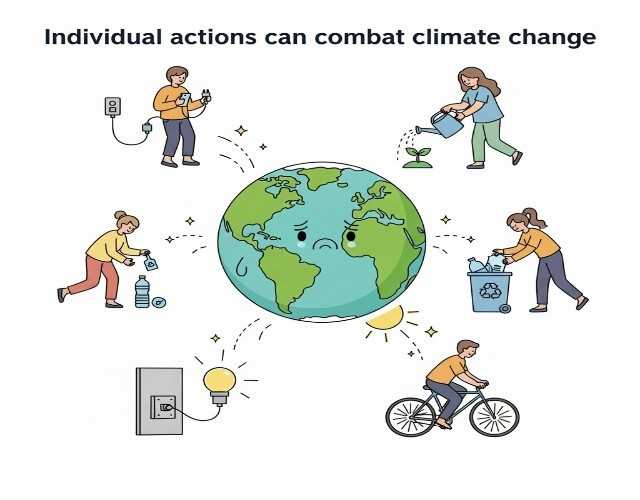
Your Carbon Footprint Matters More Than You Think
"One person can't make a difference," that's the lie we tell ourselves to justify inaction on climate change. But when 8 billion people believe this lie, the result is catastrophic inaction. Individual choices do matter, and here's why every person must take responsibility: collective individual action drives market change, personal choices model behavior for others, and waiting for governments alone has failed.
The market responds to consumer behavior. When enough individuals choose plant-based diets, companies like Burger King and McDonald's add Impossible Burgers to their menus. When consumers buy electric vehicles, automakers shift production, Ford just invested $50 billion in EV development. A 2024 Oxford study found that if just 25% of Americans reduced meat consumption by half, agricultural emissions would drop 18%, equivalent to removing 47 million cars from roads. Individual choices, multiplied, become market forces.
Personal action creates social momentum. Research from Yale's Climate Communication Program shows that people are 4x more likely to adopt sustainable practices when they see neighbors doing the same. Solar panels on one home lead to five more installations within six months on the same block. Reusable shopping bags spread through communities like fashion trends. Your visible choices normalize climate-conscious behavior.
The "wait for government" strategy has failed. The 2015 Paris Agreement set emissions targets that most countries missed. Meanwhile, individual actions have already made measurable impacts: LED bulb adoption reduced U.S. energy consumption by 15% since 2010. Recycling rates doubled in communities with strong individual participation. Consumer pressure forced 200+ major corporations to commit to net-zero emissions. Change happens when individuals demand it, not when we passively wait.
Yes, systemic change requires policy reform. But policy follows public demand. Politicians respond to constituents. Markets respond to consumers. Waiting for someone else to solve climate change is how nothing gets solved. Your choices, what you eat, how you travel, what you buy, send signals that compound across millions of people into measurable change.
Climate change feels overwhelming because the problem is massive. But massive problems get solved through millions of small actions. Yours is one of them. Make it count.
What Makes This Example Work
|
Note: Before analyzing examples, make sure you understand how persuasive essay topics shape the direction of the argument.
Persuasive Essay Example: Social Media Regulation
Topic: Social media platforms should be regulated like tobacco.
Here's how to argue for a controversial policy using a comparison strategy.
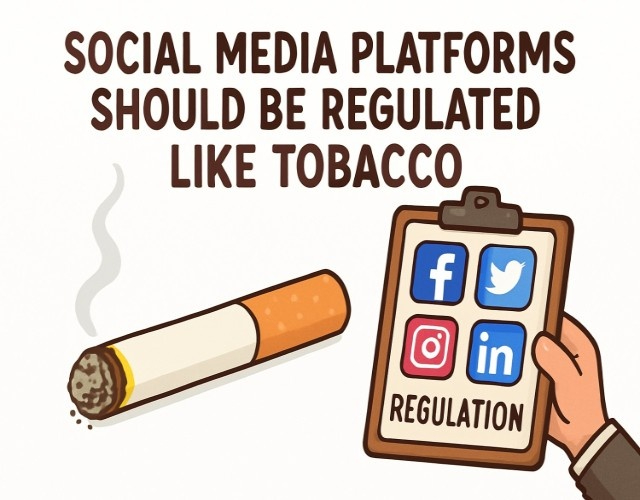
Why Social Media Needs the Tobacco Treatment
In the 1960s, cigarette companies knew their products were addictive and harmful but marketed them as sophisticated lifestyle choices. Today, social media companies know their platforms damage teen mental health, but market them as essential social connections. The parallel is striking, and the solution should be the same: regulate social media like we regulate tobacco.
The addiction mechanisms are identical. Just as nicotine triggers dopamine release, social media notifications exploit the same neural pathways. Dr. Anna Lembke, Stanford addiction specialist, explains that every like, comment, and share creates a dopamine spike followed by a craving for more. Meta's own internal research, leaked in 2021, showed Instagram makes body image issues worse for 32% of teen girls and that the company knew it. They prioritized engagement over wellbeing, exactly what Big Tobacco did with addictive cigarettes.
The mental health data is damning. Teen depression rates have risen 60% since 2010, correlating directly with smartphone adoption. Suicide rates for girls aged 10 to 14 tripled between 2010 and 2020. A 2023 CDC study of 50,000 teens found that those spending 3+ hours daily on social media had double the risk of depression and anxiety compared to those spending under one hour. We're watching a public health crisis unfold in real-time.
Regulation worked for tobacco, and it can work for social media. After warning labels, advertising bans, and age restrictions, teen smoking dropped from 36% in 1997 to 2% in 2023, a 94% reduction. Similar regulations could transform social media: mandatory age verification, warning labels about mental health risks, bans on infinite scroll and autoplay designed to maximize addiction, and required parental controls.
Free speech advocates worry about government overreach. But we already regulate harmful products without banning them: alcohol, tobacco, prescription drugs. Regulation doesn't mean censorship, it means protecting vulnerable users from predatory design. Social media companies can still exist; they just can't design products that deliberately exploit addiction pathways in developing brains.
Fifty years ago, we finally held cigarette companies accountable for knowingly harming public health. We're at that same inflection point with social media. The evidence is clear. The harm is documented. The solution exists. Now we need the political will to implement it.
What Makes This Example Work
|
Pro Tip: When reviewing persuasive essay examples with counterarguments, pay attention to how writers acknowledge opposing views and then refute them with stronger evidence.
Persuasive Essay Example: Education Policy
Topic: College should be free for all students
This example tackles a complex economic argument with concrete solutions.
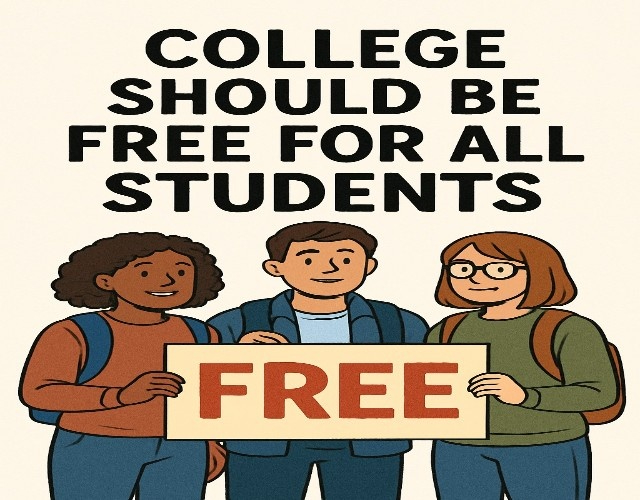
Free College Isn't Radical: It's Overdue
Student loan debt in America just surpassed $1.7 trillion, shackling an entire generation with financial burdens that delay homeownership, marriage, and even healthcare decisions. Meanwhile, countries from Germany to Finland offer tuition free higher education, producing educated workforces without drowning citizens in debt. The United States should implement free public college education because it removes class barriers to opportunity, strengthens the economy through an educated workforce, and costs less than our current broken system.
Economic mobility dies when education costs six figures. A student from the top income quartile has an 80% chance of earning a bachelor's degree by age 24. A student from the bottom quartile? Just 14%. The difference isn't intelligence or work ethic, it's money. When college costs $30,000-$60,000 annually, talented low-income students either don't attend or graduate with crippling debt. Free tuition eliminates this barrier, allowing merit rather than money to determine college access.
The economy benefits massively from free college. Georgetown University's Center on Education projects that by 2030, 72% of jobs will require postsecondary education. Yet college enrollment is declining because costs are prohibitive. Countries with free college education, Norway, Denmark, and Finland, have higher rates of degree completion and stronger economies. A 2019 Moody's analysis found that every dollar invested in free college returns $1.70 to the economy through higher earnings and tax revenue.
Cost concerns are valid but misplaced. Free public college would cost approximately $79 billion annually, less than 3% of federal tax revenue. Compare that to the $1.7 trillion in existing student debt that's already crushing economic growth. We're already paying; we're just paying badly. Shifting costs from students to taxpayers simply distributes the investment more efficiently.
Critics call free college "socialism." But we already have free K-12 public education. Nobody calls public high schools socialist. In the 1960s, a high school diploma was sufficient for middle-class employment. Today, that floor is a bachelor's degree. Free college isn't radical, it's simply updating our social contract for the modern economy.
The current system is unsustainable. It's producing graduates who can't afford homes, can't start businesses, can't take risks, all because they're servicing massive debt. Free public college isn't about handouts. It's about recognizing that an educated population is a public good that benefits everyone, just like roads, clean water, and yes, K-12 education.
What Makes This Example Work
|
Persuasive Essay Examples by Academic Level
Easy High School Level Persuasive Essay Example: Mental Health Day
Topic: Schools should allow mental health days like sick days
A complete 500 word essay on student wellbeing and education policy.
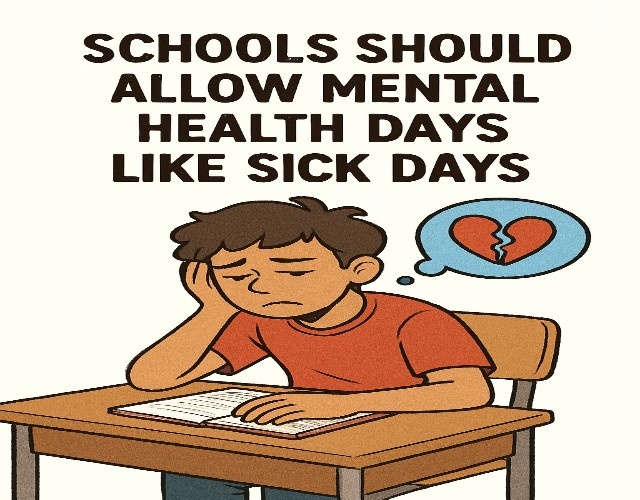
Why "I'm Not Okay" Should Be Enough
Students can stay home with the flu, but not with anxiety attacks. They can miss school for strep throat, but not for suicidal thoughts. This double standard is killing kids. Schools must allow designated mental health days where students can take time off without penalty, because mental health is health, student stress is at crisis levels, and prevention is cheaper than intervention.
The mental health crisis among students is undeniable. CDC data shows 42% of high school students felt persistently sad or hopeless in 2023, up from 28% in 2011. Teen suicide attempts increased 31% between 2019-2021. The Trevor Project's 2024 survey found that 45% of LGBTQ+ youth seriously considered suicide. These aren't statistics, they're our classmates, siblings, and children. When nearly half of students are struggling, the system is broken.
Current "solutions" don't work because they shame mental health struggles. Students fake physical illness to justify absence because saying "I'm having panic attacks" risks being labeled weak or attention-seeking. This forces them to lie or push through crisis, worsening conditions. Utah, Oregon, and Colorado now allow mental health days, attendance rates stayed stable, and counselor visits increased 30% because students felt safe seeking help before crises escalated.
Prevention saves lives and money. A mental health day costs nothing. Crisis intervention after a suicide attempt costs $200,000 in emergency care, hospitalization, and long-term treatment. Early intervention, allowing students to reset before breaking, prevents expensive emergencies. Businesses learned this: companies offering mental health days see 25% lower healthcare costs and 15% higher productivity. Schools should follow.
The academic argument holds up too. A student in crisis can't learn. They sit in class dissociating, processing nothing, falling behind, which creates more anxiety in a vicious cycle. One day off to reset enables five productive days. It's mathematically better than forcing them to attend while mentally absent.
Critics worry about abuse, students taking "mental health days" to skip tests. Simple solution: limit to 2-3 per semester, require parental notice (like sick days), and offer makeup work. Trust students. Most won't abuse the system, and those struggling genuinely need the option. We trust them with car keys that can kill people; we can trust them to know when they need mental health support.
Some argue this "coddles" students who need to learn resilience. But resilience requires recovery time. Athletes don't build strength by never resting, they rest between workouts. Brains need the same. Forcing students to "push through" mental health crises doesn't build resilience; it builds trauma.
Mental health is health. Treating it as less legitimate than physical health perpetuates stigma and costs lives. Schools should allow mental health days. It's that simple.
What Makes This Example Work
|
Remember! The best way to improve your own writing is to analyze good persuasive essay examples and model their techniques.
College Level Persuasive Essay Example: Fast Fashion Ban
Topic: Governments should ban fast fashion retailers
Here's a complete 500 word essay on consumer culture and environmental responsibility.
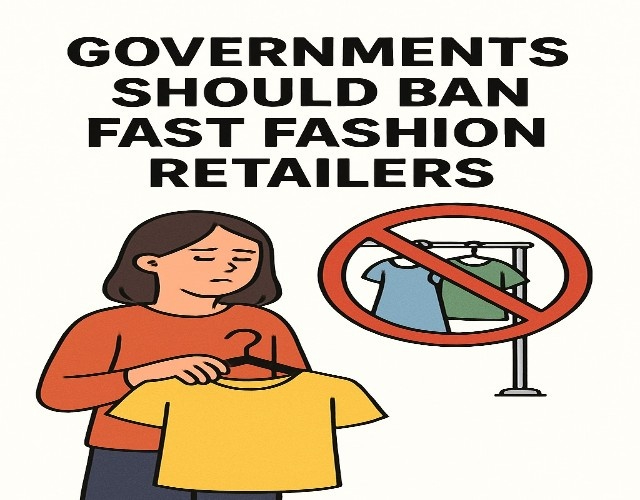
The True Cost of $5 T-Shirts
A new shirt for $5. Jeans for $15. Trends that change every two weeks, with prices so low you can buy entire wardrobes on a student budget. Fast fashion seems like a win, until you see what it's really costing us. Countries should ban fast fashion retailers because they exploit workers, devastate the environment, and promote unsustainable consumption that's destroying the planet.
The human cost is staggering. Fast fashion relies on garment workers in Bangladesh, Cambodia, and Vietnam earning $3 per day while working 14 hour shifts in dangerous conditions. The 2013 Rana Plaza collapse killed 1,134 garment workers because building owners ignored safety violations to meet production deadlines for brands like Primark and Benetton. When companies can sell shirts for $5 and still profit, someone in the supply chain is being exploited, and it's always the most vulnerable workers.
Environmental destruction happens at every stage. Fashion is now the second-largest polluter globally, producing 10% of all carbon emissions and 20% of industrial water pollution. A single cotton t-shirt requires 2,700 liters of water to produce, enough drinking water for one person for 2.5 years. Then these clothes are worn an average of 7 times before disposal. Americans alone throw away 85 pounds of textiles per person annually. This isn't fashion, it's planned obsolescence dressed up as affordability.
The consumption cycle is deliberately designed to be unsustainable. Fast fashion giants like Shein release 6,000 new styles weekly, training consumers to view clothes as disposable. Microtrends last weeks instead of seasons. Quality is engineered to fail after minimal washes. The goal isn't to clothe people, it's to create perpetual dissatisfaction so consumers keep buying. This psychological manipulation should be regulated like we regulate predatory marketing to children.
Banning fast fashion doesn't mean banning affordable clothing. It means requiring companies to pay living wages, use sustainable materials, and produce quality garments that last. Countries like France are already implementing "repairability scores" for products. The EU is considering bans on destroying unsold inventory. These regulations work, H&M's sustainability line grew 20% after transparency requirements forced better practices.
Critics argue that bans eliminate affordable options for low-income shoppers. But fast fashion's "affordability" is an illusion built on hidden costs: environmental cleanup, healthcare for exploited workers, and landfill management. Society pays these costs through taxes and degraded living conditions. Investing in durable clothing costs less long term than constantly replacing garbage quality items.
The fast fashion era must end. We can't buy our way to fulfillment on the backs of exploited workers and a dying planet. Ban the business model that treats both people and Earth as disposable.
What Makes This Example Work
|
Get Hours Back. Get a Better Essay
Our writers create custom persuasive essays of the same quality, your specific argument.
- Research, writing, and formatting, all done for you
- Plagiarism-free guarantee on every paper
- 24/7 support and direct writer communication
- On-time delivery
Any topic. Any deadline. Same excellence.
Order NowAdvance Persuasive Essay Example: Universal Basic Income
Topic: The government should provide a universal basic income
A complete 500 word essay on economic policy and technological change.
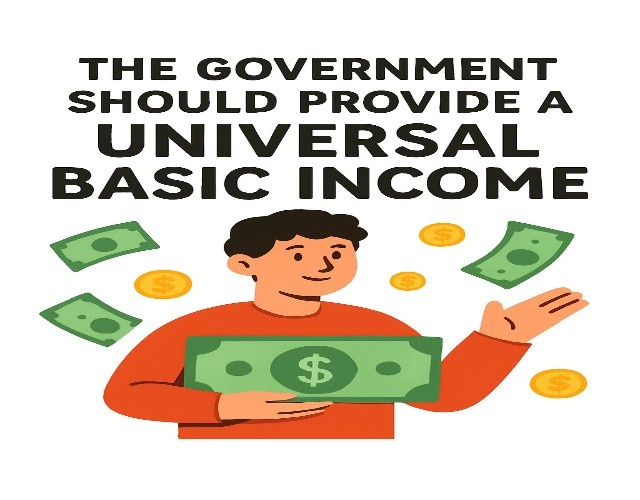
Automation Is Coming. UBI Is the Answer.
Self-checkout replaced cashiers. ChatGPT replaced content writers. Self-driving trucks will replace 3.5 million drivers. We're witnessing the largest job displacement in human history, yet we're pretending our 1930s-era social safety net can handle it. Universal Basic Income, giving every citizen a guaranteed monthly payment, isn't radical idealism. It's practical preparation for an automated economy where traditional employment can't sustain society.
The automation wave is accelerating faster than job creation. Oxford Economics projects that 20 million manufacturing jobs worldwide will be automated by 2030. McKinsey estimates 73 million U.S. jobs face high automation risk. These aren't just factory jobs, radiologists, paralegals, accountants, and journalists are already being replaced by AI. Retraining helps some workers, but you can't retrain 73 million people faster than technology eliminates their roles. UBI provides stability during this transition.
Pilot programs prove UBI works. Kenya's GiveDirectly program gave 20,000 people $22 monthly for 12 years. Results: entrepreneurship increased 34%, domestic violence decreased 20%, and recipients invested in education and small businesses rather than wasting money. Stockton, California's $500 monthly pilot showed recipients were 2x more likely to find full-time employment compared to control groups, financial stability enabled job searching instead of survival hustling. The stereotype that free money creates laziness is empirically false.
UBI costs less than our current broken system. Americans spend $1 trillion annually on welfare programs with 80+ different bureaucracies, each with eligibility requirements, application processes, and administrative costs. UBI eliminates this bureaucratic waste. A $1,000 monthly UBI for all adult Americans costs $3 trillion annually, but cut existing welfare programs ($1T), tax the wealthy appropriately (wealth tax could generate $1T), and add a VAT on automated companies profiting from job elimination ($500B). The math works when political will exists.
Economic growth requires consumer spending. When millions lose jobs to automation, they lose purchasing power. Without consumers, businesses fail, automation becomes self-defeating. UBI maintains consumer spending by ensuring everyone has basic income to buy goods and services. This isn't socialism; it's capitalism requiring a new foundation when the old model (exchange labor for wages) breaks under technological disruption.
Critics fear inflation and laziness. But inflation fears assume UBI increases money supply, it doesn't. It redistributes existing wealth. As for laziness, every pilot program shows the opposite: financial security enables productivity. People start businesses, pursue education, care for family, and volunteer. Work has meaning beyond survival, but survival anxiety prevents meaningful work.
Automation is inevitable. Mass unemployment doesn't have to be. UBI isn't about giving handouts, it's about redesigning the economy for a future where machines do most work. We can either prepare now or face social collapse later.
What Makes This Example Work
|
Remember! When reviewing examples, pay attention to how each one uses a persuasive essay outline to keep the argument persuasive and coherent.
Short Persuasive Essay Example (500 Words)
Need a shorter model? Here's a complete 500 word essay.
Length: 500 words
Structure: Intro + 3 body paragraphs + conclusion
Ban Single Use Plastics Now
Plastic water bottles litter our oceans, plastic bags choke wildlife, and microplastics contaminate our drinking water. The time for voluntary reduction has passed. Governments should ban single-use plastics because they're environmentally catastrophic, economically wasteful, and easily replaceable.
The environmental case is overwhelming. Eight million tons of plastic enter oceans annually, creating garbage patches larger than Texas. Marine life mistakes plastic for food, sea turtles eat plastic bags thinking they're jellyfish, seabirds feed plastic fragments to chicks, and fish ingest microplastics that end up in the human food chain. A 2023 study found microplastics in 83% of tap water samples worldwide. We're literally consuming our own trash.
Economically, single-use plastics are terrible investments. Americans use 500 million plastic straws daily, each used for 20 minutes, then exists for 200 years. Cities spend $3 billion annually cleaning plastic litter from streets and waterways. Meanwhile, reusable alternatives exist: cloth bags, metal straws, refillable bottles. The infrastructure already exists; we simply need policy to push adoption.
Countries that banned single-use plastics haven't collapsed. Rwanda banned plastic bags in 2008, their streets are now among the cleanest in Africa. The EU banned several single use plastic items in 2021, member states adapted within months. California's plastic bag ban reduced bag consumption by 85% in two years. Bans work when implemented broadly.
Critics worry about job losses in plastics manufacturing. But the reusable products industry creates more jobs, products that need durability, design, and quality control versus cheap disposable items stamped out by machines. As we transition away from fossil fuels anyway, plastic manufacturing must evolve. Better to plan that transition than cling to an unsustainable industry.
Single use plastics are a 20th century solution creating 21st century problems. We have better alternatives. We have proof that bans work. We have no time to waste. Ban single-use plastics.
Persuasive Essay Introduction Examples
Struggling with your opening? Here are 3 strong intros with different hook styles.
Example 1: Hook with Surprising Statistic
Did you know Americans waste 40% of the food they buy, $165 billion worth annually, while 1 in 8 Americans struggles with food insecurity? This absurd contradiction reveals a broken food distribution system that mandatory food waste composting could fix. Cities should require composting programs because they reduce landfill waste, lower greenhouse emissions, and can redistribute food to those in need.
| Why this works: Shocking stat + contradiction = immediate interest. Thesis includes three clear reasons. |
Example 2: Hook with Provocative Question
What if every click, scroll, and pause you made online was being recorded, analyzed, and sold to the highest bidder without your explicit consent? That's not a hypothetical; it's happening right now. Congress must pass comprehensive data privacy legislation because current regulations are inadequate, companies have repeatedly violated trust, and citizens deserve control over their personal information.
| Why this works: "What if" draws the reader in, then reveals its reality. Creates urgency. |
Example 3: Hook with Scenario/Story
Meet Sarah: straight-A student, varsity athlete, mentally exhausted. She survives on 5 hours of sleep because homework takes 4 to 5 hours nightly on top of sports, clubs, and college prep. She's not unique, she's typical. American high schools need to cap homework at one hour per night because excessive homework damages student wellbeing, widens achievement gaps, and doesn't actually improve learning outcomes.
| Why this works: A specific person makes an abstract problem concrete. The reader sympathizes immediately. |
Key Takeaway: Every intro needs a hook, context, and a thesis. The hook format can vary, but the structure stays consistent.
Analysis Paragraph Example (Body Paragraph)
Body paragraphs are where persuasion happens. Here's a strong example with each part labeled.
[CLAIM] Reducing meat consumption significantly lowers individual carbon footprints.
[EVIDENCE] According to Oxford University's 2024 food systems study, the average American carnivore's diet generates 3.3 tons of CO? annually from food production alone, while a vegetarian diet generates only 1.7 tons, nearly 50% less.
[EXPLANATION] This dramatic difference stems from the resources required for meat production: cattle need 20 pounds of grain to produce one pound of beef, requiring massive land use, water consumption, and fossil fuel inputs. When you choose a plant based meal, you're not just avoiding meat, you're avoiding the entire resource intensive supply chain behind it.
[COUNTERARGUMENT + REFUTATION] Some argue individual dietary changes are meaningless compared to industrial emissions. But food systems account for 26% of global emissions, larger than all transportation combined. Individual choices, multiplied across millions of people, drive market shifts that force industry change.
[LINK] Therefore, personal dietary decisions directly impact climate outcomes at scale.
Stuck choosing a stance or shaping your argument? A reliable essay writing service can help you refine your thesis, organize evidence, and tailor a persuasive essay that actually convinces readers.
Persuasive Essay Examples Free Downloadable Resources
5 Paragraph Persuasive Essay Example
Persuasive Essay Example about Covid 19
Persuasive Essay Example On Animals PDF
Persuasive Essay Examples for High School
Persuasive Essay Examples for Middle School
Persuasive Essay Examples College Level
Higher English Persuasive Essay Examples
Better Essays. Better Grades. Less Stress.
Our professional writers have helped thousands of students succeed, you're next.
- 100% plagiarism-free, original work
- Expert writers across 50+ subjects
- Fast delivery, even last-minute orders
- Satisfaction guaranteed
Trusted. Confidential. 100% human-written.
Order NowBottom Line
The best way to write a great persuasive essay is to follow a persuasive essay guide. Use these examples as models, steal the structure, adapt the techniques, and make the argument your own. And if you need backup, you know where to find us.