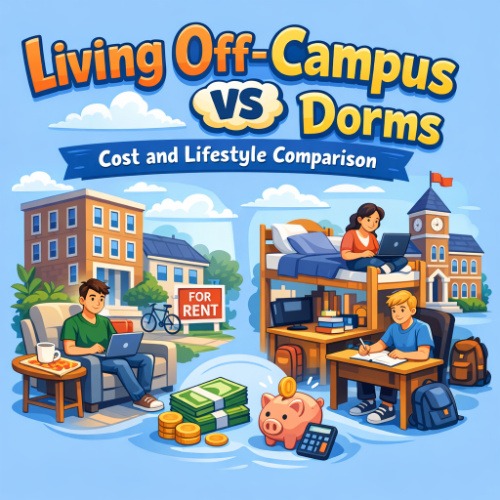
What Are the Real Costs of Living Off-Campus vs Dorms?
Real costs for off-campus housing average $400-800 monthly rent per person in shared apartments plus $100-200 utilities, $50-80 internet, $200-400 groceries, $50-150 transportation, and $500-1,500 first-year furniture totaling $9,600-19,800 annually. Dorms cost $8,000-15,000 annually (varies dramatically by university and room type) including utilities, furniture, internet, and often mandatory meal plans ($3,000-5,500). Hidden off-campus costs include security deposits (1-2 months rent), application fees, renter's insurance, parking permits, and summer lease obligations when not using space.
Detailed Cost Breakdown
On-campus housing annual costs:
Room and board:
- Traditional double room: $8,000-12,000
- Suite-style housing: $10,000-14,000
- Single room premium: Add $2,000-4,000
- Apartment-style dorm: $12,000-15,000
Mandatory meal plan:
- Included in many room/board packages: $3,000-5,500
- Declining balance or smaller plans if available: $2,000-3,500
- Often required first two years
Additional dorm costs:
- Parking permit (if bringing car): $300-1,000
- Dorm room supplies: $200-500
- Laundry: $100-200 annually
- Room damage charges: Variable
Total annual dorm cost: $8,000-16,500 (varies widely by institution and room type) |
Off-campus housing annual costs:
Rent (shared apartment/house):
- 2-bedroom split between 2 people: $400-900 per person monthly
- 3-bedroom split between 3 people: $350-700 per person monthly
- 4-bedroom split between 4 people: $300-600 per person monthly
- Annual rent per person: $3,600-10,800
Utilities (monthly per person):
- Electric: $30-60
- Gas/heat: $20-50
- Water/sewer/trash: $20-40
- Internet: $15-25 (split among roommates)
- Total utilities: $85-175 monthly = $1,020-2,100 annually
Food costs:
- Groceries: $200-400 monthly per person
- Eating out occasionally: $50-150 monthly
- Total food: $250-550 monthly = $3,000-6,600 annually
Transportation:
- Gas if commuting: $50-100 monthly
- Car insurance: $100-200 monthly
- Parking permit: $200-800 annually
- Bus pass: $20-50 monthly
- Total transportation: $70-300 monthly = $840-3,600 annually
Setup and ongoing costs:
- Security deposit: $400-800 (returned at lease end if no damages)
- Furniture and household items: $500-1,500 first year
- Renter's insurance: $150-300 annually
- Application and administrative fees: $50-150
Total annual off-campus cost: $9,600-25,000 (varies dramatically by location, lifestyle, roommates) |
Cost Comparison Table
| Expense Category | Dorms (Annual) | Off-Campus (Annual) | Difference |
|---|---|---|---|
| Housing | $8,000-12,000 | $3,600-10,800 | Variable |
| Utilities | Included | $1,020-2,100 | +$1,020-2,100 |
| Food | $3,000-5,500 (meal plan) | $3,000-6,600 (groceries) | Variable |
| Internet | Included | $180-300 (split) | +$180-300 |
| Furniture | Included | $500-1,500 (first year) | +$500-1,500 |
| Transportation | $0-1,000 (if no car) | $840-3,600 | +$840-3,600 |
| Total Range | $8,000-16,500 | $9,600-25,000 | Variable |
Key insight: Off-campus is cheaper ONLY if sharing with roommates, cooking most meals, living close to campus minimizing transportation, and finding affordable housing. Single apartments or expensive areas often cost more than dorms.
What Are the Lifestyle Differences Between Off-Campus and Dorms?
Lifestyle differences include off-campus offering cooking flexibility, personal space, quiet study environments, and independence from dorm regulations versus dorms providing built-in social community (friends literally next door), convenient campus location (5-10 minute walk to classes), included amenities (furniture, gym, study rooms), mandatory social exposure leading to friendships, and structured environment with Resident Advisors and programming creating automatic involvement opportunities.
Daily Life: Off-Campus
Typical off-campus daily experience:
Morning:
- Wake up, prepare breakfast (cooking or quick meal)
- Get ready for day
- Commute to campus (10-45 minutes by car, bus, bike)
- Find parking or lock bike
Between classes:
- May return home if long gaps (especially if close to campus)
- More likely to bring lunch from home
- Study at library, coffee shop, or apartment
- Less spontaneous socializing with floor mates
Evening:
- Commute home after classes or evening activities
- Prepare dinner (cooking, meal prep, or takeout)
- Study at home (quiet, private space)
- Socialize requires intentional planning and transportation
- May feel disconnected from campus happenings
Weekend:
- More likely to spend time off-campus
- Groceries, errands, household chores
- Hosting friends at apartment (more space, freedom)
- Must arrange transportation for campus events
Advantages:
- Personal space and privacy
- Quiet environment for studying
- Cooking healthy meals (control over diet)
- No mandatory social interaction
- Guest flexibility (significant others, friends)
- Pet ownership possible (if lease allows)
- Living with chosen friends
- Learning life skills (budgeting, cooking, cleaning)
Challenges:
- Isolation from campus community
- Missing spontaneous events or opportunities
- Time and cost of commuting
- Responsibility for utilities, maintenance, roommate conflicts
- Grocery shopping and meal planning
- Less academic support infrastructure
- Furniture shopping and setup
Daily Life: Dorms
Typical dorm daily experience:
Morning:
- Wake up, 5-10 minute walk to class
- Quick dining hall breakfast or grab-and-go
- Run back to room between classes easily
- See friends constantly in hallways
Between classes:
- Return to room for break or nap
- Study in dorm lounge with floor mates
- Dining hall for lunch with friends
- Spontaneous coffee or library runs with neighbors
Evening:
- Attend campus events (short walk home)
- Dining hall dinner with floor community
- Study in room or library (2-minute walk)
- Spontaneous social hangouts on floor
- Floor activities, programs, or casual gathering
Weekend:
- Campus events easily accessible
- Dining hall meals all weekend (no cooking)
- Friends available for spontaneous plans
- Residential programming and activities
Advantages:
- Built-in social community and friendships
- Convenient campus location (no commute)
- All-inclusive pricing (fewer surprise expenses)
- No furniture, utilities, or household management
- Academic support (tutors, study halls, RAs)
- Campus involvement easier
- Meal plan convenience (no cooking, shopping, planning)
- Higher sense of belonging and connection
Challenges:
- Limited privacy and personal space
- Noise from neighbors affecting sleep/study
- Shared bathrooms (traditional dorms)
- Mandatory meal plans (less food flexibility)
- Guest restrictions and quiet hours
- Less independence and autonomy
- Smaller living space
- Summer housing typically unavailable
Social and Academic Impact
Research findings:
- First-year dorm residents: 0.3-0.5 higher average GPA
- Dorm residents: 12-15% higher retention rate
- 73% of dorm residents report feeling strong campus belonging
- 45% of off-campus students report feeling strong campus belonging
- Off-campus students: 2.4x more likely to commute home weekends
- Dorm residents: 84% participate in at least one campus organization
- Off-campus residents: 56% participate in campus organizations
Why dorms support academic success:
- Proximity reduces class absences (5-minute walk vs. 20-minute drive)
- Peer accountability (everyone studying during finals)
- Easier to attend study groups, office hours, tutoring
- Academic support programs in residence halls
- Less time spent on life logistics (commuting, cooking, errands)
Why off-campus students sometimes struggle:
- Commute time reduces available study hours
- Easier to skip class (already home, bad weather, tired)
- Isolation from peer academic motivation
- Household responsibilities compete with studying
- Less awareness of campus resources and opportunities
However: Junior and senior year students often thrive off-campus after establishing campus connections, developing time management skills, and having focused academic/career goals reducing need for constant campus presence.
When Does Each Option Make the Most Sense?
Living in dorms makes most sense for first-year students adjusting to college and building community (12-15% higher retention rates), students at schools requiring freshman/sophomore on-campus housing, those without transportation or driver's license, students valuing convenience over independence, and those whose all-inclusive dorm cost is competitive with off-campus total costs. Off-campus makes sense for junior/senior students with established campus connections, those with reliable transportation, students with dietary restrictions requiring cooking, couples or groups wanting to live together, and when shared apartments clearly save $2,000-6,000 annually after calculating all expenses.
Freshman Year: Strong Case for Dorms
Why first-years benefit from dorms:
- Social integration crucial first year
- Built-in community eases transition
- Convenient campus location during adjustment period
- Academic support and resources readily accessible
- No lease obligations during uncertain first year
- Higher retention and graduation rates for dorm residents
- Learning college before adding life management
Statistics supporting freshman dorms:
- 12-15% higher retention rate for first-year dorm residents
- 0.3-0.5 higher average GPA
- 84% participate in organizations vs. 56% off-campus
- 73% strong belonging vs. 45% off-campus
Exceptions (when off-campus makes sense freshman year):
- Living with family (local students)
- Mature students with life experience
- Financial hardship making dorms unaffordable
- Extraordinary circumstances requiring off-campus
Sophomore Year: Transition Year
Consider both options:
- Some students ready for independence
- Others benefit from one more dorm year
- Many universities require sophomores on-campus
- Greek housing becomes option (if involved)
Questions to ask yourself:
- Have you built solid friend group? (Important for off-campus roommates)
- Do you have transportation? (Essential for off-campus)
- Can you cook and manage household? (Life skills needed)
- Is cost savings significant after calculations?
- Do you value independence over convenience?
Junior/Senior Year: Strong Case for Off-Campus
Why upperclassmen benefit from off-campus:
- Established campus connections (less need for forced proximity)
- Developed time management and responsibility
- Often have transportation
- Value privacy and independence
- May have significant others wanting to visit freely
- Learning life skills before post-graduation
- Cost savings with chosen roommates
Considerations:
- Maintain campus involvement intentionally
- Budget realistically including all expenses
- Choose roommates carefully (money and friendship)
- Live close to campus if possible (easier engagement)
- Understand lease obligations (summer, breaking lease)
Financial Decision Framework
Choose dorms if:
- Off-campus cost would exceed dorm cost
- Don't have reliable transportation
- Prefer convenience over cost savings
- Want built-in social community
- Concerned about managing utilities, cooking, household
- Attending first or second year
Choose off-campus if:
- Clear cost savings of $2,000+ annually
- Have reliable transportation
- Found trustworthy roommates with aligned lifestyles
- Value independence, privacy, cooking flexibility
- Attending junior or senior year
- Have life skills managing household
Run the numbers: Create spreadsheet with ALL costs (rent, utilities, food, transportation, furniture, deposits) for both options. The "cheaper" choice may surprise you.
How Do You Find and Evaluate Off-Campus Housing?
Find off-campus housing by starting search 3-6 months before move-in date, using university housing boards, local Facebook groups, Zillow, Apartments.com, and Craigslist (carefully avoiding scams), visiting properties in person never signing sight unseen, inspecting for maintenance issues, pest problems, safety concerns, and neighborhood quality, reading lease thoroughly understanding responsibilities, pet policies, subletting rules, and early termination penalties, and verifying landlord legitimacy through reviews, business licenses, and current tenant references.
Housing Search Timeline
6 months before (January for August move-in):
- Begin researching neighborhoods near campus
- Determine budget and must-have features
- Find potential roommates with compatible lifestyles
- Save for security deposit and first month rent
3-4 months before (March-April):
- Actively search listings
- Schedule property viewings
- Compare options using standardized criteria
- Apply to top 2-3 options
2 months before (May-June):
- Sign lease (read thoroughly before signing)
- Pay security deposit and first month rent
- Arrange utilities setup (electric, gas, internet)
- Purchase renter's insurance
1 month before (July):
- Buy furniture and household items
- Coordinate move-in with roommates
- Update address with university, bank, employers
- Plan moving logistics
Property Inspection Checklist
Safety and security:
- Exterior lighting (well-lit at night?)
- Working locks on all doors and windows
- Peephole or window in front door
- Smoke detectors and carbon monoxide detectors
- Fire extinguisher
- Secure mailbox
- Safe neighborhood (walk around day and night)
Property condition:
- No signs of pests (droppings, holes, odors)
- No water damage, mold, or mildew
- Working appliances (fridge, stove, dishwasher, washer/dryer)
- Water pressure and hot water functioning
- Heat and air conditioning working
- No major structural issues
- Fresh paint and clean condition
Practical considerations:
- Adequate electrical outlets
- Sufficient storage and closet space
- Cell phone reception
- Internet availability and speed
- Parking availability (on-street, lot, garage)
- Distance to campus and bus routes
- Noise level (traffic, neighbors, train)
- Natural light and ventilation
Red flags:
- Landlord reluctant to allow inspection
- Strong odors (mold, pets, smoke)
- Obvious deferred maintenance
- Evasive answers about past tenant issues
- Pressure to sign immediately without thinking
- Rental price significantly below market rate
Lease Considerations
Critical lease clauses to understand:
Financial terms:
- Monthly rent amount and due date
- Security deposit amount (when returned?)
- Late payment penalties and grace period
- Who pays utilities (landlord or tenant?)
- Pet deposits or fees (if applicable)
- Parking fees
Length and termination:
- Lease start and end dates
- Automatic renewal provisions
- Early termination penalties
- Subletting and assignment policies
- What happens if you break lease?
- Summer obligations (do you pay for unused months?)
Responsibilities:
- Maintenance and repair responsibilities (yours vs. landlord's)
- Snow removal, lawn care, trash disposal
- Cleaning expectations at move-out
- Guest and occupancy limits
- Noise and quiet hour policies
Important protections:
- Entry notice requirements (24-48 hours typically)
- Conditions for deposit deductions
- Dispute resolution procedures
- Local tenant rights and protections
Before signing:
- Read entire lease carefully (every page)
- Ask questions about confusing clauses
- Negotiate problematic terms if possible
- Get everything in writing (verbal promises don't count)
- Take photos/video of property condition at move-in
- Keep copies of all documents
Avoiding Housing Scams
Common scam warning signs:
- Landlord claims to be out of country/state
- Requests payment before viewing property
- Asks for payment via wire transfer, gift cards, cryptocurrency
- Rental price far below market rate
- Uses only generic email (not property-specific)
- Pressures immediate decision without proper process
- No written lease or professional documentation
Protection strategies:
- Only view properties in person
- Verify landlord identity through business license or property records
- Pay by check or secure payment method (never wire transfer)
- Meet landlord at property (not remote location)
- Research landlord reviews and reputation
- Report suspicious listings to platform and university
Key Takeaways
Make informed housing decision through these evidence-based insights:
Calculate comprehensive costs beyond rent alone as off-campus totals $9,600-25,000 annually (rent, utilities, food, transportation, furniture) versus dorms at $8,000-16,500, with off-campus only cheaper when sharing apartments, cooking meals, and living close to campus. Hidden off-campus costs include security deposits, furniture, renter's insurance, summer lease obligations, and variable food costs versus all-inclusive dorm pricing.
First-year students benefit significantly from dorms with 12-15% higher retention rates, 0.3-0.5 higher GPAs, and 73% reporting strong campus belonging versus 45% off-campus, due to convenient location reducing class absences, built-in social community, and easier campus involvement (84% participate in organizations versus 56% off-campus).
Lifestyle differences dramatically affect daily experience as dorms offer convenience (5-10 minute walk to classes), automatic social community, included amenities, and academic support versus off-campus providing independence, privacy, cooking flexibility, and personal space but requiring commute time, household management, and intentional effort maintaining campus connections.
Junior and senior years favor off-campus living for students with established friendships, reliable transportation, and developed time management skills wanting independence and potential cost savings ($2,000-6,000 annually in shared apartments). However, maintain campus involvement intentionally as 2.4x more off-campus students commute home weekends risking isolation.
Research housing thoroughly starting 3-6 months early inspecting properties in person for safety, maintenance issues, and neighborhood quality, reading leases completely understanding financial terms and responsibilities, verifying landlord legitimacy, and avoiding scams (never pay before viewing, no wire transfers, meet landlord at property).
Housing decisions impact both finances and college experience quality. First-year students prioritize community and convenience through dorms, while upperclassmen benefit from independence and potential savings through carefully selected off-campus housing with reliable roommates and realistic budgeting including all expenses.
When managing housing search, lease negotiations, and financial comparisons alongside demanding academic schedules during selection periods, consider using a trusted essay writing service for routine coursework, allowing time and mental energy for thoroughly researching options, visiting properties, calculating true costs, and making informed decisions determining living situation and financial wellbeing for entire academic year.