What Are the Best Time Efficient Workouts for Students?
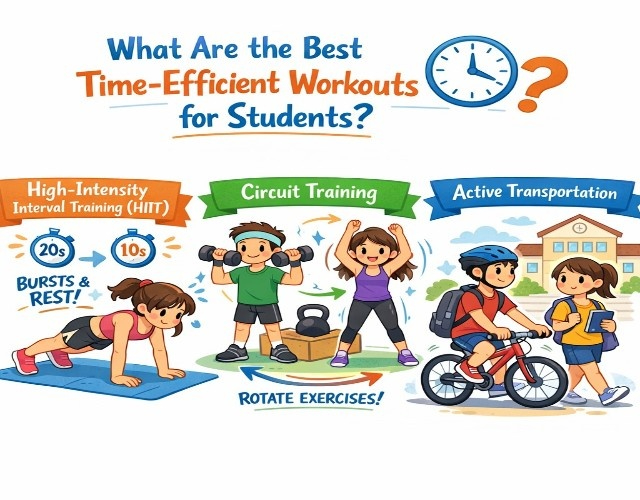
The best time efficient workouts include High-Intensity Interval Training (HIIT) providing maximum benefits in 15 to 20 minutes through alternating intense bursts with recovery periods, circuit training combining strength and cardio in 20 to 30 minutes, bodyweight exercises done anywhere without gym access, walking or biking to class accumulating activity throughout day, and fitness class sampling at campus recreation centers offering structured 30 to 45 minute sessions with social motivation and professional instruction.
1. High Intensity Interval Training (HIIT)
HIIT delivers cardiovascular benefits comparable to hour-long moderate exercise in just 15 to 20 minutes through intensity rather than duration.
Basic HIIT structure:
- 5 minute warm up (light jogging, jumping jacks, dynamic stretching)
- 20 to 30 seconds maximum effort (sprinting, burpees, mountain climbers)
- 10 to 30 seconds rest or low-intensity recovery
- Repeat 6 to 10 rounds
- 5 minute cool down (walking, static stretching)
HIIT exercises requiring no equipment:
- Burpees (full body cardio and strength)
- Mountain climbers (core and cardio)
- High knees (cardio and leg strengthening)
- Jump squats (leg power and cardio)
- Sprint intervals (pure cardio conditioning)
- Jumping jacks (full body cardio)
HIIT benefits for students:
- Complete workout in 15 to 20 minutes
- Boosts metabolism for 24 to 48 hours after a workout
- Improves cardiovascular fitness rapidly
- Can be done in a dorm room or outdoors
- Minimal equipment needed
- Highly effective for fat loss and fitness
Sample 20 minute HIIT workout:
Warm up (5 minutes)
Work intervals (10 minutes)
Cool-down (5 minutes)
|
Research shows students completing three 20 minute HIIT sessions weekly experience identical cardiovascular improvements to those doing five 45 minute moderate cardio sessions, 2.5x more time efficient for equivalent benefits.
2. Circuit Training
Circuit training combines strength and cardio exercises with minimal rest, maximizing calorie burn and muscle development in 20 to 30 minutes.
Circuit training structure:
- 6 to 8 exercises targeting different muscle groups
- 30 to 45 seconds per exercise
- 15 to 30 seconds transition between exercises
- Complete 2 to 4 full circuits
- 1 to 2 minute rest between circuits
Bodyweight circuit example (no equipment needed):
Circuit (repeat 3 times)
|
Benefits for busy students:
- Full body workout in under 30 minutes
- Builds strength and endurance simultaneously
- Adaptable to any fitness level
- Can be done in a dorm room
- Maintains an elevated heart rate throughout
3. Active Transportation
Walking or biking to class accumulates significant activity without dedicated workout time.
Active transportation benefits:
- 10-minute walk to class = 1,000-1,200 steps
- Four classes daily = 30 to 40 minutes walking
- Meets minimum daily activity recommendations
- No additional time required (already commuting)
- Improves focus and retention for the upcoming class
- Saves parking costs and hassle
Maximizing active transport:
- Take stairs instead of elevators (burns 5x more calories)
- Walk the long route between buildings
- Stand and do calf raises while waiting for the bus
- Bike to campus if within 2 to 3 miles
- Park farther away if driving
- Walk during phone calls instead of sitting
Students who walk or bike to class average 45 minutes daily activity without any dedicated exercise time, meeting 90% of weekly activity recommendations through transportation alone.
How Can You Use Campus Recreation Centers Effectively?
Use campus recreation centers effectively by exploring facilities during low-traffic hours (early morning 6-8am or late evening 9-11pm avoiding 4 to 6pm rush), trying diverse group fitness classes included in student fees (yoga, spin, Zumba, kickboxing), utilizing personal training sessions often free or discounted for students, working out with friends creating accountability and social motivation, and using study breaks for quick 20 30 minute gym sessions refreshing focus rather than viewing exercise as time away from academics.
1. Campus Rec Center Resources
Typical free resources for students:
|
Cost savings: Commercial gym memberships average $40 to 60 monthly ($480 to 720 annually), while campus recreation is included in student fees you're already paying. Use these resources to maximize value from tuition investment.
2. Group Fitness Class Benefits
Group fitness classes provide structure, motivation, and social connection while ensuring proper form and comprehensive workouts.
Popular campus fitness classes:
| Yoga: Flexibility, stress reduction, mindfulness (perfect for anxious students) |
| Spin/Cycling: High-intensity cardio with motivating music |
| Zumba: Dance based cardio (fun, doesn't feel like exercise) |
| Kickboxing: Stress relief and full-body cardio |
| HIIT classes: Structured high intensity intervals |
| Strength training: Proper form instruction with weights |
| Pilates: Core strength and body awareness |
Why classes work for busy students:
- Fixed schedule creates accountability
- The social aspect makes exercise fun
- Instructor ensures proper form, preventing injury
- Structured workout (no planning required)
- 45 to 60 minutes, including warm up and cool down
- Try different activities finding what you enjoy
Overcoming class anxiety:
- Everyone started as a beginner (instructors accommodate all levels)
- Arrive early to introduce yourself and get placement help
- Bring a friend for moral support
- Try different classes to find your preference
- Most students are friendly and welcoming
Students who attend 2 to 3 group fitness classes weekly report 73% higher exercise consistency compared to solo gym goers who often skip workouts due to motivation challenges.
Strategic Workout Timing
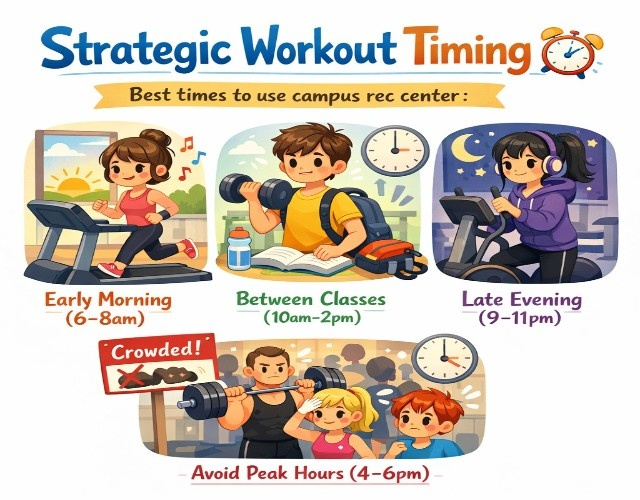
Best times to use the campus rec center:
Early morning (6 to 8am):
Between classes (10am to 2pm):
Late evening (9 to 11pm):
Avoid peak hours (4-6pm):
|
When managing demanding academic workload and fitness goals simultaneously, consider using a professional essay writing service for routine assignments during particularly busy weeks, allowing time for essential exercise, maintaining physical health, mental wellbeing, and academic performance rather than sacrificing fitness when coursework intensifies.
What Effective Workouts Can You Do in Your Dorm Room?
Effective dorm room workouts include bodyweight exercises requiring no equipment (push-ups, squats, planks, lunges, burpees), resistance band exercises providing strength training in minimal space, yoga or stretching routines using free YouTube videos, core workouts targeting abs and lower back, and quick cardio bursts (jumping jacks, high knees, mountain climbers) maintaining cardiovascular health without gym access.
1. No Equipment Dorm Workout Routine
20 Minute Full Body Dorm Workout:
Warmup (3 minutes):
Circuit 1: Lower Body (5 minutes):
Circuit 2: Upper Body (5 minutes):
Circuit 3: Core (5 minutes):
Cool down (2 minutes):
|
2. Minimal Equipment Options
Resistance bands ($10 to 20):
Yoga mat ($15 to 30):
Jump rope ($5 to 15):
Dumbbells (optional, $20 to 40):
|
3. Dorm Workout Considerations
Noise management:
Space limitations:
Motivation strategies:
|
Students completing 3 to 4 dorm room workouts weekly report identical fitness improvements to those attending gyms, demonstrating that equipment and location matter less than consistency and effort.
How Does Nutrition Support Fitness Goals?

Nutrition supports fitness goals by providing energy for workouts and daily activities, protein for muscle recovery and building (students need 0.7 to 1.0 grams per pound bodyweight), adequate hydration improving performance and recovery (64+ ounces water daily), balanced meals with carbohydrates, proteins, and fats, strategic timing eating 1 to 2 hours before exercise and protein within 60 minutes after, and avoiding excessive alcohol undermining recovery and performance while adding empty calories.
1. Student Nutrition Essentials
Pre workout nutrition (1 to 2 hours before):
Good pre workout options:
Post workout nutrition (within 60 minutes):
Good post workout options:
|
2. Dorm Friendly Nutrition Strategies
Healthy dorm room staples:
Dining hall strategies:
Hydration importance:
|
3. Balancing Social Life and Nutrition
Navigating college eating challenges:
80/20 approach:
|
Research shows that students meeting basic protein requirements (0.7 to 1.0g per pound bodyweight) and staying hydrated experience 34% better recovery, 28% improved workout performance, and 42% reduced muscle soreness compared to those neglecting nutrition despite identical exercise routines.
How Do You Stay Motivated to Exercise During Stressful Semesters?
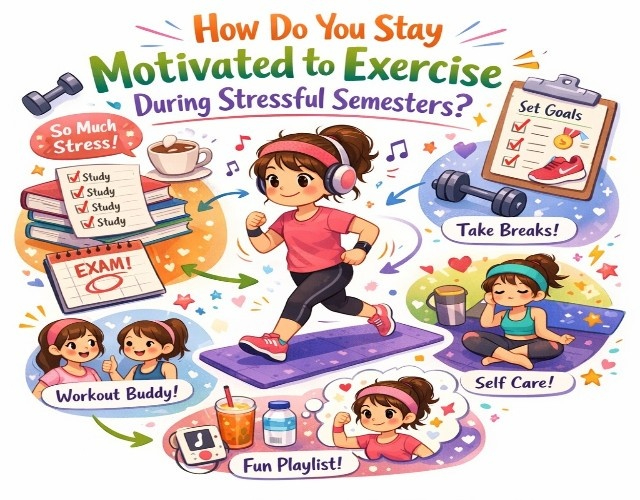
Stay motivated during stressful semesters by scheduling workouts like class commitments in calendar treating as non negotiable, exercising with friends creating social accountability and making fitness enjoyable, tracking progress celebrating small wins maintaining momentum, remembering exercise improves academic performance (23% higher GPAs for active students), choosing activities you genuinely enjoy rather than forcing disliked exercises, and being flexible adjusting intensity or duration during finals rather than skipping entirely.
1. Motivation and Consistency Strategies
Schedule fitness like academics:
Social accountability:
Track and celebrate progress:
Reframe exercise benefits:
Flexibility during high stress periods:
|
2. Overcoming Common Barriers
"I don't have time":
|
"I'm too tired":
|
"I don't like exercise":
|
"I'm not seeing results":
|
Students who exercise consistently during stressful semesters report 56% better stress management, 67% improved sleep quality, and 23% higher GPAs compared to sedentary peers, demonstrating exercise as an academic performance enhancer rather than a time waster competing with studying.
Key Takeaways
Maintain fitness as a busy college student through these evidence-based strategies:
Prioritize time efficient workouts using 15 to 20 minute HIIT or circuit training, providing 78% of the benefits of hour long sessions, accumulating activity through walking or biking to class, and scheduling exercise like class commitments, treating as a non-negotiable priority. Brief, consistent workouts outperform sporadic, lengthy sessions.
Utilize free campus recreation resources , maximizing value from student fees already paid, attending group fitness classes for structure and social motivation, and working out during low traffic hours (6 to 8am or 9 to 11pm), avoiding crowded 4 to 6pm peak. Students attending 2-3 weekly classes report 73% higher consistency than solo gym-goers.
Master dorm room workouts requiring no equipment using bodyweight exercises (push-ups, squats, planks, lunges), following YouTube workout videos for structure, and investing minimally in resistance bands ($10 to 20), providing progressive strength training in minimal space. Dorm workouts produce identical fitness improvements to gym workouts when consistent.
Support fitness through nutrition, consuming adequate protein (0.7 to 1.0g per pound bodyweight), staying hydrated (64+ ounces water daily), eating 1 to 2 hours before workouts and protein within 60 minutes after, and following an 80/20 approach (nutritious 80% of the time, flexible 20%), balancing health with social life without perfectionism.
Maintain consistency through motivation strategies exercising with friends creating accountability, tracking progress celebrating small wins, remembering exercise improves academic performance (23% higher GPAs), choosing enjoyable activities rather than forcing disliked exercises, and reducing intensity during stress rather than quitting entirely.
Exercise dramatically improves academic performance, stress management, sleep quality, and mental health, not luxuries competing with academics but essential components supporting academic success. The 23% GPA increase for active students demonstrates fitness enhances rather than detracts from educational outcomes.
When managing fitness goals alongside a demanding academic schedule, consider using a trusted essay writing service for routine coursework during particularly intense weeks, allowing time for essential exercise, maintaining physical health, mental wellbeing, stress management, and cognitive performance that directly support academic achievement and overall college success.