-19543.jpg)
Basic Descriptive Essay Outline Template
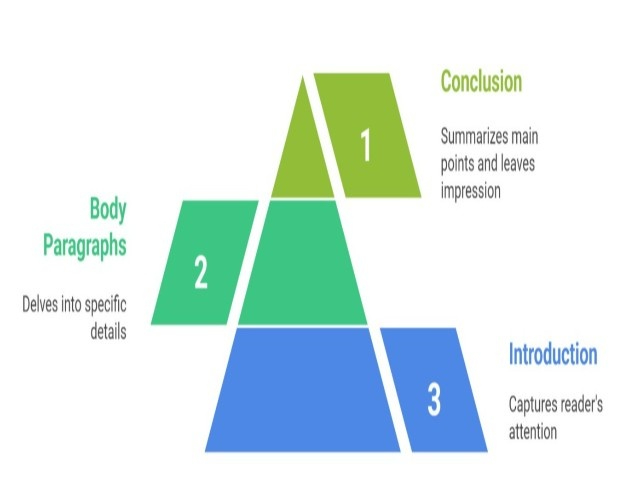
Copy this structure and fill in the brackets:
A. INTRODUCTION (10-15% of total length) B. BODY PARAGRAPH 1 (25-30%) C. BODY PARAGRAPH 2 (25-30%) D. BODY PARAGRAPH 3 (25-30%) E. CONCLUSION (10-15%)
[The overall feeling/mood your description creates].
SIGHT: [Visual observation with specific colors, shapes, lighting].
SOUND: [Auditory observation with volume, quality, source].
SMELL: [Olfactory observation with comparisons, intensity].
TOUCH: [Tactile observation with textures, temperature].
SIGHT: [Different visual angle or detail].
SOUND: [Additional auditory layer].
TASTE (if relevant): [Gustatory observation].
COMBINED SENSES: [How multiple senses work together].
FIGURATIVE LANGUAGE: [Simile, metaphor, or personification].
Connection: [Final reinforcement of theme].
Descriptive Essay Structure Breakdown by Section
Exact percentages for each section:
1. Introduction Format (10-15%)
Word count by essay length:
- 500 words: 50-75 words.
- 800 words: 80-120 words.
- 1,000 words: 100-150 words.
- 1,500 words: 150-225 words.
Required components:
- Hook with immediate sensory detail (1 sentence).
- Context establishing subject (1-2 sentences).
- Dominant impression/thesis (1-2 sentences).
Template:
| Hook: [Thunder rolled across the valley, shaking windows]. |
| Context: [Every summer, I return to the mountain cabin]. |
| Thesis: [The cabin represents solitude and renewal, where silence speaks louder than words]. |
2. Body Paragraphs Format (70-80% total)
Each body paragraph: 25-30% of the essay
Word count per paragraph:
- 500 words: 115-150 words each.
- 800 words: 185-240 words each.
- 1,000 words: 230-300 words each.
- 1,500 words: 345-450 words each.
Paragraph structure:
| Component | Description |
|---|---|
| Topic Sentence | Focus for this section |
| 3-5 Sensory Details | Engage multiple senses |
| Analysis | How details create a dominant impression |
| Transition | Connect to the next paragraph |
A well-planned description paper outline is the first step to writing an engaging and organized descriptive essay. Reviewing proven descriptive essay examples helps you see how successful writers structure paragraphs around specific topics.
3. Conclusion Format (10-15%)
Word count by essay length:
- 500 words: 50-75 words.
- 800 words: 80-120 words.
- 1,000 words: 100-150 words.
- 1,500 words: 150-225 words.
Required components:
- Reinforce dominant impression with fresh wording.
- Reflect on significance.
- End with a memorable sensory image.
Your outline becomes clearer when you pair well-chosen descriptive essay topics with real examples that demonstrate effective organization and focus.
NO TIME TO FINISH YOUR ESSAY?
Let our writers handle the full essay
- Written by academic specialists
- Custom sensory descriptions
- Proper structure execution
- Any deadline we meet
Vivid language that transports readers.
Order NowDescriptive Essay Format Variations by Subject Type
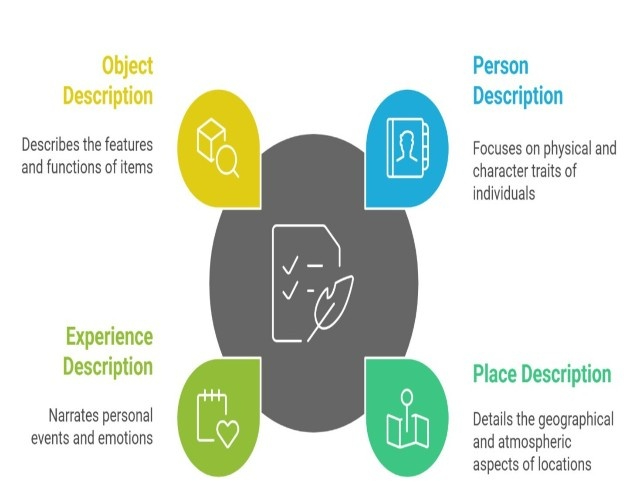
1. Person Description Template
1. INTRODUCTION
Dominant Impression: [Energetic and warm / Quiet and thoughtful]
2. PHYSICAL APPEARANCE (Body Paragraph 1)
- Overall impression: [Height, build, presence].
- Distinctive features: [Eyes, hands, hair].
- Clothing style: [What they typically wear].
- How they move: [Gestures, walk, posture]
3. CHARACTERISTIC BEHAVIORS (Body Paragraph 2)
- Vocal qualities: [Tone, volume, accent, laugh].
- Habitual actions: [What they always do].
- Interactions: [How they treat others].
- Small details: [Coffee order, pen clicking, etc.]
4. DEEPER OBSERVATIONS (Body Paragraph 3)
- Emotional reveals: [Moments showing personality].
- Sensory associations: [Smells, sounds connected to them].
- Impact on environment: [How space changes with them].
- Lasting impression: [What you remember most]
5. CONCLUSION
- Reflection on the significance of this person.
| Structure note: Organize outer to inner, appearance first, then behavior, then deeper character. |
2. Place Description Template
1. INTRODUCTION
Dominant Impression: [Peaceful sanctuary / Vibrant chaos]
2. OVERALL ATMOSPHERE (Body Paragraph 1)
- First impression: [What you notice arriving].
- Lighting quality: [Natural, harsh, dim, golden].
- Temperature: [Hot, cold, comfortable].
- General mood: [How space feels emotionally]
3. SPECIFIC DETAILS (Body Paragraph 2)
- Visual inventory: [Colors, shapes, objects].
- Sounds present: [Foreground and background].
- Smells identified: [Pleasant, unpleasant, neutral].
- Textures noted: [Floor, walls, furniture]
4. SPATIAL RELATIONSHIPS (Body Paragraph 3)
- Layout description: [How space is organized].
- Key focal points: [What draws attention].
- Hidden corners: [Less obvious details].
- Overall composition: [How elements work together].
5. CONCLUSION
Why this place matters or what it represents.
| Structure note: Organize spatially, general to specific, or move through physical space systematically. |
3. Experience Description Template
1. INTRODUCTION
Dominant Impression: [Exhilarating / Terrifying / Transformative]
2. ANTICIPATION/APPROACH (Body Paragraph 1)
- Before it begins: [Feelings, expectations].
- Initial moments: [First sensory impressions].
- Building tension: [What's about to happen].
- Immediate surroundings: [Where you are].
3. PEAK EXPERIENCE (Body Paragraph 2)
- Most intense moment: [Height of experience].
- Multiple senses: [What you see, hear, feel, taste, smell].
- Physical sensations: [Body's response].
- Emotional state: [How you feel through senses].
4. AFTERMATH/REFLECTION (Body Paragraph 3)
- Immediately after: [Lingering sensations].
- Changed perspective: [How you see things now].
- Lasting impressions: [What stays with you].
- Sensory memories: [Details you can't forget].
5. CONCLUSION
Significance of experience and its impact.
| Structure note: Organize chronologically while maintaining sensory focus at each stage. |
4. Object Description Template
1. INTRODUCTION
Dominant Impression: [Precious heirloom / Well-worn tool]
2. VISUAL DETAILS (Body Paragraph 1)
- Overall appearance: [Size, shape, color].
- Condition: [New, worn, damaged, polished].
- Design elements: [Patterns, decorations, markings].
- Materials: [What it's made from].
3. TACTILE & FUNCTIONAL (Body Paragraph 2)
- How it feels: [Texture, weight, temperature].
- How it's used: [Purpose and handling].
- Wear patterns: [Evidence of use over time].
- Sounds: [Ticking, creaking, rattling].
4. SIGNIFICANCE & ASSOCIATIONS (Body Paragraph 3)
- History: [Where it came from].
- Connected memories: [Experiences with object].
- Emotional resonance: [Why it matters].
- Sensory triggers: [Smells, sounds associated].
5. CONCLUSION
What object represents beyond physical form?
| Structure note: Organize by sense type, visual first, then tactile, then deeper meaning. |
Note: A well-structured outline for a descriptive essay is the key to writing a compelling and organized piece
Descriptive Essay Paragraph Structure (PEEL Method)
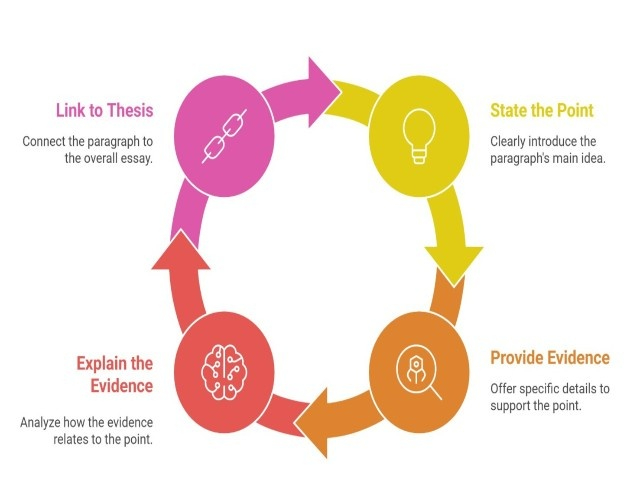
Use this format for every body paragraph:
| Element | Label | Description |
|---|---|---|
| P | Point (Topic Sentence) | States what this paragraph describes |
| E | Evidence (Sensory Details) | 3–5 specific observations engaging multiple senses |
| E | Explanation (Analysis) | Explains how the details create a dominant impression |
| L | Link (Connection) | Ties back to the thesis or transitions to the next paragraph |
Before drafting, compare your outline against professional descriptive essay examples to ensure your chosen topics support detailed sensory writing.
Remember! With a simple descriptive paragraph template, even beginners can write paragraphs full of sensory details and clear imagery.
Filled outline format (showing structure):
POINT: The kitchen's warmth came from more than the stove. EVIDENCE: EXPLANATION: These sensory details create a feeling of comfort and tradition, space designed for gathering and nurturing. LINK: This warmth extended beyond the kitchen into how grandmother made everyone feel welcome.
Note: This shows outline format, not a complete paragraph. For full written essays, see our descriptive essay examples.
Deadlines Don't Wait. Neither Should You.
Our professional writers deliver
- Original content, zero plagiarism
- Vivid sensory language
- Proper show vs. tell
- Perfect structure execution
Join thousands of satisfied students
Order NowSensory Details Checklist
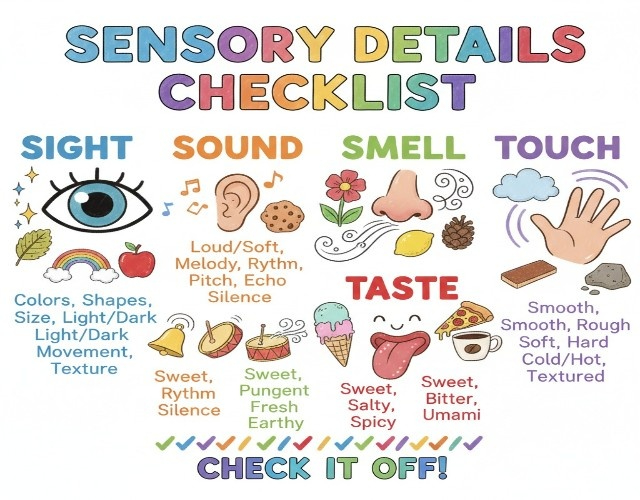
Use this while filling your outline:
1. Visual Details (SIGHT)
| Detail Category | What to Check / Include |
|---|---|
| Specific colors | Use precise, vivid color descriptions |
| Lighting quality | Describe the type and effect of light |
| Shapes and sizes | Include clear forms and measurements |
| Movement and action | Show motion within the scene |
| Visible textures | Describe how surfaces look |
2. Auditory Details (SOUND)
| Detail Category | What to Check / Include |
|---|---|
| Volume level | Indicate loudness or softness |
| Sound quality | Describe how the sound behaves |
| Source identified | Clearly state where the sound comes from |
| Multiple layers | Include foreground and background sounds |
| Rhythm patterns | Note repetition or sound flow |
3. Olfactory Details (SMELL)
| Detail Category | What to Check / Include |
|---|---|
| Familiar comparisons | Relate smells to known scents |
| Intensity | Describe the strength of the smell |
| Pleasant or unpleasant | Clarify emotional reaction |
| Multiple scents | Distinguish different smells |
| Emotional connection | Link scent to memory or feeling |
4. Tactile Details (TOUCH)
| Detail Category | What to Check / Include |
|---|---|
| Texture | Describe surface feel |
| Temperature | Indicate the level of heat or cold |
| Weight or pressure | Mention heaviness or force |
| Physical sensation | Explain bodily reaction |
| Material quality | Describe the structural feel |
5. Gustatory Details (TASTE) - if applicable
| Detail Category | What to Check / Include |
|---|---|
| Basic taste | Identify primary taste |
| Flavor combinations | Show layered flavors |
| Mouth texture | Describe the eating sensation |
| Aftertaste | Note lingering taste |
| Temperature | Mention warmth or coolness |
Descriptive Essay Outline Downloadable Resources
Blank Outline Template PDF
Copy-paste ready descriptive writing format.
Person Description Template PDF
Character-focused structure.
Place Description Template PDF
Location-focused format.
Experience Template PDF
Event-focused outline.
Object Template PDF
Item-focused structure.
Better Essays. Better Grades. Less Stress.
Our professional writers have helped thousands of students succeed, you're next
- 100% plagiarism-free, original work
- Expert writers across 50+ subjects
- Fast delivery, even last-minute orders
- Satisfaction guaranteed or money back
100% human-written. Zero AI. Unlimited revisions.
Order NowBottom Line
Copy the template, fill in your sensory details following the structure percentages, and you've got a solid outline. The format works for any descriptive subject; just plug in your observations. For complete writing guidance, see our descriptive essay guide that includes tips and expert strategies to craft vivid, engaging essays.

-19521.jpg)
-19514.jpg)
-19525.jpg)