How Do You Manage Your Commute Time Effectively?
Manage commute time effectively by using travel for productive activities like listening to recorded lectures or educational podcasts, reviewing flashcards or notes during public transit, planning daily schedule and to-do lists, practicing stress management through calming music or meditation apps, carpooling with other students sharing costs and creating accountability, and scheduling classes in blocks minimizing trips to campus (3-4 days weekly rather than daily) reducing total commute time by 40-50%.
Strategic Class Scheduling
Optimize your schedule:
- Cluster classes on fewer days (Tuesday/Thursday or Monday/Wednesday/Friday)
- Back-to-back classes minimizing gaps requiring campus loitering
- Consider 8am classes if traffic is lighter (30% shorter commute in the mornings)
- Balance early/late classes avoiding rush hour in both directions
- Schedule one "long day" to stay late for evening clubs or events
Example efficient schedules:
Option 1: Two long days
- Tuesday/Thursday: 9am-7pm (four classes plus club meetings)
- Monday/Wednesday/Friday: Study from home
- Benefits: Only commute twice weekly, engaged presence on campus
- Challenges: Long exhausting days, difficult to maintain focus
Option 2: Three moderate days
- Monday/Wednesday/Friday: 10am-4pm (three classes plus campus activities)
- Tuesday/Thursday: Study from home or work
- Benefits: Balanced energy, avoids worst traffic
- Challenges: Still commuting frequently
Option 3: Four shorter days
- Monday-Thursday: 11am-2pm (two classes daily)
- Friday: Free for work or study
- Benefits: Avoids morning rush, shorter campus days
- Challenges: More frequent commuting, less engagement opportunity
Research shows commuter students who cluster classes on 2-3 days weekly save 3-5 hours commute time while reporting 58% higher satisfaction and campus involvement compared to those attending daily for single classes.
Productive Commute Activities
For public transit commuters:
- Review lecture notes or readings
- Use flashcard apps for memorization
- Listen to course-related podcasts or recorded lectures
- Complete online discussion posts or assignments
- Read required textbook chapters on phone/tablet
- Plan weekly schedule and to-do lists
- Respond to emails from professors or group project members
For driving commuters:
- Listen to educational podcasts relevant to your major
- Practice language learning with audio programs
- Listen to recorded lectures (review, not first-time learning)
- Use commute for phone calls (hands-free) coordinating group projects
- Practice presentations or speeches aloud
- Decompress with calming music or meditation apps (especially going home)
Safety considerations:
- Never read, text, or do detailed work while driving
- Audio-only activities for drivers
- Save complex tasks for parked or public transit time
- Prioritize safe arrival over productivity
Carpooling and Alternative Transportation
Carpooling benefits:
- Share gas costs (save $50-150 monthly)
- Reduce parking permit needs (split cost)
- Create automatic accountability and social connection
- HOV lane access (faster commute in many areas)
- Built-in study partner or discussion companion
Finding carpool partners:
- Campus commuter services or ride-matching programs
- Department-specific social media groups
- Post on campus bulletin boards or online forums
- Ask professors to connect commuters from your area
- Join commuter student organizations
Alternative transportation:
- Campus shuttle programs from parking lots or nearby towns
- Public transit (bus, train, subway) allowing productive multitasking
- Biking if campus is within 5-10 miles (saves money, adds exercise)
- Splitting the week between driving and public transit
Students who carpool or use public transit report 45% lower commute stress and 34% more productive travel time compared to solo drivers, while saving $50-200 monthly on transportation costs.
When managing demanding commute times alongside heavy coursework loads, consider using a professional essay writing service for routine assignments during particularly exhausting weeks, allowing limited campus time and energy for class participation, meaningful social connections, and accessing essential campus resources rather than rushing home immediately to complete basic coursework.
What Should You Pack for Long Campus Days?
Pack for long campus days including nutritious snacks and lunch avoiding expensive campus food ($8-12 per meal adds up to $40-60 weekly), refillable water bottle staying hydrated throughout day, laptop charger and portable battery pack preventing technology failures, essential toiletries for freshening up before evening activities, comfortable backup shoes if walking extensively, weather-appropriate layers as buildings vary in temperature, study materials for gaps between classes, and gym clothes if using campus recreation facilities.
The Commuter Student Backpack
Essential daily items:
Food and hydration:
- Reusable water bottle (64+ ounces daily)
- Lunch from home (save $40-60 weekly vs. buying)
- Protein-rich snacks (nuts, protein bars, cheese, jerky)
- Fresh fruit (apples, bananas, oranges)
- Non-perishable backups (granola bars, trail mix)
- Small insulated lunch bag keeping food fresh
Technology:
- Laptop and charger (many students forget charger)
- Phone charger and portable battery pack
- Headphones for studying in noisy areas
- USB drive backup for important files
- Notebooks and writing utensils
Comfort and hygiene:
- Deodorant and hand sanitizer
- Toothbrush and toothpaste (for long days)
- Facial wipes or dry shampoo (freshen up before evening events)
- Pain relievers (headache, cramps)
- Tissues and hand lotion
- Spare contact lenses or glasses
Practical items:
- Umbrella or rain jacket (check weather daily)
- Comfortable backup shoes or flip-flops
- Light sweater or jacket (air conditioning varies)
- Gym clothes if using campus rec center
- Reusable bags for library books or shopping
Study materials:
- Textbooks for that day's classes
- Assignment sheets and syllabi
- Flashcards for memorization
- Planner or calendar
- Highlighters and sticky notes
Campus Locker or Storage Solutions
If available, secure campus storage:
- Rent locker in student union or recreation center ($25-75 per semester)
- Share locker with commuter friend splitting costs
- Store bulky items (textbooks, gym clothes, projects)
- Keep emergency supplies (umbrella, snacks, chargers)
- Reduces backpack weight and strain
Without locker:
- Identify safe temporary storage spots (library cubby, trusted organization office)
- Keep essential items only in car (weather permitting)
- Share storage with residential friends (store in their dorm)
- Use rolling backpack for heavy textbook loads
Meal Planning for Commuters
Budget-friendly campus meals:
- Pack lunch saving $40-60 weekly ($1,600-2,400 annually)
- Overnight oats in mason jar (make previous evening)
- Sandwiches, wraps, or salads in reusable containers
- Leftovers from home dinners
- Bulk snacks (nuts, granola, dried fruit) cheaper than vending machines
When buying on campus:
- Use declining balance or meal plan if cost-effective
- Share meals or buy half portions (often cheaper)
- Eat before leaving home (breakfast and snacks)
- Bring refillable coffee mug (campus coffee shops give discounts)
- Pack snacks reducing impulse purchases
Research shows commuter students who pack lunches and snacks save $1,600-2,400 annually compared to daily campus food purchases, while reporting better nutrition and energy throughout long campus days.
How Do You Build Social Connections as a Commuter?
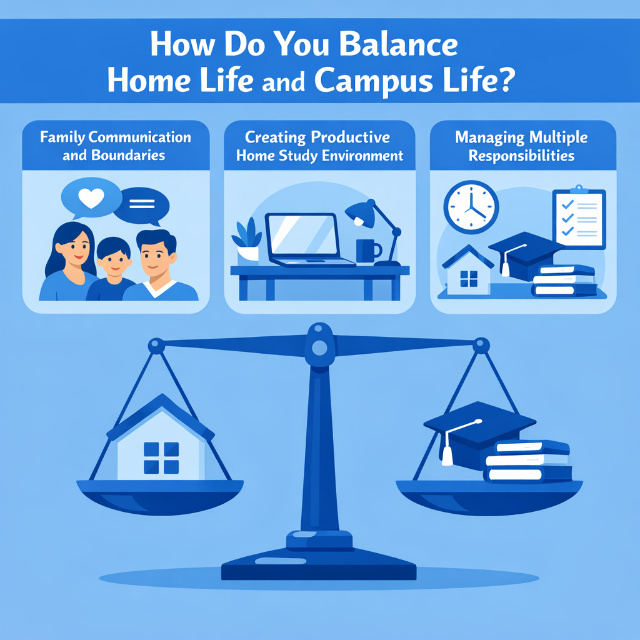
Build social connections by joining 2-3 clubs or organizations providing consistent interaction with same people weekly, attending campus events intentionally rather than rushing home immediately after class, studying in common areas or library not isolation, exchanging numbers with classmates forming study groups, staying on campus for meals socializing in dining areas, attending office hours building professor relationships, and accepting that connection requires extra effort but produces 64% higher sense of belonging when commuters invest time.
Overcoming Commuter Isolation
Common commuter social challenges:
- Missing spontaneous dorm social activities
- Leaving immediately after class to beat traffic
- Feeling excluded from campus culture and traditions
- Difficulty attending evening events due to commute
- Limited time for casual socializing between commitments
- Assumption that friendships already formed
58% of commuters report feeling socially disconnected, but students who implement intentional social strategies report satisfaction equal to residential students within one semester.
Strategic Social Integration
Join organizations with regular meetings:
- Professional organizations in your major
- Cultural or identity-based student groups
- Recreational sports or fitness clubs
- Volunteer or service organizations
- Religious or spiritual campus groups
- Special interest clubs (gaming, outdoors, arts)
Why organizations work for commuters:
- Scheduled meetings providing consistency
- Shared interests creating automatic conversation topics
- Regular interaction with same people building friendships
- Sense of belonging to campus community
- Leadership opportunities demonstrating commitment
- Often meet during the day (not just evening) accommodating commutes
Commuter-specific organizations:
- Many campuses have commuter student associations
- Connects you with others facing similar challenges
- Advocates for commuter needs and resources
- Plans commuter-friendly events and activities
- Creates automatic peer support network
Maximize Social Time on Campus
Stay longer than required:
- Arrive 30-60 minutes before first class
- Stay 30-60 minutes after last class
- Schedule gaps between classes for socializing
- Commit to one late evening weekly for events or clubs
- Eat lunch on campus in social dining areas
Study in public spaces:
- Library group study rooms
- Student union lounges
- Department common areas
- Coffee shops on or near campus
- Recreation center cafe areas
Initiate connections:
- Introduce yourself to classmates first day
- Suggest study groups or project collaboration
- Exchange numbers with friendly classmates
- Invite people to lunch or coffee between classes
- Follow up with people you meet (don't just collect contacts)
Conversation starters:
- "What other classes are you taking this semester?"
- "Do you want to study together before the exam?"
- "Are you going to [campus event]? Want to go together?"
- "Do you live on campus or commute?"
- "What's your major? I'm considering switching to that."
Students who join 2-3 organizations and stay on campus 8+ hours on their attendance days report 64% higher sense of belonging and 72% satisfaction rates comparable to residential students, demonstrating intentional effort overcomes inherent commuter isolation.
What Campus Resources Should Commuters Utilize?
Commuters should utilize commuter lounges providing storage, microwaves, refrigerators, and social space, campus parking services offering permit assistance and carpool matching, library spaces including quiet study areas and group collaboration rooms, recreation centers for fitness between classes, career services for networking and job search requiring no appointment, health and counseling centers providing medical and mental health support, and commuter-specific programs offering resources, advocacy, and social connections designed for off-campus students.
Essential Campus Resources
Commuter lounge or student center:
- Designated space for commuters to store belongings
- Microwaves and refrigerators for meals
- Comfortable seating for studying or relaxing
- Often includes lockers for rent
- Social space meeting other commuters
- Computer stations and printing
Library benefits:
- Quiet individual study spaces
- Group study rooms (reserve in advance)
- Free printing (limited pages)
- Research assistance and databases
- Extended hours (often 24/7 during finals)
- Safe well-lit environment
Campus parking and transportation:
- Discounted annual permits vs. daily parking
- Carpool matching programs
- Preferred parking for carpools
- Campus shuttle information
- Bicycle storage and repairs
- Parking enforcement appeals process
Recreation and wellness:
- Fitness center with equipment and classes
- Shower and locker facilities
- Stress relief between classes
- Social fitness opportunities
- Swimming pools or special facilities
- Free or low-cost for students
Career services:
- Resume and cover letter reviews
- Mock interviews and preparation
- Job and internship databases
- Networking events and career fairs
- Alumni networking connections
- No appointment drop-in hours
Health and counseling:
- Medical services for illnesses and injuries
- Mental health counseling (typically 6-12 free sessions)
- Stress management and wellness programs
- Emergency contraception and sexual health
- Immunizations and health screenings
- Crisis intervention services
Commuter-Specific Programming
Ask if your campus offers:
- Commuter student association or organization
- Commuter orientation programs
- Commuter-friendly event scheduling (daytime, not just evening)
- Commuter newsletter or social media groups
- Emergency ride home programs
- Late-night safety escorts to parking lots
- Locker rental at reduced rates
Many campuses recognize commuter challenges and provide targeted resources, but commuters must proactively seek them rather than waiting for information to find them.
How Do You Balance Home Life and Campus Life?
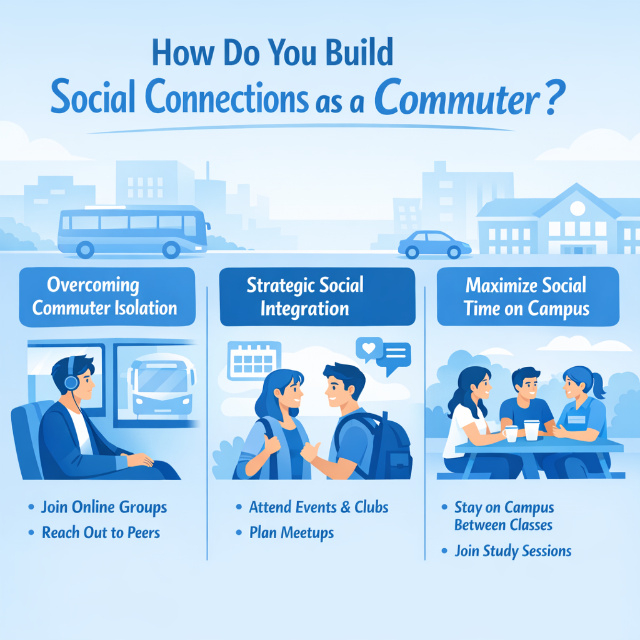
Balance home life and campus life by communicating boundaries with family about study time and campus commitments, creating designated study space at home separate from relaxation areas, establishing clear schedule showing family when available versus studying, contributing to household responsibilities without sacrificing academic success, and recognizing that commuting home doesn't mean constant availability, you're still a full-time student requiring time and space for academic work.
Family Communication and Boundaries
Common home-life challenges:
- Family expects availability for chores, errands, childcare
- Siblings or family interrupt study time
- Parents don't understand course rigor or time requirements
- Feeling guilty for studying instead of helping family
- Expected to work part-time in addition to full-time school
- Cultural expectations about family obligations
Setting healthy boundaries:
- Post weekly schedule visibly showing class, study, and available times
- Designate specific study hours as "class time" (non-negotiable)
- Create quiet study space separate from family activity
- Communicate assignment deadlines requiring focused time
- Offer specific available times for family activities or help
- Educate family about college workload and expectations
Sample family conversation: "I want to contribute to our household, and I also need time for school to succeed. Here's my weekly schedule showing when I'm in class, need to study, and when I'm available to help. Can we work together to make this work?"
Creating Productive Home Study Environment
Effective home study space:
- Designated area exclusively for studying (if possible)
- Quiet location away from TV and family traffic
- Adequate lighting and comfortable seating
- Organized supplies (notebooks, textbooks, chargers)
- Door that closes for privacy (or headphones if shared space)
- Communicate when space is "study zone" (do not disturb)
If private space unavailable:
- Study at public library during family home time
- Use campus library for serious study sessions
- Coordinate with family for quiet hours
- Use noise-cancelling headphones
- Study during times others are sleeping or out
Managing Multiple Responsibilities
Balancing work, family, and school:
- Communicate with employer about class schedule
- Use slow work periods for studying (if appropriate)
- Limit work hours during heavy academic periods (midterms, finals)
- Family members should understand full-time school = full-time commitment
- Seek on-campus employment reducing commute time
Time management strategies:
- Use commute time productively
- Study between classes on campus
- Break large assignments into small daily tasks
- Batch similar tasks (all reading together, all writing together)
- Use weekends wisely balancing study with rest
- Communicate with professors if family emergencies affect academics
Research shows commuter students managing family obligations who establish clear boundaries and designated study time report 67% higher academic performance and 58% less family conflict compared to those without explicit agreements.
When Does Living on Campus Make Financial Sense?
Living on campus makes financial sense when commute costs (gas, parking, vehicle maintenance) plus commute time value exceed room and board costs, when commute exceeds 60-90 minutes daily reducing study time and increasing stress, when missing evening campus activities limits social integration and opportunities, when family home environment prevents effective studying, or when work-study or campus employment offsets housing costs. Calculate total costs including hidden expenses making informed decisions.
Financial Comparison Calculator
Annual commuting costs:
- Gas: $150-250 monthly × 8 months = $1,200-2,000
- Parking permit: $300-800 annually
- Vehicle maintenance: $500-1,000 annually (oil changes, repairs)
- Insurance: Often higher with daily commute
- Wear and tear depreciation: $1,000-2,000 annually
- Total: $3,000-6,000 annually
Annual on-campus living costs:
- Room and board: $8,000-15,000 annually (varies widely)
- Reduced vehicle costs: -$2,000-4,000 saved
- Meal plan (if not commuting home for meals)
- Net additional cost: $4,000-11,000 annually
When commuting saves money:
- Commute under 30 minutes each way
- Live at home rent-free with meals included
- Limited on-campus activities participation
- Can study effectively at home
- Vehicle already owned and reliable
When on-campus saves money:
- Commute over 60 minutes each way (opportunity cost)
- Vehicle requires frequent expensive repairs
- On-campus employment offsets housing costs
- Room rental cheaper than commute + vehicle costs
- Significantly increases academic performance and graduation rate
Non-financial considerations:
- Time value: 2 hours daily commuting = 10 hours weekly = 40 hours monthly
- Academic performance: Residential students average 0.3-0.5 higher GPA
- Social integration: 78% of residential students report high belonging
- Mental health: Reduced commute stress
- Campus involvement: Easier participation in activities, research, networking
Middle Ground Options
Hybrid arrangements:
- Live on campus during busiest semesters (sophomore, junior year)
- Stay with friends on campus 1-2 nights weekly during finals
- Rent room near campus splitting with roommates ($400-700 monthly cheaper)
- Sublet apartment seasonally rather than year-round
- Commute Monday-Thursday, stay on campus Thursday-Friday for weekend activities
Cost-reduction strategies:
- Apply for on-campus employment (work-study, RA positions)
- Residential Advisor (RA) positions often include free housing
- Look for scholarships specifically for housing
- Summer employment saving specifically for housing costs
- Compare off-campus apartments near campus to dorms
Students should calculate comprehensive costs including time value, vehicle expenses, and opportunity costs rather than comparing only rent/board numbers, making decisions based on total financial and quality-of-life factors.
Key Takeaways
Thrive as commuter student through these evidence-based strategies:
Maximize limited campus time by clustering classes on 2-3 days weekly reducing total commute time by 40-50%, arriving early and staying late beyond class times, and using campus spaces between classes rather than commuting home. Commuters staying on campus 8+ hours report 64% higher engagement and satisfaction.
Build social connections intentionally through joining 2-3 organizations with regular meetings, studying in public campus spaces encouraging interaction, initiating friendships with classmates through study groups, and committing to one late evening weekly for campus events. Intentional social effort produces 72% satisfaction comparable to residential students.
Pack strategically for long days including nutritious lunch and snacks saving $1,600-2,400 annually versus daily campus purchases, technology chargers and portable batteries, comfort items and toiletries, and weather-appropriate layers. Utilize campus lockers if available reducing backpack burden.
Utilize commute time productively listening to educational podcasts or recorded lectures, reviewing notes and flashcards during public transit, carpooling with other students saving $50-200 monthly while creating accountability, and considering public transit enabling studying during travel time rather than driving.
Balance home and campus life through clear boundary communication with family about study time needs, establishing dedicated study space separate from family activity, and creating visible schedule showing availability versus academic commitments. Commuters with explicit family agreements report 67% higher academic performance and 58% less conflict.
Commuter students comprise 35-40% of college population and achieve identical academic outcomes to residential students when implementing strategic survival tactics. The 64% higher engagement for commuters staying on campus 8+ hours demonstrates intentional presence overcomes inherent disadvantages of off-campus living.
When managing commute demands alongside academic workload, consider using a trusted essay writing service for routine coursework during particularly exhausting weeks, allowing limited campus time and energy for meaningful class participation, social connection building, campus resource utilization, and academic engagement directly determining college success and satisfaction as commuter student.