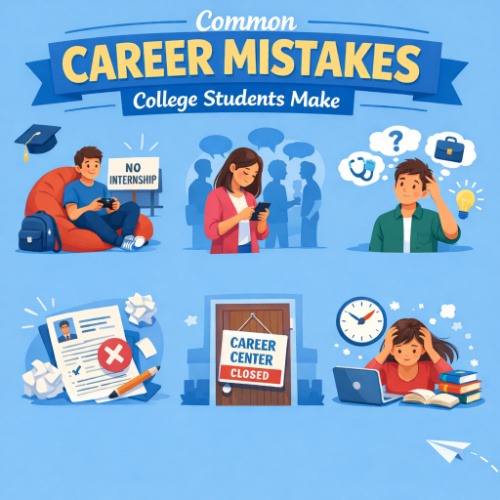
Why Is Waiting Until Senior Year to Career Plan a Mistake?
Waiting until senior year to career plan is a mistake because campus recruiting begins September of senior year requiring preparation completed junior year or earlier, competitive internships that convert to full-time offers (67% conversion rate) require sophomore-junior applications, strong professional networks need 2-3 years to develop meaningful relationships, and career direction clarity requires exploration time that senior-year panic doesn't allow.
The Compounding Disadvantage
Career development follows sequential stages, each stage building on previous work. Senior-year starters miss critical early opportunities that can't be recovered.
Timeline consequences:
What early planners accomplish (freshman-junior years):
- Explore 3-5 career paths through informational interviews and job shadowing
- Complete 2-3 internships building skills and professional references
- Develop relationships with 5-10 alumni in target industries
- Build polished professional materials (resume, LinkedIn, portfolio)
- Attend industry conferences gaining market knowledge
- Join and lead professional organizations demonstrating commitment
What late starters miss:
- Internship opportunities that convert to full-time offers (67% conversion rate)
- Campus recruiting for top employers (applications due September-October)
- Summer before senior year, last chance for substantive internship
- Relationship building with faculty who write strong recommendations
- Career clarity allowing focused, strategic job search
- Skill development time addressing gaps employers cite
When managing internship applications alongside coursework during competitive recruitment periods, consider using a professional essay writing service for routine assignments, allowing focus on tailored cover letters, application materials, and interview preparation, directly determining internship placement and subsequent career trajectory.
Employment outcome gaps:
| Metric | Early Planners (Freshman-Junior Start) | Late Starters (Senior Year Only) |
|---|---|---|
| Employment within 6 months | 89% | 56% |
| Starting salary average | $58,400 | $50,900 |
| Job search duration | 2.8 months | 6.4 months |
| Internship completion | 2.3 average | 0.7 average |
| Job satisfaction rating | 7.8/10 | 5.9/10 |
Students who begin career planning freshman or sophomore year secure employment 3.6 months faster on average and earn $7,500 more in starting salaries, demonstrating concrete ROI of early strategic planning.
How to Avoid This Mistake
Freshman year actions:
- Schedule introductory meeting with career services (September/October)
- Attend career exploration events and major-specific panels
- Create initial resume even without extensive experience
- Join one career-focused student organization
- Conduct 2-3 informational interviews with alumni
Sophomore year actions:
- Apply to summer internships (applications open November-February)
- Attend career fair with researched target companies
- Develop LinkedIn profile with professional photo and summary
- Visit office hours regularly with 2-3 professors building relationships
- Attend 3-4 professional development workshops
Junior year actions:
- Secure substantive summer internship (many convert to full-time offers)
- Practice behavioral interviews with career services
- Build alumni network in target industry/geography (5-10 contacts)
- Polish final resume and cover letter materials
- Begin researching target employers for senior year recruiting
This distributed approach prevents senior-year panic while building foundation for successful job search.
How Does Choosing a Major Without Career Research Hurt You?
Choosing a major without career research hurts you because 42% of graduates later regret their major choice citing misalignment with actual job markets, certain majors face 3-4x higher unemployment rates than others (9.2% for general studies versus 2.4% for nursing), starting salaries vary by 200%+ across majors ($38,000 humanities versus $78,000 engineering), and passion without market demand leads to underemployment requiring career pivots or additional education.
Passion vs. Market Reality
The "follow your passion" advice proves incomplete without market research. Passion matters, but so does employment demand, earning potential, and career path clarity.
Common major selection mistakes:
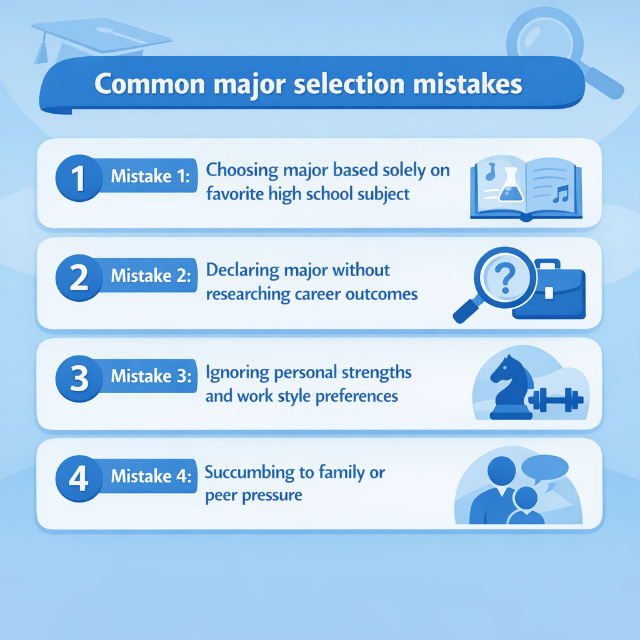
Mistake 1: Choosing major based solely on favorite high school subject
- High school calculus enjoyment is not equal to math major career satisfaction
- Subject preference doesn't reveal actual daily work or career paths
- Classes differ dramatically from professional work in that field
Mistake 2: Declaring major without researching career outcomes
- "I'll figure out what to do with this degree later" approach
- Not understanding employment rates, typical salaries, or required credentials
- Missing information about graduate school necessity for career entry
Mistake 3: Ignoring personal strengths and work style preferences
- Loving idea of career versus reality of daily work
- Introverts choosing client-facing roles or vice versa
- Not considering work-life balance, travel requirements, or stress levels
Mistake 4: Succumbing to family or peer pressure
- Pursuing "prestigious" majors not aligned with interests or strengths
- Following friends into majors without personal research
- Choosing careers based on others' definitions of success
Major-Career Alignment Research
Smart students research career outcomes before declaring majors, not after graduating.
Questions to research for any major:
Employment outcomes:
- What's the employment rate for graduates within 6 months?
- What percentage work in jobs requiring their degree?
- What's the underemployment rate (working in unrelated fields)?
Career paths:
- What specific jobs do graduates with this major pursue?
- What industries hire graduates with this background?
- Are there clear career trajectories or scattered outcomes?
Salary expectations:
- What are typical starting salaries?
- What's the salary growth potential (5-year and 10-year projections)?
- How does this compare to cost of education investment?
Required credentials:
- Does career entry require only bachelor's degree or additional credentials?
- What percentage of graduates pursue graduate school?
- Are certifications, licenses, or specialized training necessary?
Daily work reality:
- What does typical day look like in these careers?
- What skills and activities dominate the work?
- Does this align with my strengths and preferences?
Research sources:
- University career services graduate outcome reports
- Bureau of Labor Statistics Occupational Outlook Handbook
- LinkedIn alumni career path tracking
- Informational interviews with professionals in the field
- Job posting analysis for required skills and qualifications
Students who research career outcomes before declaring majors report 73% career satisfaction versus 54% for those who chose majors without market research, demonstrating importance of informed decision-making.
Why Do Students Who Skip Internships Struggle More?
Students who skip internships struggle more because employers increasingly require experience for entry-level positions (78% prioritize internship experience), internship completers earn $8,000 more in starting salaries on average, 67% of internships convert to full-time offers at same company, students without internships take 4.2 months longer to find employment, and internships provide skill development, professional references, and career clarity impossible to gain through coursework alone.
The Experience Paradox
Entry-level positions increasingly require experience, a paradox internships solve. Students without internships face catch-22: can't get job without experience, can't get experience without job.
Employment outcome differences:
| Outcome | With Internship(s) | Without Internship |
|---|---|---|
| Employment rate (6 months) | 81% | 56% |
| Starting salary average | $56,200 | $48,400 |
| Job search duration | 3.4 months | 7.6 months |
| Job satisfaction (1-10) | 7.4 | 5.8 |
| Career field alignment | 72% | 48% |
Why internships matter so much:
- Skill development: Real-world application of academic knowledge
- Professional references: Supervisors who vouch for work quality
- Resume credibility: Demonstrates you can perform professional work
- Network building: Connections leading to job opportunities
- Career clarity: Confirms or redirects career interests before graduation
- Interview content: Concrete examples for behavioral interview questions
- Full-time conversion: 67% of internships convert to offers
Common Internship Misconceptions
Myth 1: "I can't afford unpaid internships"
- Many paid internships exist (58% of internships now offer compensation)
- Financial aid often covers summer enrollment for academic credit
- Part-time internships during school year balance income needs
- One summer invested yields $8,000 higher starting salary
Myth 2: "I need to focus on grades, not internships"
- Employers value 3.2 GPA + internship over 3.8 GPA without experience
- Strategic time management allows both academic success and internships
- Junior year summer after major coursework complete is ideal timing
Myth 3: "I can't get internships without experience"
- Freshman and sophomore programs exist specifically for inexperienced students
- Career services and alumni networks facilitate first internship placement
- Start with smaller companies or nonprofits if major corporations intimidate
Myth 4: "I'll find a job easily with my degree alone"
- 78% of employers now require relevant experience for entry-level positions
- Degree proves you can learn; internships prove you can do
- Competition includes candidates with 2-3 internships
What Networking Mistakes Do Students Make?
Students make networking mistakes including never attending career networking events (71% attend zero events during college), connecting on LinkedIn without personalized messages appearing spam-like, treating networking as transactional favor-asking rather than relationship building, failing to follow up after initial conversations (73% never send follow-up emails), only networking when desperately job searching rather than continuously, and not leveraging alumni networks despite 43% of jobs coming through networking connections.
Understanding Effective Networking
Networking isn't about collecting business cards or making awkward small talk. It's about building genuine professional relationships over time that provide mutual value.
What networking is NOT:
- Immediately asking strangers for jobs
- Attending events and leaving without conversations
- Connecting on LinkedIn with generic requests
- One-time transactional interactions
- Forced, inauthentic relationship attempts
What networking IS:
- Genuine curiosity about others' career paths and experiences
- Building relationships progressively over months and years
- Offering value before requesting favors
- Consistent follow-up and relationship maintenance
- Authentic connections based on shared interests or goals
Networking Strategy for Students
Low-pressure networking opportunities:
- Informational interviews: Request 15-20 minute conversations learning about careers
- Alumni coffee chats: Connect with graduates in your target field
- Professional organization events: Industry-specific student clubs host employers
- Office hours: Build relationships with faculty who have industry connections
- Career panels: Attend speaker events and ask thoughtful questions
- LinkedIn engagement: Comment thoughtfully on professionals' posts
- Campus employer events: Company information sessions with recruiters
Effective conversation starters:
- "How did you transition from college to your current role?"
- "What does a typical day look like in your position?"
- "What skills do you wish you'd developed in college?"
- "What advice would you give someone interested in this field?"
- "How did you learn about opportunities in this industry?"
Follow-up best practices:
- Send thank-you email within 24 hours of any conversation
- Reference specific topics discussed showing you listened
- Update contacts on your progress ("I followed your advice and...")
- Share relevant articles or resources demonstrating value
- Connect on LinkedIn with personalized message
- Maintain contact quarterly with meaningful updates
Students who conduct 8+ informational interviews during college receive 2.4x more job interviews and 3.1x more offers than those who never network, demonstrating concrete ROI of relationship building.
How Does Ignoring Skill Development Beyond Coursework Hurt Careers?
Ignoring skill development beyond coursework hurts careers because employers cite skill gaps in 67% of entry-level candidates despite degrees, technical skills like Excel and data analysis appear in 78% of job postings yet few students gain proficiency, soft skills including communication and teamwork rank as top hiring criteria yet aren't systematically taught, and coursework alone doesn't develop practical application abilities employers actually need.
The Skills Employers Actually Want
Academic degrees prove you can learn. Specific skills prove you can do. Employers increasingly prioritize demonstrated competencies over credentials alone.
Most in-demand skills students lack:
Technical skills (hard skills):
- Excel and data analysis: 78% of entry-level postings require proficiency
- Coding/programming: Python, SQL, or JavaScript for many industries
- Digital marketing tools: Google Analytics, SEO, social media management
- Design software: Adobe Creative Suite, Canva, Figma
- Project management platforms: Asana, Trello, Microsoft Project
- Statistical software: SPSS, R, SAS for research and analytics
- CRM platforms: Salesforce, HubSpot for business roles
Professional skills (soft skills):
- Written communication: Professional emails, reports, documentation
- Public speaking: Presentations, meetings, client interactions
- Time management: Meeting deadlines, prioritizing tasks, productivity
- Teamwork and collaboration: Working effectively in groups
- Problem-solving: Analytical thinking and creative solutions
- Adaptability: Handling change, learning quickly, pivoting strategies
- Leadership: Influencing others, taking initiative, delegating
How to develop skills outside coursework:
Online learning platforms:
- LinkedIn Learning (often free through universities)
- Coursera certificates (financial aid available)
- Udemy courses during sales ($10-15 for comprehensive courses)
- YouTube tutorials for technical skills
- Khan Academy for foundational knowledge
Campus opportunities:
- Student organization leadership roles
- Campus newspaper, radio, or media positions
- Research assistant positions building analysis skills
- Peer tutoring developing communication abilities
- Event planning through student government
Certifications:
- Google Analytics certification (free)
- HubSpot Inbound Marketing certification (free)
- Microsoft Office Specialist (MOS) certification
- Project Management Professional (PMP) preparation
- Industry-specific credentials (varies by field)
Volunteering and side projects:
- Nonprofit board service or committee participation
- Freelance work building portfolio
- Personal projects demonstrating initiative
- Competition participation (case competitions, hackathons)
Students who develop 3-4 marketable skills beyond their major coursework receive 47% more interview invitations and report 68% higher job satisfaction, as roles better match their actual capabilities rather than just degree credentials.
What Resume and LinkedIn Mistakes Cost Students Opportunities?
Resume and LinkedIn mistakes costing students opportunities include generic objective statements instead of compelling summaries with specific value propositions, listing duties rather than accomplishments with quantifiable results (increased, decreased, improved by X%), spelling and grammar errors in professional materials (67% of employers automatically reject), having incomplete or unprofessional LinkedIn profiles (93% of recruiters search LinkedIn), using personal email addresses like "partyguy2003@email.com" instead of professional variations, and one-size-fits-all resumes not tailored to specific positions.
Resume Fatal Flaws
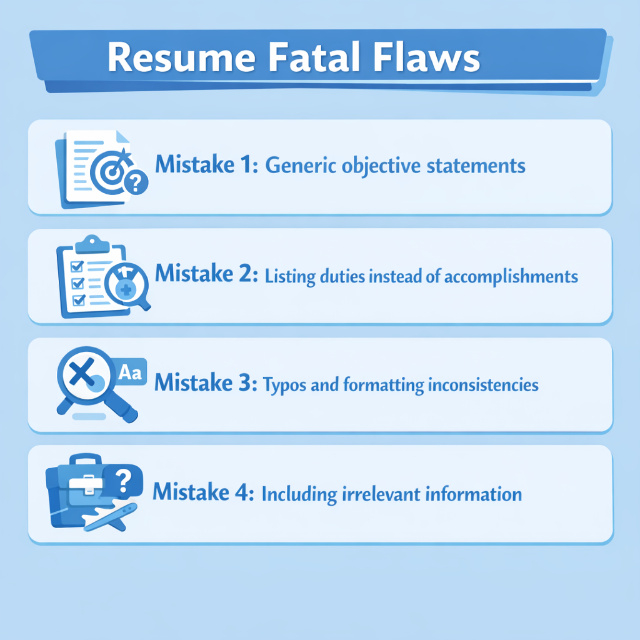
Mistake 1: Generic objective statements
Bad example: "Seeking a challenging position where I can utilize my skills and grow professionally." Good example: "Marketing graduate with social media campaign experience driving 340% engagement increase seeking digital marketing coordinator role leveraging analytics, content creation, and platform optimization skills." |
Mistake 2: Listing duties instead of accomplishments
Bad example:
- Responsible for social media accounts
- Helped with marketing campaigns
- Attended team meetings
Good example:
- Managed 4 social media accounts, growing combined following by 2,400+ (38% increase) over 6 months
- Contributed to 3 marketing campaigns generating $47,000 in revenue and 800+ qualified leads
- Collaborated with 5-person team on weekly strategic planning, resulting in 23% efficiency improvement
Mistake 3: Typos and formatting inconsistencies
- 67% of employers automatically reject resumes with spelling/grammar errors
- Inconsistent date formats (some "January 2022," others "01/2022")
- Varying bullet point styles or indentation
- Font size/style changes throughout document
Mistake 4: Including irrelevant information
- High school activities (after freshman year)
- Personal hobbies unrelated to role
- References to age, marital status, or photos (unless required)
- Every job since age 15 (focus on relevant recent experience)
LinkedIn Profile Optimization
Profile completion checklist:
- Professional headshot photo (profiles with photos receive 21x more views)
- Compelling headline beyond just "Student at [University]"
- Detailed summary (300-500 words) explaining background and goals
- Complete work experience with bullet points (mirror resume format)
- Education section with relevant coursework, GPA if 3.3+
- Skills section with 10-15 relevant skills
- Recommendations from professors, supervisors, or colleagues (aim for 3+)
- Custom URL (linkedin.com/in/firstname-lastname)
Common LinkedIn mistakes:
- Connecting without personalized messages (appears spam-like)
- Never posting or engaging with content (passive presence)
- Incomplete profile sections (looks abandoned or unprofessional)
- Unprofessional profile photo (party pics, sunglasses, group photos)
- Ignoring messages from recruiters or connections
Students with complete, optimized LinkedIn profiles receive 3.7x more recruiter messages and 2.9x more connection requests from industry professionals, significantly expanding networking opportunities and job leads.
How Can You Avoid or Fix These Career Mistakes?
Avoid or fix career mistakes by starting career planning freshman year through career services visits and informational interviews, researching major-career alignment using outcome data before declaring, completing 2-3 internships during college prioritizing sophomore-junior summers, building professional network continuously through 8+ informational interviews and consistent alumni engagement, developing in-demand skills via online courses and certifications, and creating polished professional materials with tailored resumes and complete LinkedIn profiles.
Year-by-Year Mistake Prevention Plan
Freshman Year: Foundation Building
- Visit career services for introductory meeting (avoid Mistake #1)
- Research career outcomes for potential majors (avoid Mistake #2)
- Create initial resume and LinkedIn profile (avoid Mistake #6)
- Conduct 2-3 informational interviews (avoid Mistake #4)
- Join one professional student organization (avoid Mistake #4)
- Enroll in Excel or basic technical skills course (avoid Mistake #5)
Sophomore Year: Skill and Experience Development
- Apply to summer internships (avoid Mistake #3)
- Attend 3-4 career networking events (avoid Mistake #4)
- Develop 2 marketable skills through online courses (avoid Mistake #5)
- Update resume with accomplishments, not duties (avoid Mistake #6)
- Build alumni network to 5+ connections (avoid Mistake #4)
- Visit professors' office hours building relationships
Junior Year: Strategic Positioning
- Complete substantive summer internship (avoid Mistake #3)
- Polish final resume with quantified results (avoid Mistake #6)
- Conduct 5+ informational interviews in target industry (avoid Mistake #4)
- Earn 1-2 relevant certifications (avoid Mistake #5)
- Practice behavioral interviews with career services (avoid Mistake #1)
- Attend employer information sessions for target companies
Senior Year: Execution
- Begin job search September (not spring) using career services (avoid Mistake #1)
- Leverage internship connections for referrals (avoid Mistake #3)
- Tailor resumes to specific positions (avoid Mistake #6)
- Network consistently with 2-3 new contacts monthly (avoid Mistake #4)
- Continue skill development through graduation (avoid Mistake #5)
This structured approach prevents common mistakes through proactive planning rather than reactive scrambling.
Key Takeaways
Avoid common career mistakes through these evidence-based strategies:
Start career planning freshman or sophomore year rather than senior year, as early starters achieve 89% employment rates versus 56% for late starters, earn $7,500 higher starting salaries, and secure jobs 3.6 months faster through progressive skill building and relationship development.
Research major-career alignment thoroughly before declaring using university outcome reports, Bureau of Labor Statistics data, and alumni informational interviews, as 42% of students later regret major choices made without market research, facing underemployment and career pivots.
Complete 2-3 internships during college prioritizing sophomore-junior summers, as internship completers earn $8,000 more in starting salaries, achieve 81% employment rates, and benefit from 67% full-time conversion rates compared to 56% employment for non-internship students.
Build professional networks continuously through 8+ informational interviews during college rather than job-search-only networking, as 43% of jobs come through networking and consistent networkers receive 2.4x more interviews than those who don't network.
Develop in-demand skills beyond coursework including Excel, data analysis, and professional communication through online courses and certifications, as employers cite skill gaps in 67% of entry-level candidates despite degrees, with skilled candidates receiving 47% more interview invitations.
Career success in college requires intentional planning and skill development, not perfection. The 3.6-month faster job placement and $7,500 salary premium for students who avoid these mistakes justify strategic effort throughout college rather than senior-year panic.
When managing career preparation alongside demanding coursework, consider using a trusted essay writing service for routine assignments during peak internship recruiting, networking events, and skill development periods, allowing focus on activities directly determining employment outcomes and career trajectories that shape decades of professional life.