What Are Essential Walking and Transportation Safety Tips?
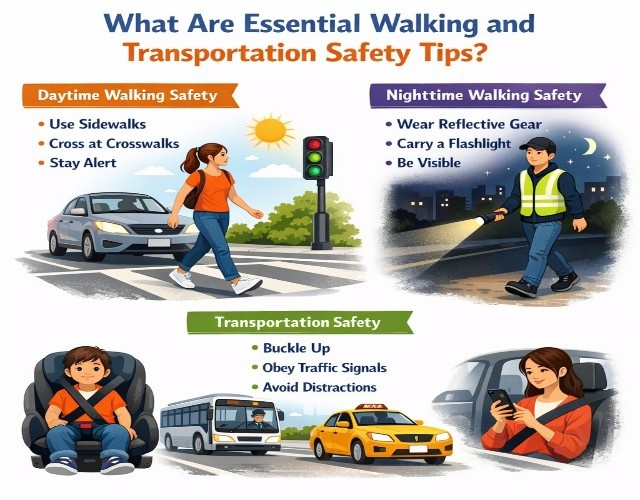
Essential walking safety tips include staying in well-lit areas using main pathways rather than shortcuts through dark isolated areas, keeping one earbud out or volume low maintaining awareness of surroundings, making eye contact with people you pass projecting confidence and alertness, holding keys between fingers as improvised defensive tool, using campus escort services or safe ride programs after dark (available at 89% of campuses), and sharing your location with trusted friends when walking alone especially at night.
1. Daytime Walking Safety
Even during daylight hours, maintain awareness and smart habits.
Daytime safety practices:
- Stay on main campus walkways rather than isolated paths
- Keep phone in pocket or bag (not in hands), maintaining awareness
- Walk with purpose and confidence, projecting alertness, not vulnerability
- Make brief eye contact with people you pass
- If someone makes you uncomfortable, enter the nearest building
- Vary routes and routines, preventing predictability
- Keep valuables concealed (expensive jewelry, electronics)
- Trust instincts, if the area feels unsafe, choose a different route
Phone safety while walking:
- Texting while walking reduces awareness by 60% according to safety research
- Makes you a visible target for theft (phone snatching is increasingly common)
- Prevents hearing approaching vehicles, bikes, or people
- If you must use the phone, stop walking and stand against the building
2. Nighttime Walking Safety
After dark, increase caution and utilize available safety resources.
After dark safety essentials:
- Never walk alone at night, use the buddy system or campus escorts
- Stay in well-lit areas, avoiding shortcuts through dark areas
- Walk in the middle of the sidewalk away from bushes or building recesses
- Have keys ready before reaching the destination
- Keep phone charged and accessible for emergencies
- If followed, walk to a well-lit populated area or building
- Don't help strangers (giving directions, finding lost pets) at night
Campus escort services:
- Available at 89% of U.S. colleges and universities
- Free transportation or walking escort between campus locations
- Typically operate from sunset to sunrise
- Call 15 to 30 minutes before needed pickup
- No judgment, services exist for your safety
- Save the escort service number in your phone immediately
Emergency blue light phones:
- Located every 100-200 feet on most campuses
- Direct connection to campus police (one-button operation)
- Illuminated for visibility from a distance
- Locate phones on your walking routes
- Use if you feel unsafe or witness an emergency.
- Pressing the button triggers an immediate police response
3. Transportation Safety
Rideshare safety (Uber, Lyft):
- Verify driver identity (check license plate, driver photo, name)
- Share trip details with a friend using the app's share feature
- Sit in the back seat, maintaining personal space and exit access
- Trust instincts, cancel ride if driver seems unsafe
- Don't share personal information with the driver
- Request the driver wait until you're inside the building
- Report concerning behavior immediately through the app
Campus shuttle safety:
- Wait at designated well lit stops
- Verify official campus transportation (look for university markings)
- Stay near the driver or populated areas on the bus
- Keep belongings secure and visible
- Report suspicious behavior to the driver or campus police
Students who consistently use campus safety resources (escorts, emergency phones, safety apps) report 78% fewer safety concerns and greater confidence navigating campus after dark.
How Do You Keep Your Dorm Room and Belongings Secure?
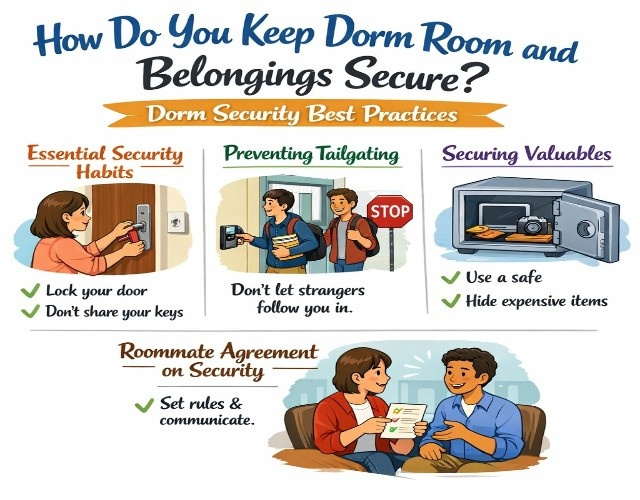
Keep dorm rooms secure by locking doors and windows always even for brief absences (82% of dorm thefts occur through unlocked doors), never propping doors open or allowing tailgating into residence halls, securing valuables with cable locks or safes, recording serial numbers of electronics for theft recovery, not posting room numbers or class schedules publicly on social media, installing door stoppers or security alarms for additional protection, and being cautious about letting acquaintances or strangers into dorm.
Dorm Security Best Practices
Essential security habits:
- Lock the door every time you leave (even 2 minute bathroom trips)
- Lock door when sleeping (safety during vulnerable hours)
- Keep windows locked, especially the ground floor and accessible floors
- Don't prop exterior or room doors open for convenience
- Never share room key, combination, or ID card
- Don't hide keys under mats or in "secret" places
- Report lost keys or ID cards immediately for replacement
- Don't post on social media when you're away from the room
Preventing tailgating:
- Don't let strangers follow you into residence halls
- Ask unfamiliar people if you can help them (most have legitimate business)
- If uncomfortable, let the door close and report to RA or campus police
- Don't feel rude enforcing security, your safety matters more
- Report repeated tailgating attempts
Securing valuables:
- Use laptop cable locks to attach devices to furniture
- Store expensive items out of view from windows/doors
- Consider a small safe for jewelry, cash, and documents
- Record serial numbers, take photos of valuable items
- Mark electronics with identifying information
- Keep valuables locked when guests visit
- Don't leave electronics charging unattended in common areas
Roommate agreement on security:
- Discuss and agree on locking habits
- Establish guest policies and quiet hours
- Share concerns about visitors or security practices
- Create a plan for handling security breaches
- Don't compromise your security for your roommate's convenience
What to do if theft occurs:
- Report to campus police immediately (even minor theft)
- File police report (required for insurance claims)
- Notify residence life staff
- Check if renter's insurance (parent's homeowner policy) covers loss
- Change locks if keys were stolen
- Post in campus lost/found and social media groups
- Check pawn shops and online marketplaces locally
Research shows 82% of dorm room thefts occur through unlocked doors with theft opportunity taking just 60 seconds, making consistent locking the single most effective theft prevention strategy.
What Safety Precautions Should You Take at Parties and Social Events?
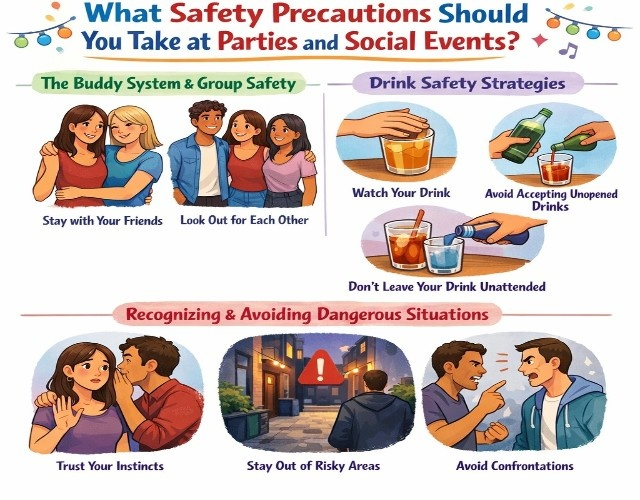
Safety precautions at parties include going with trusted friends and leaving together, designating sober person monitoring group safety, watching your drink constantly and getting new drink if you look away, refusing open container drinks from people you don't know well, setting drinking limits before arriving and sticking to them, charging phone fully and keeping it accessible, staying in populated areas avoiding isolated rooms, and establishing check-in system with friends throughout event.
1. The Buddy System and Group Safety
Before going out:
- Go with 2+ trusted friends (never go alone)
- Share location with roommate or friend not attending
- Charge phone fully and bring a portable charger
- Bring ID, cash, phone, keys only (leave valuables in locked room)
- Establish a meeting spot if separated
- Set departure time and stick to it
- Designate a sober person or rotate sobriety throughout the semester
Group safety agreements:
- "We arrive together, we leave together" commitment
- Check-in system every 30 to 60 minutes
- Intervene if a friend appears too intoxicated or in an uncomfortable situation
- Never leave a friend alone with someone they don't know
- No one leaves with someone they just met without telling the group
- Group decisions override individual impulses when safety is at risk
2. Drink Safety Strategies
Preventing drink tampering:
- Watch the bartender prepare a drink or open a container yourself
- Never accept open container drinks from strangers
- Keep a drink in your hand or with a trusted friend (never unattended)
- Get a new drink if you look away even briefly
- Notice changes in taste, color, or appearance (unusual bubbles, cloudiness)
- Be wary of drinks that seem unusually strong
- Don't drink communal punch or mixed drinks from unknown sources
If you suspect drink tampering:
- Stop drinking immediately and tell a trusted friend
- Go to a well-lit public area with friends
- Seek medical attention if feeling unusually impaired
- Report incident to campus police or event security
- Symptoms include sudden extreme intoxication, dizziness, confusion, and memory gaps
Safe alcohol consumption:
- Set limit before arriving (2-3 drinks maximum)
- Alternate alcoholic drinks with water
- Eat a substantial meal before drinking
- Pace drinks (no more than one per hour)
- Know your tolerance and respect it
- Avoid drinking games pressuring rapid consumption
- It's okay to decline drinks or hold a non-alcoholic drink
3. Recognizing and Avoiding Dangerous Situations
Red flags at parties:
- Someone pressuring you to drink more
- Isolated areas or rooms with closed doors
- A person you just met insisting you go somewhere alone
- Feeling pressured to do something uncomfortable
- Friends have left without telling you
- Feeling much more intoxicated than expected
- Someone offering to "help" you to your room alone
How to exit uncomfortable situations:
- Use "emergency" call or text from a friend as an excuse to leave
- Go to bathroom (safe temporary escape)
- Find the host or security and express concerns
- Call campus escort service or a trusted friend for pickup
- Don't worry about being rude, your safety matters more than politeness
- Use code words with friends signaling you need help
Students who consistently implement the buddy system and drink safety practices report 73% fewer unsafe situations and greater confidence when attending social events.
When managing social pressures and party culture alongside academic responsibilities, consider using a professional essay writing service for routine coursework during particularly busy social weekends, allowing focus on making safe decisions, maintaining awareness, and supporting friends' safety rather than rushing assignments while impaired or exhausted from late nights.
How Can You Prevent and Respond to Sexual Assault?
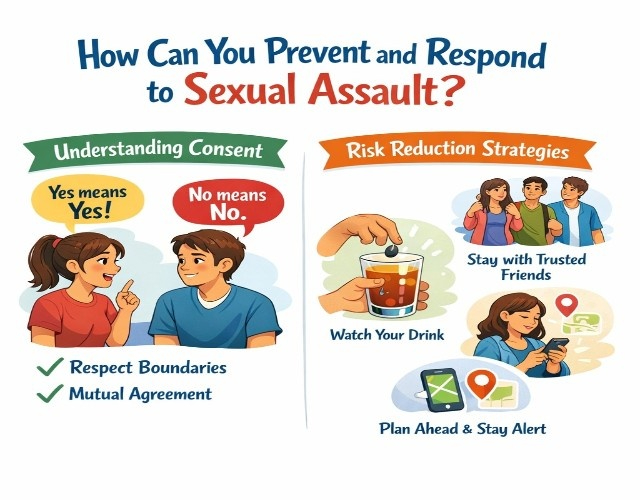
Prevent sexual assault by clearly communicating boundaries assertively, recognizing that consent must be enthusiastic, ongoing, and freely given (can be withdrawn anytime), avoiding excessive alcohol consumption impairing judgment and making you vulnerable, staying with trusted friends at parties and social events, trusting instincts when situations feel uncomfortable, and understanding that most campus sexual assaults involve acquaintances not strangers (82%) often in familiar settings like dorm rooms or parties.
1. Understanding Consent
Consent basics:
- Enthusiastic, voluntary, and ongoing agreement
- Can be withdrawn at any time for any reason
- Silence or lack of resistance is NOT consent
- Incapacitation from alcohol/drugs prevents consent
- Coercion, pressure, or threats invalidate consent
- Past consent doesn't equal future consent
- Being in a relationship doesn't equal automatic consent
Recognizing coercion:
- Verbal pressure ("If you loved me..." "Everyone else does...")
- Threats or intimidation
- Wearing down resistance through persistence
- Taking advantage of intoxication
- Isolating from friends or support
- Guilting or manipulating
2. Risk Reduction Strategies
While perpetrators are 100% responsible for assault, risk awareness helps personal safety.
Risk reduction practices:
- Maintain moderate alcohol consumption, keeping judgment clear
- Stay with trusted friends, avoiding isolation
- Meet new people in public places before private meetings
- Tell friends where you're going and expected return time
- Trust instincts, if the situation feels wrong, leave
- Be assertive, communicating boundaries clearly
- Keep phone charged and accessible
- Know the location of campus security and safe spaces
First date safety:
- Meet in a public place for initial meetings
- Provide own transportation, maintaining independence
- Tell a friend where you're going and check in
- Stay sober or limit alcohol consumption
- Pay attention to pressure to move to a private location
- Leave if feeling uncomfortable
If Sexual Assault Occurs
A. Immediate steps:
- Get to a safe location away from the perpetrator
- Call a trusted friend, campus police, or crisis line
- Preserve evidence (don't shower, wash, or change clothes)
- Seek medical attention (campus health or hospital ER)
- Consider evidence collection (Sexual Assault Forensic Exam: SAFE)
- You don't have to report to the police to receive medical care
B. Campus and community resources:
- Campus police: Immediate safety and evidence collection
- Campus health center: Medical care and evidence collection
- Counseling center: Confidential trauma support
- Title IX office: Investigation and campus protective measures
- Local rape crisis center: 24/7 advocacy and support
- RAINN National Sexual Assault Hotline: 1-800-656-4673
C. Reporting options:
- Campus Title IX office (academic accommodations, no contact orders)
- Campus police (investigation, arrest potential)
- Local police (criminal investigation and prosecution)
- Anonymous reporting (third party, name withheld)
- You control reporting decisions and timeline
D. Supporting assault survivors:
- Believe them without questioning or judgment
- Listen without giving advice unless requested
- Offer to accompany them to resources
- Respect their decisions about reporting
- Maintain confidentiality
- Continue friendship and support long term
- Encourage professional counseling support
Research shows that 82% of campus sexual assaults involve acquaintances rather than strangers, with 90% involving alcohol consumption, making awareness of familiar situations and moderate drinking particularly important for risk reduction.
What Safety Apps and Technology Should You Use?
Essential safety apps include Circle of 6 enabling one-touch emergency alerts to trusted contacts, campus-specific safety apps providing direct connection to campus police and emergency resources, Life360 for location sharing with family and friends, Noonlight triggering automatic emergency response if check-in missed, bSafe offering fake call features and SOS alerts, and Kitestring sending alerts to contacts if you don't check in safely by specified time.
Campus Safety Apps
Campus-specific safety apps (check your university):
- Direct connection to campus police (one-touch calling)
- Campus map with emergency blue light phone locations
- Safety escort service requests
- Anonymous tip reporting for suspicious activity
- Real time safety alerts and notifications
- Campus shuttle tracking
- Emergency procedures and resources
Download and set up immediately:
- Available free through campus app store
- Setup during orientation or first week
- Add emergency contacts
- Test functionality before needing it
- Keep notifications enabled
- Charge phone nightly, ensuring availability
Personal Safety Apps
1. Circle of 6 (free):
- Select 6 trusted contacts
- One-touch pre-programmed messages
- "Come get me" with location
- "Call me" for an interruption excuse
- "I need to talk" for support
- Direct links to hotlines
2. Life360 (free with premium options):
- Real-time location sharing with selected people
- Arrival/departure notifications
- Location history
- Crash detection and emergency alerts
- Private circles for different groups
- Panic button feature
3. Noonlight (free with premium features):
- Hold the button while walking alone
- Releasing the button without PIN triggers an emergency response
- Shares location with 911 automatically
- Background location monitoring
- Timeline documentation for evidence - Uber and Tinder integration
4, bSafe (free):
- Fake call feature for exit strategy
- Live GPS tracking shared with guardians
- Voice activated SOS alarm
- Automatic video recording to the cloud
- Timer alarm for safe arrival
Other Safety Technology
Personal safety devices:
- Personal alarms (130+ decibel attention-attracting noise)
- Pepper spray (check campus policies, some prohibit)
- Safety whistles (allowed on all campuses)
- Door stoppers or portable locks for additional room security
- Motion sensor lights for dark pathways
Phone safety features:
- Emergency SOS (iPhone: side button 5 times, Android: power button 3 to 5 times)
- Medical ID information accessible from locked screen
- Share location in the Messages app
- Find My Device for lost/stolen phone recovery
Students who download and properly configure campus safety apps report 45% greater confidence in personal safety and faster emergency response times when incidents occur.
What Should You Do If You Feel Unsafe Right Now?
If you feel unsafe right now, go immediately to well-lit populated area (student center, library, residence hall lobby), call campus police or 911 without hesitation (emergency operators prefer overcautious calls), activate safety app emergency features alerting trusted contacts, enter nearest open building and tell staff you need help, use emergency blue light phone if on campus outdoors, trust your instincts without dismissing feelings as overreaction, and don't worry about appearing paranoid—safety professionals prefer prevention over response to actual danger.
Immediate Danger Response
If in immediate danger:
Campus police contact:
|
Non Emergency Safety Concerns
If concerned but not immediate danger:
Suspicious activity to report:
|
When to Call Campus Police vs. 911
Call campus police for:
Call 911 for:
|
Key Takeaways
Maintain personal safety on campus through these evidence-based strategies:
Practice situational awareness consistently staying alert to surroundings, avoiding phone distractions while walking (62% of incidents involve distracted victims), and trusting instincts when situations feel uncomfortable. Awareness prevents 94% of campus crimes according to Clery Center research, making vigilance your most powerful safety tool.
Secure dorm rooms and belongings, religiously locking doors and windows always, even for brief absences, as 82% of dorm thefts occur through unlocked doors. Use cable locks for electronics, record serial numbers for theft recovery, and prevent tailgating into residence halls, protecting the entire building community.
Implement buddy system and drink safety at parties, going with trusted friends and leaving together, watching drinks constantly to prevent tampering, setting drinking limits before arriving, and establishing check-in systems throughout events. Students using the buddy system consistently report 73% fewer unsafe situations.
Download and configure campus safety apps immediately, enabling one touch emergency alerts to campus police and trusted contacts, location sharing with friends and family, and automatic emergency response if check-ins are missed. Students with properly configured safety apps report 45% greater confidence and faster emergency response.
Know prevention and response for sexual assault, understanding consent basics (enthusiastic, ongoing, freely given), recognizing that 82% of campus assaults involve acquaintances, not strangers, maintaining moderate alcohol consumption, preserving judgment, and knowing campus resources, including the Title IX office, counseling center, and 24/7 crisis hotlines.
Campus safety requires proactive daily habits, not reactive crisis responses. The few seconds to lock your door, minutes to use escort services, and awareness to travel with friends prevent situations requiring hours or days of recovery and reporting. Safety habits become automatic within 2 to 3 weeks of consistent practice.
When managing busy academic schedules and social commitments that can compromise safety through exhaustion or time pressure, consider using a trusted essay writing service for routine coursework during particularly demanding weeks, allowing focus on maintaining safety awareness, getting adequate sleep, and making smart decisions protecting your wellbeing and security throughout the college experience.