
Why Does Motivation Fail During Long Study Sessions?
Understanding why motivation collapses helps you design systems that prevent failure. Your brain wasn't designed for sustained focus on abstract tasks; it needs strategic management.
1. Attention Span Natural Limits
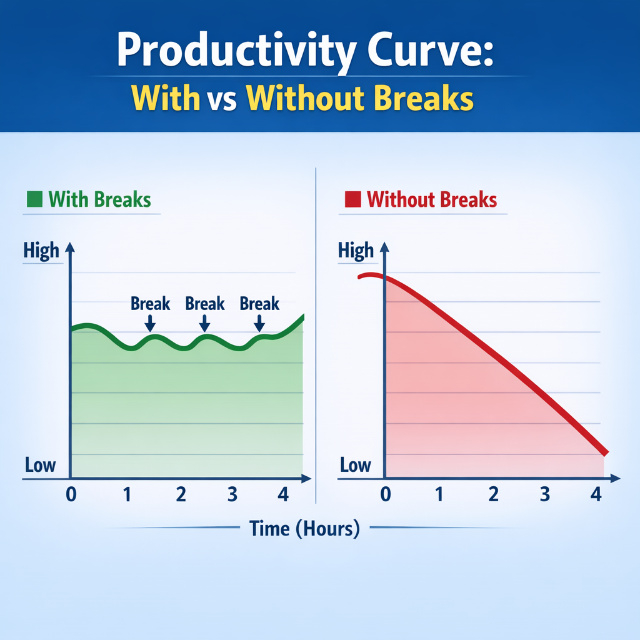
Your brain's capacity for focused attention maxes out at 45-90 minutes before requiring rest. After this point, cognitive performance drops sharply, information processing slows, error rates increase, and comprehension decreases. Students who ignore these natural cycles and push through fatigue accomplish less per hour than those who respect attention limits and take strategic breaks.
A 2024 study tracked 500 students during four hour study sessions. Students who took scheduled breaks every 45-50 minutes maintained 75% productivity throughout all four hours. Students who tried powering through without breaks saw productivity drop to 30% by hour three. The break takers accomplished more despite "working" less continuous time.
2. Dopamine Depletion
Sustained cognitive effort depletes dopamine, the neurotransmitter driving motivation and focus. Without dopamine restoration through breaks, rewards, or activity changes, motivation crashes regardless of how committed you are to studying. This is physiological, not a character flaw.
Research shows dopamine levels drop 40-60% after 90 minutes of sustained mental work.
Without restoration (through breaks, movement, or varied activities), concentration becomes impossible. Students who blame their "lack of discipline" for late session motivation collapse are fighting biology, not demonstrating weakness.
3. Goal Ambiguity
Vague goals like "study chemistry" or "work on a research paper" fail to engage motivation systems. Your brain responds to specific, achievable targets, not open-ended tasks. Without clear completion criteria, you never get the satisfaction of finishing, which sustains motivation through long sessions.
Students with specific session goals ("complete 20 practice problems," "outline sections 2-4") report 55% higher motivation maintenance than those with vague intentions. The specificity creates trackable progress and completion satisfaction.
4. Environmental Distractions
Every distraction pulls you out of focus, requiring 15-20 minutes to fully re-engage in deep work. In distraction-rich environments (phone notifications, open browser tabs, noise), students average 8-12 interruptions per hour, leaving almost no time for actual focused work despite sitting at their desk.
Research tracking eye movements and phone interactions found that students who attempted to study with phones visible averaged 96 phone checks during four-hour sessions, one every 2.5 minutes. Removing phones from sight reduced checks by 80% and doubled productive output.
For students discovering that their motivation struggles stem more from an overwhelming workload than from technique deficits, many strategically use an essay writing service for specific assignments, reducing the total volume to manageable levels where motivation techniques can work effectively.
| Aspect | Unstructured Study Sessions | Structured Study Sessions |
|---|---|---|
| Session Planning | Vague intention to “study for hours” | Clear goals defined before starting |
| Focus Duration | Drops sharply after 45–60 minutes | Sustained using 25–50 minute focus blocks |
| Breaks | Random or skipped entirely | Scheduled short and long breaks |
| Distractions | Phone and tabs frequently interrupt | Distractions removed before starting |
| Mental Fatigue | Builds quickly and reduces learning | Managed through movement and variation |
| Productivity | Declines to very low levels over time | Remains consistent for 4+ hours |
| Motivation | Relies on willpower alone | Supported by systems and rewards |
| Learning Outcome | Time spent without real progress | High-quality learning and retention |
What Are the Most Effective Motivation Techniques?
Strategic techniques work with your brain's natural patterns rather than relying on unsustainable willpower. Implement these evidence-based approaches.
1. Use the Pomodoro Technique
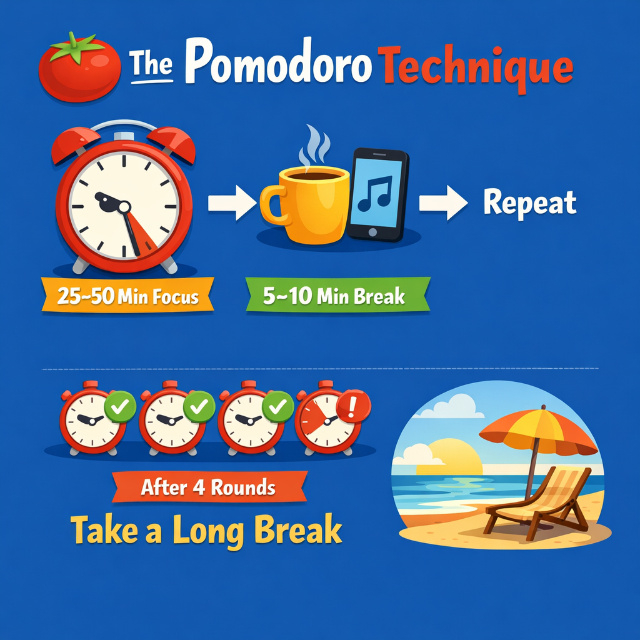
Work in focused 25-minute blocks (Pomodoros) followed by 5-minute breaks. After four Pomodoros, take a longer 15-20 minute break. This structure matches natural attention spans while providing frequent satisfaction of completing intervals.
Set a timer, commit fully to the task during the 25 minutes, then honor the break. The time constraint creates urgency that enhances focus. The guaranteed break makes sustained effort psychologically manageable.
Research shows that students who use the Pomodoro technique complete 40% more material in the same timeframe than those who study unstructured.
For longer attention spans, modify to 50-minute work blocks with 10-minute breaks. Experiment to find what maintains your peak focus. The key is predetermined work and break times, not flexible "I'll break when I feel like it" approaches.
2. Set Specific Session Goals
Before starting, write down exactly what you'll accomplish during this session. Not "study for three hours" but "complete chapter 5 review questions 1-30, create flashcards for 20 key terms, work 10 practice problems."
Specific goals provide clear targets, creating satisfaction as you achieve them. Track progress visibly, check off completed tasks, or maintain a count. This visible progress sustains motivation much more effectively than vague time-based goals. Students using specific task goals report 60% lower procrastination than those with time based goals.
4. Eliminate All Distractions
Create a distraction-free environment before beginning. Put your phone in another room or a timed lockbox. Close all browser tabs except necessary research materials. Use website blockers for social media and news sites. Wear noise canceling headphones or study in quiet locations.
Removing each distraction source increases average focus time by 10-15 minutes. Students studying with phones out of sight maintain focus 2.5 times longer than those with phones visible. Digital distraction elimination produces the single largest productivity improvement of any technique.
5. Vary Study Activities
Switch between different types of cognitive work to prevent mental fatigue in any single mode. Alternate between reading, problem solving, writing, active recall, and review. This variation maintains engagement by preventing the boredom that comes from repetitive tasks.
For a three-hour chemistry session: 50 minutes reading and highlighting, 50 minutes working practice problems, 50 minutes creating study guides and flashcards, with 10-minute breaks between. The variety keeps your brain engaged across the entire session.
Research shows students who vary activities maintain motivation 70% longer than those who do single activities for extended periods.
The novelty of each new activity provides fresh engagement even as the overall session length extends.
6. Use Scheduled Rewards
Plan specific rewards for completing goals, not vague "I'll watch Netflix later," but "after finishing these 20 problems, I'll take a 15-minute walk and get coffee." Immediate, specific rewards activate motivation systems much more effectively than distant, vague ones.
Make rewards proportional to effort; bigger achievements deserve better rewards. Use rewards you genuinely want, not things that feel like additional work. The anticipation of the reward helps sustain effort through difficult material.
Studies show students using scheduled reward systems maintain peak productivity 45 minutes longer per session than those without structured incentives.
Reward anticipation provides motivation when intrinsic interest wanes.
For students managing such heavy loads that no motivation technique can make the volume manageable, many use a professional essay writing service for specific papers, bringing the total workload to levels where motivation strategies can work effectively.
How Do You Combat Mental Fatigue During Extended Study?
Mental fatigue is inevitable during long sessions; the key is to manage it rather than ignore it. These strategies minimize fatigue and accelerate recovery.
1. Take Strategic Movement Breaks
Physical movement restores cognitive function more effectively than passive rest. During breaks, walk, stretch, do jumping jacks, or climb stairs. This movement increases blood flow to the brain, delivering oxygen and glucose while clearing metabolic waste products.
Research shows 10 minutes of moderate physical activity during breaks restores focus to 90% of peak levels, while passive sitting only restores to 60%.
Students who move during breaks report feeling significantly more alert and maintain better concentration in subsequent work blocks.
Even 2-3 minutes of movement helps. Stand and stretch at your desk. Walk to refill your water. The key is getting blood flowing and breaking static positioning.
2. Hydrate and Fuel Properly
Dehydration and hunger significantly impair cognitive function. Keep a bottle of water at your desk and sip regularly. Have healthy snacks available, such as nuts, fruit, and yogurt, for sustained energy. Avoid high sugar snacks that cause energy crashes.
Studies show even 2% dehydration (easily reached after 2-3 hours without drinking) reduces cognitive performance by 10-15%.
Keeping a water bottle visible and taking sips during Pomodoro breaks maintains hydration effortlessly.
Eat a substantial meal before long study sessions. Your brain uses 20% of your body's energy; running on empty makes concentration impossible. Complex carbohydrates plus protein provide sustained fuel without crashes.
3. Change Your Study Location
Environmental novelty restores attention. After 90-120 minutes, move to a different room, a library, or a coffee shop. The new environment provides fresh sensory input, reengaging your attention systems.
Students who change locations mid-session report renewed focus and easier concentration than those who stay in the same spot all day. The movement also provides physical activity between study blocks.
If you can't change locations, make smaller environmental changes; open windows, adjust lighting, or move to a different seat. Any novelty helps combat the adaptation that reduces attention over time.
4. Use Strategic Naps
For sessions exceeding 4 hours, a 15-20-minute nap around the midpoint dramatically restores cognitive function.
Research shows naps improve alertness, memory consolidation, and problem-solving ability for 2-3 hours after waking.
Set an alarm for no more than 20 minutes; longer naps risk sleep inertia (grogginess). Find a dark, quiet space. Even if you don't fully sleep, the rest with eyes closed restores mental resources.
Studies of medical students and residents show that properly-timed naps improve performance more than any other intervention during marathon study sessions. Don't view naps as "wasting time"; they're strategic investments in subsequent productivity.
5. Practice Mindfulness Reset
When you notice motivation flagging, take 2-3 minutes for mindful breathing. Close your eyes, take ten slow, deep breaths, focusing only on the sensation of breathing. This resets your attention and reduces the stress that compounds fatigue.
Research shows that brief mindfulness exercises restore focus and reduce the anxiety that often accompanies long study sessions. Students who practice mindfulness breaks report lower stress and better concentration than those who push through without mental resets.
6. Recognize When to Stop
Pushing past genuine exhaustion is counterproductive. When concentration becomes impossible despite breaks and strategies, stopping and returning fresh later produces better results than forcing unproductive hours.
If you've studied effectively for 4-5 hours and feel completely depleted, trust that you've done productive work. Diminishing returns set in when exhaustion dominates, you're reviewing without encoding, reading without comprehending. Better to stop and return refreshed.
For students, even with optimal techniques, they cannot maintain the study volume their courses demand. Combining effective motivation strategies with the strategic use of a reliable essay writing service for specific papers creates sustainable workload levels.
What Mistakes Prevent Sustained Motivation?
Common errors sabotage motivation even when students want to succeed. Recognizing and avoiding these patterns dramatically improves sustained focus.
1. Starting Without Clear Goals
Students sit down to "study" without defining what that means. After two hours of unfocused effort, they've accomplished little but feel like they've worked. This creates the worst outcome: time spent without progress.
Always start with specific, written goals. "Complete 30 calculus problems, read chapter 7, create a study guide for section 3." You'll know when you're done and can track progress throughout the session.
2. Studying in Distracting Environments
Attempting to study in your bedroom with your phone, TV, roommates, and open social media tabs guarantees failure. You'll spend most time fighting distractions rather than actually studying.
Create or find genuinely distraction-free environments. Libraries exist for exactly this purpose. If home-studying, remove all distractions before starting; don't rely on willpower to resist current temptations.
3. Skipping Breaks
Students who "don't have time for breaks" become progressively less productive until they're getting almost nothing done while sitting at their desk. Breaks aren't optional luxuries; they're maintenance required for sustained performance.
Honor break schedules even when you feel focused. The Pomodoro break prevents future fatigue rather than responding to current fatigue. Students who take scheduled breaks accomplish more total work than those who try studying straight through.
4. Using Social Media as "Breaks"
Scrolling social media during breaks doesn't restore focus; it fragments it further. The dopamine spikes and constant stimulus shifting exhaust the same mental resources you're trying to restore.
Use breaks for physical movement, nature exposure, genuine rest with eyes closed, or brief in-person social interaction. Avoid all screens during breaks if possible. Students who take screen-free breaks report 40% better focus in subsequent work blocks.
5. Setting Unrealistic Session Goals
Planning to study for eight hours straight is unrealistic for most people and will only lead to disappointment. Better to plan four highly productive hours than eight hours of degrading focus and mounting frustration.
Start with manageable commitments you can definitely achieve. Build from there. Success breeds motivation; failure breeds avoidance. Better to exceed conservative goals than to fail at ambitious ones.
6. Ignoring Physical Needs
Skipping meals, avoiding water, and sitting for hours without movement are physical neglects that directly impair cognitive function. Your brain can't perform optimally when your body lacks basic resources.
Treat physical maintenance as part of your study system, not optional extras. Scheduling meals, hydration, and movement is as important as scheduling work blocks.
For students who discover that, despite fixing all these mistakes, they still struggle with an overwhelming workload, many use a trusted essay writing service for specific papers, creating space for effective, motivated study of the remaining material.