-19395.jpg)
How Do You Find Scholarships Worth Applying For?
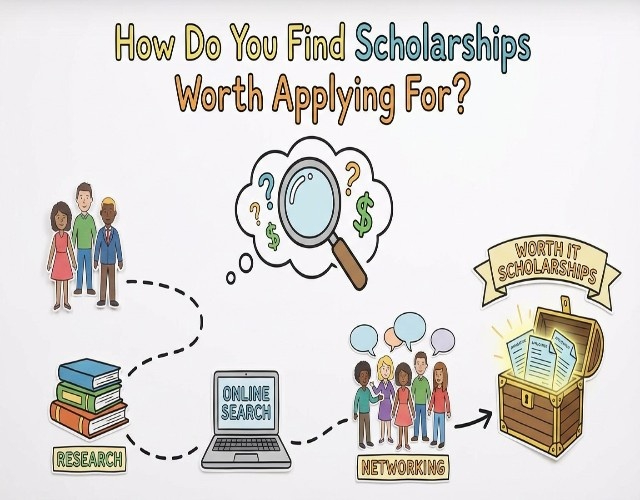
Find high-value scholarships by using specialized search engines (Fastweb, Scholarships.com, Bold.org), targeting local and niche awards with fewer applicants, checking your prospective colleges' institutional scholarships, and researching opportunities through your parents' employers or professional organizations. The most common mistake is only applying to prestigious national scholarships where competition exceeds 50,000 applicants; local $1,000-$5,000 awards often require less effort and offer better odds.
The Scholarship Search Hierarchy (Best to Worst Odds)
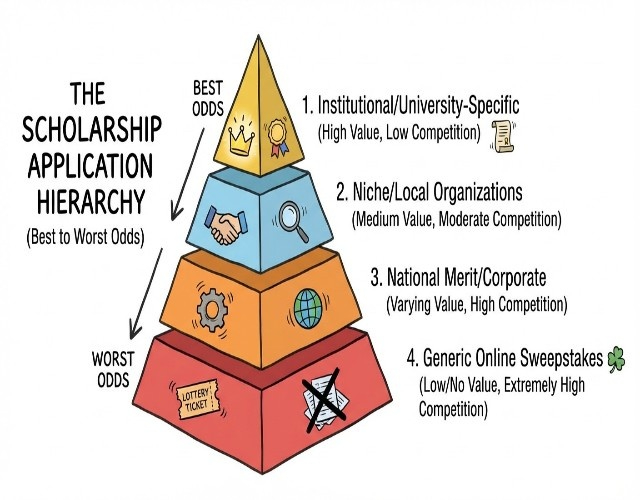
Tier 1: Institutional Scholarships (Apply First)
Your target colleges offer the most scholarship money with the best odds. Many universities automatically consider admitted students for merit scholarships, while others require separate applications.
Why institutional scholarships matter most:
- Award amounts: $5,000-$25,000+ annually (renewable).
- Competition: Limited to admitted students at that school (hundreds vs. tens of thousands).
- Fit evaluation: Schools assess you holistically, not just one essay.
- Multi-year value: Renewable awards total $20,000-$100,000+ over four years
Check each prospective college's scholarship portal. Deadlines often occur before admission decisions, in December or January, for the schools you're applying to. Missing these deadlines forfeits your best scholarship opportunities.
Tier 2: Local Community Scholarships (Best Time-to-Value Ratio)
Local businesses, civic organizations, churches, and community foundations offer $500-$5,000 scholarships with applicant pools of 50-500 students instead of 50,000.
Where to find local scholarships:
- Your high school guidance office (many are exclusive to your school).
- Community foundation websites (search "[your city/county] community foundation").
- Local business websites (banks, insurance agencies, law firms).
- Rotary, Kiwanis, Lions Club chapters.
- Parents' employer scholarship programs.
- Local union or professional association scholarships
Students focusing exclusively on national scholarships miss these opportunities where a solid application wins against limited competition. Five local $2,000 scholarships equal one $10,000 national award, but require one-third the effort.
Tier 3: Identity-Based and Niche Scholarships (Moderate Competition)
Scholarships targeting specific demographics, majors, or interests reduce competition dramatically. Engineering scholarships exclude 90% of students. First-generation college student awards eliminate students with college-educated parents.
Niche categories to explore:
- Major-specific (nursing, engineering, teaching, etc.).
- Heritage/ethnicity-based organizations.
- First-generation college students.
- Military dependents or veterans.
- Students with disabilities.
- Intended career field organizations.
- Hobby or activity-based (golf, equestrian, volunteering).
The more specific the criteria, the fewer applicants and better odds. A scholarship for left-handed redheaded jazz musicians from Ohio receives 20 applicants versus 20,000 for generic merit awards.
Tier 4: National Corporate and Foundation Scholarships (Worst Odds)
Coca-Cola Scholars, Gates Scholarship, Dell Scholars, and similar national programs offer life-changing amounts ($20,000-$100,000+) but attract tens of thousands of exceptional applicants. Apply to 1-3 of these, but don't make them your primary strategy.
Why national scholarships work as lottery tickets, not strategies:
- Competition: 20,000-100,000+ applicants for 50-500 awards.
- Acceptance rates: Often under 1% (more competitive than Harvard).
- Time investment: Applications require 10-20 hours each.
- Unpredictable criteria: Even exceptional students get rejected.
Include a few national reaches in your portfolio, but secure funding through institutional and local awards first.
Building Your Scholarship Application List
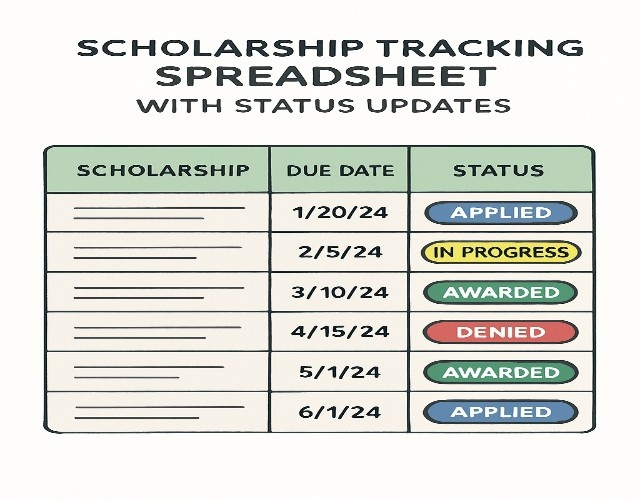
Create a spreadsheet tracking 20-30 potential scholarships with columns for deadline, award amount, requirements, and estimated effort level. Focus on scholarships where you meet all eligibility criteria and can submit genuinely strong applications.
Application quantity guidelines:
- Minimum viable: 15 applications (expect 2-4 wins totaling $8,000-$20,000).
- Strong effort: 20-25 applications (expect 4-7 wins totaling $15,000-$40,000).
- Maximum realistic: 30 applications (diminishing returns beyond this).
Quality matters more than quantity. Twenty carefully crafted applications outperform fifty rushed generic submissions. Scholarship committees instantly recognize copy-paste essays that don't specifically address their prompt.
What Makes a Winning Scholarship Essay?
Winning scholarship essays directly answer the prompt with specific personal stories demonstrating the qualities committees seek (perseverance, leadership, community impact), connect experiences to future goals, and avoid generic statements that could apply to anyone. The most common fatal mistake is writing what you think sounds impressive rather than authentically answering the actual question asked.
The Anatomy of Scholarship Essays That Win
Element 1: Immediate Prompt Alignment
Scholarship essays fail most often because applicants ignore the actual prompt. A prompt asking "Describe a challenge you overcame and what you learned" requires a challenge narrative with reflection. Applicants often write achievement essays instead, discussing awards won rather than obstacles conquered.
Read the prompt multiple times. Underline key instruction words: describe, explain, discuss, analyze. Identify exactly what they're asking before writing a single word. Your opening paragraph should make clear you understand and are addressing the prompt directly.
Element 2: Specific Concrete Stories
Generic essays claim: "I am a leader who perseveres through challenges and helps my community." Winning essays show specific moments: "When our debate team lost its advisor in November, I organized practice sessions at my kitchen table each Tuesday, recruited three alumni judges, and helped our team place second at State despite having no coach."
Scholarship committees read hundreds of essays claiming leadership and perseverance. Concrete stories with specific details, names, dates, sensory details, and dialogue prove these qualities instead of asserting them. Showing beats telling every time.
Element 3: Personal Insight and Growth
Strong scholarship essays reveal self-awareness and growth. After describing experiences, explain what you learned about yourself, how your perspective changed, or what you'd do differently. Reflection demonstrates maturity and learning capacity.
Weak: "This experience taught me the importance of hard work."
Strong: "Watching my business fail taught me that passion alone doesn't create success. understanding customer needs matters more than loving your product. This realization transformed how I approach projects: research first, enthusiasm second."
Element 4: Clear Future Connection
Connect your past experiences to future goals and explain why this scholarship specifically helps you achieve them. Committees invest in students likely to maximize their education and positively impact communities.
Don't write: "This scholarship would help me pay for college." Write: "As a first-generation student pursuing biomedical engineering, this scholarship eliminates the 20-hour weekly work schedule that would otherwise limit my lab research time, the hands-on experience I need to contribute to prosthetics development for pediatric patients."
When you're crafting these high-stakes narratives where $10,000-$50,000 depends on standing out from thousands of applicants, a trusted essay writing service can help you develop compelling stories with the strategic structure and polished execution that scholarship committees reward with funding.
Essay Red Flags That Trigger Rejection
1. Generic statements applicable to anyone: "Education is important to me, and this scholarship would help me achieve my dreams." Committees reject these instantly; thousands of applicants could write identical sentences.
2. Excessive humility or false modesty: "I'm not special, but..." Scholarship committees choose exceptional students. Confidence balanced with authenticity wins; excessive humility suggests you don't believe you deserve funding.
3. Lack of proofreading: Typos, grammatical errors, and formatting inconsistencies signal a lack of effort and attention to detail. If you won't invest time perfecting a $10,000 essay, why should committees invest in you?
4. Controversial topics without purpose: Political arguments, religious debates, or divisive opinions alienate evaluators unless directly relevant to the prompt. Stay focused on your story and qualifications. Browse our collection of college application essay topics to find the perfect idea for your application.
5. Victim mentality without resilience: Describing challenges gains sympathy; staying stuck in difficulty without demonstrating growth or perseverance concerns committees. They fund resilient students who overcome obstacles, not students overwhelmed by them.
6. Copying examples or using AI detection-prone content: Committees increasingly use plagiarism detection and AI content detection tools. Copied or AI-generated essays result in immediate disqualification.
How Do You Secure Strong Letters of Recommendation?
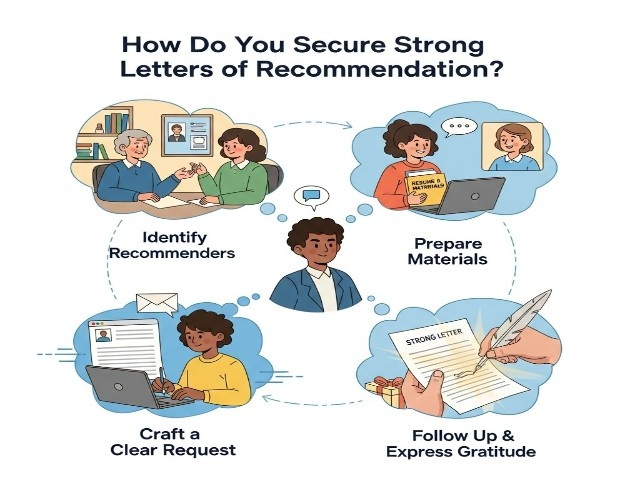
Secure powerful recommendations by asking teachers who know you well at least 4-6 weeks before deadlines, providing them with comprehensive background materials, including your resume and scholarship information, and following up respectfully to ensure timely submission. The weakest recommendations come from impressive-sounding people (principals, senators) who barely know you; the strongest come from teachers or mentors who can provide specific examples of your character and abilities.
Choosing the Right Recommenders
The best recommenders have two qualities:
1. Direct knowledge of your abilities: They've observed you extensively in relevant contexts.
2. Strong writing skills: They can articulate observations compellingly
A teacher who taught you junior year and sponsors a club you lead writes stronger recommendations than a celebrity or politician who met you once. Committees want substantive assessment, not name-dropping.
Ideal recommender categories:
- Core academic teachers (especially in fields related to your major).
- Activity sponsors or coaches who know your leadership.
- Employers or volunteer supervisors who've worked with you extensively.
- Mentors from long-term programs (research, internships).
Avoid family friends, relatives, or religious leaders unless they supervised substantial work or the scholarship specifically requests religious recommendations. Personal relationships create biased concerns.
The Recommendation Request Process
Timeline for requesting recommendations:
- First choice recommenders: 6-8 weeks before deadline.
- Backup options: 4-6 weeks before deadline.
- Absolute minimum: 3 weeks before the deadline (less than this is disrespectful).
Effective request approach:
1. Ask in person when possible, email if necessary.
2. Explain the scholarship and why it matters to your goals.
3. Confirm they can write a strong, positive recommendation.
4. Provide deadline and submission instructions.
5. Offer comprehensive background materials.
Some teachers decline recommendation requests because they don't feel they know students well enough. This honesty helps you; a reluctant recommendation hurts more than finding another recommender.
Providing Helpful Background Materials
Make your recommender's job easy by providing organized information:
Essential materials to supply:
- Resume or activity list highlighting relevant achievements.
- Transcript (they may not remember your grades across courses).
- Scholarship description and criteria.
- Essay draft or personal statement (helps them align their recommendation).
- Specific qualities the scholarship values (leadership, service, perseverance).
- 2-3 specific memories or examples they might reference.
- Clear submission deadline and instructions.
Sample guidance you might include:
"The scholarship values leadership and community service. You might mention my role organizing the school food drive that collected 3,000+ items, or when I helped struggling calculus students during your office hours. The committee wants to understand how I positively impact communities and support peers academically."
This guidance helps recommenders write specific, relevant letters addressing scholarship criteria. Without it, recommendations often generically praise students without targeting what committees need to hear.
Following Up Respectfully
Send polite reminders as deadlines approach:
- Two weeks before deadline: "Just checking if you need any additional information".
- One week before deadline: "Wanted to confirm the recommendation is progressing well".
- Three days before deadline: "The deadline is approaching on [date], please let me know if any issues arise."
After submission, always send thank-you notes (handwritten preferred). Recommenders invest significant time helping students express genuine appreciation. These same people may write graduate school or job recommendations years later.
What Scholarship Application Strategies Maximize Your Total Awards?
Maximize total scholarship awards by applying early to maximize opportunities, reusing and adapting essays across multiple applications to increase efficiency, focusing effort proportionally on the highest-value awards, and maintaining organized systems tracking deadlines and requirements. Students treating scholarship applications as systematic campaigns win 3-5x more funding than those applying sporadically without a strategy.
The Early Application Advantage
Many scholarships review applications on a rolling basis, awarding funds until depleted. Early applicants face less competition and benefit from committee members' fresh enthusiasm compared to late submissions during final deadline rushes.
Benefits of early application:
- Less competition in initial review rounds.
- More committee attention before fatigue sets in.
- Demonstrates organization and genuine interest.
- Provides time for revisions if technical issues occur.
- Reduce your stress by completing early.
Start applications immediately when available, aiming to submit 2-4 weeks before deadlines rather than on deadline day. Quality doesn't suffer from early completion; most students improve their essays through multiple revision rounds over weeks, not rushed overnight sessions.
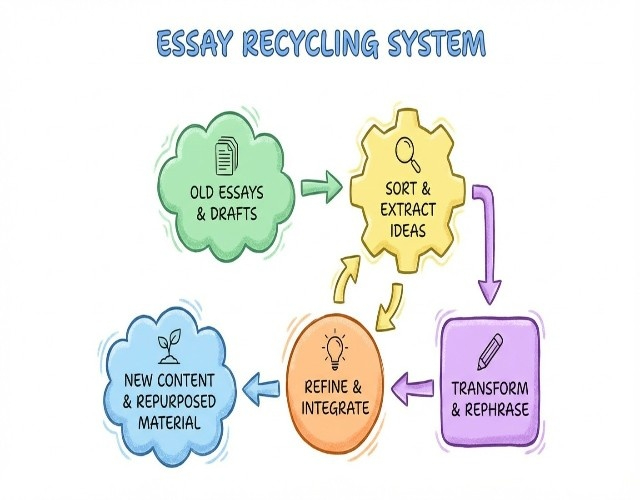
The Essay Recycling System
Writing completely unique essays for 20 scholarships creates an unsustainable workload. Strategic applicants develop 3-5 strong core essays adaptable to various prompts.
Core essay themes that adapt broadly:
1. Overcoming a significant challenge: Addresses prompts about resilience, growth, and perseverance.
2. Leadership or service experience: Covers community impact, helping others, and taking initiative.
3. Academic or career goals: Explains your field choice, future aspirations, and why you need education.
4. Defining moment or influence: Discuss what shaped your values, interests, or direction.
5. Diversity or unique perspective: Addresses background, experiences, or viewpoints you bring.
Adapt core essays to specific prompts by adjusting opening paragraphs, adding prompt-specific examples, and tailoring conclusions to scholarship criteria. A well-written core essay becomes 5-10 scholarship submissions with 30-60 minutes of adaptation each.
Essay recycling ethics: Adaptation is appropriate; copy-paste without customization is not. Every submission should directly address that scholarship's specific prompt and criteria. Generic essays are obvious and fail.
Proportional Effort Investment
Not all scholarships deserve equal effort. Allocate time based on award size and winning probability.
Effort allocation framework:
- $20,000+ institutional scholarships: 15-20 hours (multiple essay rounds, perfect polish).
- $5,000-$10,000 local/niche scholarships: 4-6 hours (strong tailored essays).
- $1,000-$2,500 smaller scholarships: 2-3 hours (solid adapted essays).
- $100-$500 micro-scholarships: 30-60 minutes (basic application if very easy).
This framework prevents spending 10 hours perfecting a $500 scholarship essay while rushing a $15,000 institutional application. Return on time investment matters when managing 20+ applications.
Organization Systems That Prevent Deadline Disasters
Missing deadlines wastes all previous effort. Organizational systems prevent this tragedy.
Essential tracking system:
Create a spreadsheet with columns:
- Scholarship name and organization.
- Award amount.
- Deadline (with a 1-week early target deadline).
- Requirements (essays, recommendations, transcripts, etc.).
- Status (not started, in progress, submitted).
- Notes (login credentials, confirmation numbers, judge contacts)
Set calendar reminders for:
- Two weeks before the deadline (begin if not started).
- One week before the deadline (finalize and review).
- Three days before the deadline (final check and submit).
Batch similar tasks:
- Request all transcripts on one day.
- Ask all recommenders during the same week.
- Complete similar essay prompts in one session.
- Submit multiple applications during dedicated time blocks.
Batching creates efficiency through momentum and reduces the cognitive overhead of constantly switching between different scholarship contexts.
When you're managing 15-25 applications simultaneously and need strategic support on your highest-value submissions to ensure they receive the polish and attention that distinguish winners, a reliable essay writing service can provide expert assistance on critical applications while you focus your personal effort on institutional and local awards, maximizing your total funding across all opportunities.
Conclusion
Winning substantial scholarship money requires treating applications as systematic campaigns rather than lottery tickets, with strategic targeting, polished materials, and organized execution separating students who graduate debt-free from those borrowing heavily.
Key strategies for maximizing scholarship awards:
- Apply to 15-25 well-matched scholarships, prioritizing institutional awards (best odds, highest amounts), then local community scholarships (best time-to-value ratio), before national competitions.
- Write essays that directly answer specific prompts with concrete personal stories demonstrating growth and connecting experiences to future goals rather than generic achievement lists.
- Secure recommendations from people who know you well 4-6 weeks before deadlines, providing comprehensive background materials that help them write specific, relevant letters.
- Start applications early (September-October of senior year), develop 3-5 adaptable core essays you customize for various prompts, and allocate effort proportionally to award size.
- Create organized tracking systems with calendar reminders, preventing the deadline disasters that waste all previous effort
Begin your scholarship campaign by building a spreadsheet of 20-30 potential scholarships where you meet eligibility criteria and can submit genuinely strong applications. Students investing 30-40 hours total across systematic campaigns typically win $20,000-$50,000+ in funding, that's $500-$1,250 per hour of effort, far exceeding any part-time job.
The financial difference between graduating with $80,000 in debt versus $15,000 often comes down to scholarship application quality and strategy rather than merit alone.
Most money goes to students who apply strategically with polished materials, not necessarily those with the highest GPAs or most impressive resumes. Your application effort directly determines your financial future; treat it as the highest-paying temporary job you'll ever have.
When you need expert support on your most critical high-stakes scholarship essays where five-figure awards depend on distinguished applications, a professional essay writing service can provide the strategic positioning and polished execution that separates winning submissions from the 95% that get rejected, helping you maximize your total scholarship funding across all opportunities.
Download our free Scholarship Application Tracker with deadline calendars, essay adaptation worksheets, and recommendation request templates for systematic campaigns.