
What Does Research Say About Working Hours and Academic Performance?
Research shows working 1 to 15 hours weekly correlates with 0.05 to 0.10 higher GPAs compared to non-working students through enhanced time management, structure, and reduced excessive socializing.
Working 16 to 20 hours shows neutral academic impact (0.0 to 0.05 GPA difference), 21 to 25 hours begins negative effects (0.10 to 0.20 GPA decrease) as work time cuts into study time, and 26+ hours significantly harms academics (0.30+ GPA decrease) with 25% increased dropout risk.
Additionally, 70% of students working 30+ hours report high stress, sleep deprivation, and health problems affecting quality of life beyond just grades.
The Sweet Spot: 10 to 15 Hours Weekly
Why 10 to 15 hours improves academic performance:
- Creates structured schedule (no excessive free time)
- Develops time management skills used for studying
- Reduces time wasted on low-value activities
- Provides breaks from academic stress
- Builds responsibility and accountability
- Maintains connection to professional world
- Generates income without overwhelming schedule
Research findings on 10 to 15 hour students:
- 3.21 average GPA (vs 3.16 for non-working students)
- 87% report strong time management skills
- 78% graduate within 6 years
- 65% say work experience helped career placement
- 82% maintain social connections and campus involvement
The Danger Zone: 20+ Hours Weekly
Why 20+ hours creates problems:
- Reduces available study time below recommended levels
- Forces a choice between sleep, studying, and social life
- Limits campus involvement and networking
- Increases stress and burnout risk
- Reduces ability to take advantage of opportunities (study abroad, internships, research)
- Makes heavy course loads impossible
Statistics on students working 25+ hours:
- 2.85 average GPA (0.36 points lower than non-workers)
- 25% higher dropout rate
- 70% report chronic stress and sleep deprivation
- 45% say work negatively impacts academics
- 32% extend graduation timeline (5+ years vs. 4)
Academic Performance by Weekly Work Hours
| Weekly Hours | Average GPA | Graduation Rate (6-year) | Reports Negative Academic Impact |
|---|---|---|---|
| 0 hours | 3.16 | 76% | N/A |
| 1-10 hours | 3.21 | 81% | 12% |
| 11-15 hours | 3.19 | 78% | 18% |
| 16-20 hours | 3.11 | 73% | 35% |
| 21-25 hours | 2.98 | 68% | 58% |
| 26-30 hours | 2.85 | 62% | 72% |
| 31+ hours | 2.71 | 54% | 85% |
Important context: These are averages; individual outcomes vary based on major difficulty, natural academic ability, job flexibility, and time management skills.
Non Academic Impacts
Beyond GPA, excessive work hours affect:
- Sleep (students working 25+ hours sleep 1-2 hours less nightly)
- Mental health (2.3x higher anxiety/depression rates)
- Social connections (56% report missing social events regularly)
- Campus involvement (reduce or eliminate organization participation)
- Physical health (poor nutrition, lack of exercise, frequent illness)
- Career exploration (no time for internships, networking, skill development)
When managing demanding work schedules alongside rigorous coursework, consider using a professional essay writing service for routine assignments during particularly heavy work weeks, allowing focus on essential academics, work responsibilities, and maintaining adequate sleep and wellbeing rather than sacrificing grades or health to financial necessity, requiring balanced sustainable approach.
How Do You Calculate Your Personal Work Capacity?
Calculate personal work capacity by totaling weekly time commitments (classes 12-18 hours, studying 24-36 hours using 2-3 hours per credit hour, sleep 49-56 hours, meals and personal care 14-21 hours, commute 3-5 hours), equaling 102-136 hours leaving 32-66 hours for work, social, and activities.
Then assess major difficulty (STEM requires more study than humanities), current GPA stability (3.5+ can handle more work than 2.5), semester course load (12 credits versus 18), job flexibility (can you study during downtime?), and financial necessity versus optional income, determining if working is worth academic trade-offs.
Time Budget Calculation
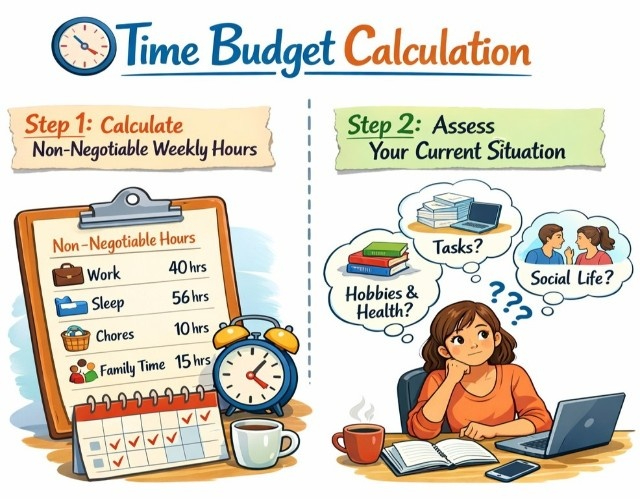
Step 1: Calculate non negotiable weekly hours
Academic commitments:
Essential personal needs:
Total committed time: 108 to 140 hours of 168 weekly hours Remaining flexible time: 2 to 60 hours This remaining time covers: work, social activities, campus involvement, errands, relaxation, buffer for unexpected demands. |
Step 2: Assess your current situation
Major difficulty adjustment:
Current academic performance:
Course load this semester:
Job flexibility:
|
Personal Capacity Formula
Maximum sustainable work hours = 28-60 available hours - (10 social/activities + 5 campus involvement + 5 buffer) = 8-40 hours theoretically
Practical sustainable work hours:
- Light academic load (12 credits, easy major, 3.5+ GPA): 15-20 hours
- Average academic situation (15 credits, moderate difficulty, 3.0+ GPA): 10-15 hours
- Heavy academic load (18 credits, STEM major, building GPA): 5-10 hours
- Struggling academically (below 3.0 GPA): 0-5 hours until stable
Reality check questions:
- Am I sacrificing sleep to work and study? (Red flag)
- Are my grades declining since starting work? (Reduce hours)
- Do I miss classes or skip studying due to work? (Unsustainable)
- Am I constantly stressed and overwhelmed? (Too much)
- Do I have time for friends and self-care? (Essential for wellbeing)
What Are the Best Part Time Jobs for Students?
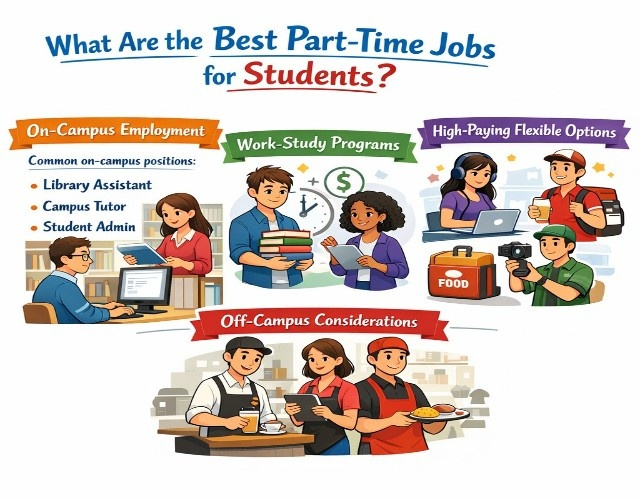
Best part-time jobs for students include on-campus positions (library, recreation center, student unions) offering convenient location and flexible scheduling around classes, tutoring providing $15-25/hour with resume value and studying opportunities, resident advisor positions providing free housing ($8,000-12,000 value) plus stipend, work-study jobs through federal financial aid matching student schedules, research assistantships building resume for graduate school while developing skills, and remote positions (virtual assistant, freelance writing, data entry) maximizing schedule flexibility working between classes or late evening.
On Campus Employment
Advantages of on campus jobs:
- No commute (walking distance from dorms)
- Employers understand academic priorities
- Flexible scheduling around classes and exams
- Study opportunities during slow periods
- Network with faculty and staff
- Resume building within a university context
Common on campus positions:
1. Library positions ($10 to 15/hour):
- Shelving books and organizing materials
- Circulation desk assistance
- Significant downtime for studying
- Quiet environment
- 10 to 20 hours weekly, typically
2. Recreation center ($10 to 14/hour):
- Equipment desk attendant
- Facility monitor
- Fitness class assistant
- Free gym access often included
- Active role (less studying time)
Dining services ($10 to 13/hour):
- Food preparation and serving
- Cashier and cleaning
- Flexible shifts
- Free or discounted meals often included
- Higher hours available (20 to 30 weekly)
Student union/center ($10-15/hour):
- Information desk
- Event setup and support
- Box office or ticket sales
- Variable hours (events, evenings, weekends)
Departmental assistant ($12 to 18/hour):
- Administrative support for academic departments
- Professional skills development
- Networking with faculty
- Resume value for career field
- Usually 10 to 15 hours weekly
Resident Advisor (RA):
- Free housing ($8,000 to 12,000 value annually)
- Stipend ($1,000 to 3,000 per year)
- Leadership experience
- Significant time commitment (24/7 on call)
- Builds community and advising skills
Work Study Programs
Federal work study benefits:
- Part of financial aid package (need-based)
- Jobs match academic schedule
- Limited hours (typically 10 to 15 hours weekly)
- On-campus or approved off-campus nonprofit positions
- Earnings don't count against financial aid
- Often career-related positions
How to access work study:
- Complete FAFSA indicating work-study interest
- Financial aid office determines eligibility
- Search work study job board on campus
- Apply like a regular job (resume, interview)
- Supervisor manages hours within the award limit
High Paying Flexible Options
Tutoring ($15 to 30/hour):
- Subject expertise (math, science, writing)
- Set own schedule and rates
- Meet students in library or online
- Resume value (teaching, communication skills)
- Helps reinforce your own learning
- Find clients through campus tutoring center, flyers, online platforms
Research assistant ($12 to 20/hour):
- Work with faculty on research projects
- Lab work, data collection, literature reviews
- Resume building for graduate school
- Flexible hours arranged with professor
- Skill development in research methods
- Networking with faculty
Freelance/remote work ($15 to 50/hour depending on skills):
- Writing, editing, graphic design
- Virtual assistant, social media management
- Web development, coding
- Data entry, transcription
- Complete flexibility (work midnight if you want)
- Build portfolio for future career
- Find through Upwork, Fiverr, FlexJobs
Off Campus Considerations
When off campus makes sense:
- Higher pay than campus jobs
- Career-relevant experience (internship style position)
- Already have established employment relationship
- Campus jobs unavailable or don't fit schedule
Off campus challenges:
- Commute time and cost
- Less understanding of academic demands
- Rigid scheduling (less flexibility for exams)
- Longer shifts (4 to 8 hours vs. 2 to 4 hours on campus)
Best off campus options:
- Retail with student friendly employers (Target, Starbucks)
- Restaurants (flexible schedules, tip income)
- Nanny/babysitting ($12 to 20/hour)
- Ride-share or delivery (Uber, DoorDash)
- ultimate flexibility
- Fitness instruction (yoga, personal training) if qualified
How Do You Balance Work and Academic Responsibilities?
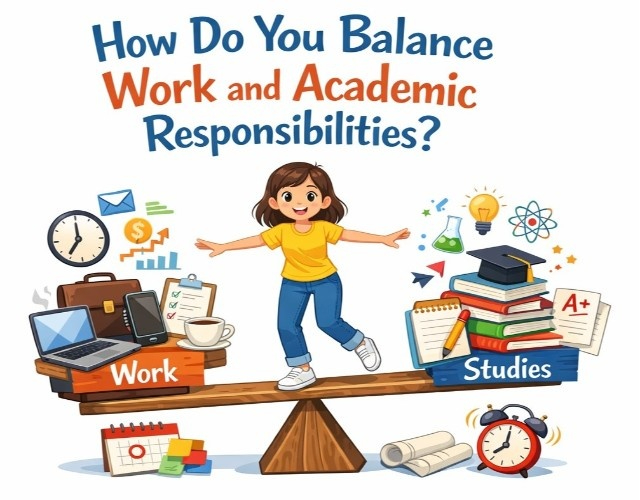
Balance work and academics by creating master weekly schedule blocking all commitments (classes, work, study time) identifying conflicts before they occur, communicating with employer about exam weeks and major deadlines, prioritizing academics over work when conflicts arise (school is your primary job), protecting sleep as non negotiable (7 to 8 hours nightly), batch-processing similar tasks increasing efficiency, and regularly assessing whether current work hours remain sustainable adjusting before crisis occurs.
Time Management Strategies
Create a comprehensive weekly schedule:
- Block all class times
- Add work shifts
- Schedule study blocks for each class (2 to 3 hours per credit hour)
- Include sleep, meals, commute, exercise
- Identify any conflicts or overcommitment
Example balanced schedule (15 credits + 12 work hours):
Monday/Wednesday/Friday: Tuesday/Thursday: Weekend: Total: 12 work hours + 45 class hours + 36-40 study hours + 56 sleep hours + 21 personal = manageable
Communication with Employers
Setting expectations upfront:
Managing conflicts:
When to prioritize academics:
|
Efficiency Strategies
Maximize productivity during limited time:
Leverage work benefits:
|
Regular Assessment
Monthly work life check-in:
Signs you're working too much:
When these signs appear, immediately:
|
Key Takeaways
Successfully balance work and academics through these evidence-based strategies:
Limit work to 10 to 15 hours weekly for optimal outcomes, as research shows students working 1 to 15 hours have 0.05 to 0.10 higher GPAs than non-working students through improved time management, while 26+ hours decreases GPA by 0.30+ points and increases dropout risk by 25%. The sweet spot balances financial benefits with academic success, maintaining essential study time, sleep, and social connections.
Calculate personal capacity based on individual circumstances, totaling non-negotiable commitments (36-54 hours academics, 72-86 hours essential needs), leaving 28-60 flexible hours, then adjusting for major difficulty, current GPA, course load, and job flexibility. STEM students taking 18 credits may sustain only 5-10 work hours, while business students with 12 credits manage 15-20 hours successfully.
Prioritize on-campus employment and work-study , offering a convenient location (no commute), understanding of academic priorities, flexible scheduling around exams, study opportunities during downtime, and resume-building through university context. Resident advisor positions provide $8,000-12,000 free housing value, while tutoring pays $15-30/hour with schedule flexibility.
Create comprehensive weekly schedules blocking all commitments including classes, work, study blocks (2-3 hours per credit hour), sleep (7-8 hours nightly), meals, and social time, identifying conflicts before they occur and protecting non-negotiables like adequate sleep and exam preparation time.
Assess sustainability monthly through clear warning signs including declining GPA, sleep deprivation (under 7 hours nightly), missing classes for work, constant stress, eliminated social connections, and frequent illness. When warning signs appear, immediately reduce work hours 5-10 weekly or request temporary time off before an academic crisis develops, requiring more drastic intervention.
| Working during college builds time management, responsibility, and career skills while generating necessary income. However, academic success must remain the primary priority; graduating with a strong GPA and degree completion matters more than maximizing part-time earnings. Find a sustainable balance honoring both financial needs and educational investment, determining long-term career outcomes. |
When managing demanding work schedules during particularly heavy academic periods like midterms, finals, or major project deadlines, consider using a trusted essay writing service for routine coursework, allowing focus on essential studying, work responsibilities, and maintaining adequate sleep and wellbeing rather than sacrificing grades, health, or job performance during unsustainable peak demand weeks requiring temporary support.