How Do You Research Companies and Roles Before Interviews?
Company and role research is your foundation; it informs every answer you give and every question you ask. Interviewers instantly recognize who researched versus who's improvising, and research depth directly correlates with interview success.
1. Deep Dive Into Company Information
Spend 2-3 hours researching each company before interviews; this isn't excessive, it's minimum due diligence. Cover these areas systematically:
2. Company Background and Mission
- Read the "About Us" and "Mission/Values" pages thoroughly
- Understand their products, services, and customer base
- Know their company size, founding date, and growth trajectory
- Research their competitors and market position
3. Recent News and Developments
- Google "[Company Name] news" for the past 6 months
- Check their press release page for major announcements
- Review their social media for recent initiatives
- Identify challenges or opportunities they're facing
4. Company Culture and Values
- Read employee reviews on Glassdoor (with appropriate skepticism)
- Watch their culture videos or employee testimonials
- Review their LinkedIn company page for culture content
- Understand their diversity, equity, and inclusion initiatives
Research shows candidates who reference specific company information in answers receive 45% more positive interviewer feedback than those giving generic responses.
Mentioning a recent product launch, company value, or strategic initiative demonstrates genuine interest beyond just wanting any job.
5. Understand the Specific Role
Analyze the job description thoroughly; it's your blueprint for what interviewers will assess. For each requirement and qualification:
- Identify which of your experiences align with each requirement
- Prepare specific examples demonstrating those qualifications
- Note skills you're still developing and prepare honest responses about growth areas
- Research tools or methodologies mentioned to discuss them knowledgeably
Map your qualifications to their requirements in a two column document:
| Their Requirement | My Evidence |
|---|---|
| "Strong analytical skills" | Data analysis project reducing costs by 15% |
| "Team collaboration" | Led 4-person capstone team to completion |
| "Python proficiency" | Completed 3 courses, built 2 projects |
This preparation ensures you won't freeze when asked, "Why are you qualified for this role?" You'll have specific, relevant examples ready. Students who systematically map qualifications to requirements answer questions 40% more specifically than those relying on general preparation.
6. Research Your Interviewers
When you receive interviewer names beforehand, research them on LinkedIn; understanding their background helps build rapport and informs your examples. Note their:
- Role and department
- Career path and tenure at the company
- Educational background
- Shared connections or interests
Don't mention stalking their profile ("I saw on LinkedIn..."), but use the information to tailor your approach. If interviewing with an alumnus from your university, that's natural common ground. If they have a technical background, emphasize technical details; if they're from business development, focus on impact and results.
For students managing interview preparation while facing academic deadlines, many strategically use an essay writing service for specific papers, creating bandwidth for the deep company research that drives interview success.
What Questions Should You Prepare For and How?
Interview questions fall into predictable categories; preparing structured responses for common question types ensures you'll handle 80% of what interviewers ask without improvising.
1. Master the STAR Method for Behavioral Questions
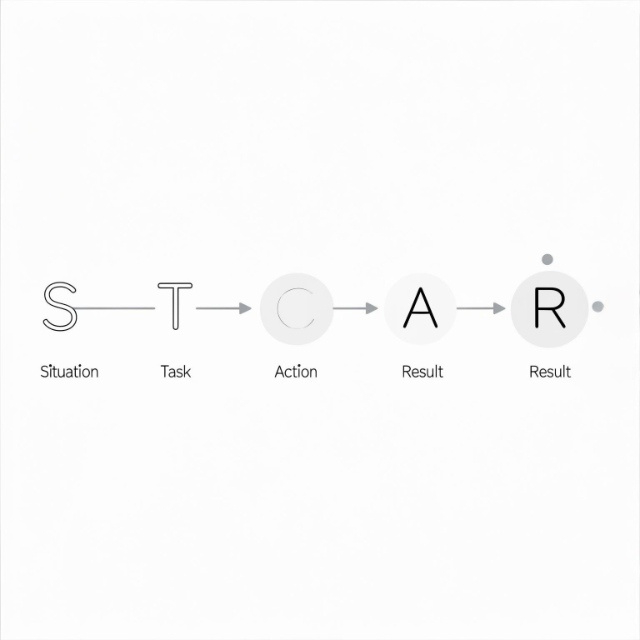
Behavioral questions ("Tell me about a time when...") require structured storytelling using the STAR method:
- Situation: Set context (when, where, what circumstances)
- Task: Explain your responsibility or challenge
- Action: Describe specific actions you took
- Result: Share quantifiable outcomes and learning
Weak Response: "I'm good at teamwork. In my internship, I worked with others on projects, and we got along well."
Strong STAR Response: "At my marketing internship, our team needed to launch a social media campaign in 3 weeks instead of the usual 6 due to a product delay. I was responsible for content creation. I organized daily 15-minute standups to coordinate efforts, created a shared content calendar preventing overlap, and personally produced 20 posts aligned with our brand voice. The campaign launched on time, generated 40% more engagement than our previous campaign, and I learned how structured communication enables teams to perform under tight deadlines."
The strong version is specific, quantified, and demonstrates concrete skills.
Research shows STAR-structured responses receive 60% higher interviewer ratings than vague general answers.
2. Prepare 8-10 Core Stories
Develop detailed STAR stories covering different competencies:
- Leadership/Initiative example
- Teamwork/Collaboration example
- Problem solving/Analytical thinking example
- Overcoming challenge/Failure example
- Communication skills example
- Time management/Prioritization example
- Learning agility/Adaptability example
- Impact/Results driven example
Write out each story following the STAR format. Practice delivering them in 60-90 seconds. These stories become your arsenal; you'll adapt them to various questions. One strong leadership story might answer "Tell me about a time you led a team," "How do you handle responsibility," or "Describe your leadership style."
Students who prepare 8-10 detailed stories answer unexpected questions 3-4 times more effectively than those who prepare generic "I'm a hard worker" talking points.
3. Practice Common Interview Questions
These questions appear in 70-80% of interviews. Prepare specific answers:
"Tell me about yourself"
- 60-90 second professional summary
- Current status (major, year, university)
- Relevant experience highlights
- Why are you interested in this role
- Don't recite your resume, tell your professional story
"Why do you want to work here?"
- Reference specific company attributes from your research
- Connect company values/mission to your interests
- Mention specific products, initiatives, or opportunities
- Avoid generic "great company" statements
"What are your strengths?"
- Name 2-3 relevant strengths with specific examples
- Choose strengths matching job requirements
- Demonstrate each with concrete evidence
"What are your weaknesses?"
- Choose real but manageable weaknesses
- Explain specific steps you're taking to improve
- Show self awareness and a growth mindset
- Avoid fake weaknesses ("I work too hard")
"Where do you see yourself in 5 years?"
- Show ambition aligned with the company's opportunities
- Demonstrate you've thought about your career trajectory
- Balance aspiration with realism
- Avoid suggesting you'll leave quickly
"Why should we hire you?"
- Summarize your top 3 qualifications
- Reference specific role requirements
- Differentiate yourself from other candidates
- Express genuine enthusiasm
Practice these questions out loud until answers feel natural, not memorized. Record yourself and watch for filler words, hesitations, or unclear phrasing. Students practicing aloud perform 50% better in actual interviews than those only mentally reviewing answers.
For students balancing interview preparation with course projects and deadlines, many use a professional essay writing service for specific assignments, protecting time for the practice that builds interview confidence.
What Questions Should You Ask Interviewers?
Asking thoughtful questions demonstrates engagement and helps you assess whether the role fits your goals. Prepare 5-7 questions, ensuring you have backups if some get answered during the interview.
1. Strong Question Categories
About the Role:
- "What would success look like in the first 3-6 months?"
- "What are the biggest challenges someone in this role typically faces?"
- "How does this position contribute to the team's/department's goals?"
- "What projects would I be working on initially?"
About the Team and Culture:
- "Can you describe the team I'd be working with?"
- "How does the team collaborate on projects?"
- "What do you enjoy most about working here?"
- "How would you describe the company culture?"
About Growth and Development:
- "What learning and development opportunities exist?"
- "How do you support career growth for people in this role?"
- "What skills should I develop to excel here?"
- "Can you share examples of career paths people have taken from this role?"
About the Company:
- "How is the company adapting to [relevant industry trend]?"
- "What are the company's main priorities this year?"
- "How has the company changed since you joined?"
2. Questions to Avoid
Never ask questions easily answered by basic research:
- "What does your company do?" (This shows you didn't prepare)
- "How large is the company?" (Google it)
- "What products do you make?" (Visit their website)
Avoid premature compensation and benefits questions in first interviews:
- Save salary, vacation, and benefits for after offers
- Asking too early suggests you only care about compensation
- Wait until they bring up these topics or save for final interviews
Don't ask yes/no questions:
- "Is there training?" changes to "What training opportunities exist?"
- "Do you like working here?" turns into "What do you enjoy most about working here?"
Research shows that candidates asking 3-5 thoughtful questions receive 40% more positive interviewer feedback than those asking only 1-2 or asking generic questions.
Your questions should demonstrate you've thought seriously about the role and company.
How Do You Prepare Practically for Interview Day?
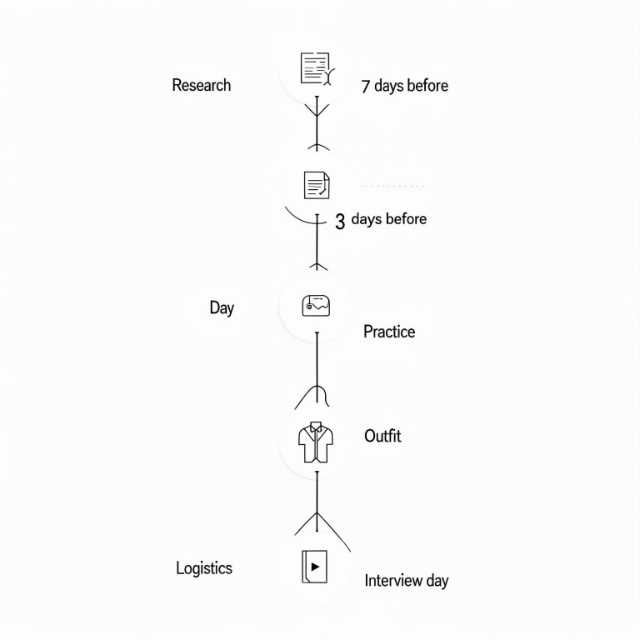
Logistical preparation prevents day-of-interview stress that impairs performance. Handle practical details beforehand so you can focus mentally on the interview itself.
1. Plan Your Outfit in Advance
Choose and test your interview outfit 2-3 days before; discovering wrinkles, missing buttons, or an uncomfortable fit the morning of creates unnecessary stress. Standard interview attire:
Business Professional (Most industries):
- Men: Suit and tie, dress shoes, minimal accessories
- Women: Suit, professional dress, or blouse with slacks/skirt, closed toe shoes
Business Casual (Tech/Creative):
- Men: Dress shirt, slacks, dress shoes (optional blazer)
- Women: Blouse with slacks/skirt, professional dress, flats or heels
When uncertain, err toward more formal; you can always dress down next time if feedback suggests it, but underdressing creates poor first impressions you can't undo.
Research shows professionally dressed candidates receive 35% more positive first-impression ratings than those in casual or inappropriate attire.
2. Master the Location and Timing
For in-person interviews, arrive 10-15 minutes early, account for parking, finding the building, security check in, and restroom stops. Late arrivals signal disorganization and disrespect regardless of the excuse.
Do a practice run if possible, especially for unfamiliar locations. Account for traffic patterns at interview time. Have the recruiter's phone number accessible for emergencies. Plan to arrive 20-30 minutes early, then wait in your car or nearby coffee shop until 10 minutes before.
For virtual interviews, test the technology 30 minutes beforehand:
- Verify that the camera and microphone work
- Check lighting (face should be evenly lit, not backlit by windows)
- Ensure a stable internet connection
- Close unnecessary applications
- Test the interview platform (Zoom, Teams, etc.)
- Prepare a professional background or virtual background
- Silence phone and notifications
Technical difficulties during virtual interviews create terrible impressions despite being common. Students who test technology beforehand experience 70% fewer technical issues than those who "wing it."
3. Prepare Your Interview Materials
Bring multiple copies of your resume, a notepad, and a pen to in-person interviews. Also bring:
- List of references (if requested)
- Portfolio or work samples (if applicable)
- Questions you prepared for interviewers
- Notepad for taking notes during the interview
Taking notes during interviews demonstrates engagement and helps you remember details for follow up. Students who take notes receive 25% higher engagement ratings from interviewers.
4. Manage Pre-Interview Anxiety
Nervousness is normal, channel it productively:
- Get 7-8 hours of sleep the night before (critical for cognitive performance)
- Eat a substantial breakfast/lunch before afternoon interviews
- Arrive early, allowing time to compose yourself
- Do breathing exercises (5 deep breaths) before entering
- Review your prepared stories one final time
- Remind yourself you've prepared thoroughly
Research shows students who sleep adequately before interviews perform 30-40% better on complex questions than sleep-deprived peers.
Your brain needs rest to access prepared information under pressure.
For students managing interview preparation alongside academic responsibilities, strategic use of a reliable essay writing service for specific papers creates bandwidth for the mental preparation that drives interview success.
Conclusion: Systematic Preparation Transforms Interview Performance
Interview preparation for students requires thorough company and role research, practicing common questions using the STAR method for behavioral responses, preparing 5-7 thoughtful questions for interviewers, planning professional attire and logistics, and conducting mock interviews to build confidence. Students who prepare systematically receive job offers at 3-4 times higher rates than those who approach interviews casually. Interviews reward preparation more than natural talent; the candidate who prepares thoroughly consistently outperforms more qualified candidates who improvise.
Key Takeaways:
- Research companies 2-3 hours per interview, depth demonstrates genuine interest (45% better feedback)
- Prepare 8-10 STAR format stories covering different competencies for behavioral questions
- Practice common questions out loud 3-5 times until answers flow naturally
- Prepare 5-7 thoughtful questions showing you've researched the role and company
- Test technology 30 minutes early for virtual interviews (70% fewer technical issues)
- Send personalized thank you emails within 24 hours (25-30% higher offer rates)
Start preparing immediately when you receive interview invitations, not the night before. Research the company thoroughly, write out your STAR stories, practice delivery out loud, prepare your questions, and plan logistics. Compare your performance to previous interviews where you prepared less. The success rate improvement will demonstrate that interview skills are learnable, trainable abilities rather than innate talents.
For students managing interview preparation alongside course deadlines and academic responsibilities, strategic use of a trusted essay writing service for specific assignments creates bandwidth for the thorough preparation that converts interviews into offers.
Transform your interview approach from hoping your resume speaks for itself into strategically demonstrating why you're the ideal candidate through systematic preparation.