| Aspect | Prepared Students | Unprepared Students |
|---|---|---|
| Company research | Targeted & intentional | Random booth visits |
| Confidence level | High, structured | Nervous, unclear |
| Conversation quality | Specific & engaging | Generic & forgettable |
| Recruiter callbacks | High | Low |
| Interviews received | More likely | Rare |
What Should You Research Before the Career Fair?
Pre-event research is the single most important preparation step that separates successful students from wasted attendees. Recruiters instantly recognize who researched versus who's improvising.
1. Get the Company List Early
Career fair organizers typically publish lists of attending companies 1-2 weeks beforehand. Access this list immediately; it's your strategic roadmap. Students who review the company list beforehand visit 40% more relevant employers and have significantly more productive conversations than those who arrive cold.
Download the list and highlight 10-15 companies matching your interests, major, and career goals. Don't waste time on every booth; target companies where you're genuinely interested and qualified. This focus allows for deeper conversations rather than superficial booth hopping.
2. Research Your Target Companies Thoroughly
For each priority company, spend 15-20 minutes learning:
- Current initiatives and recent news: Check their website, LinkedIn, and recent press releases. Mentioning specific projects shows genuine interest.
- Company culture and values: Review their careers page and employee testimonials.
- Open positions: Many companies post specific roles they're recruiting for at the fair.
- Recruiter names, if available: Some fairs list which recruiters from each company will attend.
A 2024 study found recruiters rate students who reference specific company information 65% more favorably than those who ask generic questions.
The research demonstrates commitment and differentiates you from hundreds of generic interactions.
3. Understand Job Requirements
Review job descriptions for positions you're targeting. Identify required skills, preferred qualifications, and specific software or methodologies they mention. This allows you to align your pitch with what they're actually seeking rather than generic capabilities.
If a company seeks data analytics skills and you've completed relevant coursework or projects, having that information ready to discuss creates an immediate value match. Students who connect their qualifications to specific job requirements receive follow up contact 3-4 times more frequently.
4. Prepare Company: Specific Questions
Generic questions like "What's it like to work here?" waste precious time and demonstrate no preparation. Develop 2-3 specific questions per target company based on your research.
Strong examples:
- "I read about your new sustainability initiative. How does your department contribute to those goals?"
- "Your posting mentions Tableau experience. What other analytics tools does your team use?"
- "I saw you recently expanded into European markets. Is your internship program exploring international opportunities?"
These questions prove you've done homework and create substantive conversations recruiters remember.
Research shows specific questions lead to 45% longer conversations and significantly higher callback rates.
For students managing career fair preparation while facing assignment deadlines, many strategically use an essay writing service for specific papers, freeing up bandwidth for thorough company research that drives fair success.
What Materials Should You Bring to Career Fairs?
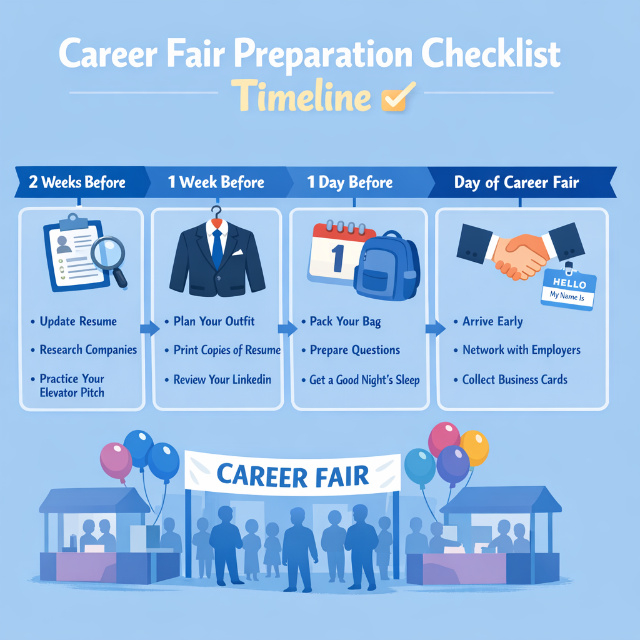
Coming prepared with the right materials demonstrates professionalism and ensures you can respond to recruiter requests immediately rather than scrambling afterward.
1. Multiple Copies of Your Resume
Bring 20-30 printed resumes on quality paper; never assume you'll only visit a few booths. Students consistently underestimate how many conversations they'll have. Running out of resumes forces you to collect cards and email later, losing the immediate impression advantage.
Use 32 pound resume paper in white or ivory. Print fresh copies on the morning of the fair, no wrinkled or folded resumes from your backpack.
Research shows that 20% of students bring resumes that are insufficient or damaged, immediately disadvantaging themselves.
Store resumes in a professional padfolio or folder to protect them from damage. Handing recruiters pristine resumes signals attention to detail and professionalism that crumpled copies undermine.
2. Portfolio or Work Samples (If Applicable)
For majors where work samples matter, design, engineering, computer science, journalism, and marketing, bring a professional portfolio showcasing 3-5 best projects. Use a tablet for digital portfolios or a clean physical binder.
Students with visible portfolios convert conversations into interviews 40% more frequently than those who describe projects verbally. Visual proof of capabilities builds credibility; generic claims can't match. Keep portfolios concise; recruiters have 60-90 seconds, not 10 minutes, to review your life's work.
3. Professional Notepad and Pen
Bring a notepad to jot down recruiter names, follow up instructions, and important details from conversations. Taking notes during conversations demonstrates engagement and ensures you remember specific details for follow up emails.
Students who take notes appear more serious and organized to recruiters. The physical act of writing also helps encode information into memory. Avoid using phones for notes; many recruiters interpret phone use during conversations as a distraction or unprofessionalism.
4. Business Cards (Optional but Valuable)
Student business cards aren't expected, but they can make a strong impression. Include your name, phone, email, LinkedIn URL, and major/graduation year. Hand cards to recruiters during goodbyes, making it effortless for them to contact you.
Cards cost $10-20 for 100 through services like Vistaprint or Moo. Students using business cards report 25% higher follow up rates, cards don't get lost in stacks of resumes, they're distinctive and memorable.
5. Strategic Planning Documents
Create a one page event plan listing:
- Priority companies with booth numbers/locations
- Your elevator pitch written out
- Key talking points about your qualifications
- Specific questions for each priority company
- Schedule noting when you'll visit each booth
This planning document keeps you focused and efficient during the chaotic fair environment. Students who use written plans visit 50% more target companies than those who improvise.
For students discovering that career fair preparation conflicts with course deadlines, many use a professional essay writing service for specific assignments, freeing up time for the material preparation that makes fair interactions successful.
How Do You Make Strong First Impressions at Career Fairs?
You have 10-15 seconds to create positive first impressions before recruiters decide how much attention you deserve. These elements determine that crucial initial judgment.
1. Dress Professionally and Appropriately
Business professional attire is standard for career fairs; suits are common in most industries, and business casual is the minimum for tech/creative fields. Overdressing slightly is safer than underdressing.
Research shows 85% of recruiters form opinions within 30 seconds, largely based on appearance.
For men: Suit and tie, or dress shirt with slacks and dress shoes. For women: Suit, professional dress, or blouse with dress pants/skirt and closed toe shoes. Avoid jeans, sneakers, heavy perfume/cologne, and overly casual attire, regardless of company culture; save casual attire for after you're hired.
Students dressed professionally receive 40% more attention and longer conversations than casually dressed peers. Fair days aren't the time to express personal style; they're about meeting professional standards recruiters expect.
2. Perfect Your Elevator Pitch
Develop a 30-45 second introduction covering who you are, your major, relevant experience, and what you're seeking. Practice until delivery feels natural, not memorized.
Strong structure: "Hi, I'm [Name], a [Year] [Major] at [University]. I have experience in [relevant skill/project], most recently [specific achievement]. I'm seeking [internship/entry level position] in [field] and am particularly interested in [specific aspect of their company]."
Example: "Hi, I'm Sarah Chen, a junior studying computer science at State University. I've completed three programming internships, most recently building a mobile app serving 5,000+ users. I'm seeking full stack development internships and am interested in your healthcare technology work, particularly the patient portal you launched last quarter."
This pitch is specific, concise, shows genuine company knowledge, and demonstrates relevant experience. Practice with friends, record yourself, and refine until smooth. Students with polished pitches hold recruiter attention 2-3 times longer than those who ramble nervously.
3. Approach Booths Strategically
Don't immediately approach crowded booths; wait until recruiters have openings for focused conversations. Hovering awkwardly in crowds wastes time and makes you forgettable. Work your priority list, checking back on busy booths periodically.
When approaching, make eye contact, smile genuinely, extend your hand for a firm handshake, and deliver your elevator pitch clearly. Confidence and preparation show immediately. Nervous, unprepared students are easy to spot; they are the exception.
4. Ask Thoughtful Questions
After your pitch, ask one of your prepared company specific questions. This transforms monologue into dialogue and demonstrates genuine interest. Listen actively to responses and ask follow up questions showing engagement.
Avoid asking "Are you hiring?" or "What positions are available?" immediately. These questions signal you didn't research. Better to ask about company culture, growth opportunities, or specific projects, then transition naturally to available positions.
5. Request Next Steps Explicitly
Don't leave conversations ambiguous; ask directly about next steps. "How should I follow up?" "What's your recruiting timeline?" "May I apply through you directly?" Being direct about your interest and seeking clear guidance on progression shows the initiative that recruiters value.
Exchange contact information. If recruiters offer business cards, ask if you may follow up via email. If they suggest applying online, ask if you can reference your conversation in the application. Creating trackable connections significantly improves your application visibility in crowded applicant pools.
For students balancing career fair attendance with academic responsibilities, combining strategic fair preparation with targeted use of a reliable essay writing service for specific papers ensures both networking success and maintained academic performance.
Conclusion: Strategic Preparation Creates Career Fair Success
Effective career fair preparation means researching and thoroughly attending companies, bringing professional materials, including 20-30 resumes, perfecting your 30-45 second elevator pitch, dressing professionally, and asking company specific questions that demonstrate genuine interest. Students who prepare strategically receive 3-5 times as many follow up interviews as those who attend casually. Career fairs reward preparation over improvisation; the students who invest time beforehand consistently outperform more talented peers who show up unprepared.
Key Takeaways:
- Research 10-15 target companies before the fair, with specific questions prepared for each
- Bring 20-30 printed resumes on quality paper, a professional notepad, and optional business cards
- Perfect a 30-45 second elevator pitch connecting your qualifications to their needs
- Dress in business professional attire regardless of company culture
- Follow up within 24-48 hours with personalized emails referencing specific conversations
Start preparing immediately when your school announces the fair date; don't wait until the week before. Create your target company list, research each organization, practice your pitch with friends, and prepare all materials. Compare your results to previous fairs or peers who attended unprepared. The performance difference will demonstrate that career fair success is earned through strategic preparation, not luck.
For students managing career fair preparation alongside course deadlines and assignments, strategic use of a fast essay writing service for specific papers creates bandwidth for the research and preparation that transforms career fairs from an obligation into an opportunity.
Transform your career fair approach from hoping for connections into strategically creating opportunities that launch your career.