What Are Common Types of Family Pressure Students Experience?
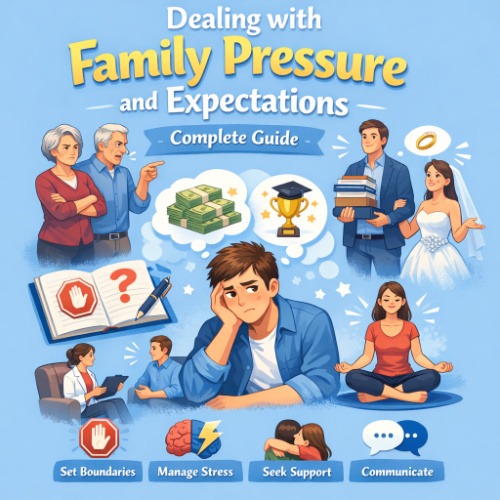
Common family pressures include major and career path mandates (particularly toward medicine, law, engineering, business) despite student interests in other fields, academic performance expectations (demanding 4.0 GPA or constant comparison to siblings/peers), post-graduation plans dictating graduate school attendance or career choices, relationship and marriage expectations including who students date and when they settle down, lifestyle and value conflicts around religion, politics, or personal choices, and financial control linking support to compliance with family expectations creating obligation and guilt.
Academic and Career Pressure
"You must be a doctor/lawyer/engineer":
- Family investment in education creates obligation to "practical" careers
- Parents project their own unfulfilled dreams onto children
- Cultural expectations prioritizing certain "prestigious" professions
- Dismissal of humanities, arts, social sciences as "unmarketable"
- Pressure to pursue fields student has no interest in or aptitude for
Consequences of forced career paths:
- 52% of students in parent-chosen majors report being unhappy
- 43% eventually change majors despite family conflict
- Lower GPAs in forced majors (2.8 vs. 3.2 in chosen majors)
- Higher dropout rates (32% vs. 18%)
- Career dissatisfaction and burnout post-graduation
Real student experiences:
- "My parents sacrificed everything for me to become a doctor, but I'm passionate about teaching."
- "I'm pre-law because that's what my family expects, but I want to study environmental science."
- "My older siblings are engineers. My parents won't accept my psychology major."
Grade and Performance Pressure
Unrealistic GPA expectations:
- Demanding 4.0 or "all A's" without understanding college rigor
- Punishment or disappointment over B grades
- Constant comparison to siblings, cousins, or peers
- Threats to withdraw financial support over grades
- Ignoring effort and context (difficult major, mental health struggles)
Impact of excessive grade pressure:
- 68% report family grade pressure causes significant anxiety
- Increased cheating temptation (desperate to maintain appearance)
- Burnout and academic exhaustion
- Avoidance of challenging courses (protecting GPA over learning)
- Mental health crises (depression, anxiety, suicidal ideation)
Cultural context:
- Some cultures emphasize academic achievement as family honor
- Collectivist cultures view individual failure as family shame
- Immigrant parents may tie success to justifying immigration sacrifice
- Understanding context helps navigate pressure while asserting boundaries
Personal Life and Values Pressure
Relationships and marriage:
- Disapproval of dating partners (wrong race, religion, class, gender)
- Pressure to date or avoid dating during college
- Expectations about marriage timing or arranged marriages
- Control over personal relationships and autonomy
Lifestyle and identity:
- Religious observance expectations
- Political alignment demands
- Career over family or family over career
- Living location post-graduation
- Coming out to family (LGBTQ+ identity conflicts)
Financial control as leverage:
- "We're paying, so you'll do what we say"
- Conditional financial support
- Using money to maintain control over adult children
- Guilt about family sacrifice and investment
How Do You Communicate Boundaries with Family?
Communicate boundaries by choosing appropriate timing when family is receptive not during conflict, using "I" statements focusing on your feelings and needs ("I feel overwhelmed when..." not "You always..."), expressing gratitude and understanding ("I know you want what's best for me, and I appreciate your concern..."), clearly stating your needs and boundaries ("I need to make my own major decision" or "I need you to stop comparing me to my sister"), offering compromise when possible without sacrificing core needs, and preparing for resistance accepting you cannot control their reaction only your actions and boundaries.
Conversation Framework
Step 1: Prepare mentally and emotionally
- Clarify your needs and boundaries before conversation
- Anticipate their concerns and prepare responses
- Accept that they may react negatively initially
- Remember: You're not asking permission, you're informing respectfully
- Consider writing key points to stay focused
Step 2: Choose the right time and place
- Private setting without distractions
- When family is not stressed or rushed
- Face-to-face or video call (not text for serious topics)
- Avoid holidays or family gatherings (too much emotion)
- Plan adequate time (not rushed conversation)
Step 3: Open with appreciation and understanding
- "I know you love me and want what's best for me."
- "I appreciate all the sacrifices you've made for my education."
- "I understand you have concerns about my future."
- "I value your opinion and input in my life."
Step 4: State your position using "I" statements
- "I've realized engineering isn't the right path for me. I'm passionate about social work."
- "I need to make my own decisions about my major and career."
- "I feel stressed and anxious when my worth is tied to my GPA."
- "I'm an adult, and I need you to trust me to make my own choices."
Step 5: Provide context and rationale
- Share research about your chosen field
- Explain your decision-making process
- Demonstrate you've thought carefully, not impulsively
- Offer concrete plans showing responsibility
- Address their specific concerns with facts
Step 6: Set clear boundaries
- "I need you to stop comparing me to [sibling/peer]."
- "I won't discuss my grades every time we talk."
- "I need you to respect my major choice even if you don't agree."
- "I appreciate advice, but I need the final say in my decisions."
Step 7: Offer compromise without sacrificing core needs
- "I'll keep a 3.0 GPA, but I can't promise all A's."
- "I'll consider graduate school, but not immediately after undergrad."
- "I'll introduce you to my partner when we're both ready."
- "I'll visit twice a semester, but I need weekends for studying and friends."
Conversation Scripts for Common Situations
Changing major despite family opposition:
"Mom and Dad, I need to talk to you about something important. I know you want me to major in engineering because you believe it's the best path to financial security. I appreciate your concern for my future; it shows how much you love me.
However, I've realized engineering isn't right for me. I'm struggling in my classes because my heart isn't in it, and my grades are suffering as a result. I'm passionate about psychology and want to pursue mental health counseling. I've researched career outcomes, and therapists have good job prospects and satisfying careers helping people.
I know this isn't what you envisioned, but I need to make this decision for myself. I'm asking you to trust me and support my choice, even if you don't fully understand or agree. Can we discuss this?"
Addressing unrealistic grade pressure:
"I want to talk about expectations around my grades. I know academic achievement is important to our family, and I'm working hard in school. However, I feel like my worth as a person is tied to getting all A's, and that pressure is actually hurting my performance and mental health.
College is much more rigorous than high school, and a 3.5 GPA in a challenging major is actually very good. I need you to understand that B's are acceptable and don't mean I'm failing or not trying hard enough. I need you to stop comparing me to [sibling/peer] because it makes me feel like I'm never good enough.
I promise I'm taking school seriously, but I need you to value my effort and growth, not just my grades."
Establishing life autonomy:
"I'm grateful for your financial support, and I know you've sacrificed a lot for my education. However, I'm an adult now, and I need to start making my own decisions about my life, career, and relationships. That doesn't mean I don't value your advice or input, I do. But I need the final say in decisions affecting my future.
I understand this is hard because you're used to guiding me, but part of growing up is learning from my own choices, even if I make mistakes sometimes. I need you to trust that you raised me well enough to make good decisions. Can you try to support me even when you don't agree with every choice I make?"
When Conversations Go Poorly
Common negative reactions:
- Anger or yelling
- Guilt trips ("After all we've done for you...")
- Emotional manipulation ("You're breaking my heart")
- Threats (withdrawing support, cutting contact)
- Dismissal ("You're just confused" or "You'll understand when you're older")
- Cultural/religious authority ("You're dishonoring the family")
How to respond:
- Stay calm and don't match their emotion
- Repeat your boundary calmly: "I understand you're upset, but this is my decision."
- End conversation if it becomes abusive: "I love you, but I need to go now. We can talk when we're both calmer."
- Give them time to process (days or weeks)
- Seek support from friends, counselor, or trusted mentor
How Do You Navigate Cultural and Generational Differences?
Navigate cultural differences by educating yourself about your family's cultural values understanding context behind expectations, acknowledging their perspective and experiences showing respect while asserting boundaries, finding cultural mediators (extended family, community leaders, therapists familiar with your culture) who can help bridge understanding, balancing collectivist family values with individualist personal autonomy through compromise, and recognizing some differences are generational (immigrant parents raised in different context) requiring patience and education rather than rejection of culture.
Understanding Cultural Context
Common cultural expectations:
- Collectivist cultures: Individual choices reflect on the entire family
- Immigrant families: Success justifies immigration sacrifice and hardship
- Traditional families: Predetermined life paths (career, marriage, lifestyle)
- Filial piety cultures: Obedience and honor to parents paramount
- Gender roles: Different expectations for daughters vs. sons
Why understanding context matters:
Parents' pressure often stems from:
- Their own experiences with limited opportunities
- Desire to protect you from struggles they faced
- Cultural definition of success different from yours
- Fear you'll face discrimination or hardship
- Love expressed through worry and control
This doesn't excuse controlling behavior, but understanding helps:
- Respond with empathy while maintaining boundaries
- Frame conversations around shared values (success, happiness, security)
- Demonstrate respect for culture while asserting individuality
Balancing Two Worlds
Common challenges for multicultural students:
- Code-switching between campus culture and family culture
- Feeling pulled between two identities
- Guilt about "Americanizing" or losing cultural roots
- Family doesn't understand college culture or opportunities
- Dating and relationship conflicts
- Career choices valued differently across cultures
Strategies for balance:
- You can honor culture while making authentic choices
- Educate family about American college experience and opportunities
- Share how you're maintaining cultural identity in new ways
- Invite family to campus events showing your life
- Connect them with other families navigating the same transition
- Find community supporting bicultural identity (cultural student organizations)
When Cultural Conflict Becomes Harmful
Recognizing abusive vs. loving pressure:
- Loving concern: Expresses worry but ultimately respects autonomy
- Abuse: Uses threats, coercion, violence, or extreme emotional manipulation
- Loving concern: Disagrees but maintains relationship
- Abuse: Conditional love (rejection unless you comply)
- Loving concern: Wants conversation and understanding
- Abuse: Demands obedience without discussion
If experiencing abuse:
- Seek support from campus counseling immediately
- Connect with cultural support services on campus
- Consider involving trusted extended family members
- Understand that abuse is not cultural, it's abuse
- You may need to establish distance for your safety
- Financial independence becomes a critical priority
How Does Family Pressure Affect Mental Health?
Family pressure affects mental health causing anxiety disorders (constant worry about disappointing family affecting 68% of students under high pressure), depression and feelings of inadequacy (43% report depressive symptoms), imposter syndrome feeling unworthy despite achievements, perfectionism and fear of failure paralyzing decision-making, identity confusion not knowing own values separate from family expectations, and in severe cases suicidal ideation when pressure feels unbearable. Students from cultures emphasizing family honor show 2.3x higher rates of anxiety and depression related to family expectations.
Mental Health Impacts
Anxiety and stress:
- Constant worry about meeting expectations
- Panic attacks before sharing grades or decisions
- Avoidance of conversations with family
- Physical symptoms (headaches, stomach issues, insomnia)
- Hypervigilance about performance
Depression:
- Feeling like failure or disappointment
- Loss of interest in activities
- Hopelessness about future
- Fatigue and low motivation
- Social withdrawal
Identity issues:
- Not knowing what you want separate from family
- Living someone else's dream
- Feeling like a fraud or imposter
- Confusion about values and priorities
- Lost sense of authentic self
Relationship impacts:
- Difficulty trusting own judgment
- Seeking external validation constantly
- Conflict avoidance (learned from family dynamics)
- Codependency patterns
- Difficulty setting boundaries in relationships
When to Seek Professional Help
Signs professional support needed:
- Persistent sadness or anxiety (weeks or months)
- Thoughts of self-harm or suicide
- Inability to function (missing classes, isolating)
- Physical health problems from stress
- Using substances to cope
- Eating disorders or self-harm behaviors
- Panic attacks or severe anxiety
Campus resources:
- Counseling center (confidential, typically 6-12 free sessions)
- Support groups for cultural/family issues
- International or first-generation student services
- LGBTQ+ resource center (for identity conflicts)
- Dean of students office (advocacy and support)
- Crisis hotline (988 - Suicide & Crisis Lifeline)
What therapy provides:
- Safe space processing family dynamics
- Tools for setting boundaries and communicating
- Validation that your feelings are legitimate
- Strategies for managing anxiety and depression
- Help clarifying your own values and goals
- Support navigating difficult decisions
Self-Care During Family Conflict
Healthy coping strategies:
- Journaling feelings and thoughts
- Exercise and physical activity
- Meditation and mindfulness
- Spending time with supportive friends
- Engaging in hobbies and interests
- Setting boundaries on family contact when needed
- Affirming your worth independent of family approval
Unhealthy coping to avoid:
- Substance use numbing feelings
- Overworking or perfectionism proving worth
- Complete family cutoff before attempting repair
- Passive-aggressive behavior instead of direct communication
- Self-harm or eating disorders
- Rushing into relationships seeking approval elsewhere
How Do You Make Autonomous Decisions Despite Family Disapproval?
Make autonomous decisions by clarifying your own values through reflection and self-assessment separate from family influence, gathering information making informed choices based on research not just defiance, accepting that disappointing family sometimes is necessary for authentic life, building support network of friends, mentors, counselors validating your choices, planning for financial independence if family threatens to withdraw support, and recognizing that families often come around eventually once they see you're successful and happy even if initial reaction is negative.
Decision-Making Framework
Step 1: Clarify your authentic desires
- What do I want regardless of family opinion?
- What are my strengths, interests, and values?
- What kind of life do I envision for myself?
- What career would make me fulfilled?
- What relationships do I want to pursue?
Step 2: Separate your voice from family voice
- Which expectations are mine vs. internalized family pressure?
- What would I choose if family had no opinion?
- Am I choosing this to please them or because I genuinely want it?
- What am I afraid of if I disappoint them?
Step 3: Do your research
- Gather facts about your choice (career outcomes, graduate programs, etc.)
- Talk to people in fields you're considering
- Understand realistic challenges and opportunities
- Make informed decision, not rebellious impulse
- Prepare to share research with family
Step 4: Build your support system
- Friends who support your authentic choices
- Mentors or advisors who know your situation
- Counselor helping navigate family dynamics
- Peers from similar backgrounds understanding cultural context
- Online communities for specific situations (r/AsianParentStories, etc.)
Step 5: Plan for worst-case scenario
- What if family withdraws financial support?
- What if they cut contact temporarily?
- How will I support myself?
- What resources are available (loans, work-study, scholarships)?
- Who can I rely on during conflict?
Step 6: Make decision and communicate
- Choose based on your authentic values
- Communicate decision respectfully but firmly
- Accept their initial reaction may be negative
- Give them time to process and adjust
- Stand firm in your decision
Step 7: Live with integrity
- Prove through actions you made wise choice
- Succeed in path you've chosen
- Maintain relationship despite disagreement
- Demonstrate maturity and responsibility
- Be patient with their adjustment process
Long-Term Perspective
Families often come around:
- Initial shock and disappointment often softens
- Seeing your happiness and success changes minds
- Time and distance provide perspective
- Your success proves them wrong about concerns
- They may apologize or acknowledge they were wrong (eventually)
68% of students who made autonomous major/career choices report:
- Family eventually accepted or supported decision
- Relationship improved once boundaries established
- Parents respected them more for independence
- Initial conflict led to healthier adult relationship
Even if family never fully accepts:
- You can maintain relationship with boundaries
- Your wellbeing matters more than their approval
- Living authentically is worth short-term conflict
- You model healthy boundaries for future generations
- Other family relationships may compensate
Key Takeaways
Navigate family pressure and expectations through these evidence-based strategies:
Communicate boundaries assertively using "I" statements expressing feelings and needs ("I feel overwhelmed when..." not "You always..."), offering compromise without sacrificing core values, and accepting you cannot control their reaction only your actions. 68% of students report family pressure causes significant stress, making boundary communication essential for mental health and authentic decision-making.
Understand cultural context showing respect while asserting autonomy recognizing pressure often stems from love, limited opportunities in parents' experiences, and desire to protect rather than control. However, understanding context doesn't excuse controlling behavior; you can honor culture while making authentic choices, balancing collectivist family values with individualist personal autonomy.
Recognize mental health impacts seeking support when needed as family pressure causes anxiety (68%), depression (43%), identity confusion, and perfectionism affecting academic performance and wellbeing. Campus counseling provides confidential support processing family dynamics, developing boundary-setting skills, and clarifying values separate from family expectations without judgment or cultural insensitivity.
Make autonomous decisions through informed deliberate process clarifying authentic values through reflection, gathering research supporting choices, building support networks validating decisions, planning for financial independence if necessary, and accepting families often come around eventually seeing your success and happiness. 68% of students making autonomous choices report family eventually accepted decisions.
Balance respect for family with personal autonomy honoring parents' concerns and sacrifices while ultimately making decisions about education, career, and life aligned with authentic self. Living someone else's vision creates unhappiness, resentment, and career dissatisfaction. Students in parent-chosen majors report 52% unhappiness and 2.8 vs. 3.2 GPAs compared to self-chosen majors.
Family relationships evolve requiring renegotiation as you transition from dependent child to autonomous adult. Short-term conflict establishing boundaries often leads to healthier long-term relationships based on mutual respect rather than control. Your wellbeing, authenticity, and self-determination matter; you can love family while making your own choices.
When managing emotional strain of family conflict alongside demanding academic responsibilities, consider using a trusted essay writing service for routine coursework during particularly difficult family negotiation periods, allowing mental and emotional energy for processing feelings, having difficult conversations, seeking counseling support, and establishing necessary boundaries without sacrificing academic performance during emotionally exhausting family dynamics.